Head to head
Anker SOLIX C2000 Gen 2 vs Anker SOLIX F3000
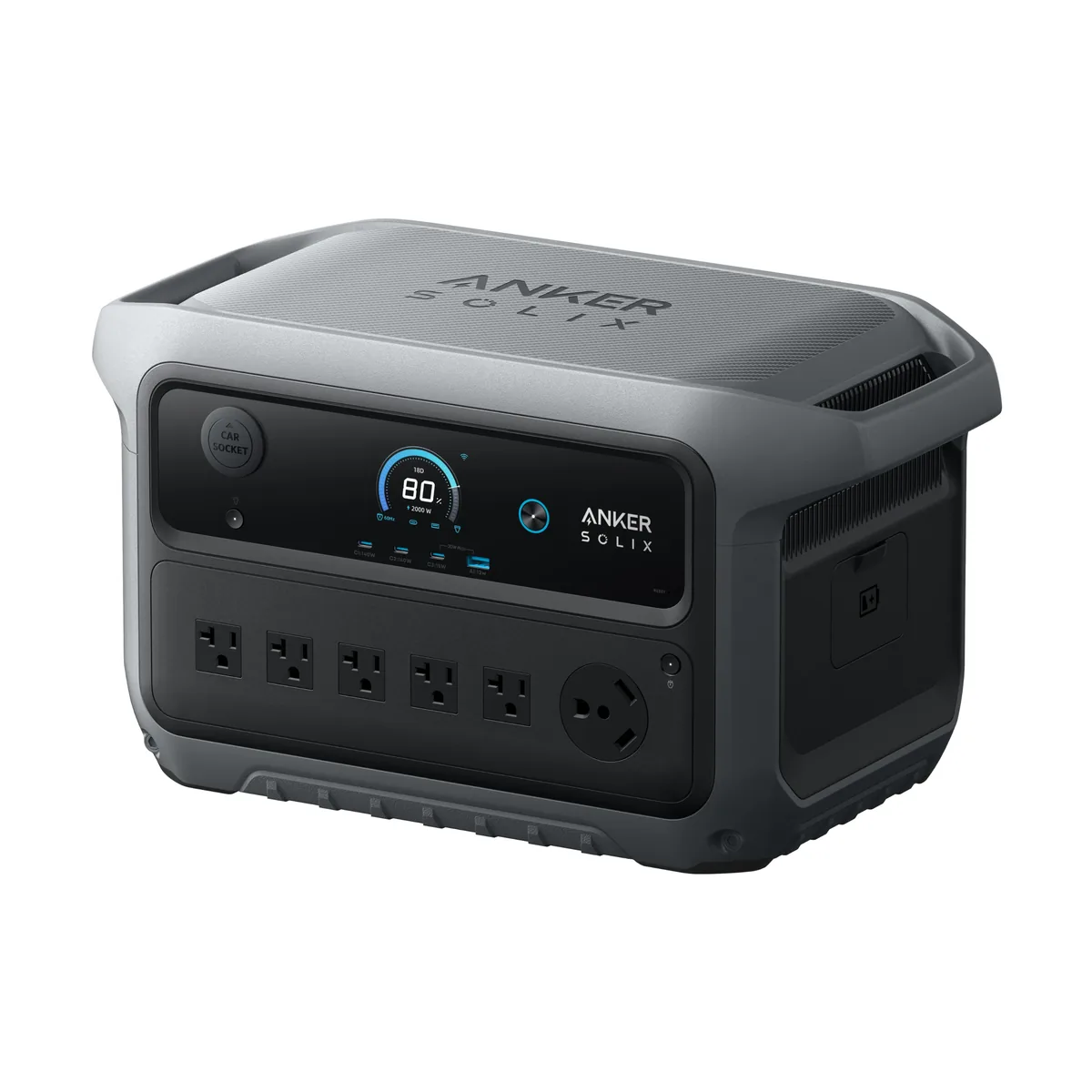
Anker SOLIX · Power Station
Anker SOLIX C2000 Gen 2
~$1,499
2,400 W / 4,000 W surge · up to fridge, freezer and the essentials
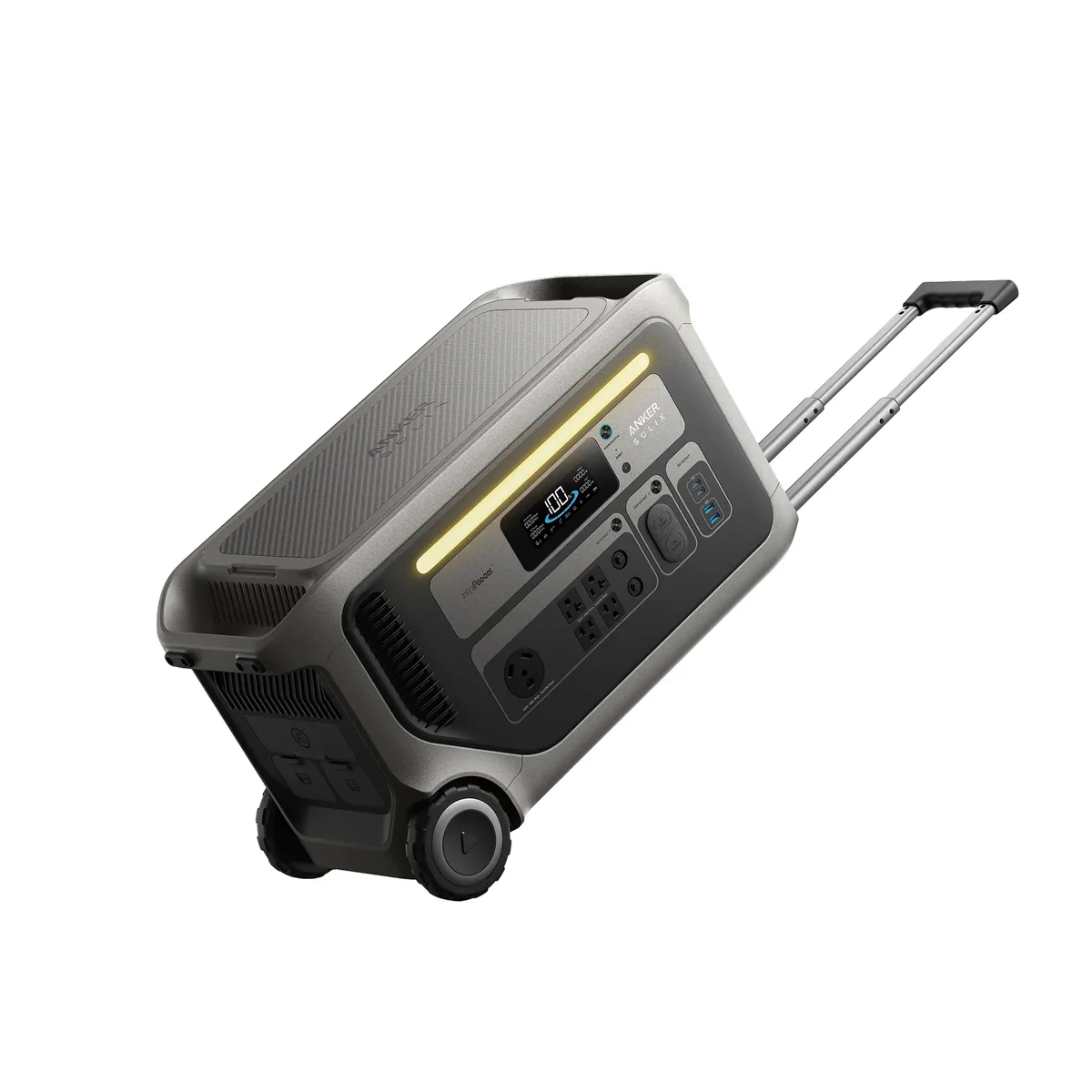
Anker SOLIX · Power Station
Anker SOLIX F3000
~$1,699
3,600 W / 7,200 W surge · up to fridge, freezer and the essentials
Quick takeThe Anker SOLIX C2000 Gen 2 lists about $200 lower; the Anker SOLIX F3000 puts out more sustained power (3,600 W).
| Spec | Anker SOLIX C2000 Gen 2 | Anker SOLIX F3000 |
|---|---|---|
| Approx. price | ~$1,499 | ~$1,699 |
| Type | Power Station | Power Station |
| Fuel | Battery (LiFePO4) | Battery (LiFePO4) |
| Running / output watts | 2,400 W | 3,600 W |
| Starting / surge watts | 4,000 W | 7,200 W |
| Battery capacity | 2,048 Wh | 3,072 Wh |
| Expandable to | 4,096 Wh | 12,288 Wh |
| Noise | 30 dB | — |
| Runtime | Fridge (~150W): ~11 hrs on base unit | Fridge (~150W): ~17 hrs on base unit |
| Outlets | 5x 120V 20A AC (NEMA 5-20R), 1x 120V 30A AC (TT-30R), 2x 140W USB-C, 1x 15W USB-C, 1x 12W USB-A, 12V car | 4x 120V 20A AC (NEMA 5-20R), 1x 120V 30A TT-30R, USB-C, USB-A, 12V car, 30A Anderson; 240V 30A via Double Voltage Hub (sold separately) |
| Fuel tank | — | — |
| Weight | 41.7 lbs | 91.5 lbs |
| Transfer-switch ready | No | No |
| Warranty | 5-year | 5-year |
Highlighted cell is the better figure for that row.
Owner pros and cons
Anker SOLIX C2000 Gen 2
- +2,400W continuous with 4,000W surge
- +800W solar or alternator input
- +41.7 lbs for 2,048Wh of LiFePO4
- +Storm Guard mode charges ahead of forecast weather
- −TT-30R is 120V, so it does not feed an L14-30 transfer inlet
- −Expansion battery is a big extra cost
- −App-based setup of Storm Guard and TOU modes
Anker SOLIX F3000
- +3,600W continuous with 7,200W surge handles a well pump and fridge together
- +Low idle draw: Anker rates it at about 42 hrs on a 190W refrigerator
- +Dual-voltage solar input (up to 165V) simplifies string wiring
- +Wheels and pull handle for a 91.5 lb unit
- +3,600W pass-through charging keeps loads on while recharging
- −91.5 lbs; the wheels earn their place
- −240V needs the separately sold Double Voltage Hub and a second unit
- −No published noise figure
- −Expansion batteries are expensive per kWh