Westinghouse Generators

Westinghouse has 9 units on Outage Geek, priced from $529 to $3,499. The least expensive Westinghouse model here is the Westinghouse iGen2550c at $529, and the lineup below runs cheapest first.

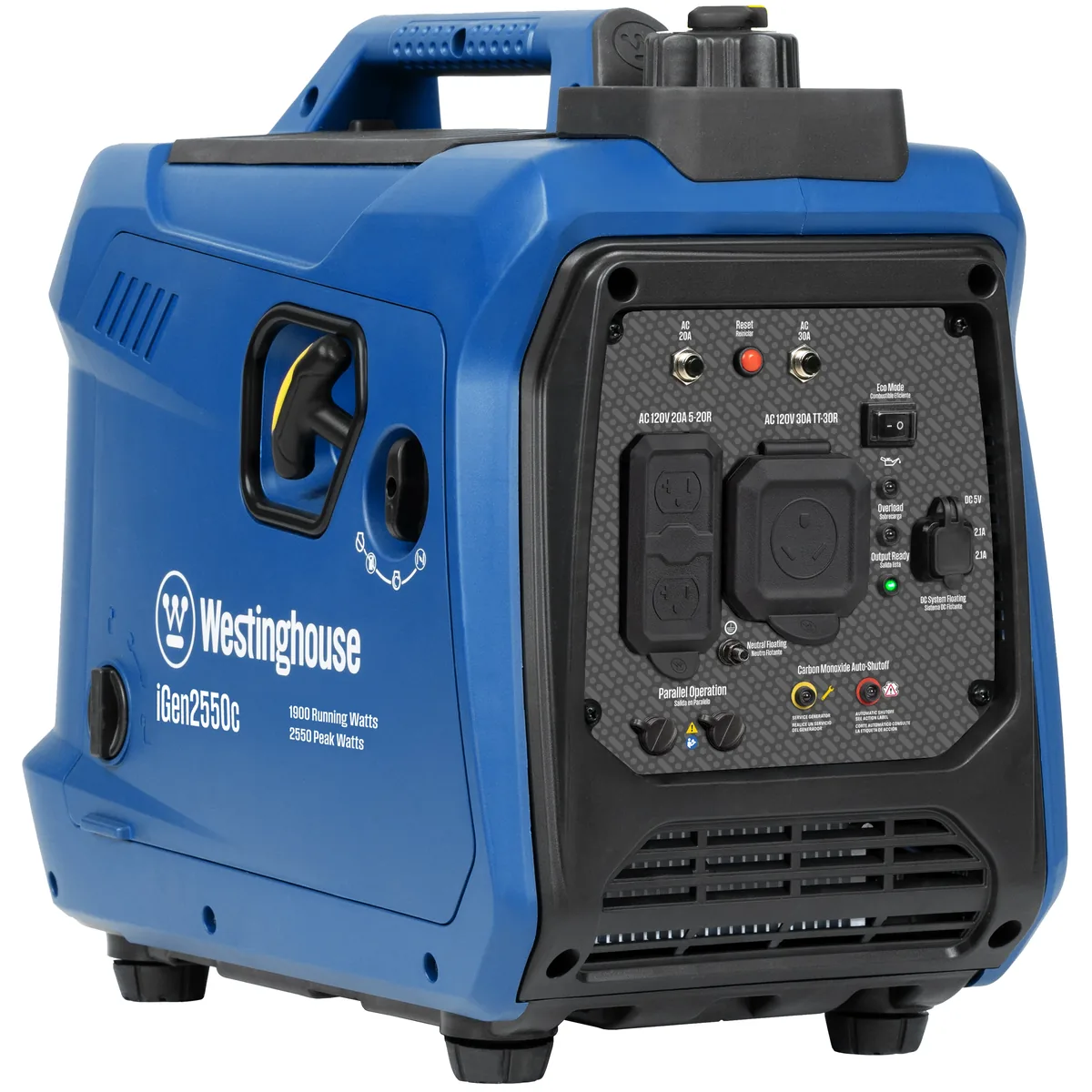
Westinghouse iGen2550c
~$529

Inverter Generator · Gasoline · 52 dB

Westinghouse iGen2550c

The current small Westinghouse replaces the older iGen2500 and gives you a 30A RV outlet and a CO sensor on a 2 kW inverter without paying Honda money. It makes 1,900 running watts and 2,550 peak, weighs 40 lbs and has an LED data center showing fuel level, load and remaining run time. Owners use it for campsites, tailgates and as a short-outage fridge-and-lights unit. Reports are positive on value and on how easy it is to carry, and most of the complaints are about the engine: it is small, so at full load the 1.1 gallon tank gives much less than the 11-hour figure that Westinghouse rates at a quarter load; the 52 dBA rating is a published figure, and owners say it is louder than that under heavy load. It parallels with a second iGen with optional cables. Westinghouse lists a $529 MSRP and sells through retailers such as Home Depot and Lowe's, where street prices move around that figure.

1,900 W / 2,550 W surge · up to lights, phones, router, a CPAP

running
1,900 W

Best for RV and tailgate users who want a light 2 kW inverter with a 30A outlet and CO shutoff at about half the price of a Honda or Yamaha.
Westinghouse WGen5300DFc
~$829

Portable Generator · Dual Fuel (Gas/Propane) · 68 dB

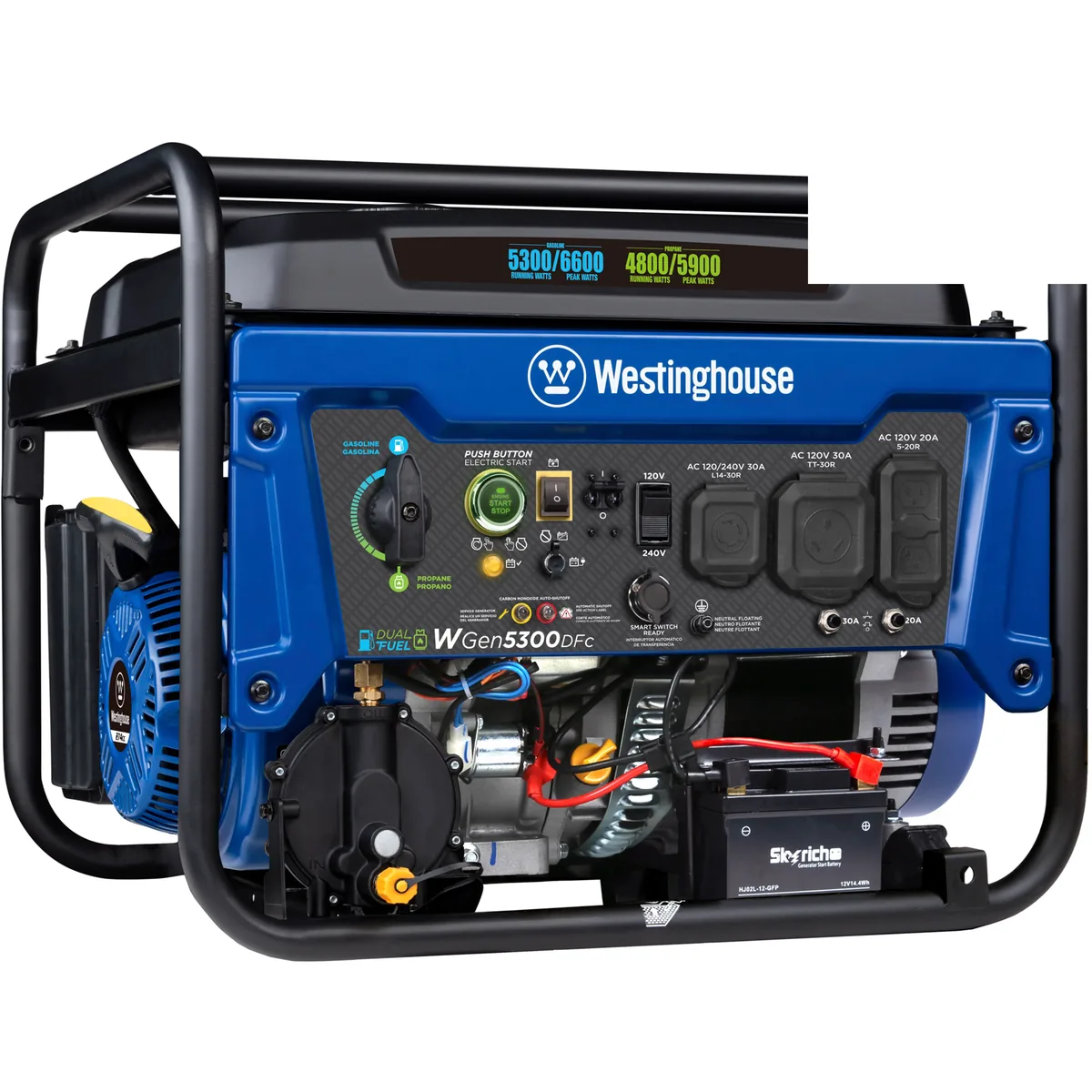
Westinghouse WGen5300DFc

The small open-frame that still reaches a transfer switch. At 5,300 running watts on gasoline and 4,800 on propane it carries a furnace, fridge and a few circuits, and the L14-30R and RV-style TT-30R outlets mean it plugs into a 30-amp inlet or a camper without adapters. Dual fuel is what owners buy it for: a 20 lb propane cylinder stores for years where gasoline goes stale, and the regulator and hose come in the box. The CO sensor is a useful extra at this price. One detail trips buyers up: it has a floating neutral, so some interlock and transfer-switch setups need a bonding plug and an electrician's say-so, and the sheet lists no GFCI outlets. It is also rated at 68 dBA, close to a typical open-frame, and at 136 lbs it is the one in this class a single person can wheel into a shed.

5,300 W / 6,600 W surge · up to furnace blower, sump pump or a window AC

running
5,300 W
Transfer switch
transfer-switch ready

Best for Small-home owners and RV campers who want dual fuel and a 30-amp transfer-switch outlet in a unit light enough to move alone.

Westinghouse iGen4500
~$849

Inverter Generator · Gasoline · 52 dB

Westinghouse iGen4500

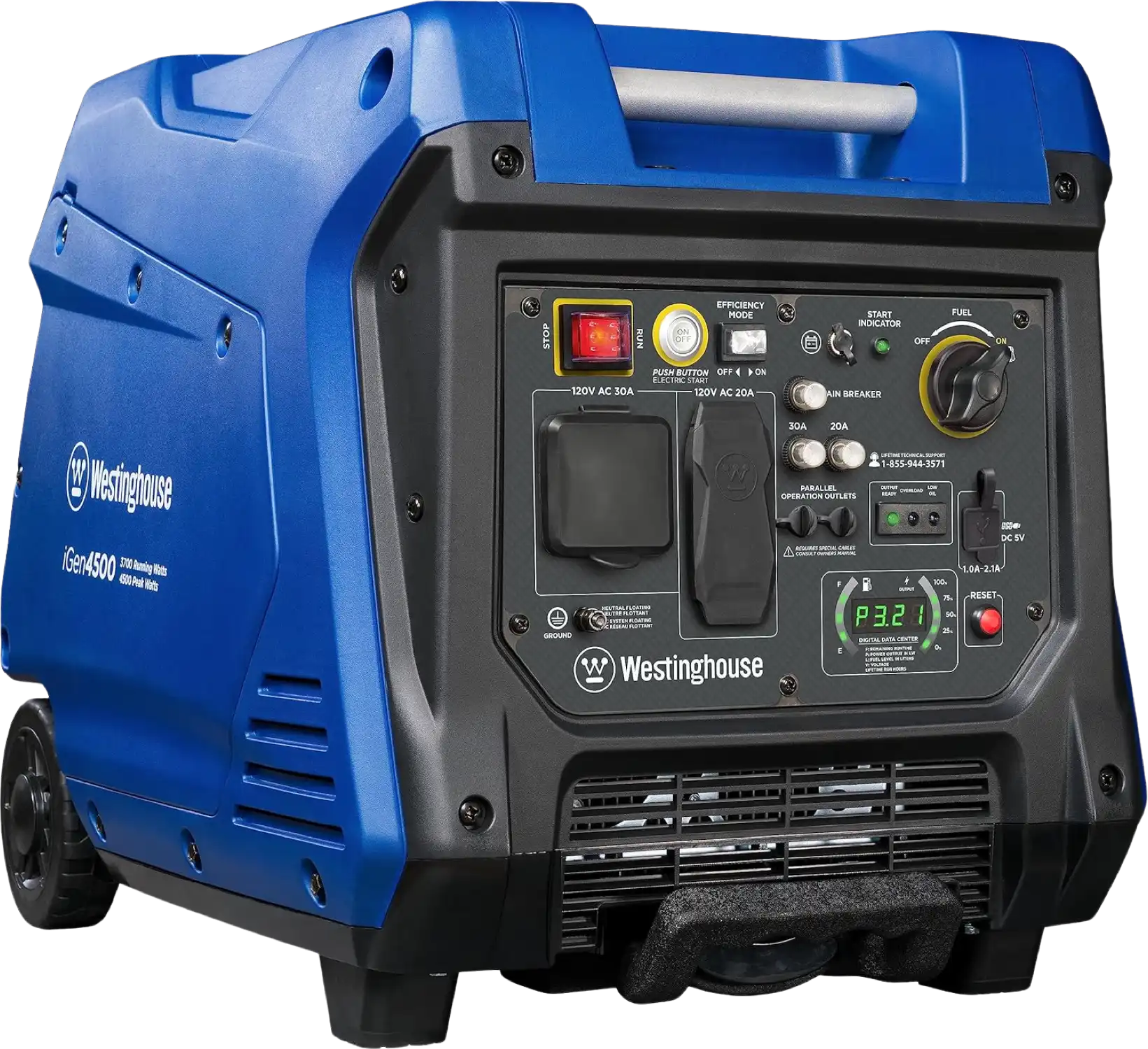
A non-Honda RV inverter: 3,700 running watts, a genuine 52 dB at quarter load, a telescoping suitcase handle, and an 18-hour economy-mode runtime. The digital display with remaining-runtime readout and the remote-start fob are the standout features, at half the cost of Honda's discontinued EU3000. It starts most 15k BTU RV ACs, though in high heat owners are advised to add a soft-starter. Grievances from owners: carb trouble such as surging at idle, and a Westinghouse support line that can be hard to reach. The DF dual-fuel variant had a fuel-filter leak recall in 2020 — this gas model wasn't affected.

3,700 W / 4,500 W surge · up to fridge, freezer and the essentials

running
3,700 W

Best for RVers who want near-Honda quiet, AC-starting power, and long runtimes at a mid-tier price.

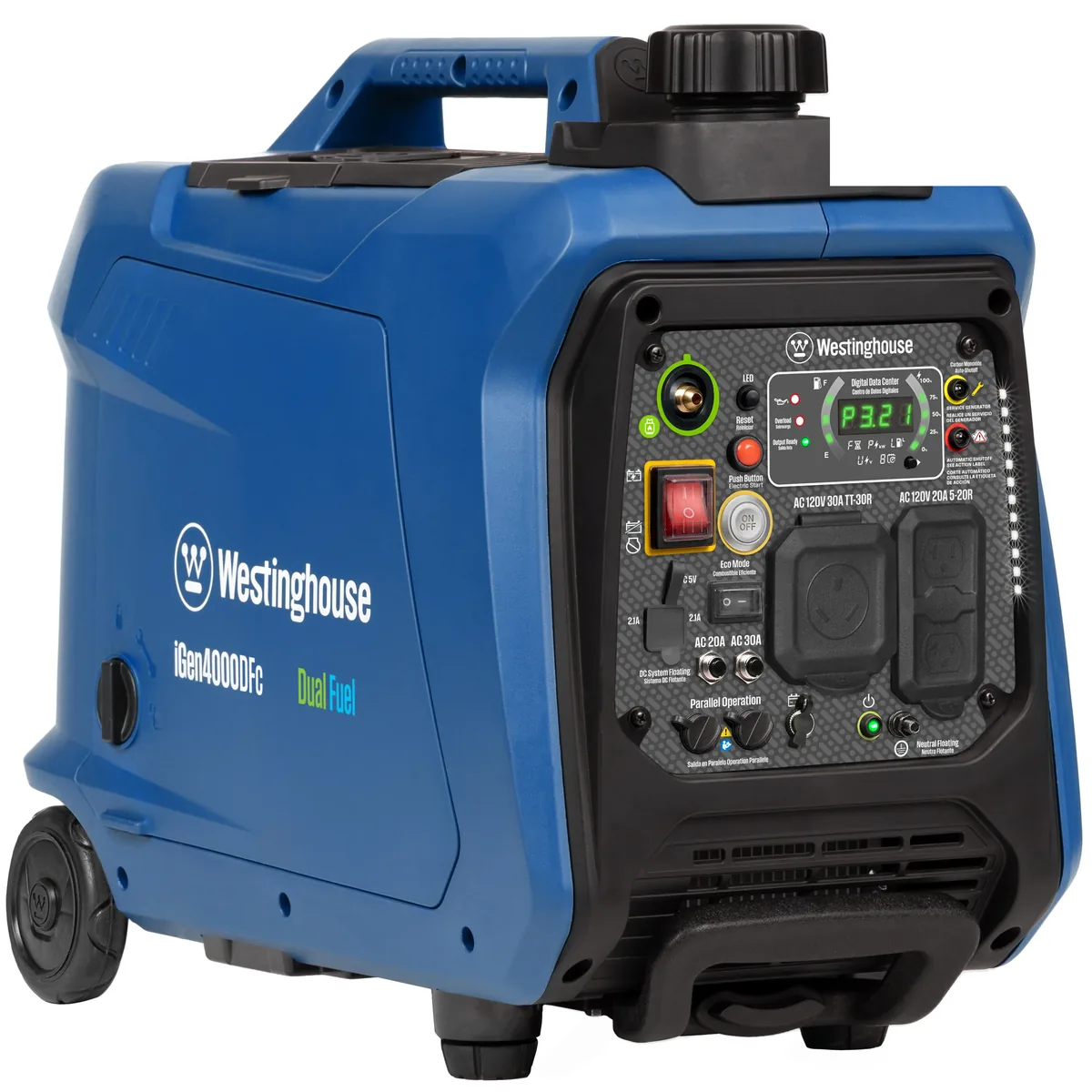
Westinghouse iGen4000DFc
~$859

Inverter Generator · Dual Fuel (Gas/Propane) · 52 dB

Westinghouse iGen4000DFc

A wheeled 3,300-watt inverter with electric start, a key-fob remote and propane capability for $859. It makes 3,300 running and 4,000 peak watts on gasoline, and 2,970 and 3,600 on propane, which covers a fridge, a furnace blower, a sump pump and lights, and a 13,500 BTU RV air conditioner is within reach on a soft-start. Owners like the telescoping handle and wheels at 62.8 lbs, and the key-fob start from the camper steps. The complaints are consistent: the 1.69 gallon tank gives about 7 hours even at a quarter load, so a long outage means refueling overnight or switching to propane, and owners find it louder than the 52 dBA on the spec sheet, which sits oddly beside the same figure Westinghouse gives its much smaller iGen2550c. The 30A outlet is a 120V TT-30R, so it does not feed a transfer switch. It is a bargain next to the Honda EU3200i and a notch above the budget Champions in fit and finish.

3,300 W / 4,000 W surge · up to fridge, freezer and the essentials

running
3,300 W

Best for RV owners and backup users who want electric start, a remote fob and propane on a wheeled 3.3 kW inverter at under $900.

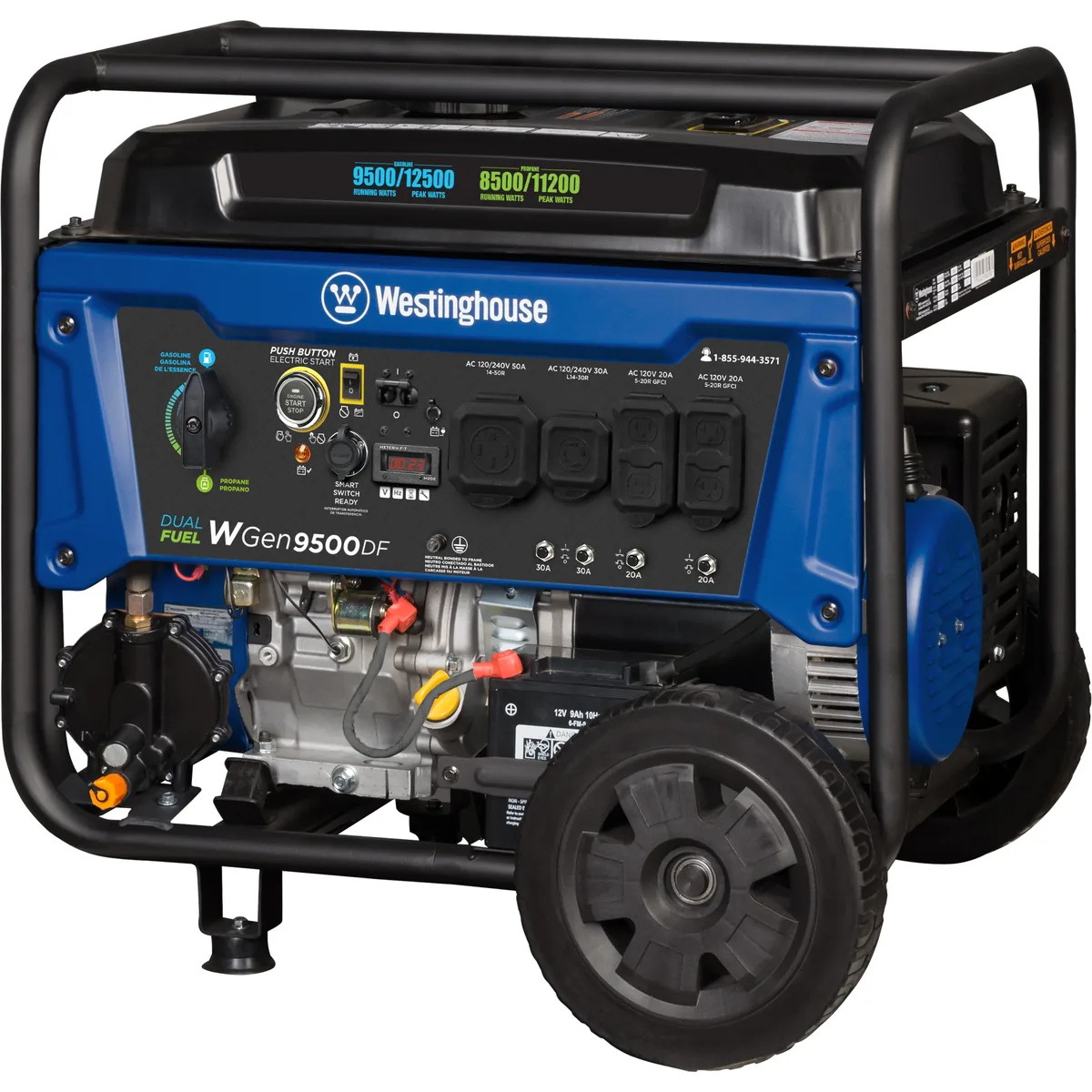
Westinghouse WGen9500DF
~$1,049

Portable Generator · Dual Fuel (Gas/Propane) · 74 dB

Westinghouse WGen9500DF

Built for cheap whole-house backup through an interlock. 9,500 running watts on gasoline (8,500 on propane), a 50-amp outlet, remote-start key fob, and a 12-hour tank for around a grand is a spec sheet nothing else matches. Owners report running entire homes, central AC included, during outages. It is not subtle: expect 75+ real-world dB, a 211-lb frame, and open-frame vibration. The complaint file: electrical oddities on some brand-new units, a Westinghouse support line that draws owner complaints, and carb gumming if stored wet. The current 'DFc' revision adds a CO sensor. Buy it, change the skimpy break-in oil early, and store it dry.

9,500 W / 12,500 W surge · up to well pump or a small central AC

running
9,500 W
Transfer switch
transfer-switch ready

Best for Budget whole-house backup through an interlock or transfer switch — maximum watts per dollar.

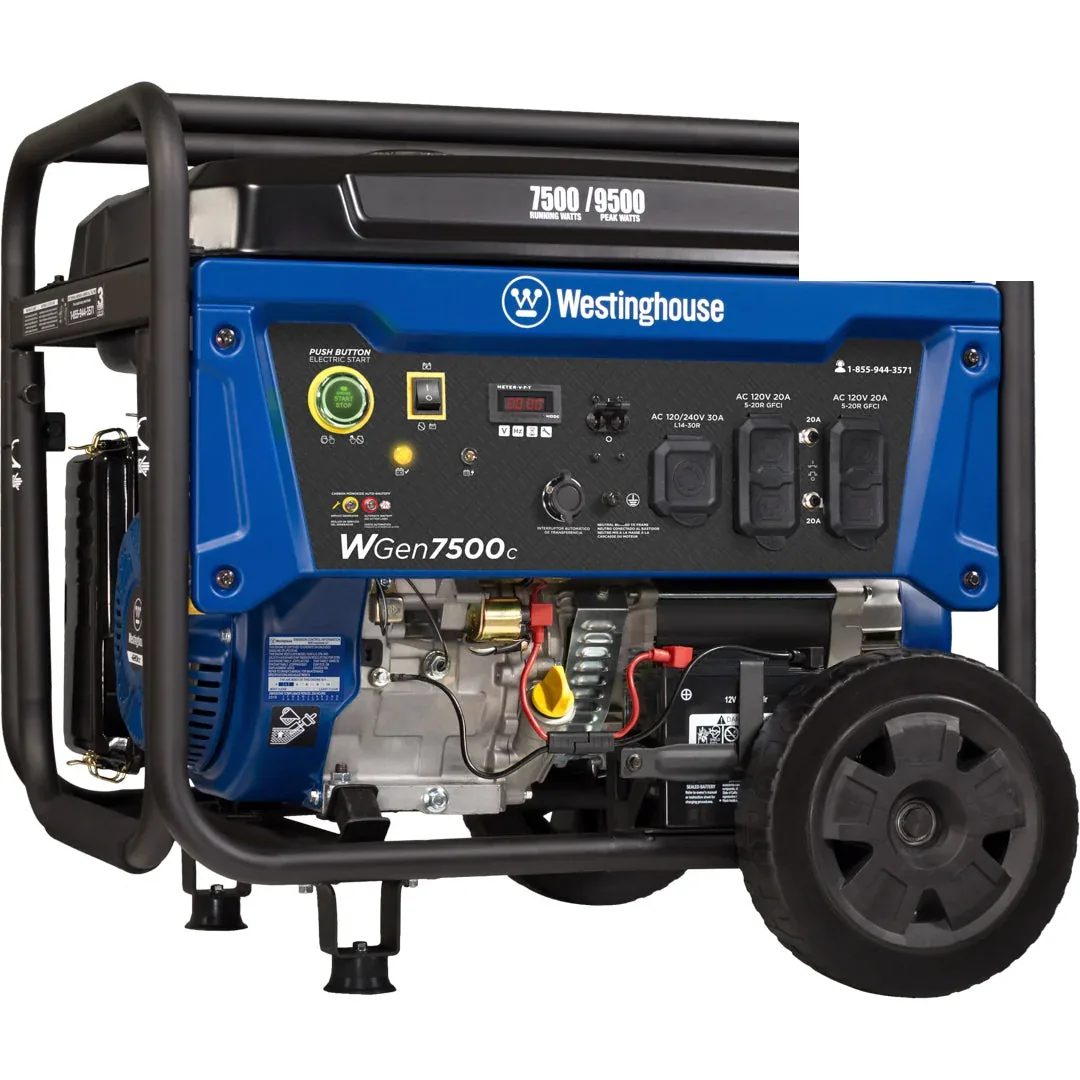
Westinghouse WGen7500c
~$1,199

Portable Generator · Gasoline · 72 dB

Westinghouse WGen7500c

The sensible size for most houses: 7,500 running watts runs a furnace blower, fridge, sump pump and a handful of lights through a manual transfer switch or interlock, which the L14-30R outlet is built for. The c suffix is the CO-sensor version, which shuts the engine off when carbon monoxide builds up near the unit, and owners who run generators near garages say that is the feature to pay the extra $150 over the plain WGen7500 for. Electric start with a key fob and a battery float charger are in the box, so the common first-outage failure of a flat starter battery is easier to avoid. The 420cc engine is loud at 72 dBA and thirsty at about 0.6 gallon per hour at a quarter load, and it is a 197 lb frame generator you will want a flat path for. It does not run on propane, so buyers who want stored fuel that does not go stale look at the dual-fuel DF versions instead.

7,500 W / 9,500 W surge · up to well pump or a small central AC

running
7,500 W
Transfer switch
transfer-switch ready

Best for Homeowners with a manual transfer switch or interlock who want a mid-size gasoline generator with CO shutdown and electric start at a mid-range price.

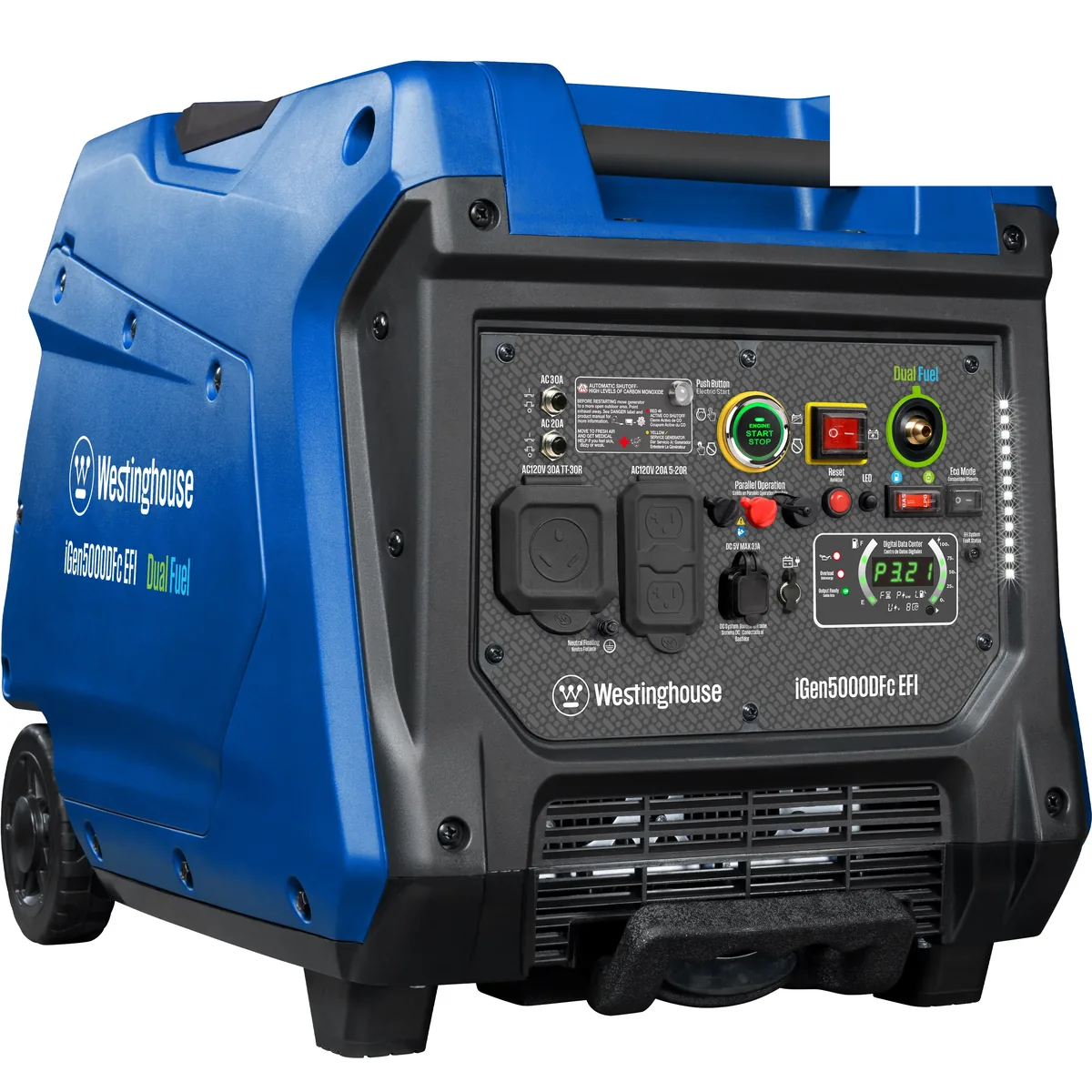
Westinghouse iGen5000DFc EFI
~$1,399

Inverter Generator · Dual Fuel (Gas/Propane) · 61 dB

Westinghouse iGen5000DFc EFI

The big Westinghouse inverter and the only one in this price class with electronic fuel injection. It makes 3,900 running and 5,000 peak watts on gasoline, 3,500 and 4,500 on propane, and the 224cc engine and 3.2 gallon steel tank give 18 hours at a quarter load on gas. That is long enough for a night of fridge, furnace and lights on one fill. The wheels, the key-fob start and the way EFI starts cleanly in cold weather without a choke dance all get good reports. Weight and noise are the complaints. Westinghouse lists it at 111 lbs on the spec sheet and 105.8 in its marketing copy, and its own noise figures disagree, so the higher 61 dBA figure is the one to plan around. The 30A outlet is TT-30R, not a 240V port, so it feeds RVs but not a 240V transfer switch. At $1,399 it undercuts the Honda EU7000iS by a wide margin but is a 4 kW unit, not a 7.

3,900 W / 5,000 W surge · up to fridge, freezer and the essentials

running
3,900 W

Best for RV owners and outage-prone households who want 4 kW, EFI and propane on wheels at well under Honda or Yamaha prices.

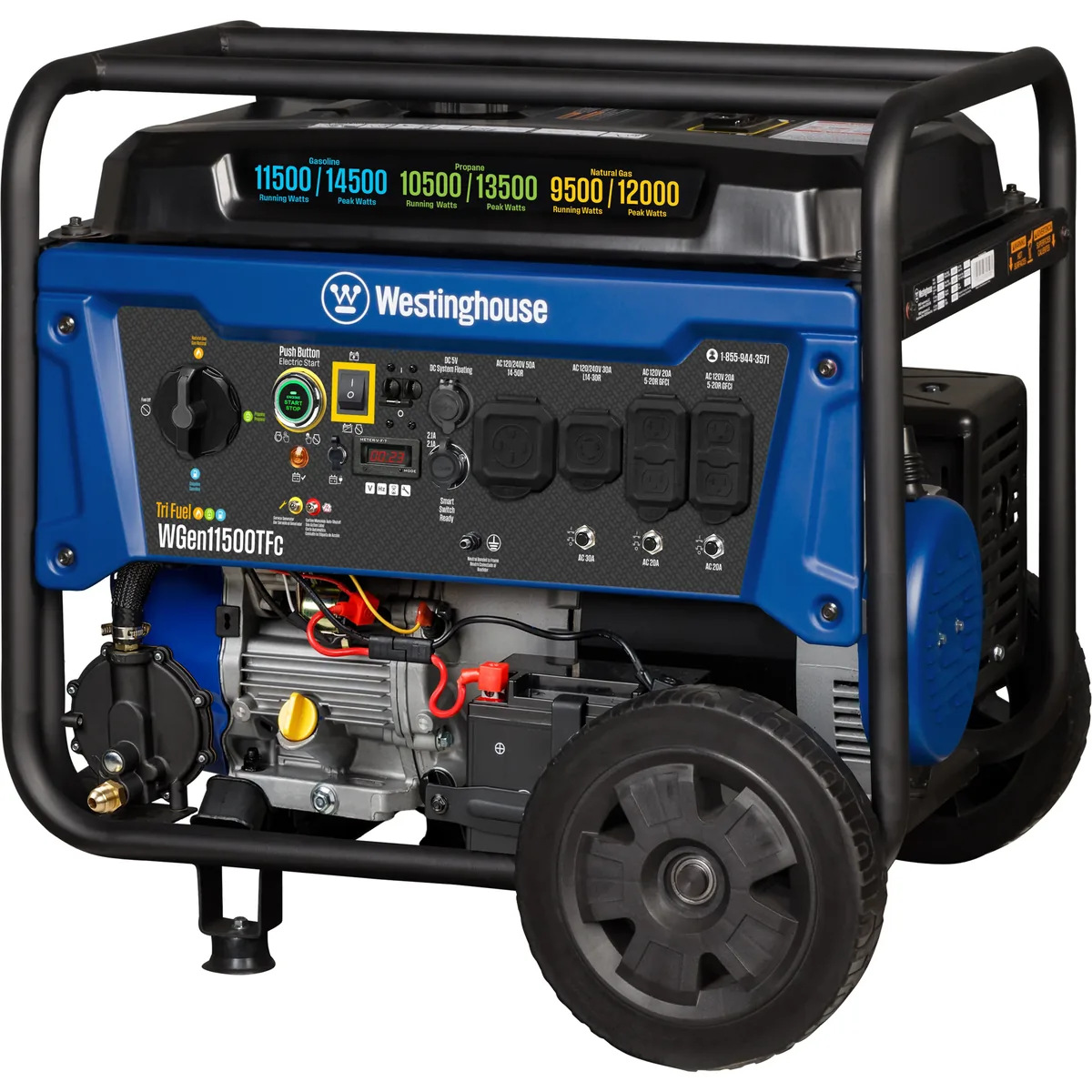
Westinghouse WGen11500TFc Tri-Fuel
~$1,699

Portable Generator · Tri Fuel (Gas/LP/NG) · 74 dB

Westinghouse WGen11500TFc Tri-Fuel

The power-user pick: hook it to your home's natural gas line through a quick-connect and you have effectively unlimited runtime without storing a drop of gasoline — the practical middle ground between a portable and a $12,000 standby install. On gasoline it makes a huge 11,500 running watts; the honest math is the NG derate to 9,500 running watts, still enough for most whole homes via the 50A outlet and an interlock. Remote start, CO sensor, and a 9.5-gallon tank round it out. Owner notes: NG performance depends on an adequately sized gas supply, and some units sputter or won't start on NG even where a twin runs fine. It's also a 230-lb beast and mid-70s dB loud, and Westinghouse's shift toward mail-in warranty service worries owners of a machine this heavy.

11,500 W / 14,500 W surge · up to well pump or a small central AC

running
11,500 W
Transfer switch
transfer-switch ready

Best for Storm-prone homeowners who want unlimited-runtime whole-house backup without a standby install.

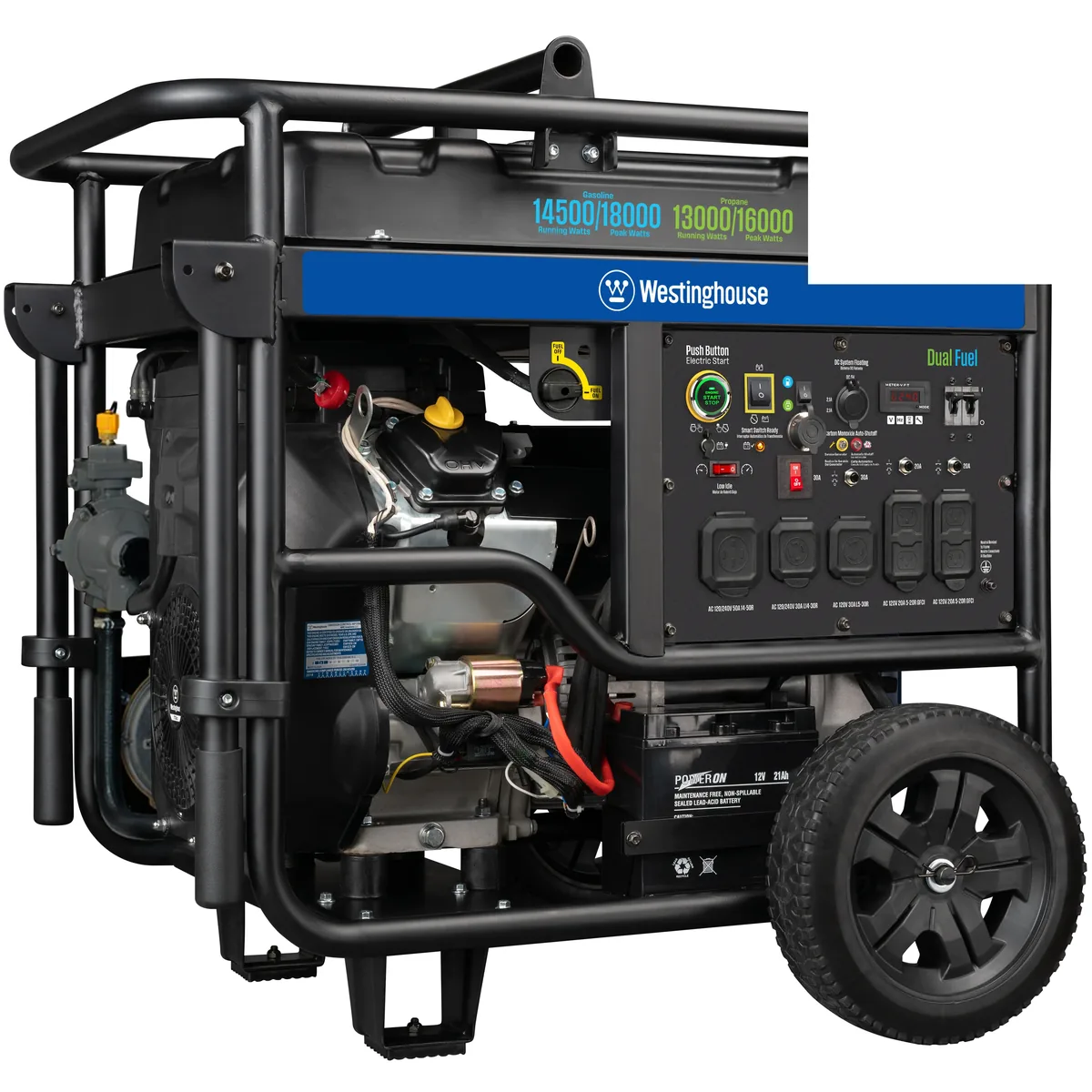
Westinghouse WGen14500DFc
~$3,499

Portable Generator · Dual Fuel (Gas/Propane) · 74 dB

Westinghouse WGen14500DFc

Westinghouse's biggest gas-and-propane portable, for the house where a 9,500 to 12,000 watt unit will not start the central air. It makes 14,500 running watts on gasoline and 13,000 on propane, with 18,000 peak, from a 713cc V-twin. The 14-50R outlet means a 50-amp transfer switch or a 6-50 cord feeds the panel, and copper windings with THD at or below 5% are kinder to electronics than the 23% units. It is also a very big machine: 352 lbs, 74 dBA, no recoil backup, and a 20 lb propane cylinder runs it only about four hours at half load, so a dual-fuel plan needs a larger propane tank. At $3,499 it costs about what a mid-size standby unit does before the transfer switch and install, so the choice comes down to whether you will drag it out and refuel it during a storm.

14,500 W / 18,000 W surge · up to well pump or a small central AC

running
14,500 W
Transfer switch
transfer-switch ready

Best for Larger homes that want whole-house portable power through a 50-amp transfer switch and will fuel it manually or from a big propane tank.