Best Portable Power Stations
Power stations — often marketed as solar generators — are big lithium batteries with AC outlets: silent, emission-free, and the only backup power that's safe to run indoors. No fuel, no maintenance, no pull cord; charge from the wall, your car, or solar panels. Capacity is the number to watch: watt-hours on the label divided by your load's watts is how long the lights stay on.
Outage Geek tracks 17 power stations from 6 brands, priced $449 to $4,999. The highest owner rating in the group belongs to the DJI Power 1000 V2 at 4.8★, and the most affordable is the Bluetti AC180 at $449. Compare them all below.
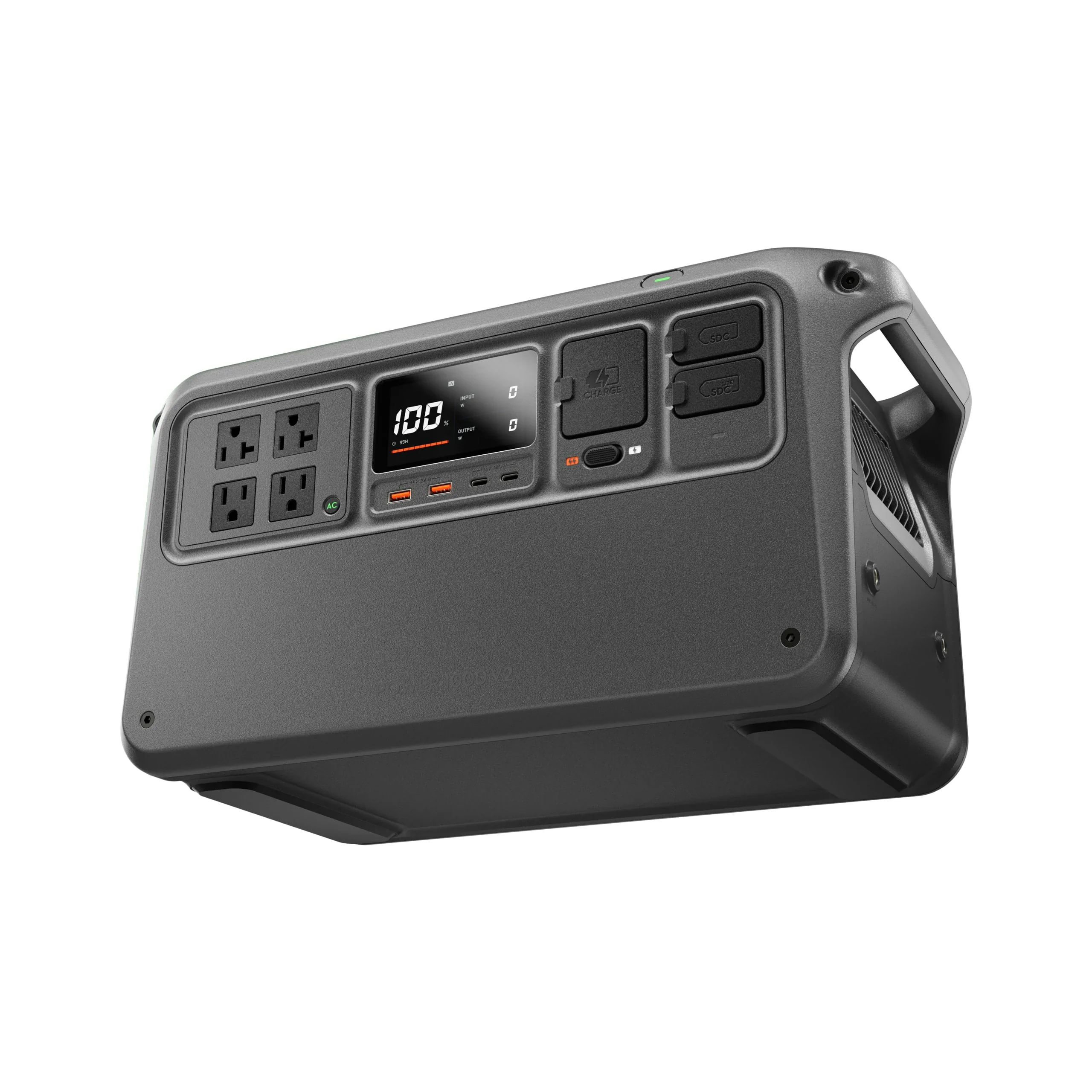
The drone company's second-gen power station, and the sleeper hit of the category - reviewers keep reaching for words like 'premium' and 'polished.' The headline specs are absurd for a 1kWh box: 2,600W continuous output (more than most 2kWh units), 4,400W peak, 0-80% charging in 37 minutes, and operation as low as 26dB - owners confirm it's effectively silent, the quietest unit in this entire roundup. V2 fixed the original's two-outlet stinginess with four AC ports and added Wi-Fi. Expansion runs to 11.2kWh via 2kWh add-on packs. The quirks are DJI-flavored: solar charging requires a proprietary MPPT adapter dongle rather than native XT60 ports, the app is minimal compared to EcoFlow's, and the SDC ports are really designed around fast-charging DJI drone batteries. Warranty is 3 years, extending to 5 if you register in the app.
EcoFlow
EcoFlow DELTA 3 Plus
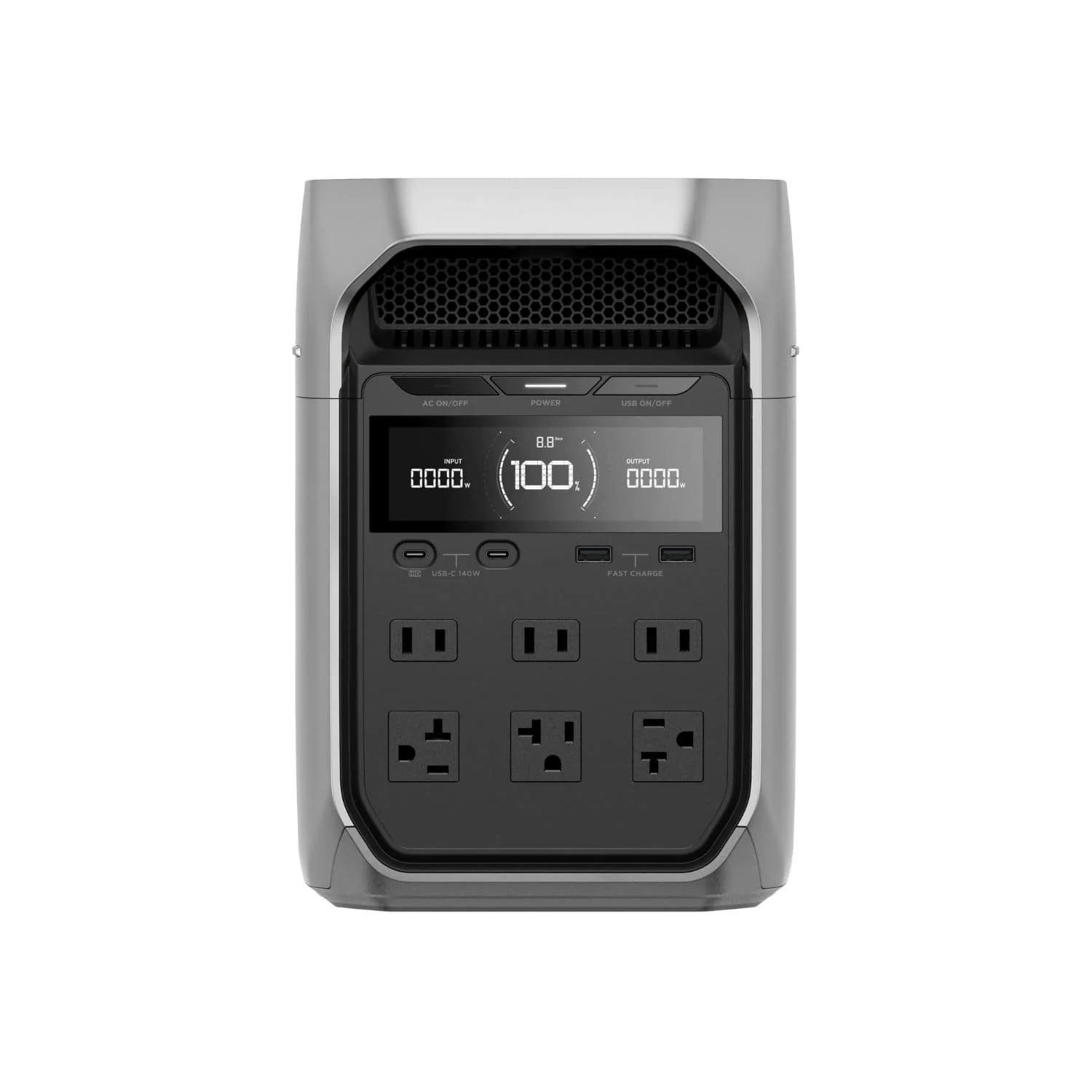
The default answer when someone asks r/portablepowerstations for a 1kWh backup unit. The killer feature owners rave about is the 10ms UPS switchover - people literally run NAS boxes, routers, and CPAP machines off it full-time and never notice an outage. It charges 0-100% in 56 minutes, which sounds like marketing until you watch it happen. Real-world quirks: the 30dB quiet claim only holds at idle - fast AC charging spins the fan up noticeably, so owners set a slower charge rate in the app at night. The app requires an EcoFlow account, which annoys the privacy crowd. X-Boost lets it fudge 2200W resistive loads (space heaters, kettles), but induction motors still trip it. Expansion to ~5kWh via extra batteries is handy, though the add-on packs cost almost as much as the unit on sale.
EcoFlow
EcoFlow DELTA Pro 3
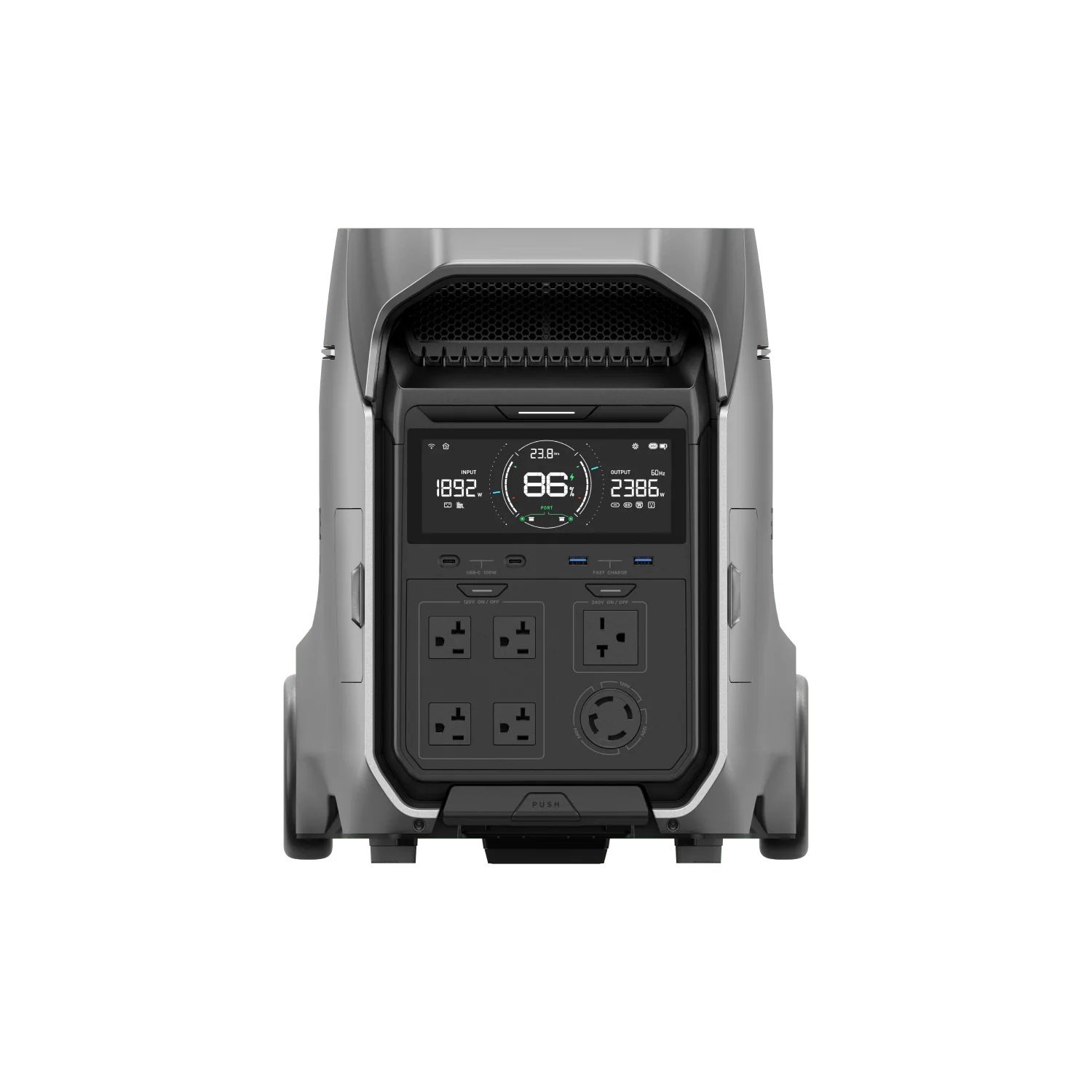
The single most-recommended whole-home-capable unit that still rolls on wheels. What sells it: 4000W with real 120/240V split-phase from one box, so it backfeeds a transfer switch and runs a well pump or mini-split without pairing two units. Owners consistently praise how quiet it stays at partial load (30dB claimed) and the 10ms UPS. The recurring complaint thread is idle drain - leaving AC output on burns tens of watts, so a 4kWh charge quietly evaporates over days if you use it as a dumb UPS without tweaking settings. It is 113 lbs; the wheels and handle work on pavement, not stairs. A few owners report warranty friction outside the mainland US, and early-firmware horror stories still circulate on Reddit, so update before first use. Street price has fallen from $3,699 to low-$2,000s, which changed the calculus versus F3800 Plus.
EcoFlow
EcoFlow DELTA Pro Ultra
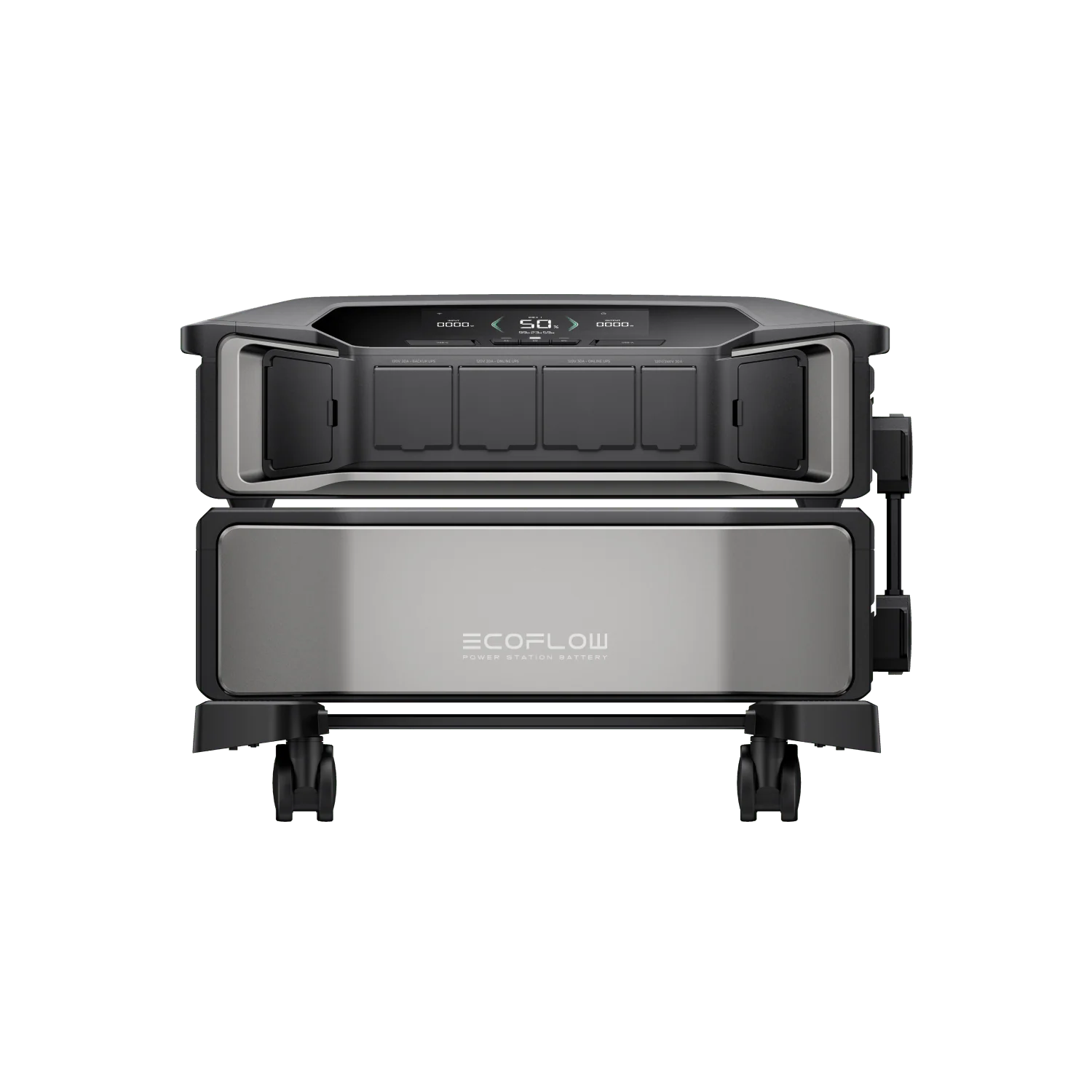
EcoFlow's modular whole-home flagship: a 7200W inverter head that stacks up to 15 batteries for 90kWh, or triples to 21.6kW output. Price shown is the inverter + one 6.1kWh battery; the Smart Home Panel 2 (roughly $1,500-1,900 more plus electrician) is what unlocks the automatic 10-circuit backup owners actually buy this for. Owner sentiment is mostly awe at capability with recurring gripes about the ecosystem tax - every accessory is proprietary and priced accordingly. Fan noise under heavy charge or load is louder than the marketing suggests, and at 164 lbs assembled you position it once and leave it. The 120A LRA rating starts most 3-ton air conditioners, which smaller stations simply cannot do. People cross-shop it against a Powerwall 3 install; the Ultra wins on no-permit portability, loses on per-kWh cost at scale.
EcoFlow
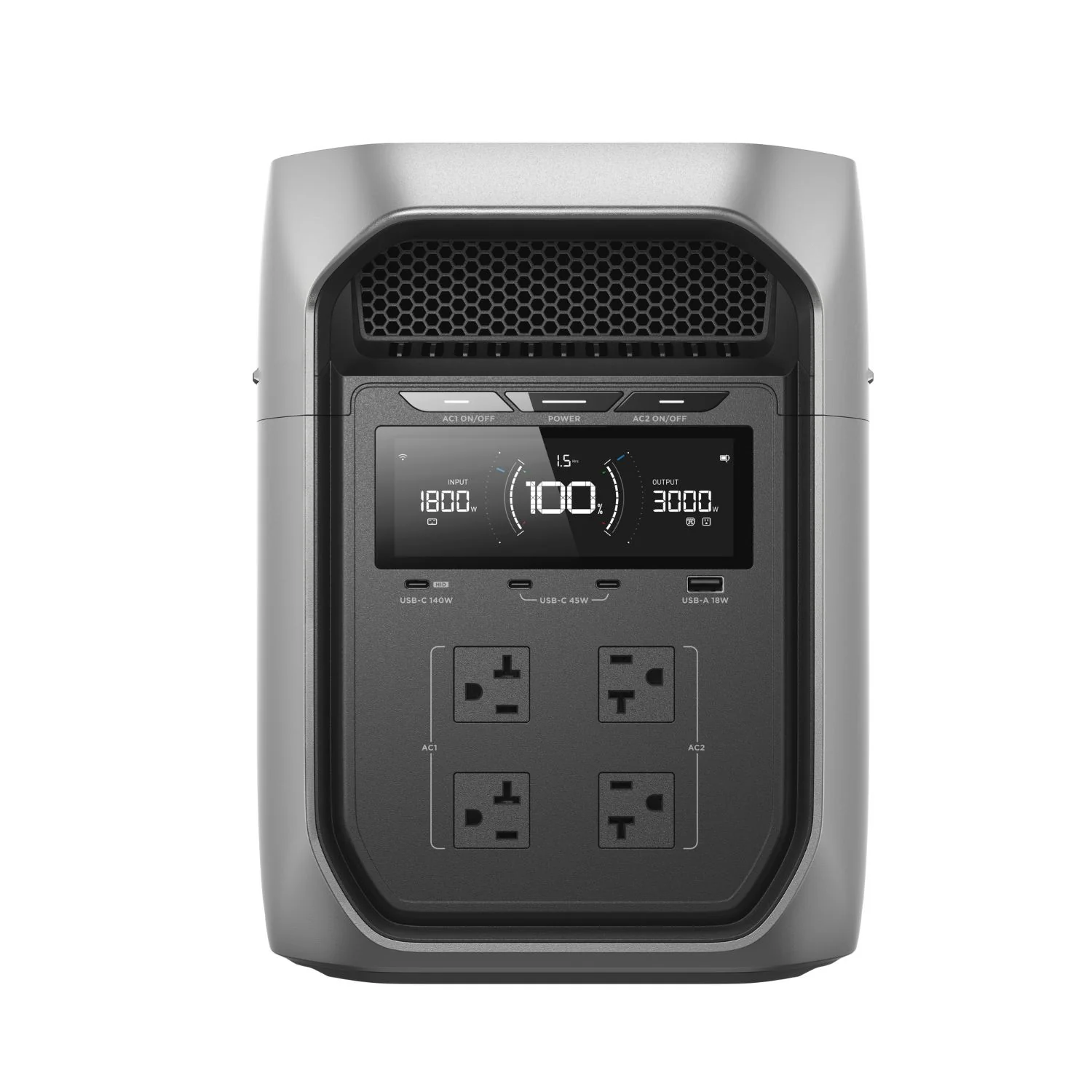
EcoFlow DELTA 3 Max Plus
The 2025-2026 refresh of EcoFlow's mid-size class and a current 'best for home backup' pick in several tested roundups. You get 2kWh and a 3000W inverter - enough to run a microwave and fridge simultaneously - at a price that undercuts the old Delta 2 Max's launch by hundreds. Owners like the practical stuff: 0-80% in about 68 minutes, X-Boost handling 3800W resistive loads, and expansion to 10kWh if backup needs grow. The dual side handles make the 49-lb carry manageable for one person. Quirks from owner threads mirror the rest of the Delta 3 line: fan spins up audibly during fast charging, idle drain means you shouldn't store it with AC output enabled, and the app occasionally loses Wi-Fi pairing until you power-cycle. Solid pick if 1kWh feels tight but 4kWh-class weight and price feel excessive.
Jackery
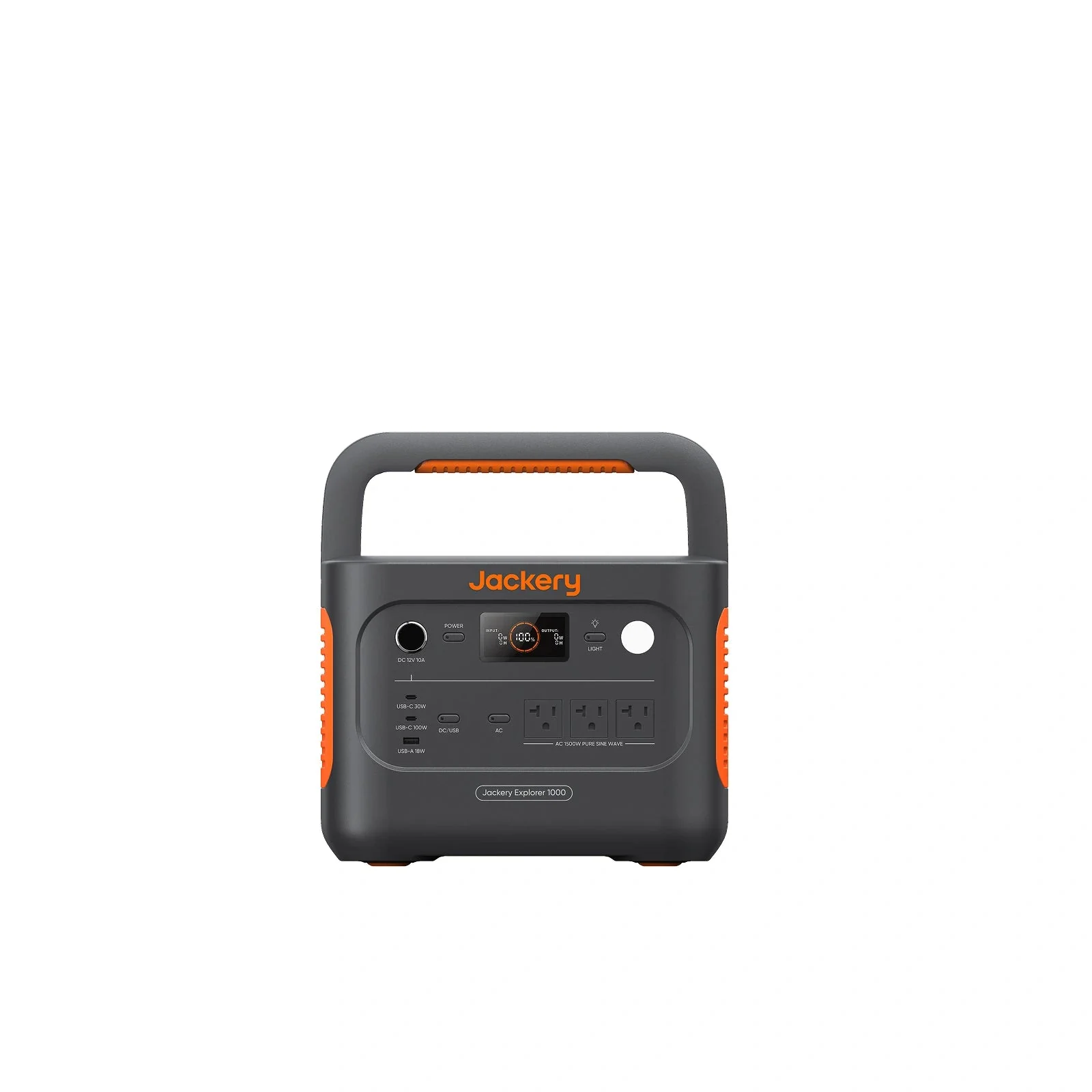
Jackery Explorer 1000 v2
Jackery's LiFePO4 do-over of the best-selling power station ever, and the one people actually mean when they say 'just get a Jackery.' At 23.8 lbs it's several pounds lighter than every 1kWh rival, which is why campers and older buyers gravitate to it. The 1500W inverter (3000W surge) runs coffee makers and microwaves fine; owners confirm the quiet-fan claim - it's noticeably more pleasant than an AC180 under load. Real-world knocks: there's no expansion port at all, the 20ms UPS switchover is fine for a fridge but not marketed for computers, and the 1500W output trails the 1800-2000W competition on paper. It lives on sale - $429-499 happens monthly - so nobody should pay list. The foldable handle and genuinely idiot-proof interface make it the one to recommend to non-technical relatives.
Jackery
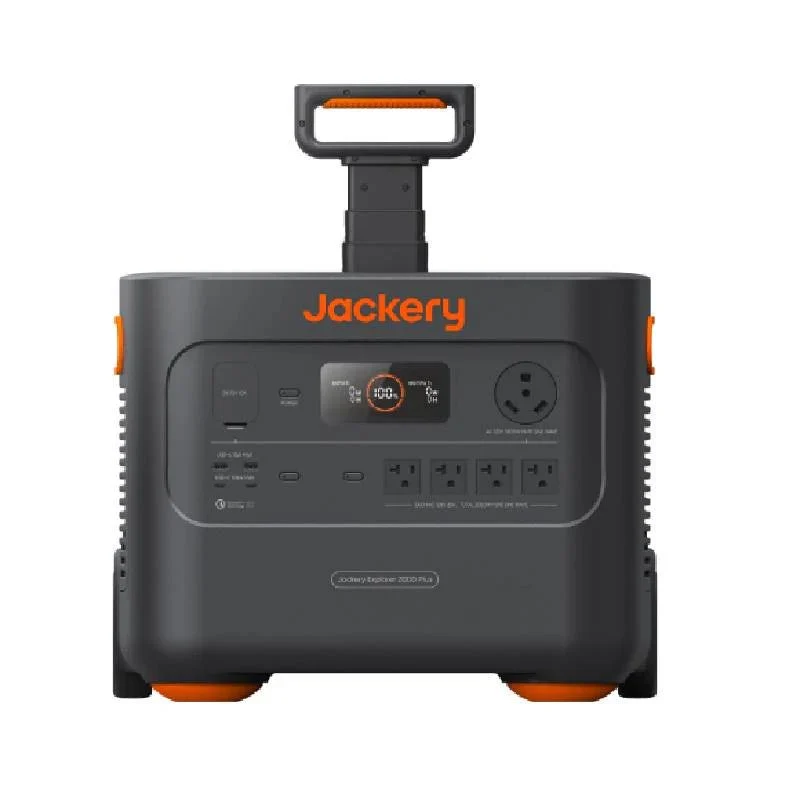
Jackery Explorer 2000 Plus
The workhorse of Jackery's lineup and a fixture in RV and home-backup threads since 2023 - still current because Jackery kept cutting the price instead of replacing it. A 3000W inverter with a TT-30 RV outlet plus expansion to 12kWh (24kWh with two units paired for 240V) covers a lot of scenarios. Owners consistently call out how quiet it is - roughly 30dB under moderate load - and the telescoping handle and wheels, because 61.5 lbs is not a carry-it-around weight. The gripes: expansion packs run ~$1,000+ each, making big builds pricier than a Bluetti stack; the app is functional but bare-bones; and the TT-30 is 25A rather than a full 30A. Deal-watchers note it hits $999 several times a year, at which point it's arguably the best $/W value in the 2kWh class from a tier-one brand.
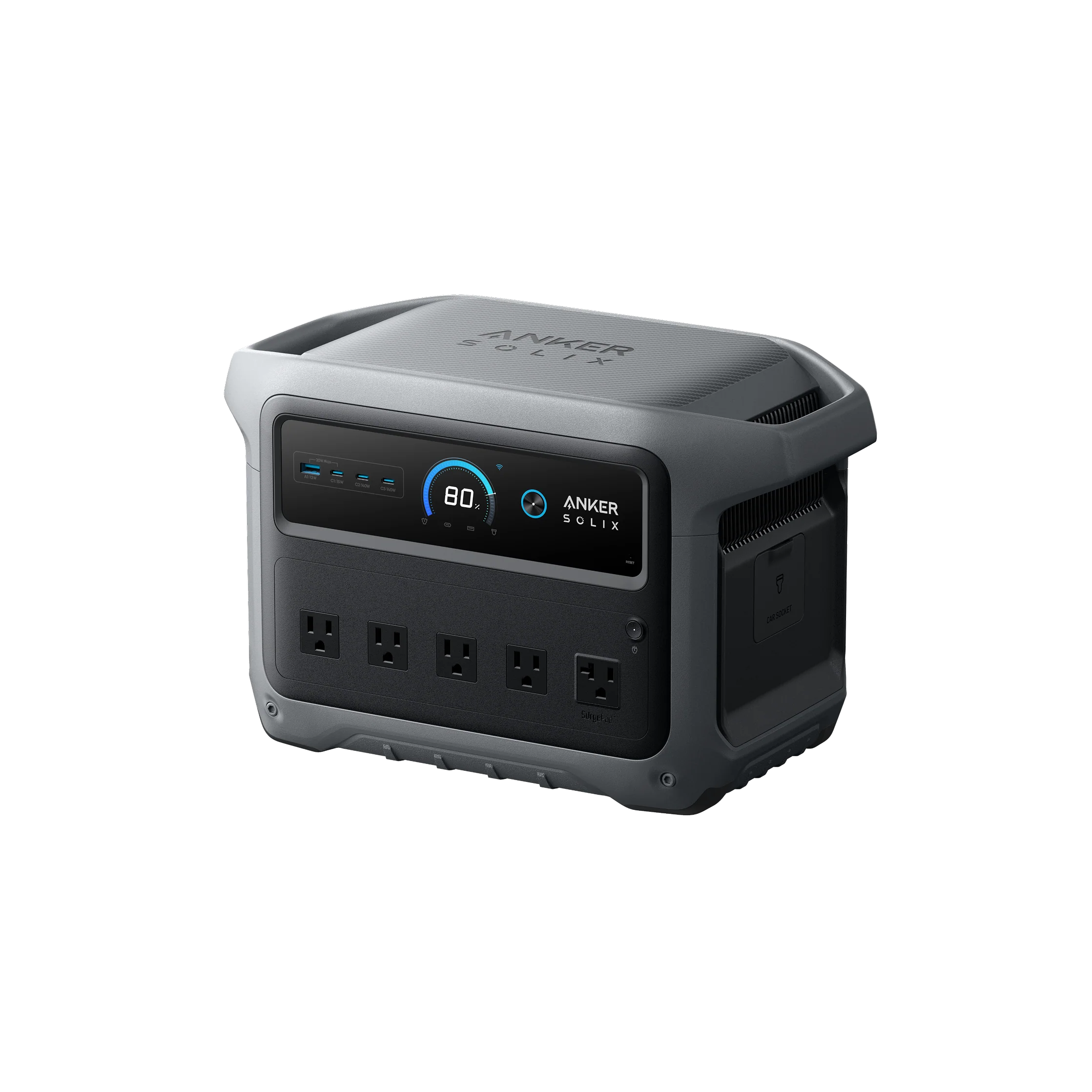
The 2026 'best overall' pick on multiple tested lists, and the current answer in the sub-$500 1kWh knife-fight. Anker took the already-popular C1000, cut 3.5 lbs, bumped output to 2000W, added a 10ms UPS mode, and kept HyperFlash charging (full in 49 minutes). Owners describe it as nearly silent at low loads - the 20dB claim holds for trickle duty, though the fan is audible during 1,600W charging. The catch that surprises upgraders: Gen 2 dropped expansion support entirely - the old BP1000 battery is not compatible, so 1kWh is what you get forever. Other nitpicks from owner threads: USB-A is a weak 12W, and the plastic shell feels less premium than the weight suggests. At its perpetual ~$499 street price, it's the strongest pure value in portable power right now.

The enthusiast favorite for DIY whole-home backup, and the unit r/Anker and diysolarforum threads obsess over. 6000W split-phase with both a NEMA 14-50 and L14-30 on the face means it plugs straight into a generator inlet - no adapters - and can trickle-charge an EV. The Plus revision added 3,200W solar input and gas-generator charging input, fixing the two biggest F3800 complaints. Anker's permanent price cut to $2,499 (from $4,799 launch) made it the per-kWh bargain of the big-battery class. Owner quirks: a documented buzzing noise traced to a ferrite bead that firmware only partially fixed, fans that are unapologetically loud during 2,400W charging, and Home Power Panel installs that depend on finding a willing electrician. Support experiences vary wildly in owner reports - some get instant advance replacements, others chase tickets for weeks.
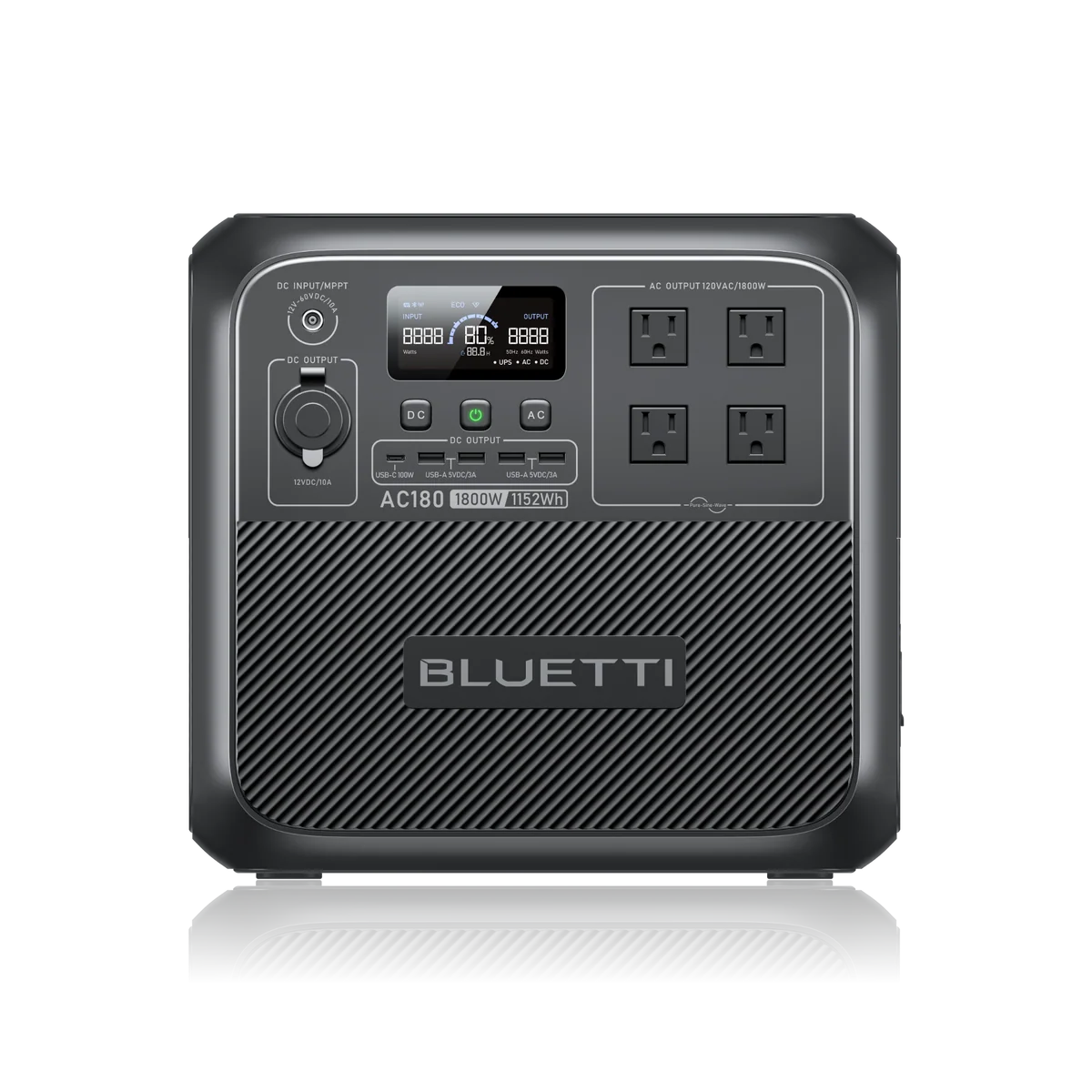
Bluetti
Bluetti AC180
The budget king of the 1kWh class - Amazon's perpetual best-seller with a review count nothing else touches. You get more capacity (1,152Wh) than the Anker or EcoFlow rivals, 1800W output with a 2,700W Power Lifting mode for heaters and kettles, and a wireless charging pad, usually for under $450. Owners are clear-eyed about the trade-offs: the fan runs early and often, even at loads where competitors stay silent - it's the single most repeated complaint in three years of reviews. The 12V DC port is a regulated but weak 10A, there's no expansion support, and at 35.3 lbs it's a full 10 lbs heavier than the Jackery. But for a storm-prep box that lives in a closet and runs the fridge when needed, the price-per-Wh math has kept it the default recommendation for budget buyers since 2023.
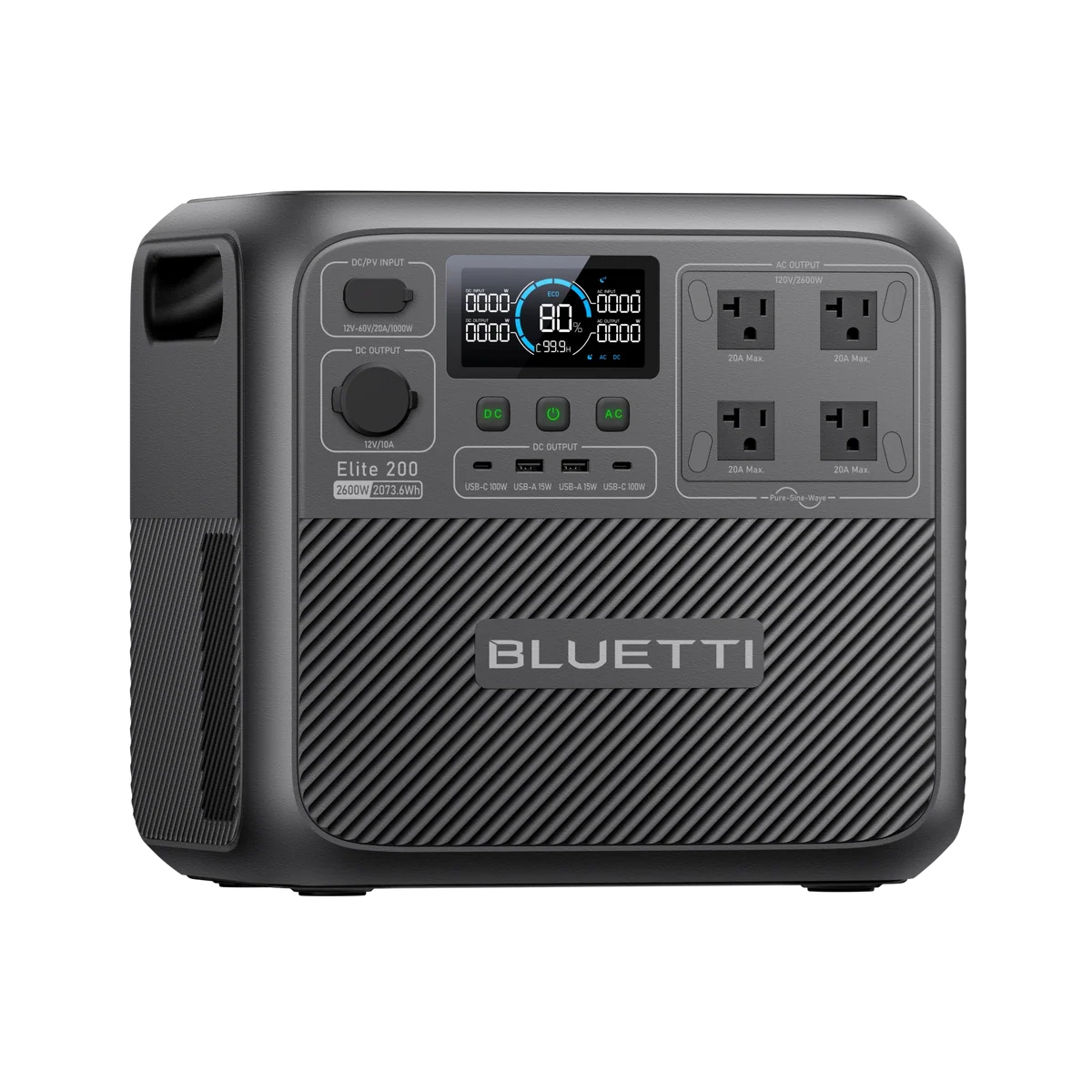
Bluetti
Bluetti Elite 200 V2
Bluetti's 2025-generation 2kWh flagship and the unit that reset expectations for what $999 buys: a 6,000-cycle LiFePO4 pack (cycle it daily and it still holds 80% in 2043), a stronger 2,600W inverter than anything else in class, and a chassis nearly 10 lbs lighter than the AC200L it effectively replaces. Vanlife reviewers in particular have adopted it as the default build battery. Owners praise the 50-minute 0-80% charging and the noticeably better fan tuning versus older Bluettis - it's not silent, but it no longer howls at 200W loads. The trade-offs are real though: no expansion port at all (that's what Apex 300 is for), solar input caps at 1,000W, and there's no wireless pad or fancy extras. If your capacity needs are fixed at ~2kWh, this is arguably the best-engineered unit in the segment right now.
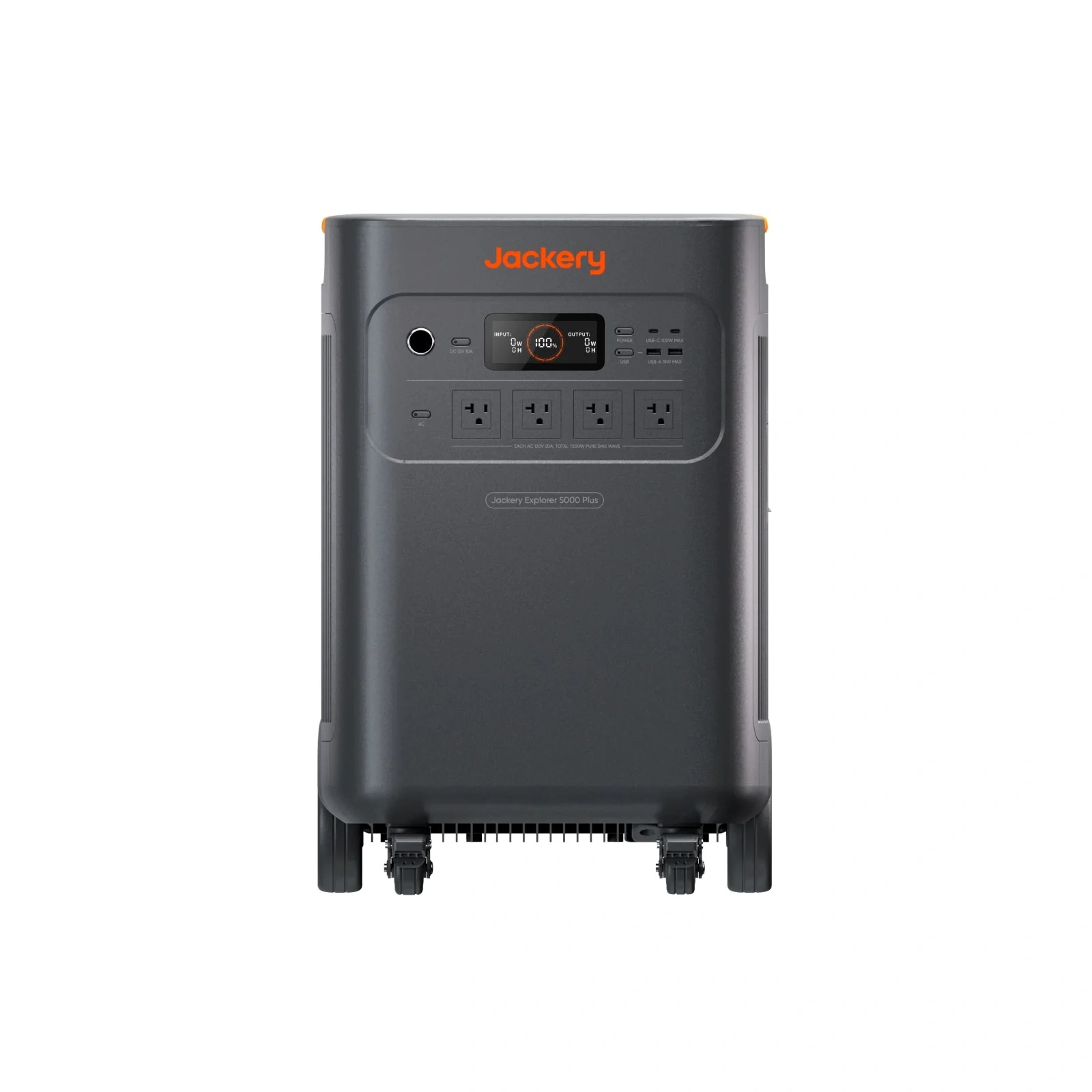
Jackery
Jackery Explorer 5000 Plus
Jackery's 2025 entry into whole-home territory: 5kWh, a 7200W split-phase inverter, and a claimed 0ms UPS switchover - the spec that gets it recommended for sump pumps and server closets. It expands to 60kWh with battery packs and pairs with Jackery's transfer-switch kits for panel integration. Costco periodically sells it at $2,799, which owners treat as the buy signal since list is $4,299. The good: 240V from a single unit (rare - EcoFlow needs the bigger Pro 3 for that), suitcase wheels that handle gravel, and genuinely fast 4000W solar charging. Owner complaints center on the accessory economics - the transfer switch kit, battery packs, and parallel box add up fast - plus a 134.5-lb chassis you will not lift alone, and Wi-Fi setup that multiple reviewers found finicky. Newer to market, so long-term reliability data is thinner than the 2000 Plus.

Anker's suitcase-style 2kWh veteran - launched 2022, still sold in 2026 because constant $799-999 deals keep it moving. The rolling-luggage design with a pull handle is the feature owners mention most; 67 lbs rolls fine but the top-mounted ports mean bending over a lot. SurgePad pushes it to 3600W briefly, and the TT-30 makes it a natural for smaller RVs. GaNPrime charging does 0-80% in 1.4 hours, which was headline speed in 2022 and is merely fine now. Owner threads flag its age honestly: no UPS mode (there's a delay on switchover), the display washes out in sunlight, solar input caps at 1000W, and the app is the older Anker platform with fewer controls. Reliability sentiment is strong though - lots of three-year owners with zero issues, and the 5-year full-device warranty is unusual for its generation.
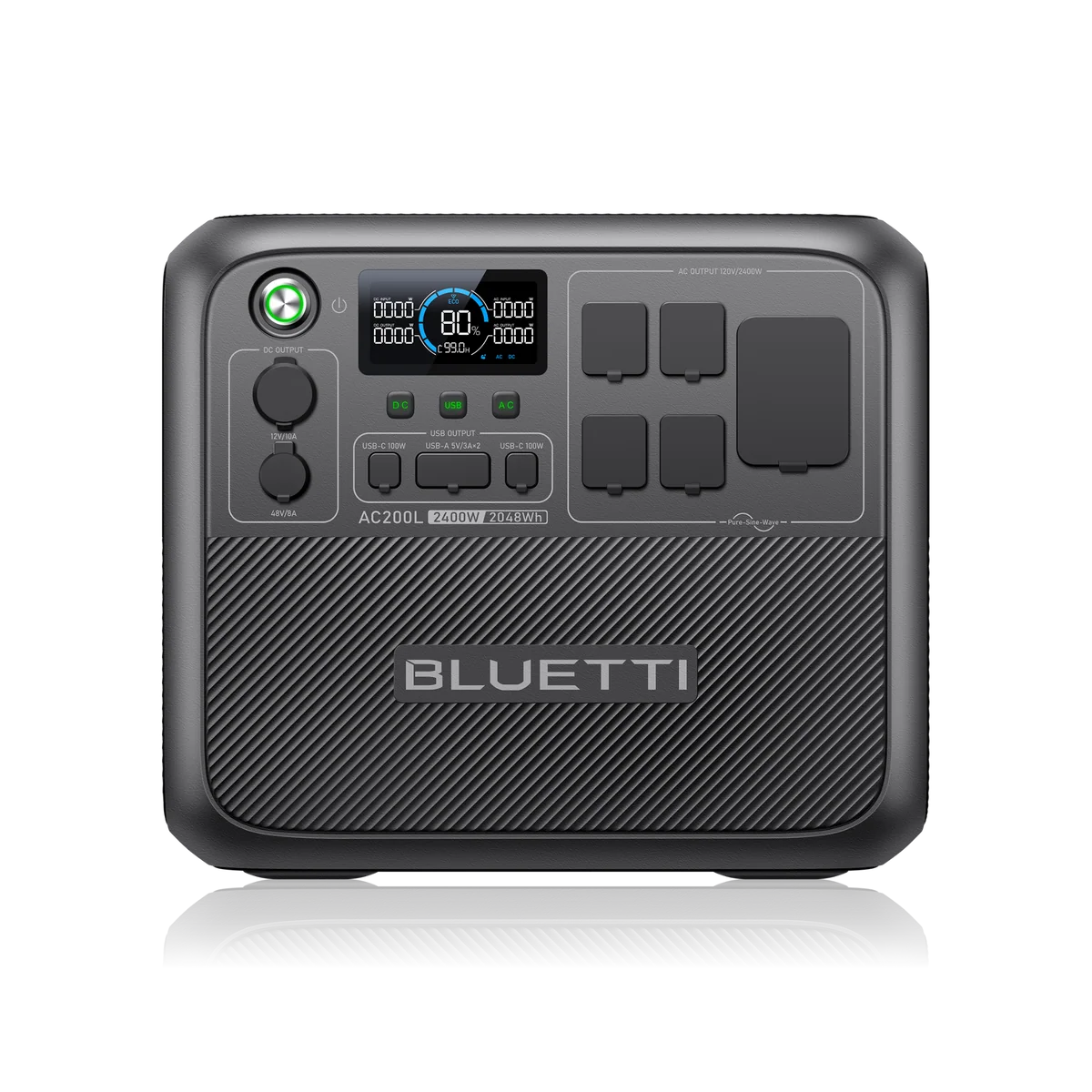
Bluetti
Bluetti AC200L
Bluetti's mainstream 2kWh unit and the expandability play at this price: it accepts B300K packs (up to ~8kWh) that also work with the bigger AC500 and Apex 300, so nothing you buy gets orphaned. The 30A TT-30 outlet plus a 48V RV DC port make it quietly one of the best RV units under $1,000. A 2,400W inverter with 3,600W Power Lifting covers tools and kitchen gear. Owner sentiment: solid hardware, middling software - app pairing drops and slow firmware updates are recurring gripes, and the cooling fans are audible under load in classic Bluetti fashion. At 62.4 lbs with no wheels, repositioning it is a deliberate act. Street pricing settled around $899 in 2026, and the periodic $799 deals make it a strong alternative to the Jackery 2000 Plus when expansion cost matters more than quietness.
Bluetti
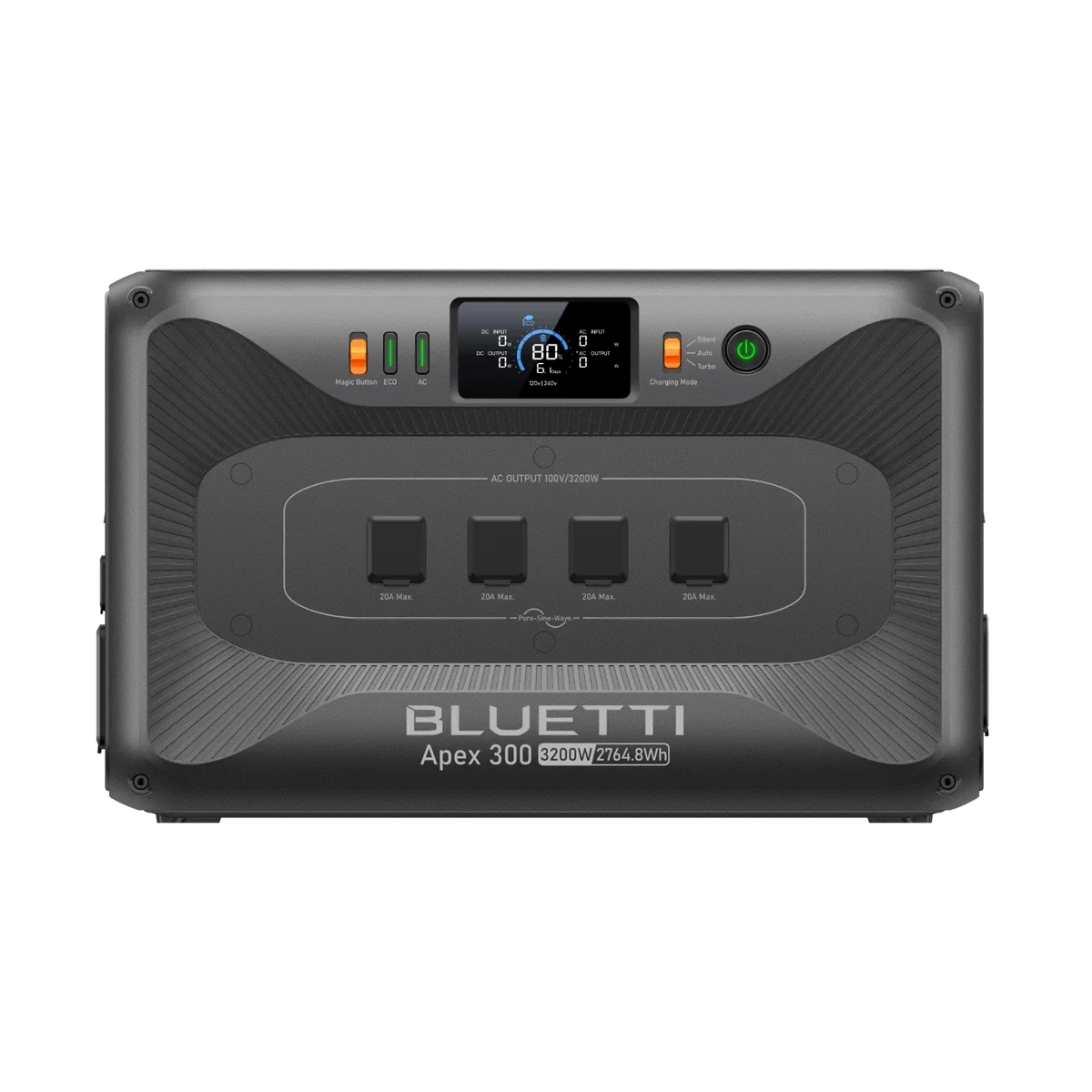
Bluetti Apex 300
Bluetti's 2025 modular flagship and their real answer to the F3800 Plus: 3,840W continuous (7,680W surge) with simultaneous 120/240V output, black-start capability, and expansion to a frankly absurd 58kWh using the same B300K packs the AC200L takes. The 6,000-cycle cells carry a claimed 17-year lifespan. Pro reviewers praise how confidently it starts well pumps and RV air conditioners, and the $1,529 street price undercuts every 240V-capable rival. Owner-reported quirks skew new-platform: frequent firmware updates (mostly improvements, occasionally breakage), accessories like the solar controller and home-integration hub trickling out on their own schedule, and 83.8 lbs with no built-in wheels - the optional trolley is basically mandatory. Fan noise under heavy charge is present but better-mannered than older AC-series units. The ecosystem bet looks smart if Bluetti keeps shipping the promised add-ons.
Bluetti
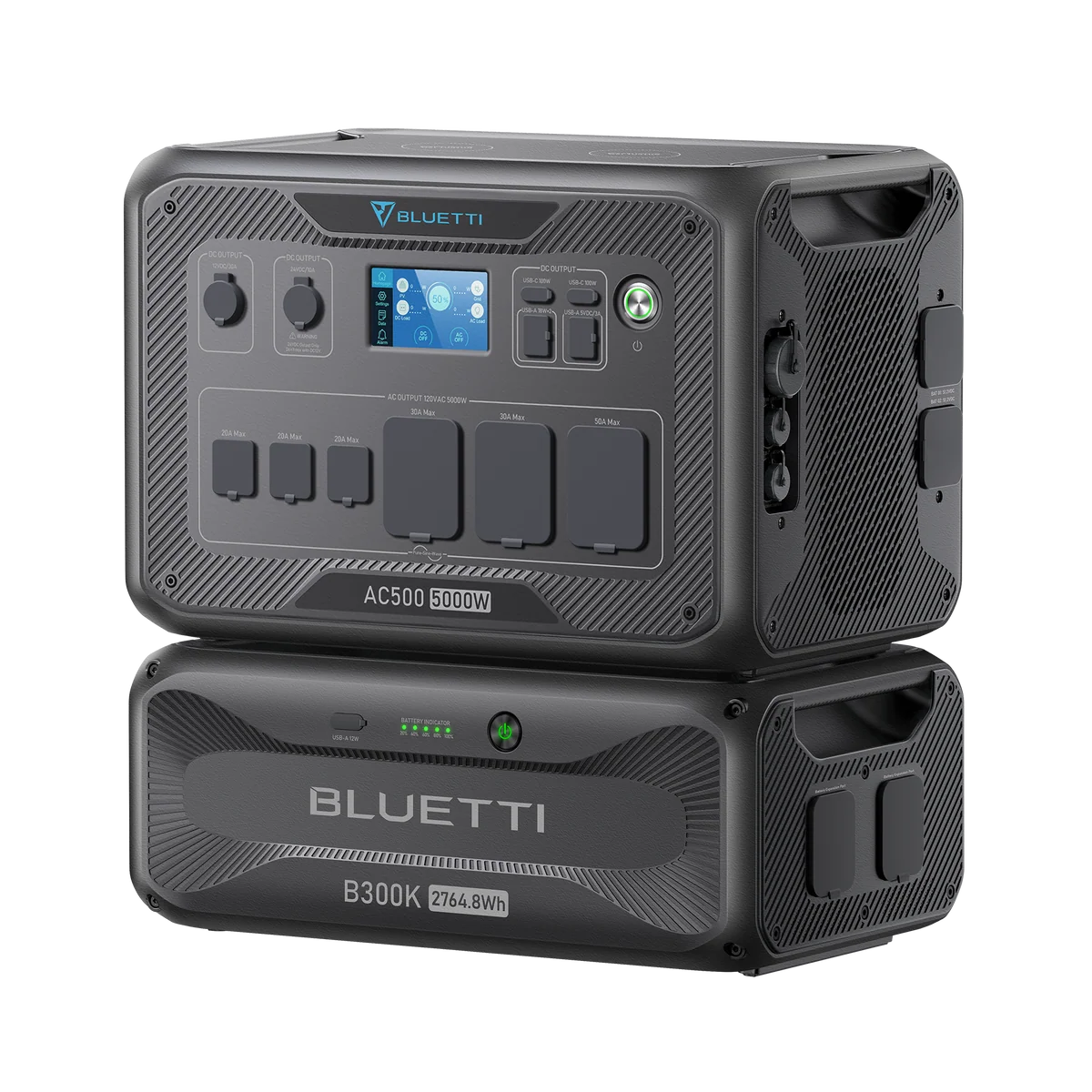
Bluetti AC500 + B300K
Bluetti's modular tower system: a 5,000W inverter head (10,000W surge - the strongest surge rating of any portable here) that stacks on B300K batteries. The 50A NEMA 14-50 outlet plus L14-30 makes transfer-switch and RV-pedestal hookups trivial, and two AC500s can pair for 240V and 33kWh. Costco has carried the combo, which says something about mainstream acceptance. Owners like the swap-ability - batteries charge to 80% in 45 minutes and detach for transport, since the two-piece design splits an unliftable 131 lbs into two 65-lb pieces. Recurring complaints: the fans are genuinely loud at high charge rates, Wi-Fi connectivity drops, and the 4-year/3+1 warranty structure trails the 5-year industry standard. It's older than the Apex 300 but the 5kW inverter and 14-50 outlet still earn it recommendations for heavy transfer-switch duty.
Goal Zero
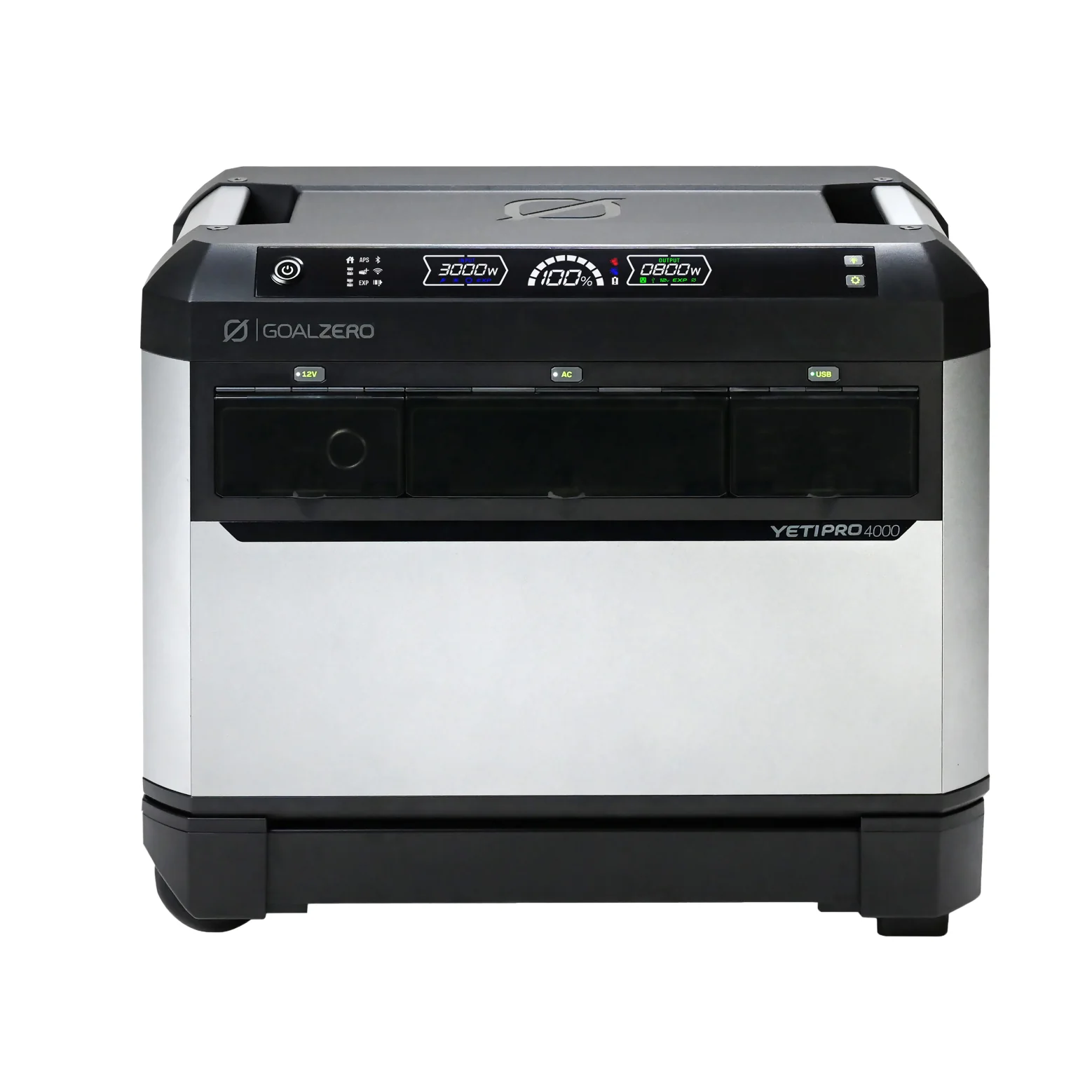
Goal Zero Yeti Pro 4000
Goal Zero's 6th-gen flagship, built like outdoor equipment rather than consumer electronics: aluminum housing, magnetic port covers that snap shut against dust and rain, and UL2743 certification for outdoor portable use - it's the overlanding crowd's pick for a reason. 3,994Wh with 3,600W output (7,200W surge), 3,000W of solar input, and expansion via Tank Pro batteries to roughly 20kWh. It pairs with Goal Zero's Haven 10 transfer switch for 10-circuit home backup. Owners consistently note the fans are quieter than expected for the size, and the build quality feels a class above. The complaints are equally consistent: it's expensive per kWh versus EcoFlow and Anker, Tank Pro expansion batteries cost more than competitors' packs, there's no 240V from a single unit, and Goal Zero's app - historically the brand's weak spot - is improved but still behind EcoFlow's.