57 units · 22 brands · updated September 2026
What actually stays on when the power goes out
Whole-home standby units, open-frame portables, quiet inverters, power stations, and wall batteries in one sortable table, $449 to $24,000. Running watts, surge watts, decibels, fuel, and runtime — plus what owners complain about once the novelty and the first tank are gone.
Every unit we track
Narrow by brand, type, fuel, and price, or sort the whole catalog by watts. Tick the box on any three and their spec sheets land in one table.
57 units found

Honda
Honda EU2200i
The default answer to 'which small generator should I buy' for going on two decades. The EU2200i's GXR120 engine, 47-lb carry weight, and 48-57 dB voice-level noise make it the campground and tailgate standard, and the current version adds Bluetooth monitoring, CO-MINDER shutdown, and a fuel shutoff valve so you can run the carb dry before storage — a direct response to the gummed-carburetor complaints that dominate owner threads for every small generator, Honda included. Owners justify the price with resale value (used units hold 70%+ of MSRP) and start-on-second-pull reliability years in. The honest knocks: it's double the cost of credible clones, 1,800 running watts won't touch most RV air conditioners without a parallel second unit, there's no fuel gauge, and the early-generation recall history (2018-19 fire risk) still comes up in threads.

Generac
Generac Guardian 10kW
The entry point to the Guardian line, and the one owners of smaller homes keep recommending because it bundles a 100-amp, 16-circuit transfer switch in the box. The 460cc G-Force 400 engine covers essentials — furnace, fridge, well pump, some lights — not whole-house AC, and owners are clear-eyed about that. At 61 dB it's the quietest Guardian, though people still report it's louder than they expected during weekly exercise. Owner threads praise years of flawless auto-transfers, but the recurring gripes are real: the battery, oil, and some setup parts aren't included, Evolution controller boards have a documented failure pattern, and warranty service depends entirely on how good your local Generac dealer is. Budget for install — most people pay more for wiring and gas work than for the unit.

Honda
Honda EU7000iS
The generator hurricane-country homeowners aspire to: fuel-injected GX390 engine, 5,500 running watts with 240V output for a transfer switch, electric start, and noise levels (52-58 dB) so low that owners describe running it overnight outside bedroom windows. The EFI matters twice — no carb maintenance, and roughly 16 hours from 5.1 gallons at quarter load, which owners confirm during multi-day outages. Reliability reports are as close to unanimous as generators get; Consumer Reports ranks it at the top of the class. What owners complain about: 263 pounds is a two-person or ramp job despite the wheels, the price crossed into home-standby territory (people cross-shop it against installed Generacs), it can't run on propane or NG without third-party conversion, and replacement parts are dealer-priced. If the budget survives, nobody regrets it.
Predator (Harbor Freight)
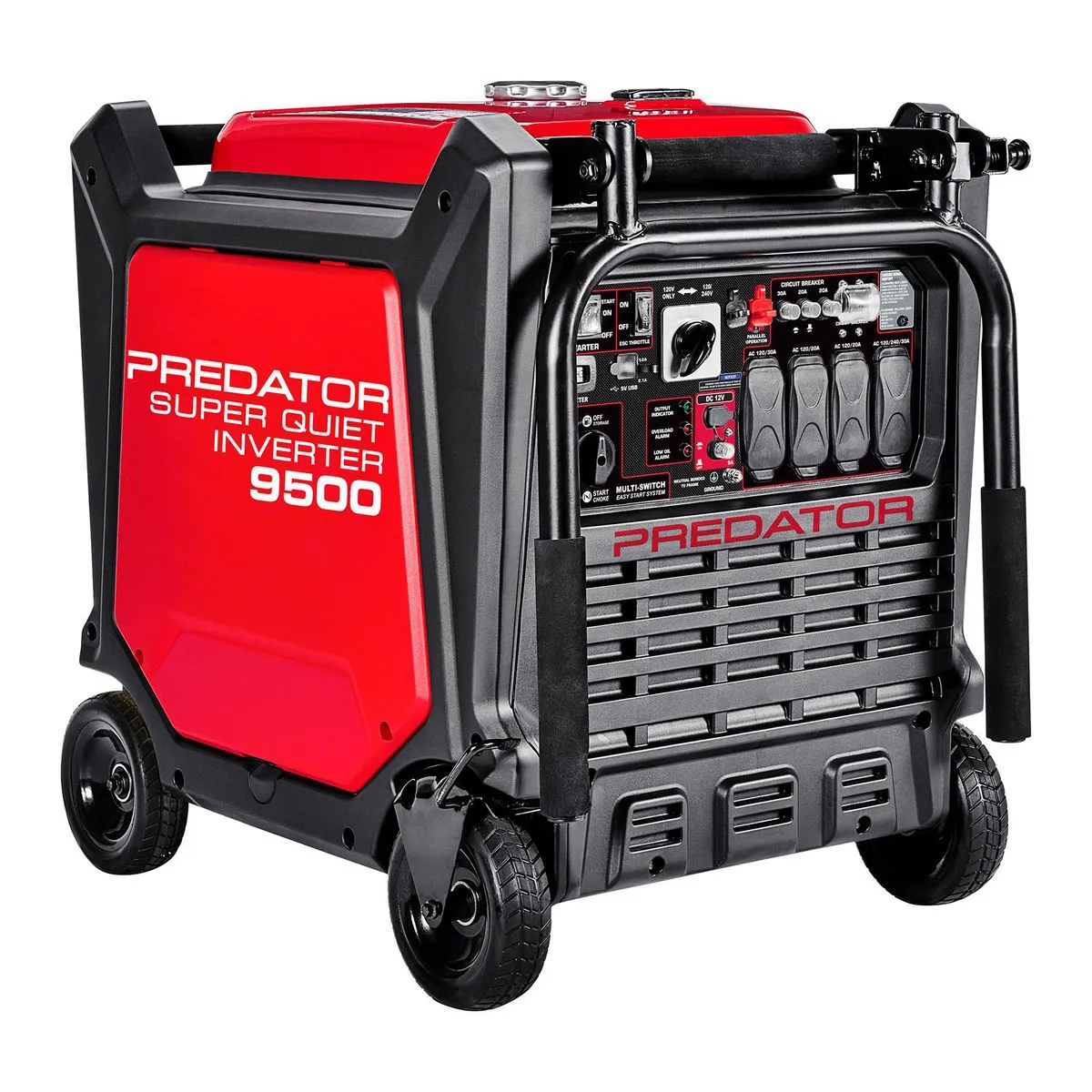
Predator 9500 Inverter
Harbor Freight's giant-killer. The Predator 9500 delivers 7,600 running watts of closed-case inverter power — EU7000iS territory plus 2,000 extra watts — at 40% of Honda's price, and the r/Generator consensus is that the hardware genuinely delivers: clean power, 67 dBA that's dramatically quieter than open frames, electric start, ESC economy mode, and 18.5-hour runtimes. Owners run whole homes through the L14-30R and an interlock. The catch everyone leads with: a 90-day warranty from a company whose service model is 'bring it to the store,' so buyers treat the extended protection plan as mandatory. Other realities from long-term threads: 257 lbs makes it the heaviest thing in its class, it's carbureted (store it dry), CO Secure occasionally false-trips in enclosed-ish spaces, and there's no dual-fuel option at this size.
Predator (Harbor Freight)
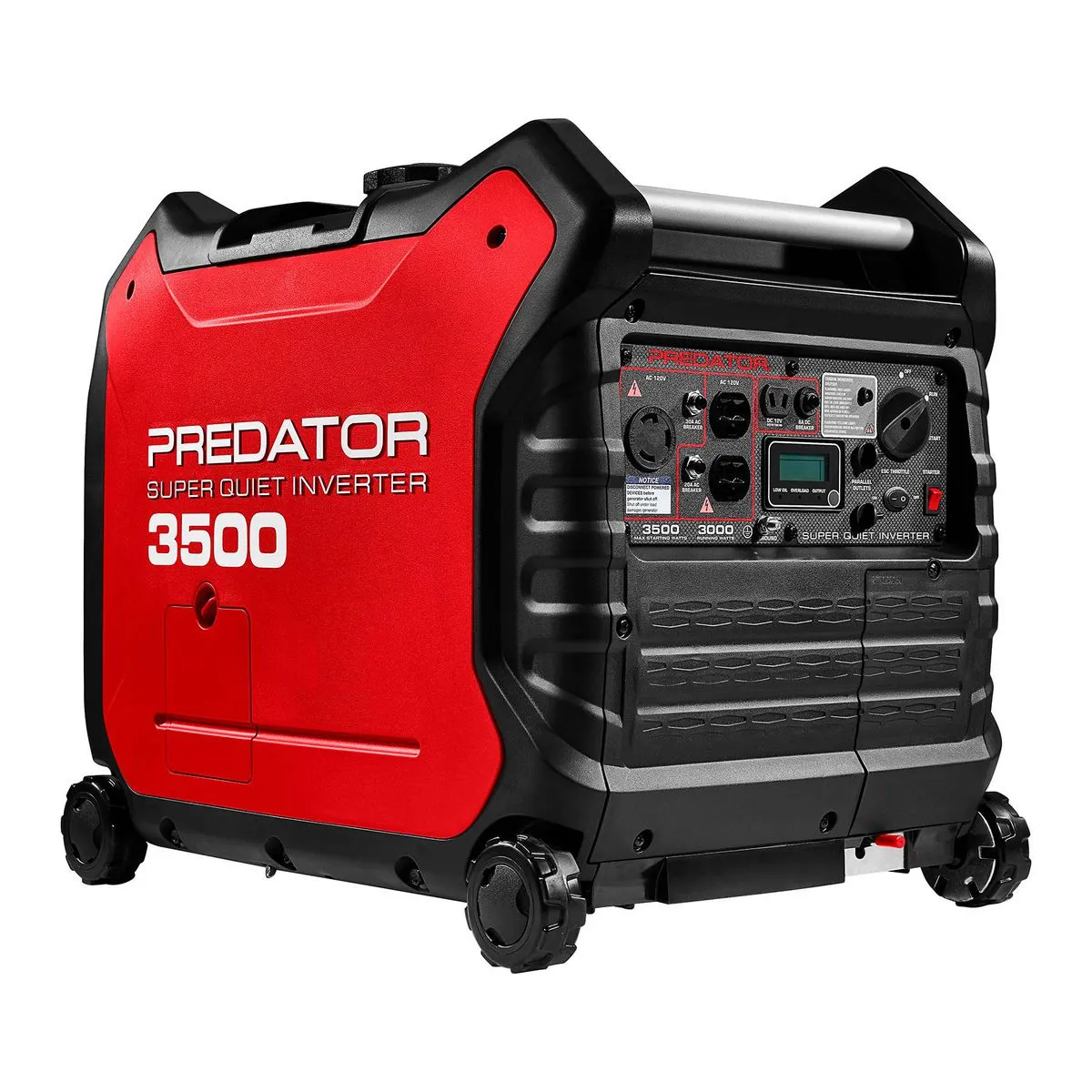
Predator 3500 Inverter
The cult classic of the RV world. The Predator 3500 has powered a decade of forum threads titled 'why pay Honda prices?' — 3,000 running watts, 57 dB super-quiet operation, electric start, and a digital readout for around $800, with periodic coupons taking it lower. Owners report five-plus-year lifespans with basic oil changes, and it starts 15k BTU RV ACs that make 2,200W units give up. Consumer Reports rates it surprisingly highly for noise and power quality. The trade-offs are well-mapped: 99 lbs with no folding handle makes truck-bed loading awkward, the oil fill is tilted and messy, carb varnish after storage is the top repair thread, the 90-day warranty is the shortest in the industry, and CARB-state buyers need the newer CO Secure version. Still the value benchmark for RV inverters.
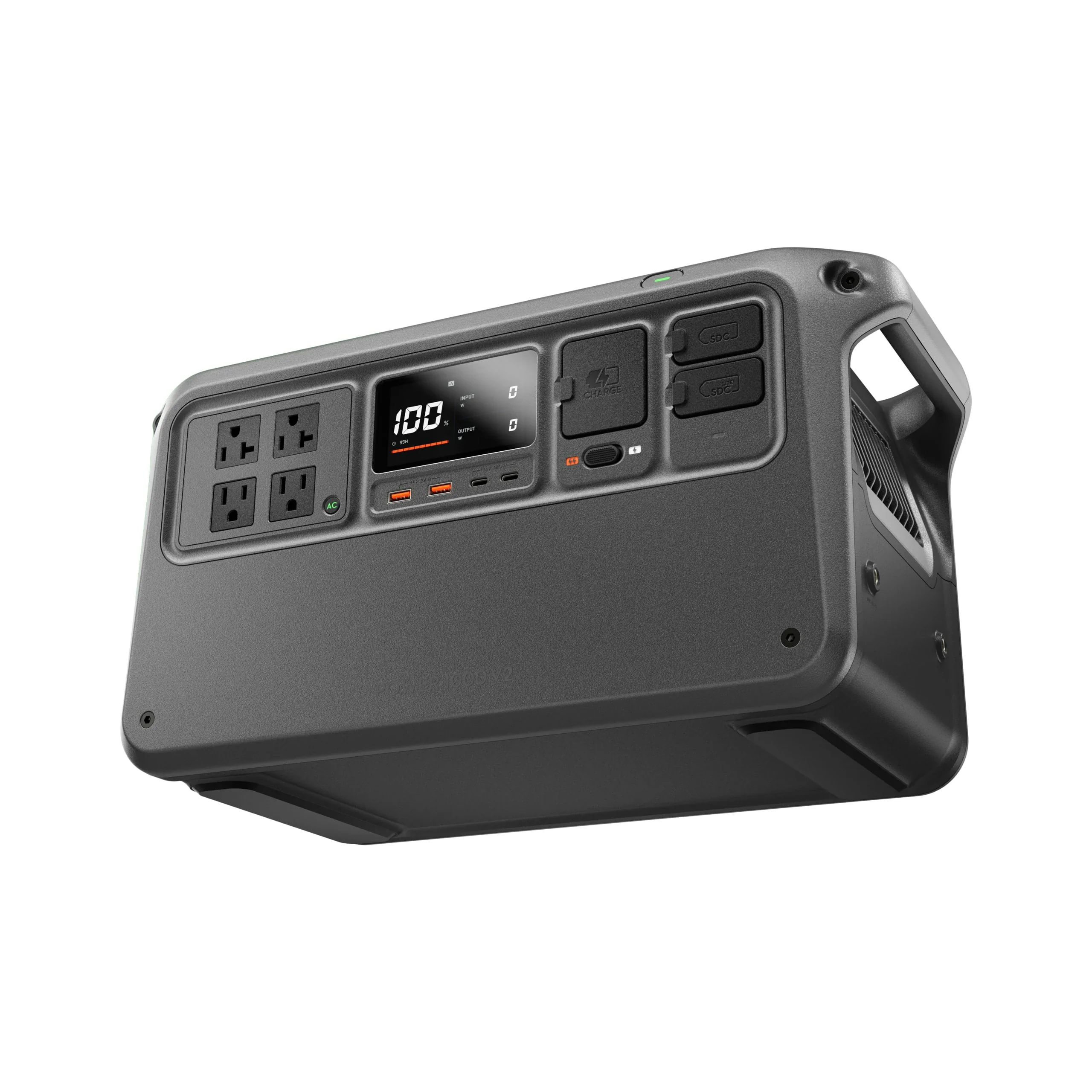
The drone company's second-gen power station, and the sleeper hit of the category - reviewers keep reaching for words like 'premium' and 'polished.' The headline specs are absurd for a 1kWh box: 2,600W continuous output (more than most 2kWh units), 4,400W peak, 0-80% charging in 37 minutes, and operation as low as 26dB - owners confirm it's effectively silent, the quietest unit in this entire roundup. V2 fixed the original's two-outlet stinginess with four AC ports and added Wi-Fi. Expansion runs to 11.2kWh via 2kWh add-on packs. The quirks are DJI-flavored: solar charging requires a proprietary MPPT adapter dongle rather than native XT60 ports, the app is minimal compared to EcoFlow's, and the SDC ports are really designed around fast-charging DJI drone batteries. Warranty is 3 years, extending to 5 if you register in the app.
FranklinWH
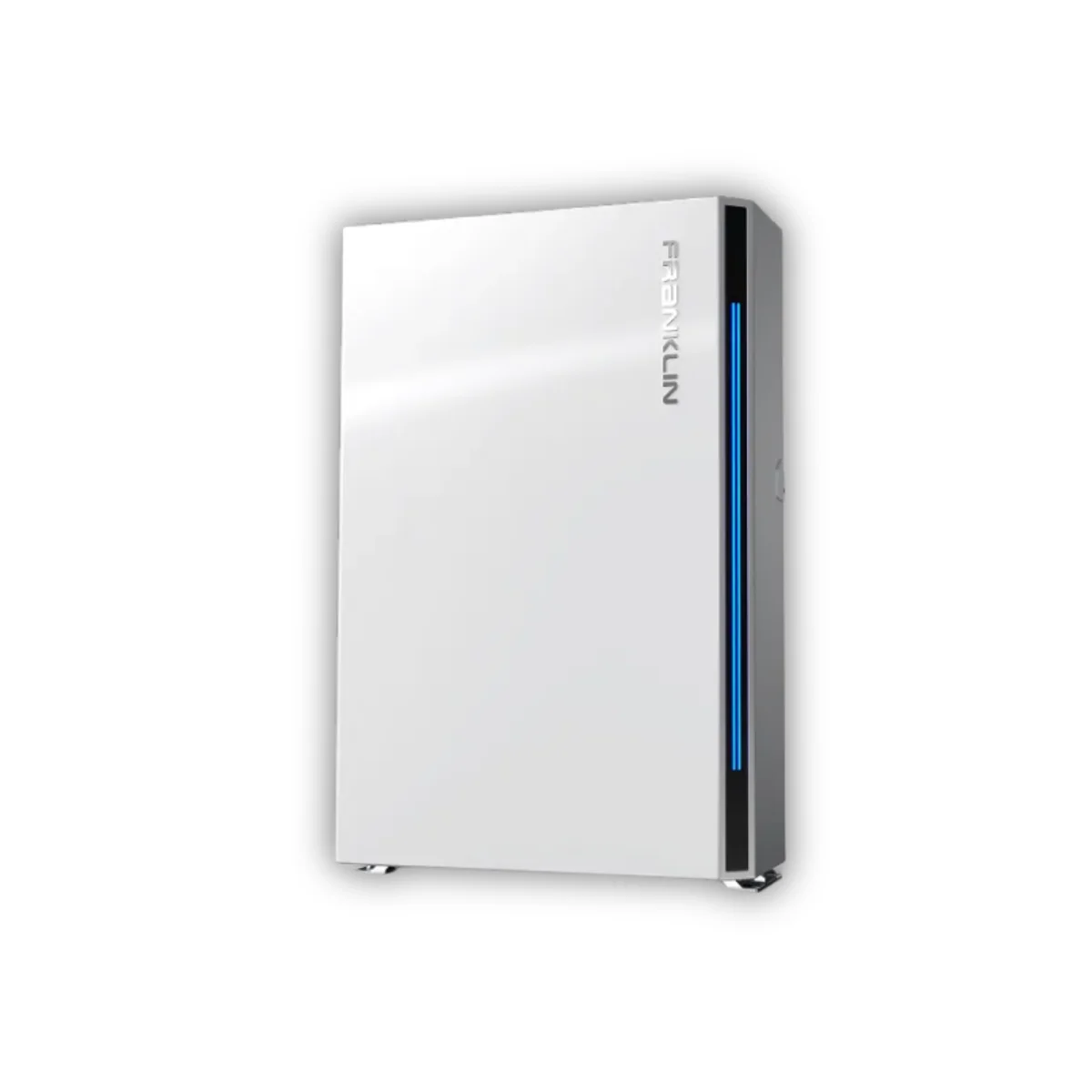
FranklinWH aPower 2
The Powerwall alternative installers keep steering people toward in 2026, and owner satisfaction scores back them up. One cabinet holds 15kWh - the most storage per unit of any mainstream battery - with 10kW continuous and a 15kW/10-second surge rated to start a 5-ton air conditioner. Price shown is typical installed cost with the aGate controller ($12,000-20,000 depending on market). Because it's AC-coupled, it retrofits onto any existing solar inverter brand - the single biggest reason people pick it over Powerwall 3. The aGate handles whole-home transfer plus generator and even EV-as-load integration. Owner gripes are modest: quotes vary widely between dealers, the app covers essentials but lacks Tesla's polish and power-user data, and the dealer network, while growing fast, is thinner than Tesla's. Expansion runs to a ridiculous 225kWh across 15 units.

The DIY community's darling and the reigning value champion of home storage: 14.3kWh of UL9540-listed, heated, IP65 outdoor-rated LiFePO4 for around $3,300 hardware - roughly $230/kWh, a fifth of installed-brand pricing. Price shown is hardware MSRP for the battery alone; you supply the inverter (usually EG4's 18kPV or FlexBOSS21) and either DIY or hire an electrician. diysolarforum threads are full of multi-unit builds - it parallels to 85.8kWh - and long-term owner reports are strongly positive: 8,000-cycle rating, self-heating below freezing, and 200A continuous discharge. The honest downsides: support is email/forum-grade compared to a dealer network, closed-loop comms with non-EG4 inverters take firmware fiddling, permitting and insurance for self-installs varies by jurisdiction, and 308.6 lbs makes hanging it a genuine engineering project.

Generac
Generac Guardian 14kW
The 14kW is the sweet spot Guardian for mid-size homes: it steps up to the 816cc twin-cylinder G-Force 800 engine, holds 14kW on both propane and natural gas, and will start a modest central AC with load management. Owners who sized it right describe multi-day outages where it just hummed along at 65 dB with the Quiet-Test weekly cycle keeping neighbors happy. The recurring themes in owner threads mirror the whole Guardian line: buy it for the dealer network and parts availability, not for the customer support experience — Generac corporate routes everything back to dealers, and controller/board warranty claims can drag for weeks. This 7223 SKU is the bare generator; pair it with a 100A or 200A switch, and get quotes, because installed cost typically lands at double the hardware price.

Generac
Generac Guardian 18kW
The 18kW is the value pick in the Guardian range on a dollars-per-kilowatt basis — same 816cc G-Force 800 twin as the 14kW, tuned for 18kW on propane and 17kW on natural gas, at only a few hundred dollars more. Owners in hurricane and ice-storm country consistently report it carrying a whole modest home including a 3-ton AC without drama, and the G-Flex variable-speed exercise keeps the weekly test tolerable at 65 dB. The ownership caveats are pure Generac: the Evolution 2 controller is the component that fails, dealers are the only sanctioned path for warranty work, and owners recommend buying the battery and cold-weather kit up front rather than discovering they're extras on install day. If you're between the 14 and this, most owner advice says spend up.
Generac
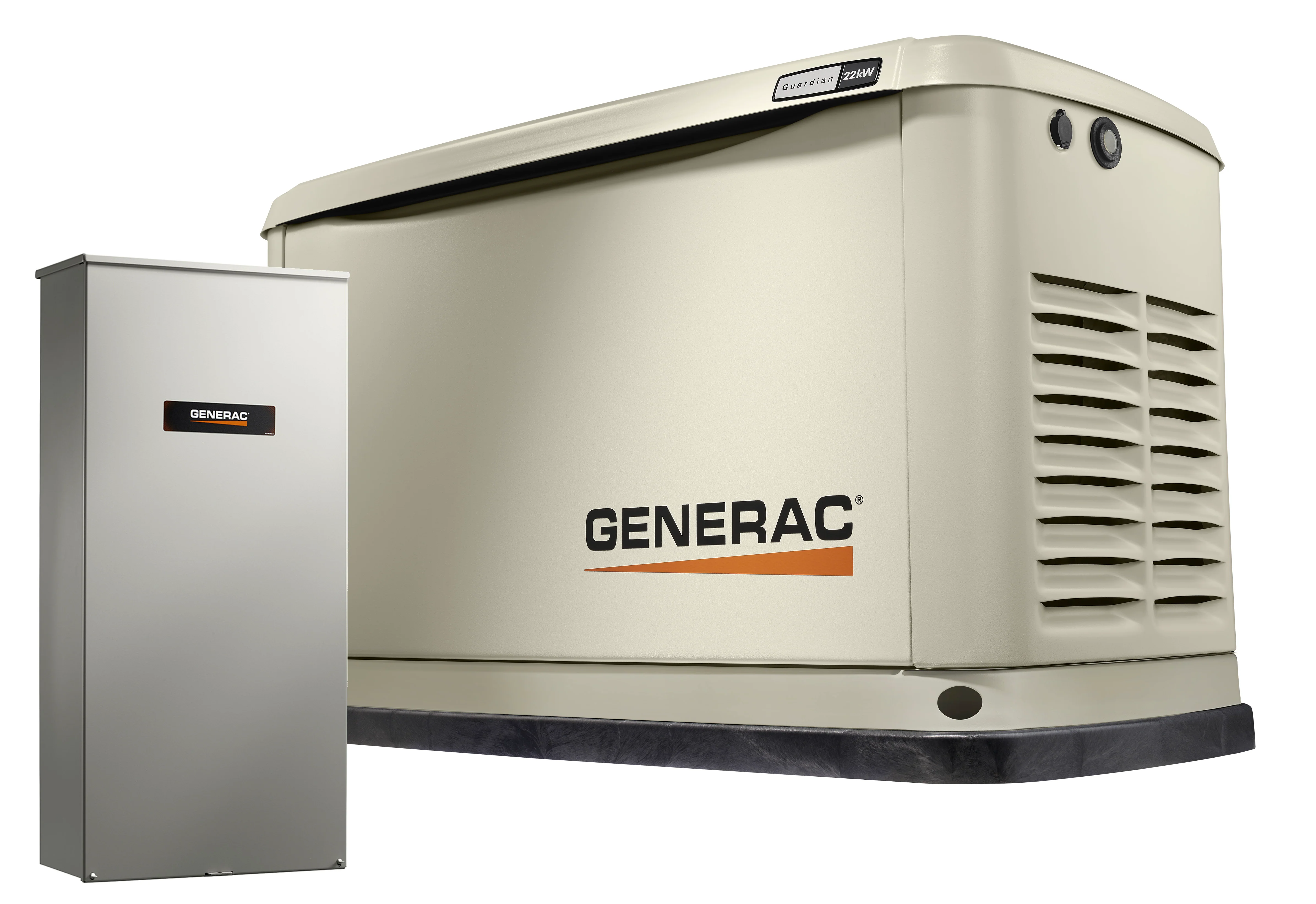
Generac Guardian 22kW
For years the best-selling home standby generator in America, and the sheer volume of owner reviews shows why: the 22kW carries most whole homes — two AC units with load management — and every electrician and gas fitter in the country has installed one. The G-Force 1000 engine and 67 dB noise level are unremarkable but proven; owners report units sailing through week-long outages after hurricanes. The flip side of ubiquity is that the complaint threads are equally deep: Evolution controller replacements, dealers backlogged after storms, and Generac support that owners describe as polite but powerless. The newer 24kW (7209/7210) has largely replaced it at similar money, but the 7042 remains widely stocked, slightly cheaper, and the known quantity — a big deal when your installer has done fifty of them.
Generac
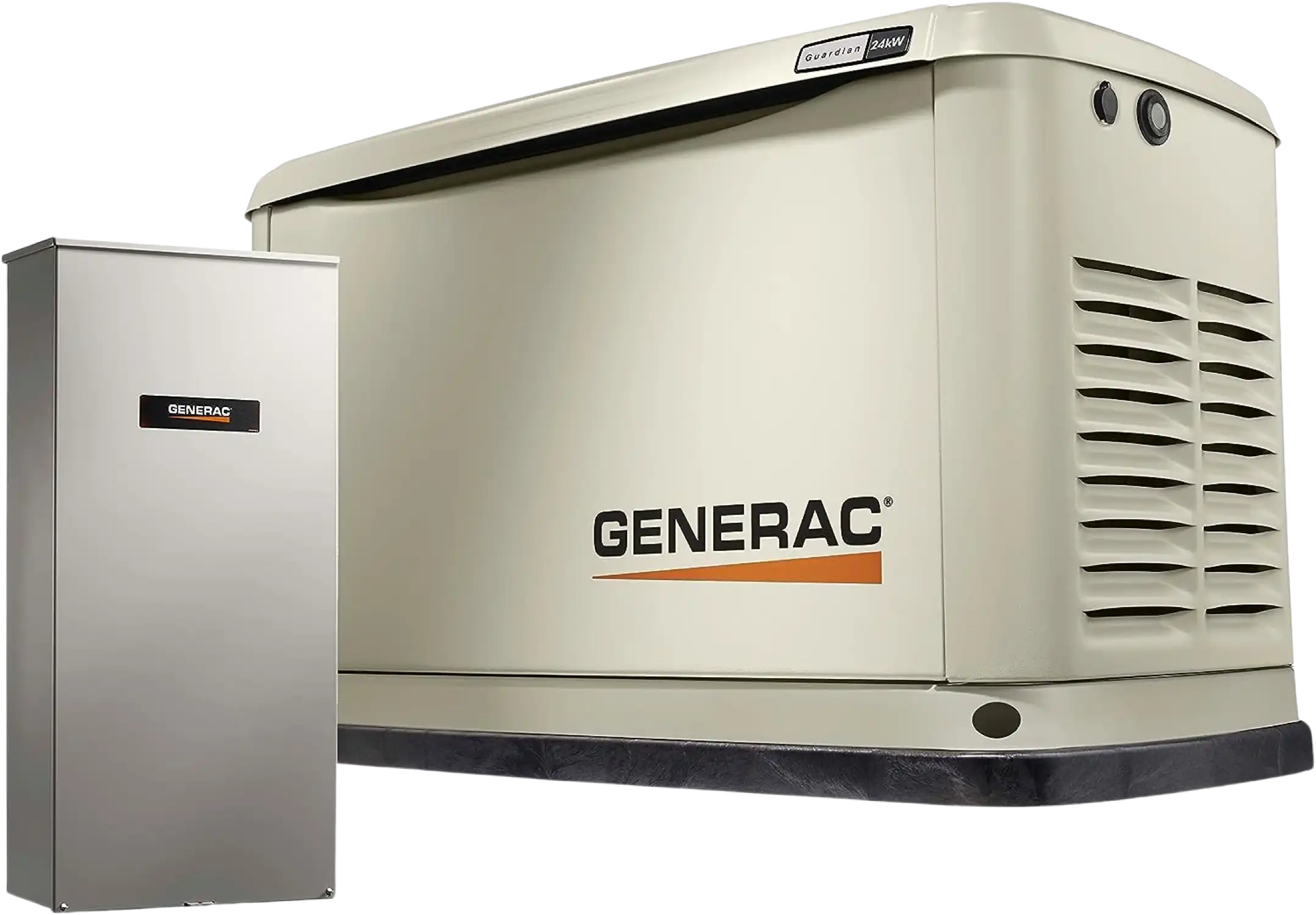
Generac Guardian 24kW
Generac's current volume flagship: 24kW on propane and 21kW on natural gas from the G-Force 1000 platform, bundled here with a 200-amp service-entrance transfer switch with PWRview energy monitoring. It's pitched as the 22kW's replacement, squeezing 2.6x the power of the baseline air-cooled units from the same-size enclosure, and owners like that it fits the same pad footprint. Real-world reports are strong — seamless transfers, two-AC homes handled with smart load modules — with noise at 67 dB under load and a much quieter 57 dB Quiet-Test. The complaints are familiar: owners report Wi-Fi Mobile Link dropouts, controller boards replaced under warranty, and dealer-network variability that makes your installer choice as important as the machine. Ships as a complete package, which simplifies quotes compared to the à-la-carte SKUs.

Kohler
Kohler 20kW RCA
The 20RCA is Kohler's volume whole-house unit and the direct rival to Generac's 22/24kW, built around the bigger CH1000 V-twin. Its party trick is 41kVA of motor-starting capacity — owners regularly confirm it starts a 5-ton AC without dropping the rest of the house, which smaller-surge competitors need load-shedding modules to manage. The RDC2 controller has a strong reliability reputation, and long-term owners (this platform has been around for years) report exceptionally boring, dependable service — the best compliment a standby can get. Trade-offs are the familiar Kohler ones: 18kW on natural gas, 70 dB at full-speed operation is on the loud side, OnCue Plus monitoring trails Generac's app, and you may wait longer for both the unit and a certified installer depending on your region.

Cummins
Cummins QuietConnect RS13A
The sleeper value in home standby: a genuine Cummins — the company that powers hospitals and data centers — at a price under the equivalent Generac or Kohler. The RS13A's QSJ999G 999cc V-twin was designed in-house for gaseous fuel, and the QuietConnect sound-insulated enclosure holds it to 65 dB at 23 feet, quieter than most competitors' smaller units. It holds 13kW on either natural gas or propane with no derate, meets the 18-inch NFPA 37 clearance for tight lots, and owners consistently describe installs that just work. The catch, and it's the one that dominates owner threads: the Cummins residential dealer network is sparse compared to Generac's. If there's no certified servicer within reasonable distance, warranty work becomes your problem. The Cummins app covers status and alerts but is basic.

Cummins
Cummins QuietConnect RS20A
The RS20A is what owners buy when the nightly drone of a 70 dB generator is a dealbreaker: Cummins holds it to 65 dB at 23 feet — dishwasher territory — while still starting a 5-ton air conditioner and managing four loads with its built-in intelligent load control. The same QSJ999G V-twin as the RS13A runs harder here, delivering 20kW on propane and 18kW on natural gas, and it ships cold-weather-ready to 0°F out of the box. Owner reviews read like Kohler's best: uneventful, reliable, quiet enough that neighbors ask if it's running. The trade-offs also mirror the RS13A — sparse residential dealer coverage makes pre-purchase service planning essential, stock frequently slips to pre-order, and the app is functional but bare-bones. For sound-sensitive neighborhoods it's arguably the class benchmark.

The people's RV generator. Champion's 200988 pairs 4,500 starting watts with dual-fuel flexibility and electric start at well under half of Honda money, and the review volume — thousands across Amazon, Walmart, and Camping World — is overwhelmingly positive. Owners confirm it starts 13.5k BTU RV air conditioners, sips propane for up to 21 hours on a 20-lb tank, and holds clean sub-3% THD power for electronics. At 61 dB it's audibly louder than a Honda or the iGen4500, more of a steady hum than a whisper, and the 103-lb body rides on small, hard wheels that owners wish were bigger. Recurring gripes: the electric-start battery dies if you don't tend it (there's a maintenance charger port for a reason), propane output derates to 3,150 running watts, and oil changes require a slight tilt-and-funnel dance.

Westinghouse
Westinghouse WGen9500DF
Probably the most-reviewed big portable on the internet — 24,000+ ratings averaging 4.7 — and the default r/Generator answer for 'cheap whole-house backup through an interlock.' 9,500 running watts on gasoline (8,500 on propane), a 50-amp outlet, remote-start key fob, and a 12-hour tank for around a grand is a spec sheet nothing else matches. Owners routinely run entire homes including central AC during hurricanes. It is not subtle: expect 75+ real-world dB, a 211-lb frame, and open-frame vibration. The complaint file is proportionate to the sales volume: occasional oil leaks and QC escapes out of the box, a Westinghouse support line that owners describe as slow to days-long, and carb gumming if stored wet. The current 'DFc' revision adds a CO sensor. Buy it, change the skimpy break-in oil early, and store it dry.
Westinghouse
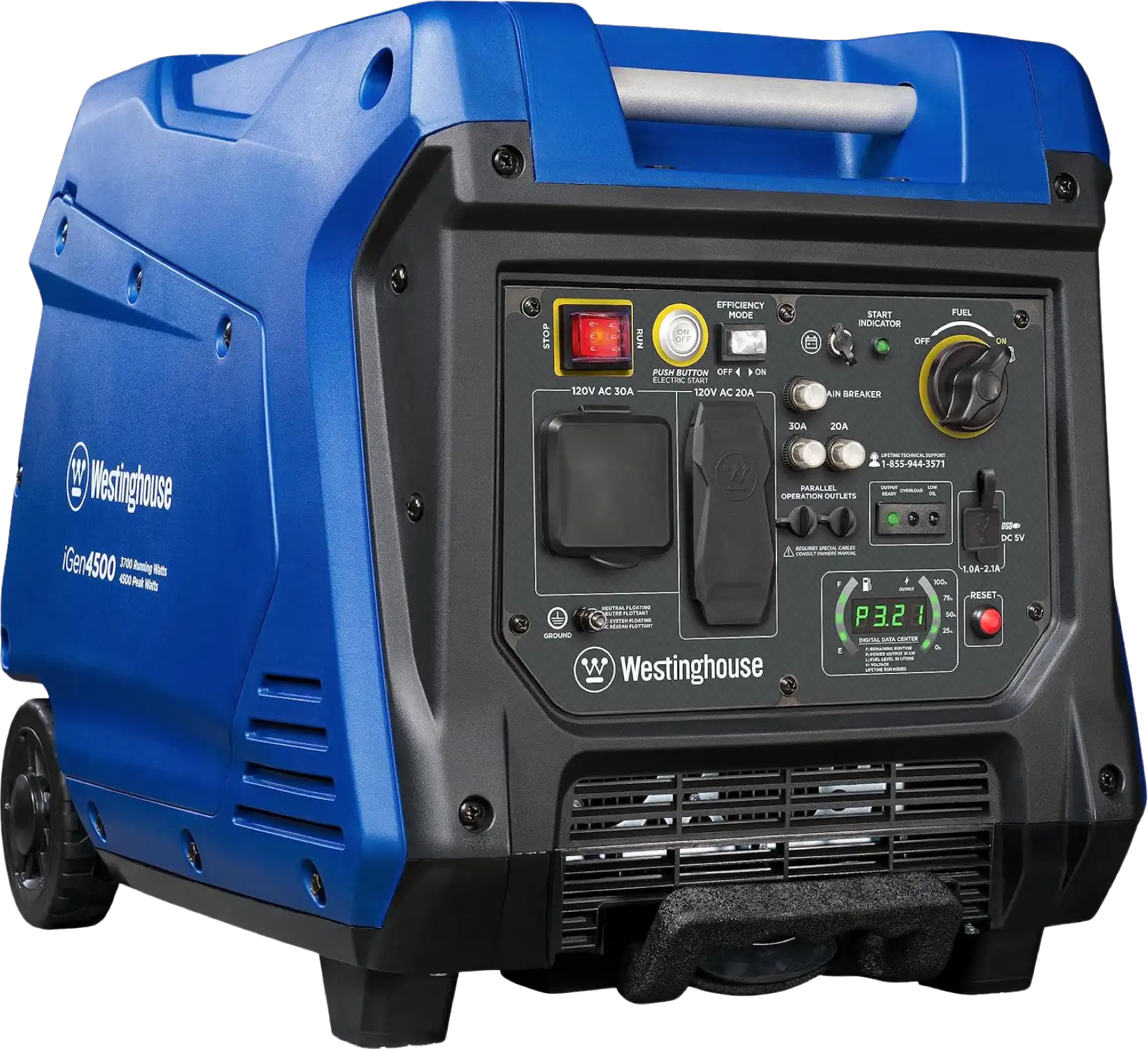
Westinghouse iGen4500
The RV community's favorite non-Honda: 3,700 running watts, a genuine 52 dB at quarter load, a telescoping suitcase handle, and an 18-hour economy-mode runtime that owners verify on long weekends. The digital display with remaining-runtime readout and the remote-start fob are the features people mention unprompted, and at half the cost of Honda's discontinued EU3000 it became the default. It starts most 15k BTU RV ACs, though owners at altitude or in high heat add a soft-starter to be safe. Grievances from long-term threads: the rear wheels are small for gravel campgrounds, the recoil backup start is awkwardly placed, carb gumming after storage is the top reliability complaint (fuel shutoff use is essential), and Westinghouse's parts/support pipeline can be slow. The DF dual-fuel variant had a fuel-filter leak recall in 2020 — this gas model wasn't affected.

Generac
Generac iQ3500
Generac's premium inverter was built to beat Honda's EU3000iS on paper — more starting watts, electric start, a PowerDial that combines start/run/stop in one twist, and a digital dashboard showing watts and runtime — and owner reviews suggest it largely succeeds at 50-52 dB. Job-site users like the steel enclosure; tailgaters like that it's genuinely conversation-quiet in economy mode. It starts 13.5k RV ACs and the 30A L5-30R twist-lock feeds RV adapters cleanly. The persistent owner complaints: 109 pounds with no wheels and only two handles — moving it solo is miserable and a wheel-kit is the first accessory everyone buys; the carburetor demands fuel treatment before storage; and a 2023-era recall on certain units (stator faults causing fire risk) rattled confidence, though current production is clear. At street prices near $1,250 it undercuts what the equivalent Honda cost by nearly half.
EcoFlow
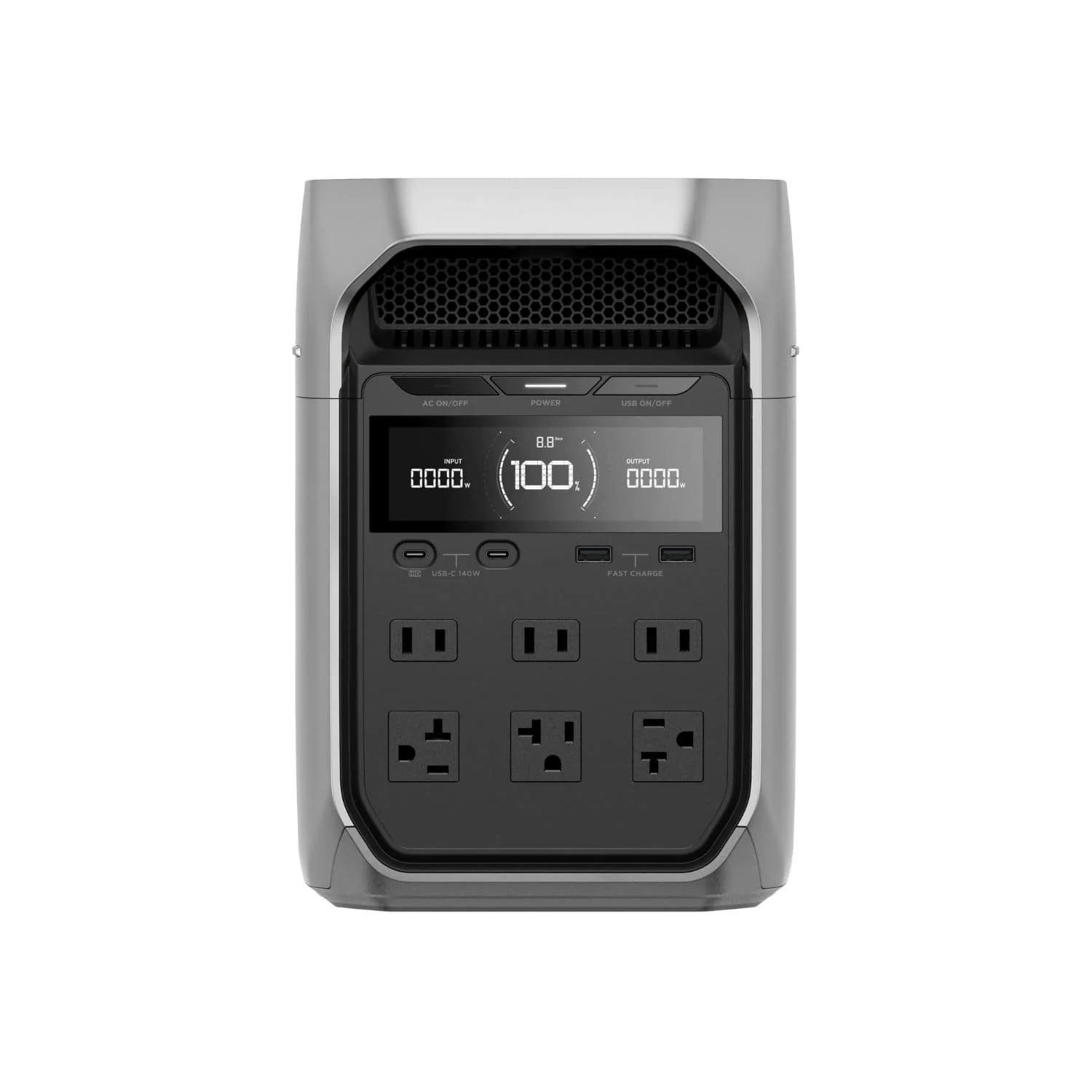
EcoFlow DELTA 3 Plus
The default answer when someone asks r/portablepowerstations for a 1kWh backup unit. The killer feature owners rave about is the 10ms UPS switchover - people literally run NAS boxes, routers, and CPAP machines off it full-time and never notice an outage. It charges 0-100% in 56 minutes, which sounds like marketing until you watch it happen. Real-world quirks: the 30dB quiet claim only holds at idle - fast AC charging spins the fan up noticeably, so owners set a slower charge rate in the app at night. The app requires an EcoFlow account, which annoys the privacy crowd. X-Boost lets it fudge 2200W resistive loads (space heaters, kettles), but induction motors still trip it. Expansion to ~5kWh via extra batteries is handy, though the add-on packs cost almost as much as the unit on sale.
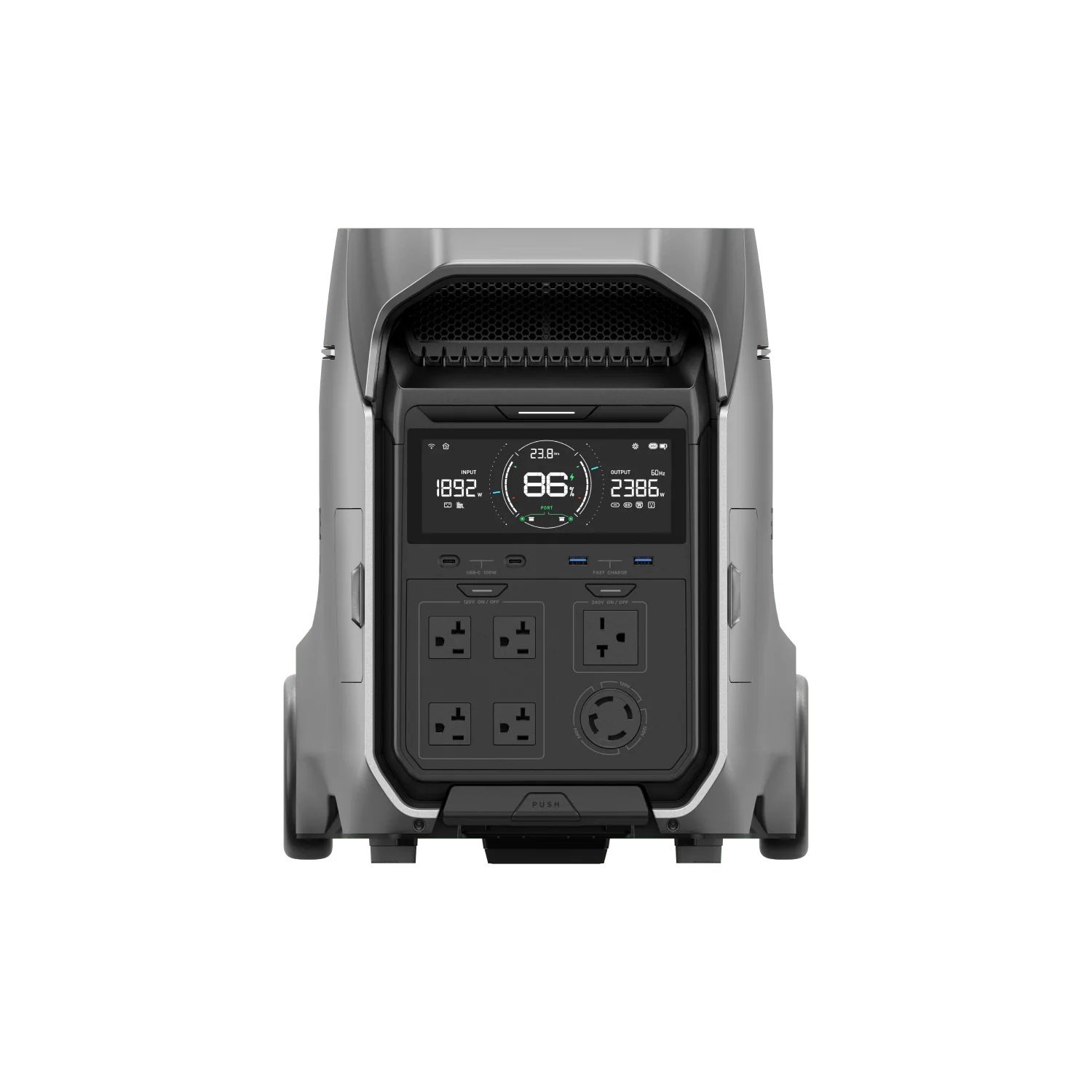
EcoFlow
EcoFlow DELTA Pro 3
The single most-recommended whole-home-capable unit that still rolls on wheels. What sells it: 4000W with real 120/240V split-phase from one box, so it backfeeds a transfer switch and runs a well pump or mini-split without pairing two units. Owners consistently praise how quiet it stays at partial load (30dB claimed) and the 10ms UPS. The recurring complaint thread is idle drain - leaving AC output on burns tens of watts, so a 4kWh charge quietly evaporates over days if you use it as a dumb UPS without tweaking settings. It is 113 lbs; the wheels and handle work on pavement, not stairs. A few owners report warranty friction outside the mainland US, and early-firmware horror stories still circulate on Reddit, so update before first use. Street price has fallen from $3,699 to low-$2,000s, which changed the calculus versus F3800 Plus.
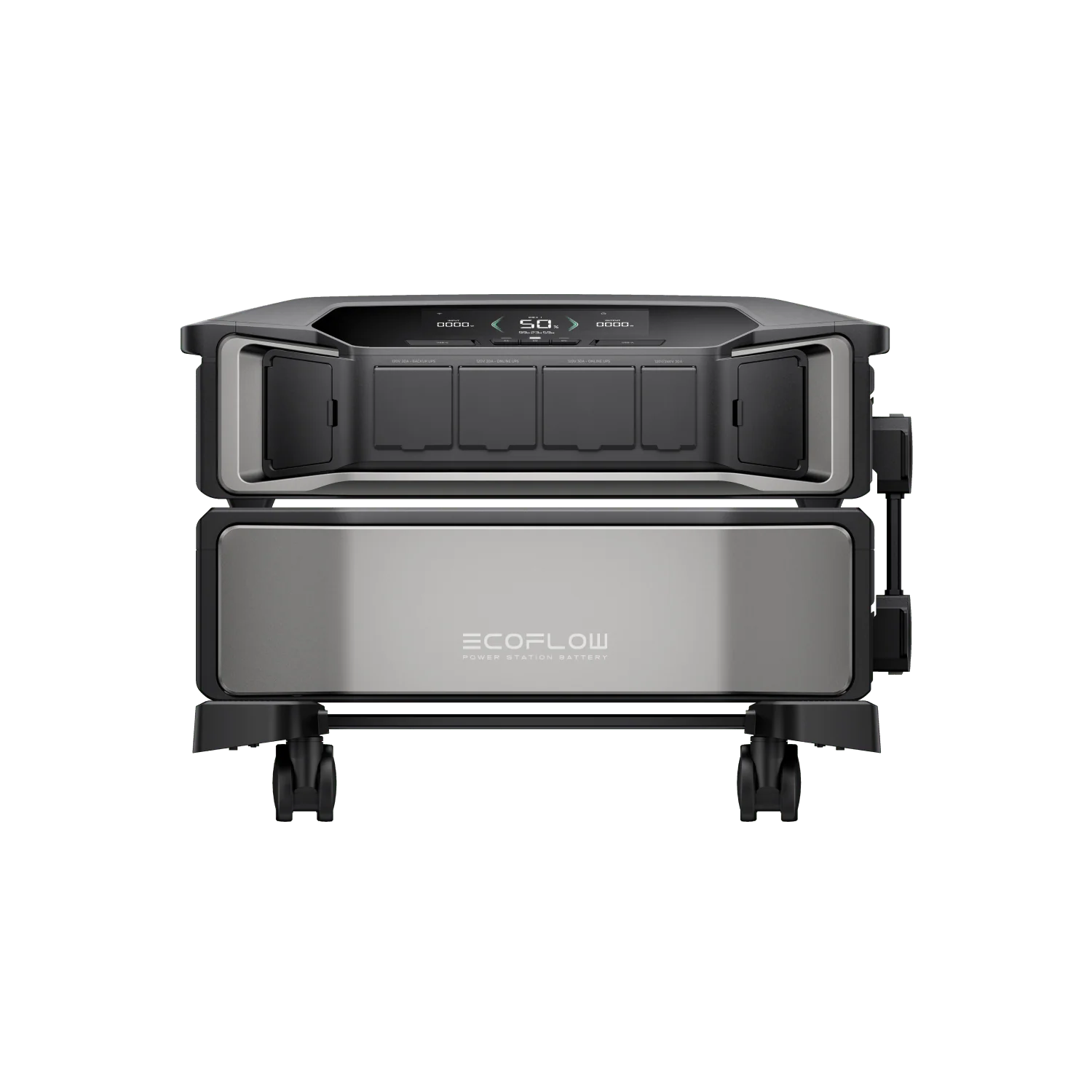
EcoFlow
EcoFlow DELTA Pro Ultra
EcoFlow's modular whole-home flagship: a 7200W inverter head that stacks up to 15 batteries for 90kWh, or triples to 21.6kW output. Price shown is the inverter + one 6.1kWh battery; the Smart Home Panel 2 (roughly $1,500-1,900 more plus electrician) is what unlocks the automatic 10-circuit backup owners actually buy this for. Owner sentiment is mostly awe at capability with recurring gripes about the ecosystem tax - every accessory is proprietary and priced accordingly. Fan noise under heavy charge or load is louder than the marketing suggests, and at 164 lbs assembled you position it once and leave it. The 120A LRA rating starts most 3-ton air conditioners, which smaller stations simply cannot do. People cross-shop it against a Powerwall 3 install; the Ultra wins on no-permit portability, loses on per-kWh cost at scale.
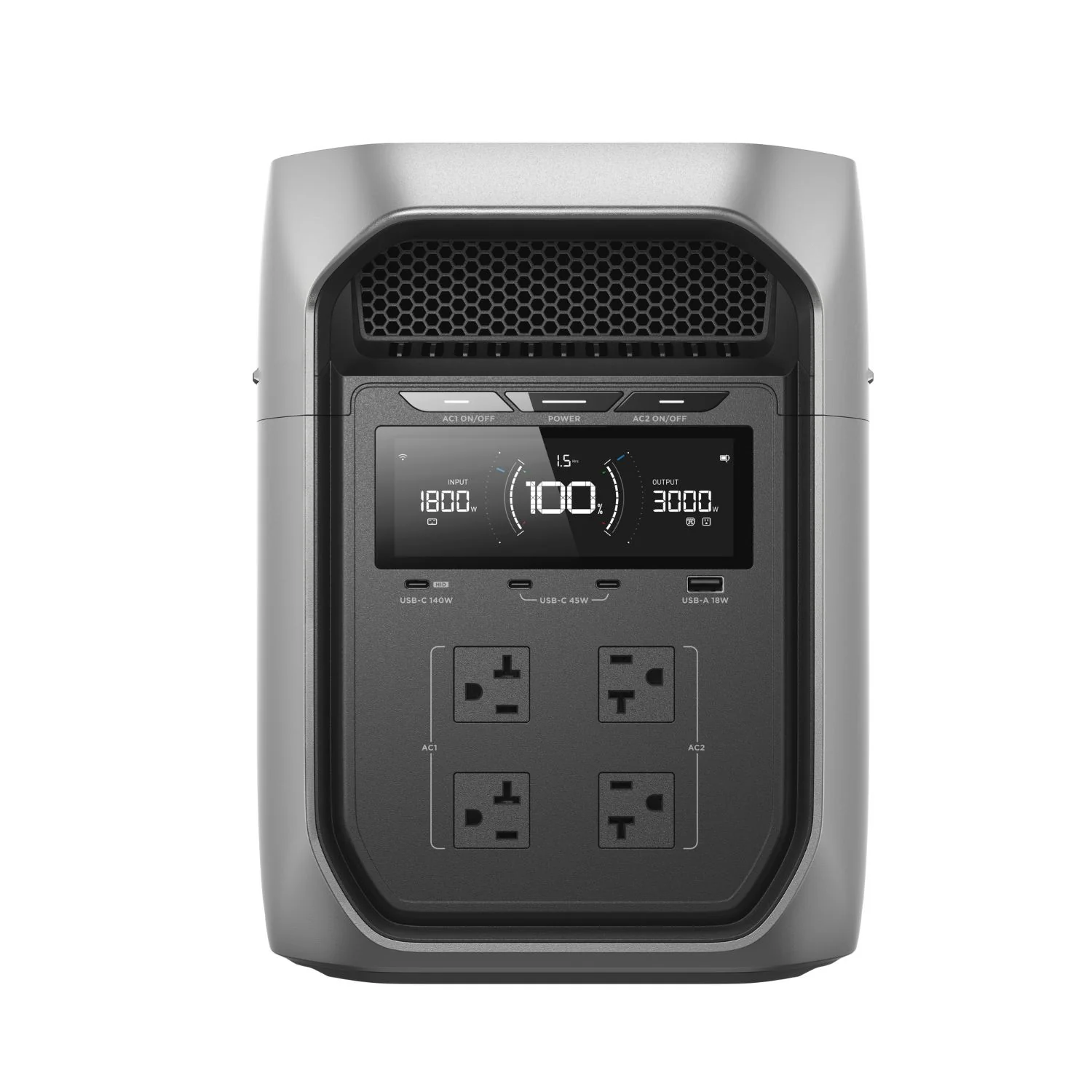
EcoFlow
EcoFlow DELTA 3 Max Plus
The 2025-2026 refresh of EcoFlow's mid-size class and a current 'best for home backup' pick in several tested roundups. You get 2kWh and a 3000W inverter - enough to run a microwave and fridge simultaneously - at a price that undercuts the old Delta 2 Max's launch by hundreds. Owners like the practical stuff: 0-80% in about 68 minutes, X-Boost handling 3800W resistive loads, and expansion to 10kWh if backup needs grow. The dual side handles make the 49-lb carry manageable for one person. Quirks from owner threads mirror the rest of the Delta 3 line: fan spins up audibly during fast charging, idle drain means you shouldn't store it with AC output enabled, and the app occasionally loses Wi-Fi pairing until you power-cycle. Solid pick if 1kWh feels tight but 4kWh-class weight and price feel excessive.
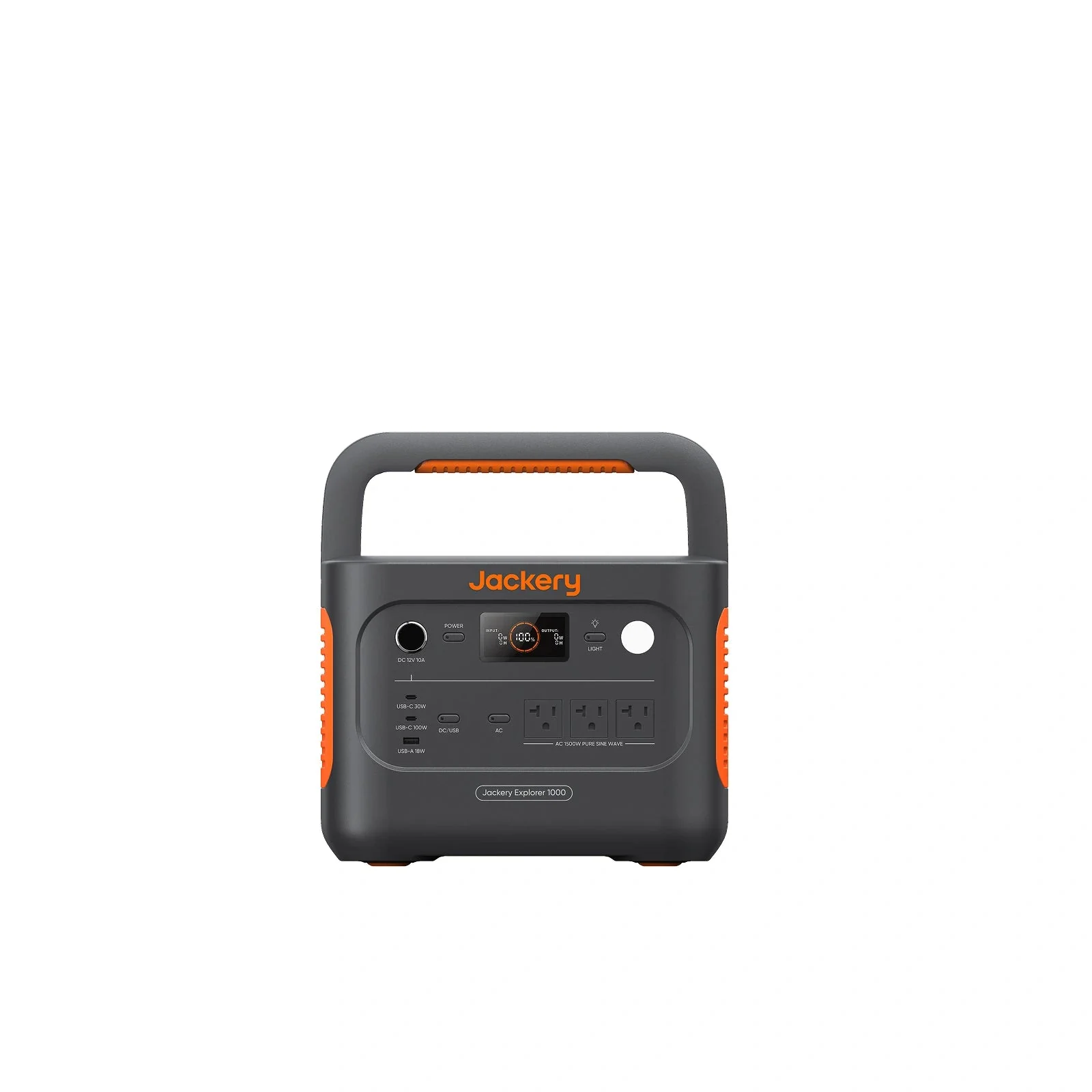
Jackery
Jackery Explorer 1000 v2
Jackery's LiFePO4 do-over of the best-selling power station ever, and the one people actually mean when they say 'just get a Jackery.' At 23.8 lbs it's several pounds lighter than every 1kWh rival, which is why campers and older buyers gravitate to it. The 1500W inverter (3000W surge) runs coffee makers and microwaves fine; owners confirm the quiet-fan claim - it's noticeably more pleasant than an AC180 under load. Real-world knocks: there's no expansion port at all, the 20ms UPS switchover is fine for a fridge but not marketed for computers, and the 1500W output trails the 1800-2000W competition on paper. It lives on sale - $429-499 happens monthly - so nobody should pay list. The foldable handle and genuinely idiot-proof interface make it the one to recommend to non-technical relatives.
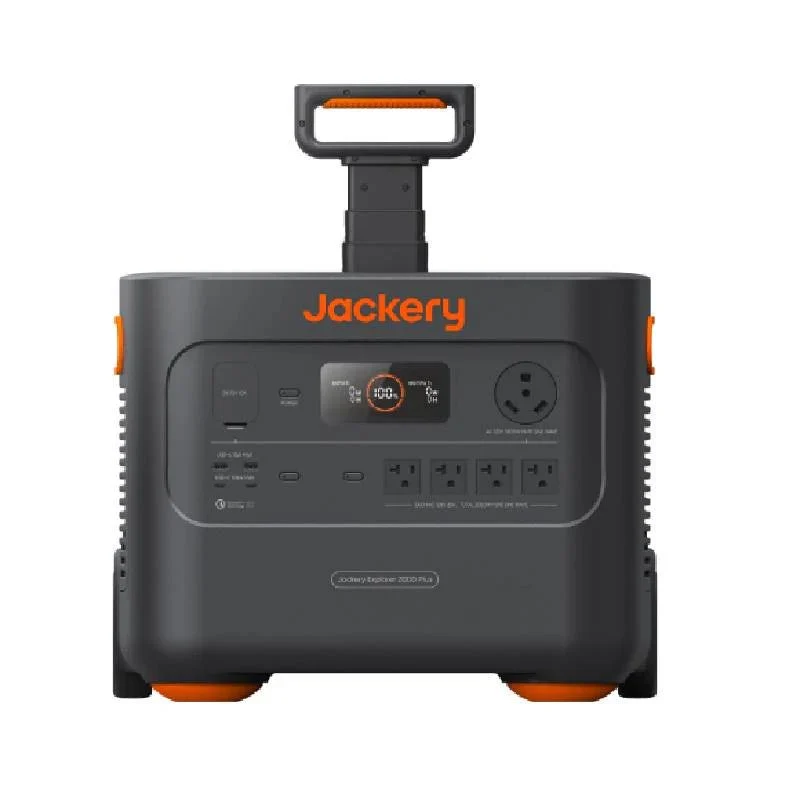
Jackery
Jackery Explorer 2000 Plus
The workhorse of Jackery's lineup and a fixture in RV and home-backup threads since 2023 - still current because Jackery kept cutting the price instead of replacing it. A 3000W inverter with a TT-30 RV outlet plus expansion to 12kWh (24kWh with two units paired for 240V) covers a lot of scenarios. Owners consistently call out how quiet it is - roughly 30dB under moderate load - and the telescoping handle and wheels, because 61.5 lbs is not a carry-it-around weight. The gripes: expansion packs run ~$1,000+ each, making big builds pricier than a Bluetti stack; the app is functional but bare-bones; and the TT-30 is 25A rather than a full 30A. Deal-watchers note it hits $999 several times a year, at which point it's arguably the best $/W value in the 2kWh class from a tier-one brand.
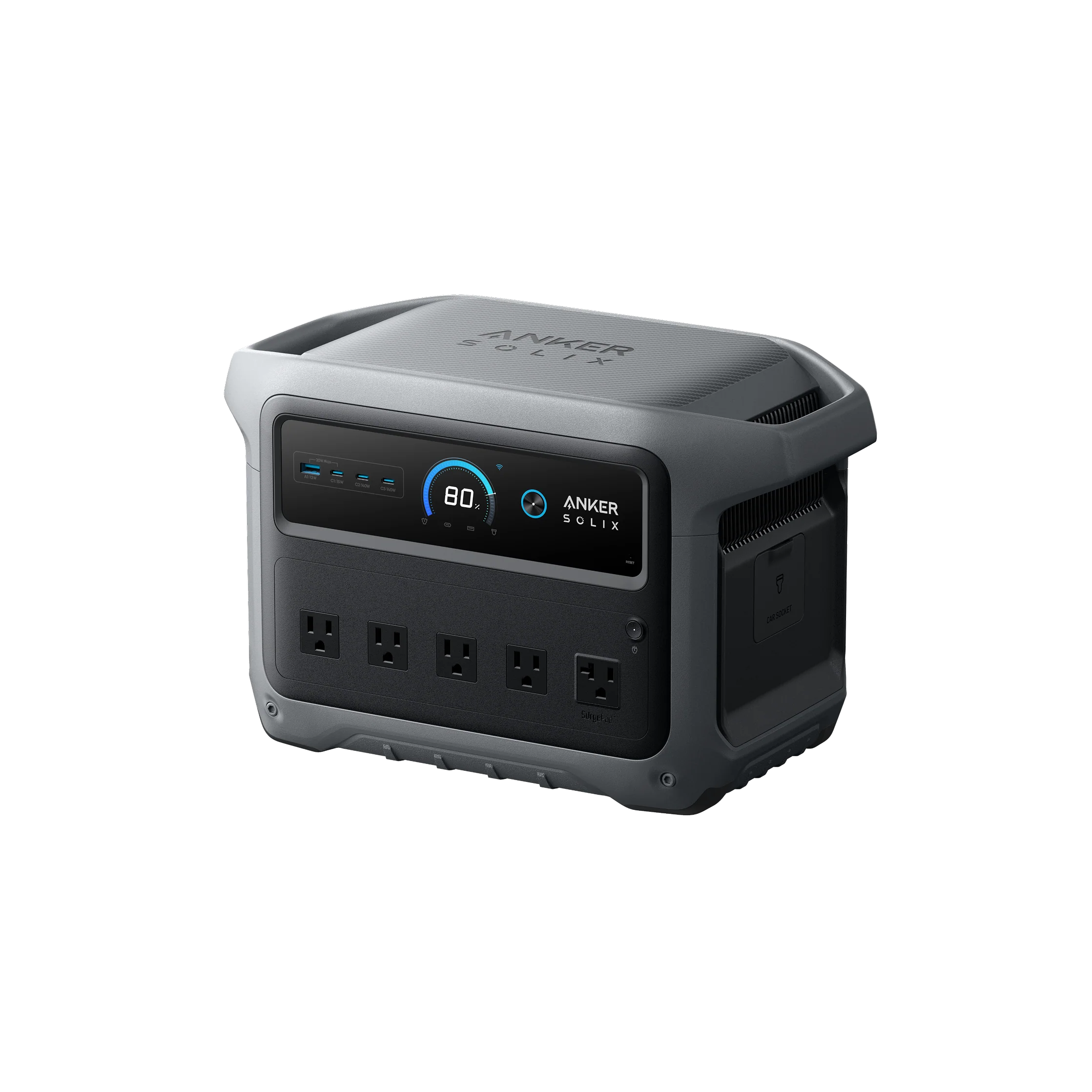
The 2026 'best overall' pick on multiple tested lists, and the current answer in the sub-$500 1kWh knife-fight. Anker took the already-popular C1000, cut 3.5 lbs, bumped output to 2000W, added a 10ms UPS mode, and kept HyperFlash charging (full in 49 minutes). Owners describe it as nearly silent at low loads - the 20dB claim holds for trickle duty, though the fan is audible during 1,600W charging. The catch that surprises upgraders: Gen 2 dropped expansion support entirely - the old BP1000 battery is not compatible, so 1kWh is what you get forever. Other nitpicks from owner threads: USB-A is a weak 12W, and the plastic shell feels less premium than the weight suggests. At its perpetual ~$499 street price, it's the strongest pure value in portable power right now.

The enthusiast favorite for DIY whole-home backup, and the unit r/Anker and diysolarforum threads obsess over. 6000W split-phase with both a NEMA 14-50 and L14-30 on the face means it plugs straight into a generator inlet - no adapters - and can trickle-charge an EV. The Plus revision added 3,200W solar input and gas-generator charging input, fixing the two biggest F3800 complaints. Anker's permanent price cut to $2,499 (from $4,799 launch) made it the per-kWh bargain of the big-battery class. Owner quirks: a documented buzzing noise traced to a ferrite bead that firmware only partially fixed, fans that are unapologetically loud during 2,400W charging, and Home Power Panel installs that depend on finding a willing electrician. Support experiences vary wildly in owner reports - some get instant advance replacements, others chase tickets for weeks.
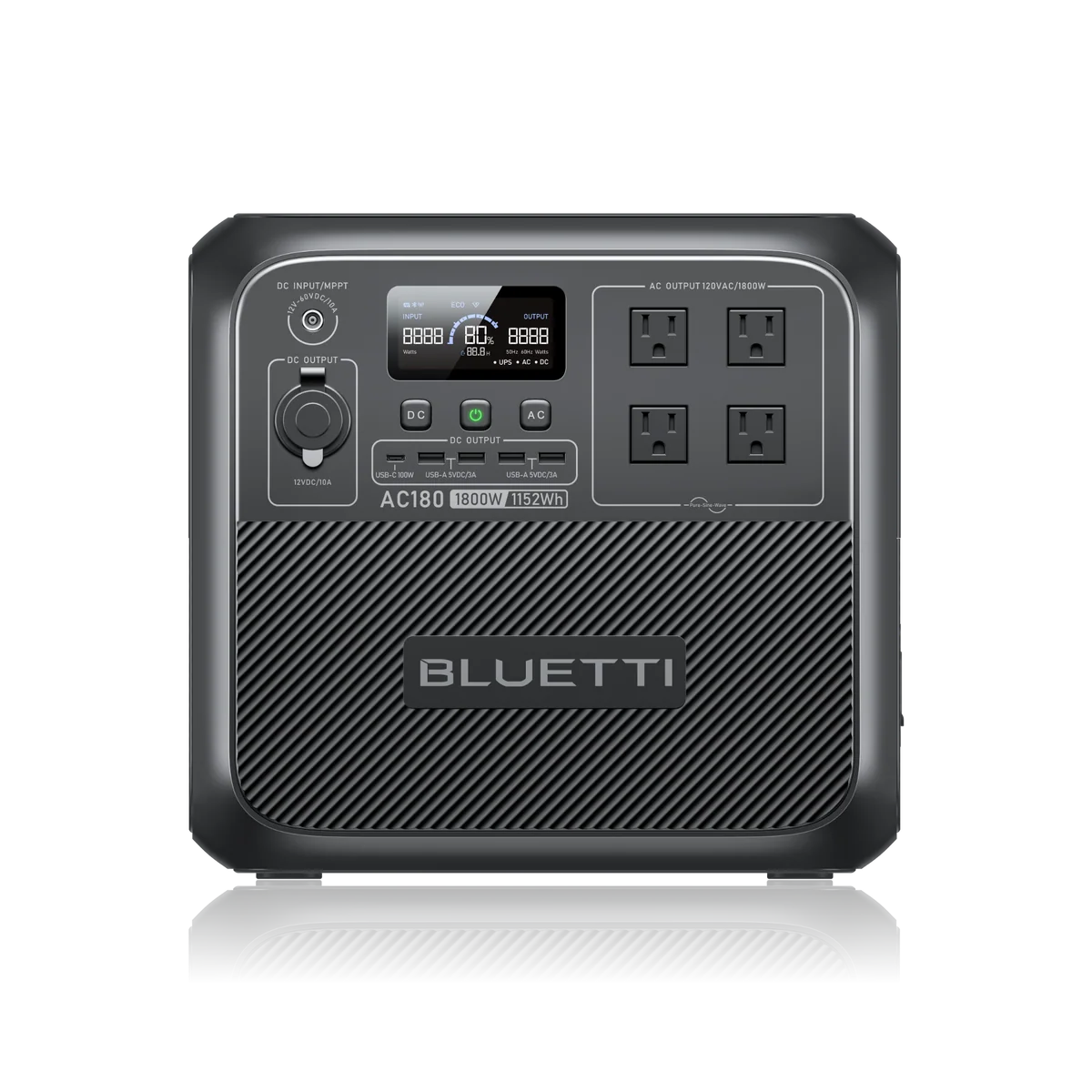
Bluetti
Bluetti AC180
The budget king of the 1kWh class - Amazon's perpetual best-seller with a review count nothing else touches. You get more capacity (1,152Wh) than the Anker or EcoFlow rivals, 1800W output with a 2,700W Power Lifting mode for heaters and kettles, and a wireless charging pad, usually for under $450. Owners are clear-eyed about the trade-offs: the fan runs early and often, even at loads where competitors stay silent - it's the single most repeated complaint in three years of reviews. The 12V DC port is a regulated but weak 10A, there's no expansion support, and at 35.3 lbs it's a full 10 lbs heavier than the Jackery. But for a storm-prep box that lives in a closet and runs the fridge when needed, the price-per-Wh math has kept it the default recommendation for budget buyers since 2023.
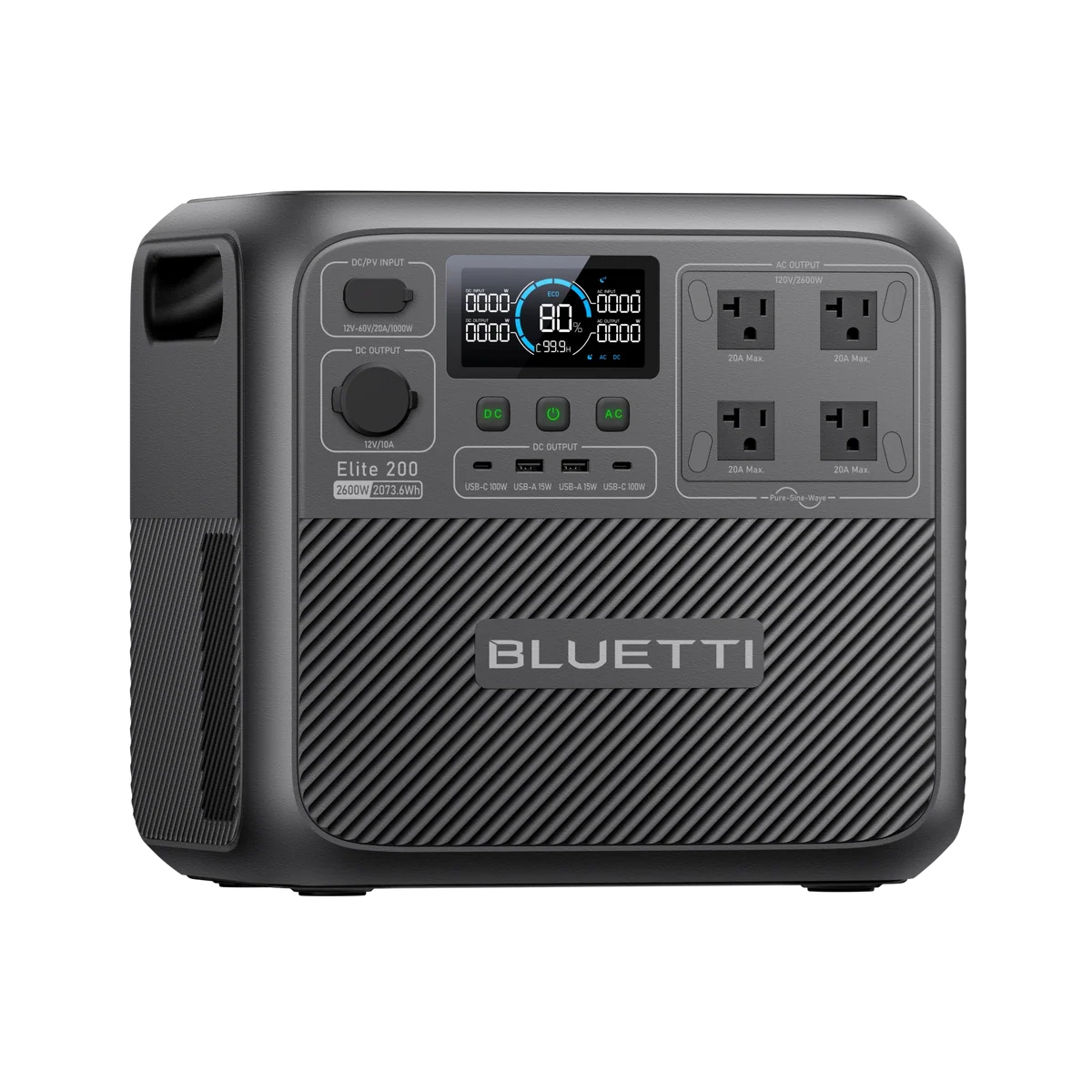
Bluetti
Bluetti Elite 200 V2
Bluetti's 2025-generation 2kWh flagship and the unit that reset expectations for what $999 buys: a 6,000-cycle LiFePO4 pack (cycle it daily and it still holds 80% in 2043), a stronger 2,600W inverter than anything else in class, and a chassis nearly 10 lbs lighter than the AC200L it effectively replaces. Vanlife reviewers in particular have adopted it as the default build battery. Owners praise the 50-minute 0-80% charging and the noticeably better fan tuning versus older Bluettis - it's not silent, but it no longer howls at 200W loads. The trade-offs are real though: no expansion port at all (that's what Apex 300 is for), solar input caps at 1,000W, and there's no wireless pad or fancy extras. If your capacity needs are fixed at ~2kWh, this is arguably the best-engineered unit in the segment right now.
Generac
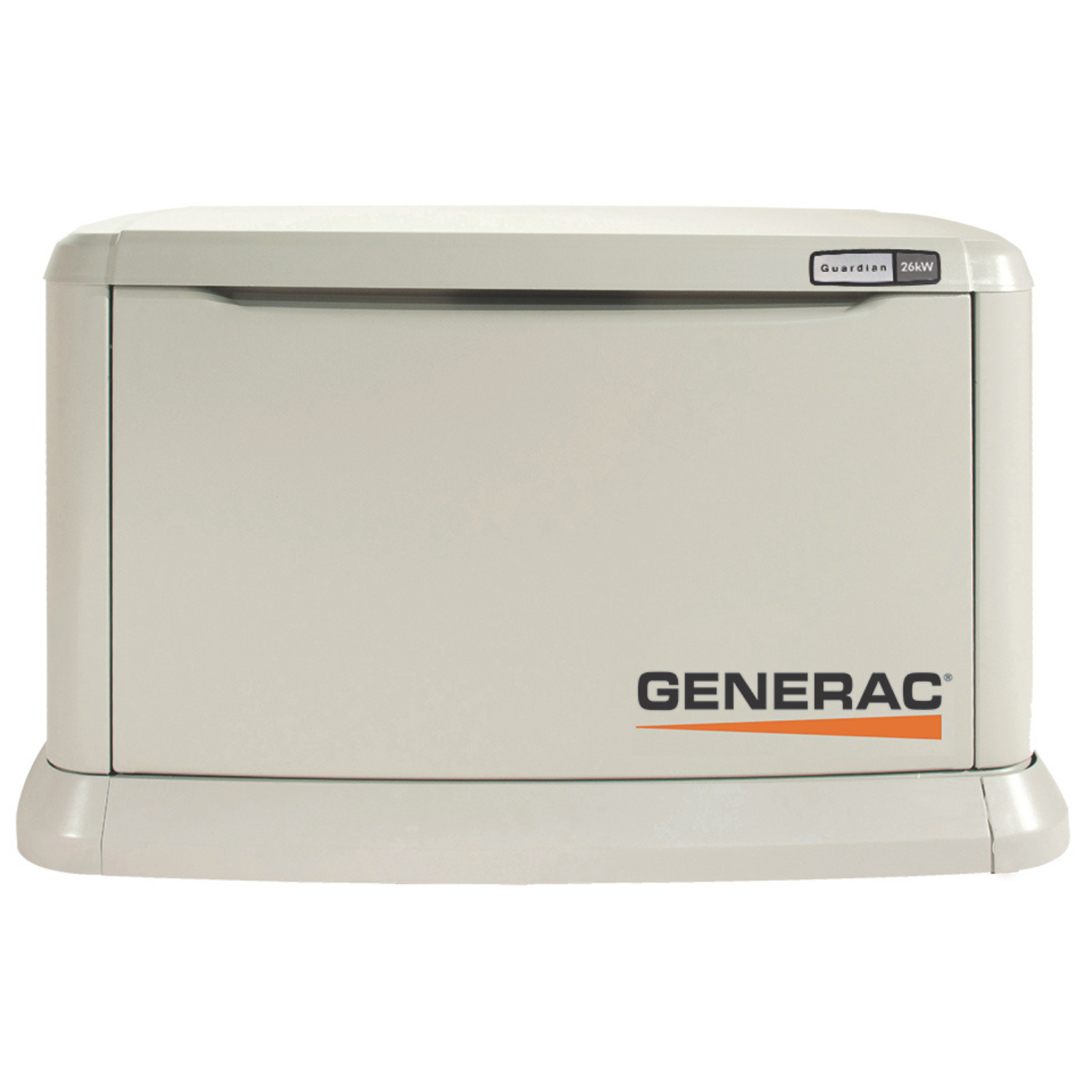
Generac Guardian 26kW
The biggest air-cooled generator Generac makes, and the one owners of large homes buy to avoid stepping up to liquid-cooled money. 26kW on propane (22.5kW on natural gas) with a redesigned alternator delivering 230 LRA of starting grunt means dual 5-ton AC setups are realistic with load management. It's 'smart grid ready' and runs the same Evolution 2 controller and Mobile Link stack as the rest of the line — which cuts both ways, since the controller is also the line's most-reported failure point. Owners praise the density (Generac claims 68% less space than comparable output) and the familiar service ecosystem; the grumbles are the usual dealer-dependent warranty service, the meaningful NG derate, and 67 dB of noise that a big home's yard absorbs better than a small lot does.

Kohler
Kohler 14kW RCA
Kohler's answer to the Guardian 14kW, and the one owners pick when they've read enough Generac controller threads. The commercial-grade CH740 V-twin uses hydraulic valve lifters — no break-in, no valve adjustments — and the corrosion-proof aluminum enclosure holds up in coastal salt air where painted steel rusts. It punches above its class on motor starting with 33kVA of surge capacity via PowerBoost, so a 4-ton AC is realistic. Owner sentiment is consistent: the hardware feels a grade above Generac, but the dealer network is thinner, lead times run longer, and the OnCue Plus monitoring app is dated and clunky compared to Mobile Link. Note the honest ratings: 14kW on propane but 12kW on natural gas, and 69 dB in normal operation is louder than the spec-sheet skim suggests.

Kohler
Kohler 26kW RCA
Kohler's air-cooled flagship goes head-to-head with Generac's 26kW and quietly wins the spec that matters for most buyers: 24kW on natural gas versus Generac's 22.5kW. Built on the CH1006 V-twin with PowerBoost starting, it carries large homes — dual AC compressors, well pumps, the works — and owners describe it as the 'buy once' choice in the class. The critical silencer and sound enclosure keep the tone lower and less mechanical than the raw 70 dB figure suggests, though it's still not quiet. Ownership realities: it's a 625-lb unit that needs a serious pad, Kohler/Rehlko dealer coverage is uneven so line up your servicer before you buy, and lead times can stretch after major storm seasons. The 26RCAL variant bundles a 200A transfer switch if you want one quote for everything.

Honda
Honda EU3200i
Honda's first genuinely new generator in years, and the first in this size with fuel injection — the GX130 EFI means no carburetor to gum up in storage, which eliminates the single most common failure mode in owner forums. At 59 lbs it carries like an EU2200i but delivers 2,600 running watts and a 30A locking outlet, enough to start a 13.5k BTU RV air conditioner that the smaller Honda can't touch. Owners love the concept; the execution had teething problems — Consumer Reports and retailer reviews show a visible minority of one-star reports for stalling and hard-start issues on early units, and Honda's dealer-service response has been mixed. Most current-production owners report it running flawlessly and impressively quiet at 54-58 dB. It's expensive per watt, but it's the lightest path to real RV-AC power with EFI reliability.

Champion's answer to the EU7000iS costs a third as much and adds propane capability: 7,000 running watts of closed-frame inverter power at a claimed 61 dBA from 23 feet, with both 50A and 30A 240V outlets ready for a transfer switch. Owners running whole-home essentials during outages report it handles well pumps, furnaces, and a smaller central AC, with quiet operation that genuinely surprises people used to open-frame roar. The CO Shield sensor and electric start round out a strong package. The complaint list from owner threads: at 214 pounds it's barely 'portable' despite never-flat wheels, the propane derate takes running power to about 6,300 watts, real-world noise climbs well above 61 dB under heavy load, and a few owners report early inverter-board failures — Champion support resolves them, but shipping a 200-lb unit for service is nobody's idea of fun.

Westinghouse
Westinghouse WGen11500TFc Tri-Fuel
The r/Generator power-user pick: hook it to your home's natural gas line through a quick-connect and you have effectively unlimited runtime without storing a drop of gasoline — the practical middle ground between a portable and a $12,000 standby install. On gasoline it makes a huge 11,500 running watts; the honest math is the NG derate to 9,500 running watts, still enough for most whole homes via the 50A outlet and an interlock. Remote start, CO sensor, and a 9.5-gallon tank round it out. Owner notes: NG performance depends on your line pressure — undersized gas plumbing causes surging and hard starts, the most common complaint thread — plus it's a 230-lb beast, mid-70s dB loud, and Westinghouse support remains the weak link. Registered owners report solid 3-year warranty coverage when they persist.

DuroMax
DuroMax XP13000EH
The 'Beast': 13,000 starting watts, a 500cc V-twin, all-metal construction, and a 50-amp outlet for around $1,300 makes this the biggest-hammer option in portable backup. Owners with heat pumps and well pumps buy it specifically because the MX2 switch lets you dedicate full power to 120V or split 120/240V, and thousands of reviews confirm it starts loads that stall 8kW units. DuroMax support actually gets better marks than Westinghouse's in forum comparisons. What the fans concede: it's LOUD (mid-to-high 70s dB real world), 234 lbs of steel, drinks propane fast (about 3 hours on a grill tank), and its non-inverter power has high enough THD that owners with sensitive electronics run a UPS or interlock only non-critical circuits. Fit-and-finish complaints — sticky chokes, cheap petcocks — appear but are usually solved with basic wrenching.

Generac
Generac GP3300i
Generac's play for the Honda EU2200i shopper who balks at $1,200: 2,500 running watts (700 more than the Honda), PowerRush surge tech, USB ports, and COsense CO shutdown for roughly half the money, in a 60-lb suitcase. Owners use it for camping, tailgates, and charging batteries off-grid, and reviews are broadly positive about starting behavior and the extra headroom that runs a small AC or space heater the Honda can't. What the threads flag: Generac doesn't publish a noise spec — owners measure it audibly louder than the Honda, especially outside eco mode; eco mode can hunt/surge with cycling loads like fridges; the 1-gallon tank is small; and while the 3-year warranty is real, portable warranty service goes through Generac's dealer network, which prioritizes standby customers. A rational value pick if ultimate quiet isn't the goal.
Generac
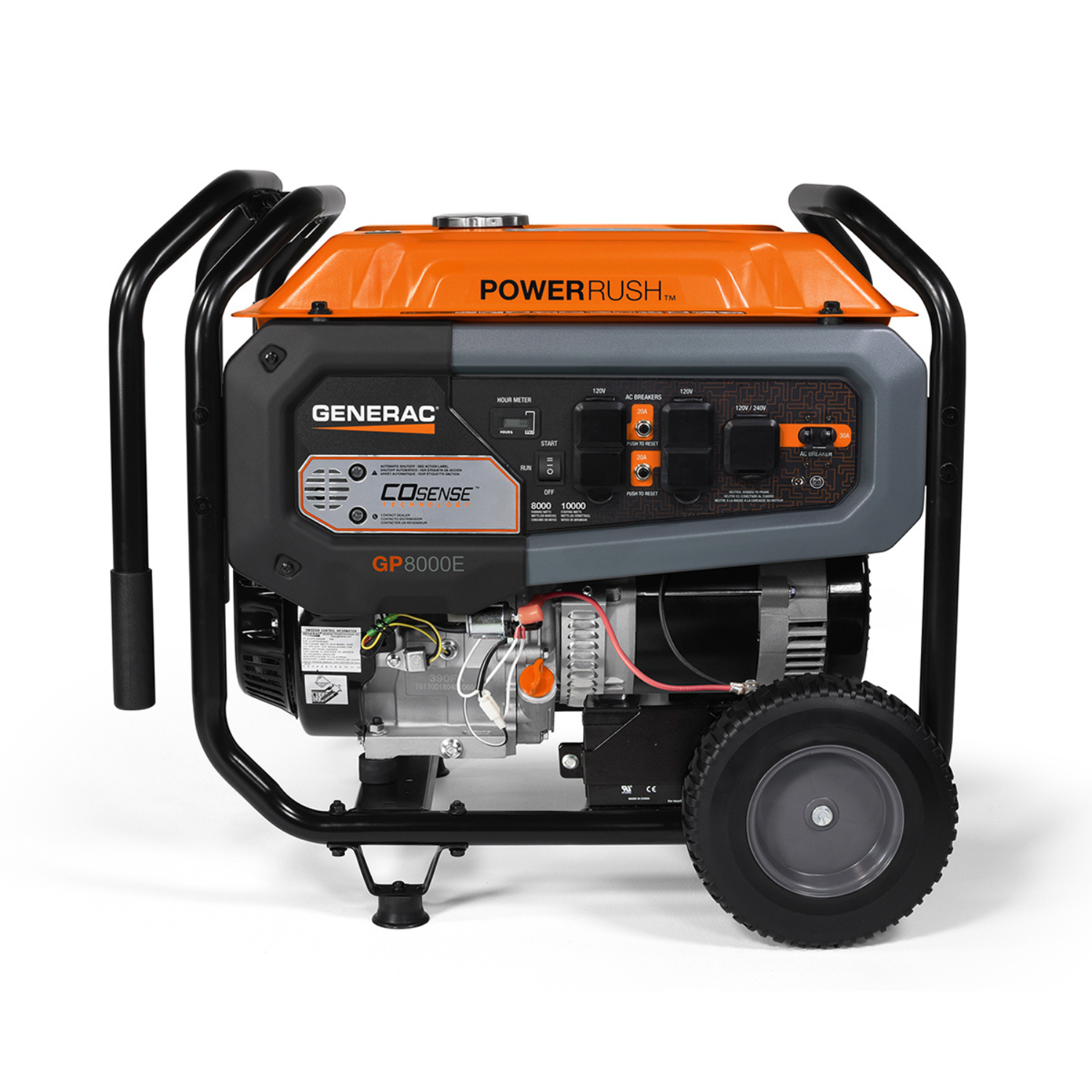
Generac GP8000E COsense
The big-box storm generator: when a hurricane is three days out, this is what's stacked on pallets at Home Depot, and that availability is genuinely part of its value. 8,000 running watts, 10,000 starting via PowerRush, electric start, COsense shutdown, and an L14-30R for interlock feeding — a complete storm kit under $1,000 from a brand every service shop knows. Owner reports are solid on power delivery: it carries fridges, window ACs, well pumps, and furnace blowers simultaneously. The honest ledger: it's an open-frame roarer (Generac publishes no dB figure; owners report it's loud), non-inverter power means owners keep sensitive electronics on a UPS, it's gasoline-only with a thirsty 420cc engine, and Generac portables were hit by recalls (2022 handle pinch; an April 2026 carburetor fuel-leak recall on certain GP units) — check your serial. Runs forever with oil changes, per multi-year owners.
Firman
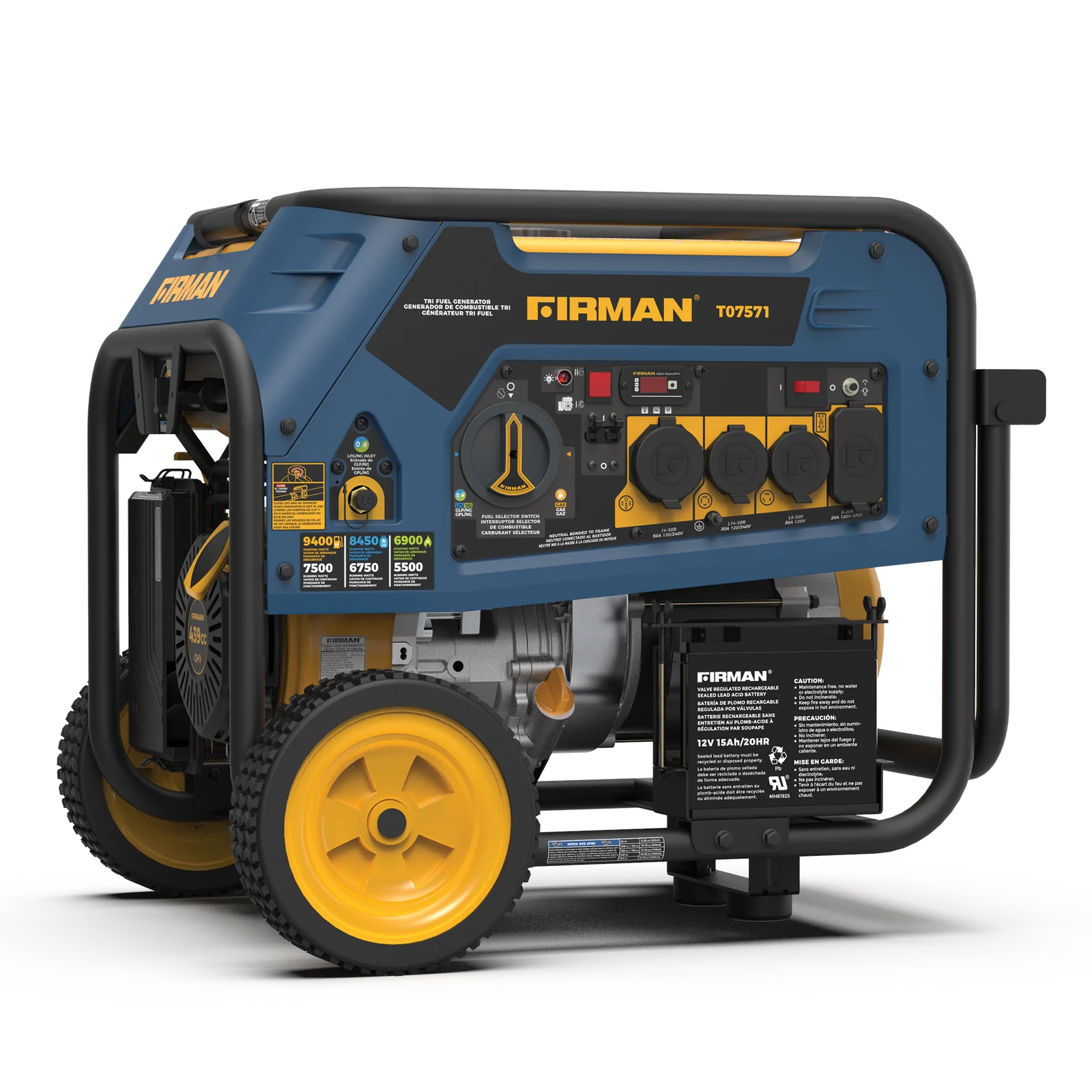
Firman T07571 Tri-Fuel
The Costco tri-fuel that made natural-gas backup a thousand-dollar proposition. The T07571 runs 7,500 watts on gasoline, 6,750 on propane, and 5,500 on natural gas, ships with both LP and NG hoses in the box, and has a 50-amp outlet — which is why r/Generator treats it as the default budget answer to 'I want to hook a portable to my gas meter.' Owners praise the honest hardware: electric start, 8-gallon tank, sturdy 213-lb frame, and a 3-year warranty that beats Predator's 90 days. The recurring complaints: Firman customer service is slow — weeks-long waits for warranty parts are the most common thread — NG output is a real 27% derate, it's a loud 74 dB open frame, and low NG line pressure causes surging just like every NG portable. Costco's return policy is frequently cited as the real warranty.

Champion
Champion 76533 3800W Dual Fuel
One of the best-selling generators ever made, and the archetype of the 'good enough for everything' budget dual fuel. Electric start, RV-ready TT-30R outlet, propane capability out of the box, and nearly a decade of owner history at around $550 — the review count across Amazon and Walmart is enormous and consistently positive. Owners run travel trailers, job sites, and essential-circuit extension-cord backup, and the 224cc engine has a reputation for starting after years of neglect (on propane especially, since there's no carb to gum). Known quirks from the threads: it's a 68 dB droner that campground quiet hours won't love, output on propane drops about 10%, there's no 240V so interlock users look elsewhere, the fuel selector and petcock feel plasticky, and cold-weather propane starts sometimes need a second try. Champion's phone support gets rare-for-the-industry praise.

WEN
WEN 56235i
The budget-inverter benchmark and a long-running Wirecutter-class recommendation: 1,900 running watts, a class-leading 39-lb carry weight, and 51 dB at quarter load — numbers that shadow the Honda EU2200i for less than half the money. The killer feature owners cite constantly is the three-position fuel shutoff, which burns the carburetor dry before shutdown and largely prevents the gummed-carb death that plagues stored generators. Thousands of Amazon reviews describe years of camping and CPAP-backup service; several document buying a second unit to parallel. The honest limits: it's 100 watts shy of the Honda with less surge grace, the eco mode hunts with cycling loads, the 1-gallon tank needs topping during long nights, WEN's warranty is 2 years versus 3 for the majors, and long-term durability past the 500-hour mark is less documented than Honda's. Per dollar, nothing embarrasses it.
Jackery
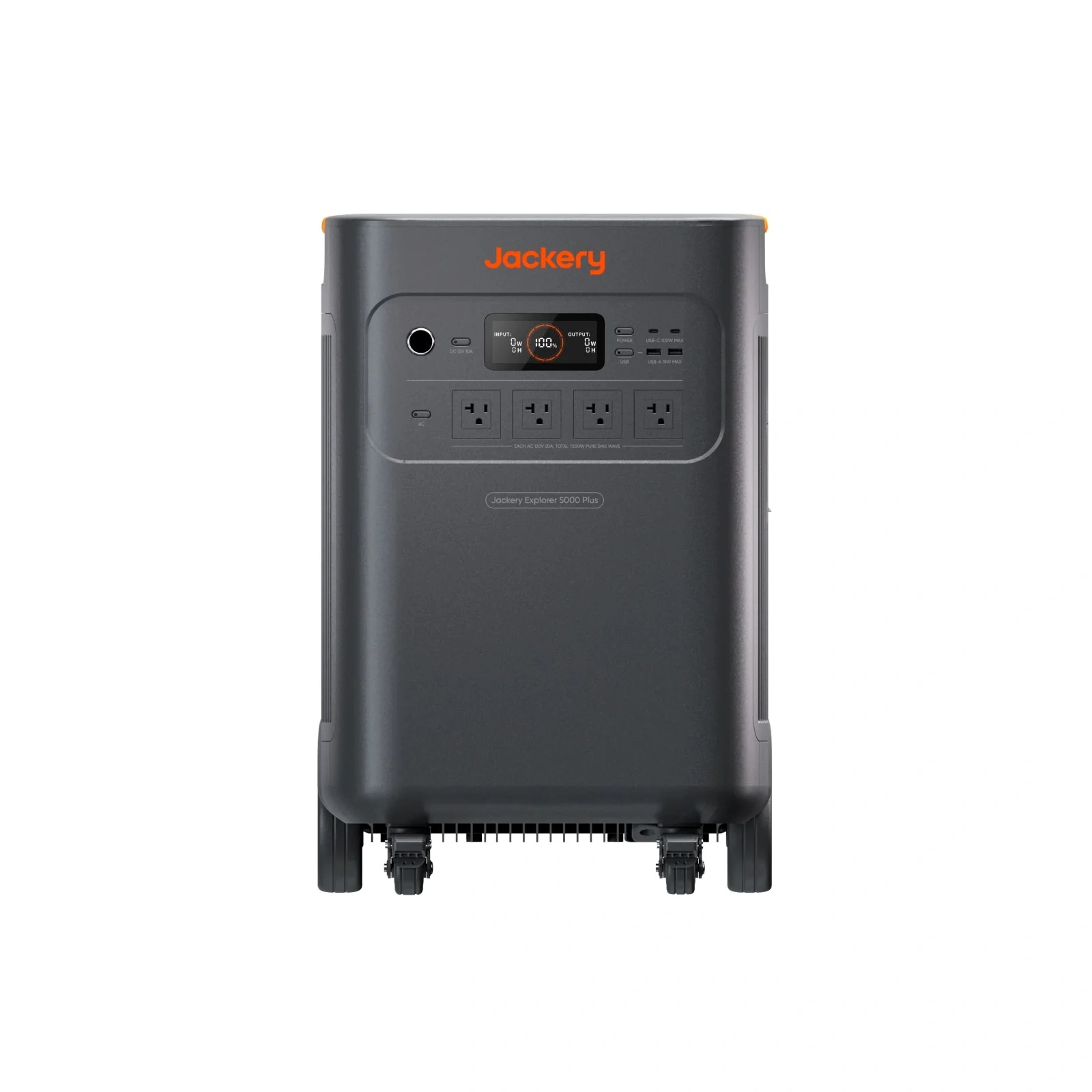
Jackery Explorer 5000 Plus
Jackery's 2025 entry into whole-home territory: 5kWh, a 7200W split-phase inverter, and a claimed 0ms UPS switchover - the spec that gets it recommended for sump pumps and server closets. It expands to 60kWh with battery packs and pairs with Jackery's transfer-switch kits for panel integration. Costco periodically sells it at $2,799, which owners treat as the buy signal since list is $4,299. The good: 240V from a single unit (rare - EcoFlow needs the bigger Pro 3 for that), suitcase wheels that handle gravel, and genuinely fast 4000W solar charging. Owner complaints center on the accessory economics - the transfer switch kit, battery packs, and parallel box add up fast - plus a 134.5-lb chassis you will not lift alone, and Wi-Fi setup that multiple reviewers found finicky. Newer to market, so long-term reliability data is thinner than the 2000 Plus.

Anker's suitcase-style 2kWh veteran - launched 2022, still sold in 2026 because constant $799-999 deals keep it moving. The rolling-luggage design with a pull handle is the feature owners mention most; 67 lbs rolls fine but the top-mounted ports mean bending over a lot. SurgePad pushes it to 3600W briefly, and the TT-30 makes it a natural for smaller RVs. GaNPrime charging does 0-80% in 1.4 hours, which was headline speed in 2022 and is merely fine now. Owner threads flag its age honestly: no UPS mode (there's a delay on switchover), the display washes out in sunlight, solar input caps at 1000W, and the app is the older Anker platform with fewer controls. Reliability sentiment is strong though - lots of three-year owners with zero issues, and the 5-year full-device warranty is unusual for its generation.
Bluetti
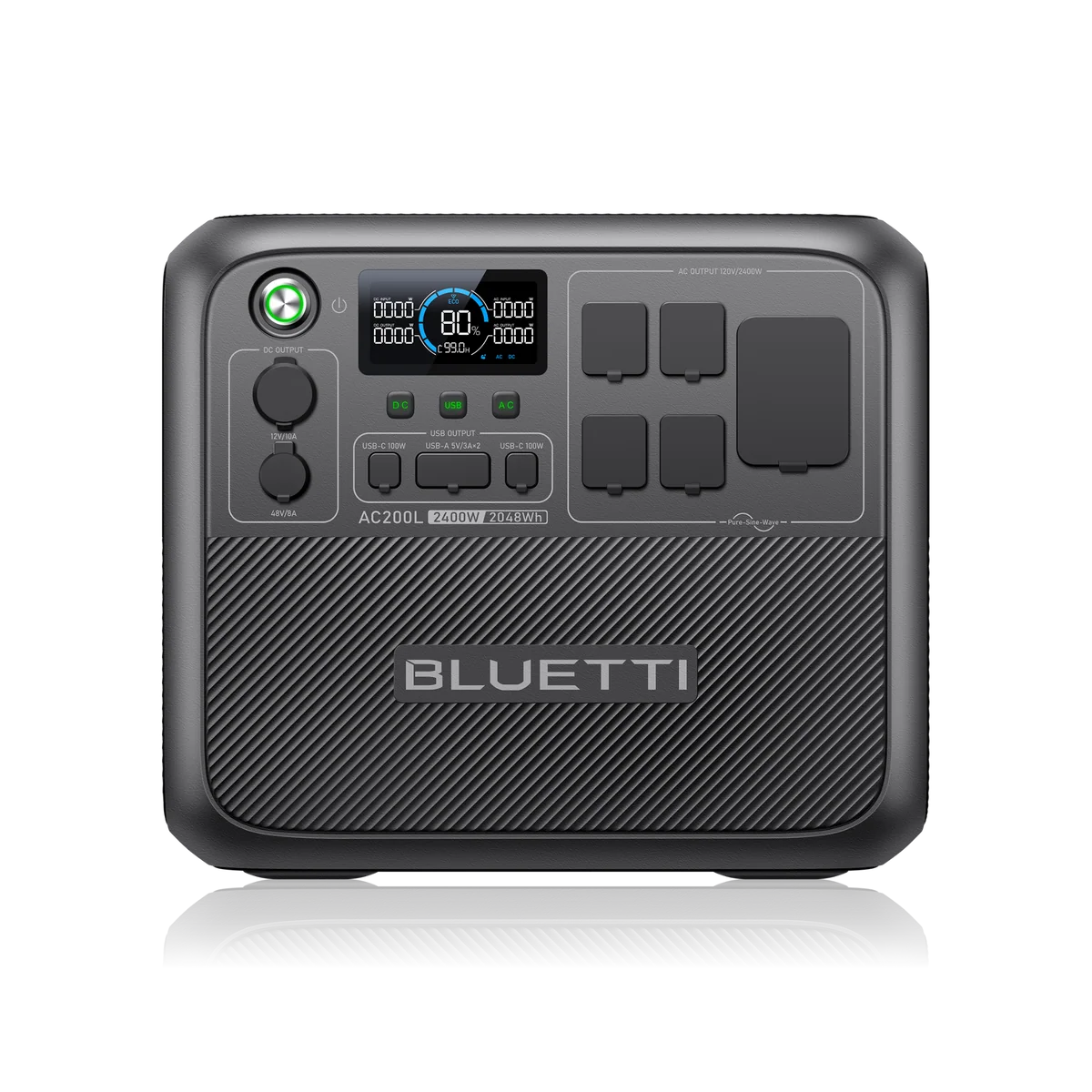
Bluetti AC200L
Bluetti's mainstream 2kWh unit and the expandability play at this price: it accepts B300K packs (up to ~8kWh) that also work with the bigger AC500 and Apex 300, so nothing you buy gets orphaned. The 30A TT-30 outlet plus a 48V RV DC port make it quietly one of the best RV units under $1,000. A 2,400W inverter with 3,600W Power Lifting covers tools and kitchen gear. Owner sentiment: solid hardware, middling software - app pairing drops and slow firmware updates are recurring gripes, and the cooling fans are audible under load in classic Bluetti fashion. At 62.4 lbs with no wheels, repositioning it is a deliberate act. Street pricing settled around $899 in 2026, and the periodic $799 deals make it a strong alternative to the Jackery 2000 Plus when expansion cost matters more than quietness.
Bluetti
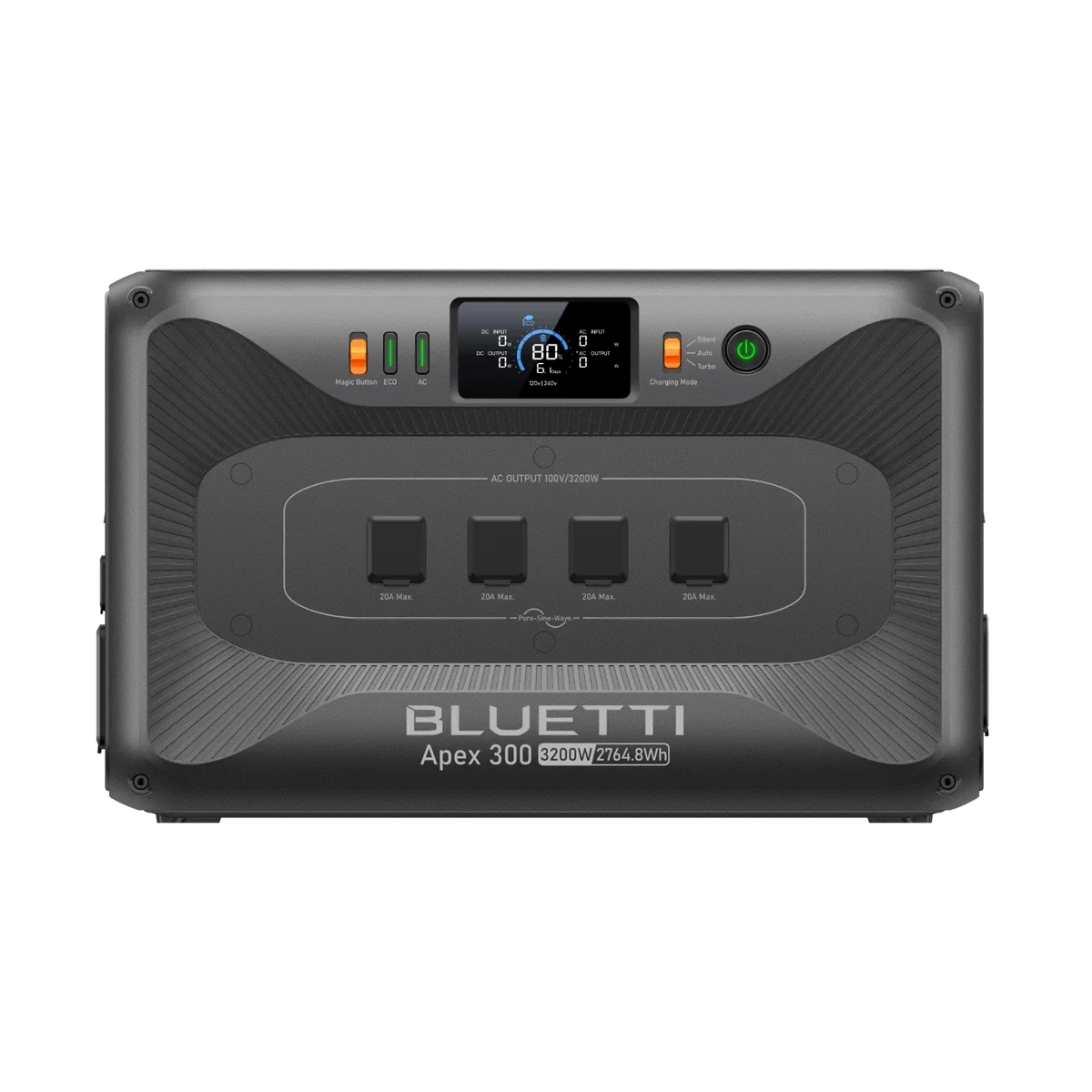
Bluetti Apex 300
Bluetti's 2025 modular flagship and their real answer to the F3800 Plus: 3,840W continuous (7,680W surge) with simultaneous 120/240V output, black-start capability, and expansion to a frankly absurd 58kWh using the same B300K packs the AC200L takes. The 6,000-cycle cells carry a claimed 17-year lifespan. Pro reviewers praise how confidently it starts well pumps and RV air conditioners, and the $1,529 street price undercuts every 240V-capable rival. Owner-reported quirks skew new-platform: frequent firmware updates (mostly improvements, occasionally breakage), accessories like the solar controller and home-integration hub trickling out on their own schedule, and 83.8 lbs with no built-in wheels - the optional trolley is basically mandatory. Fan noise under heavy charge is present but better-mannered than older AC-series units. The ecosystem bet looks smart if Bluetti keeps shipping the promised add-ons.
Bluetti
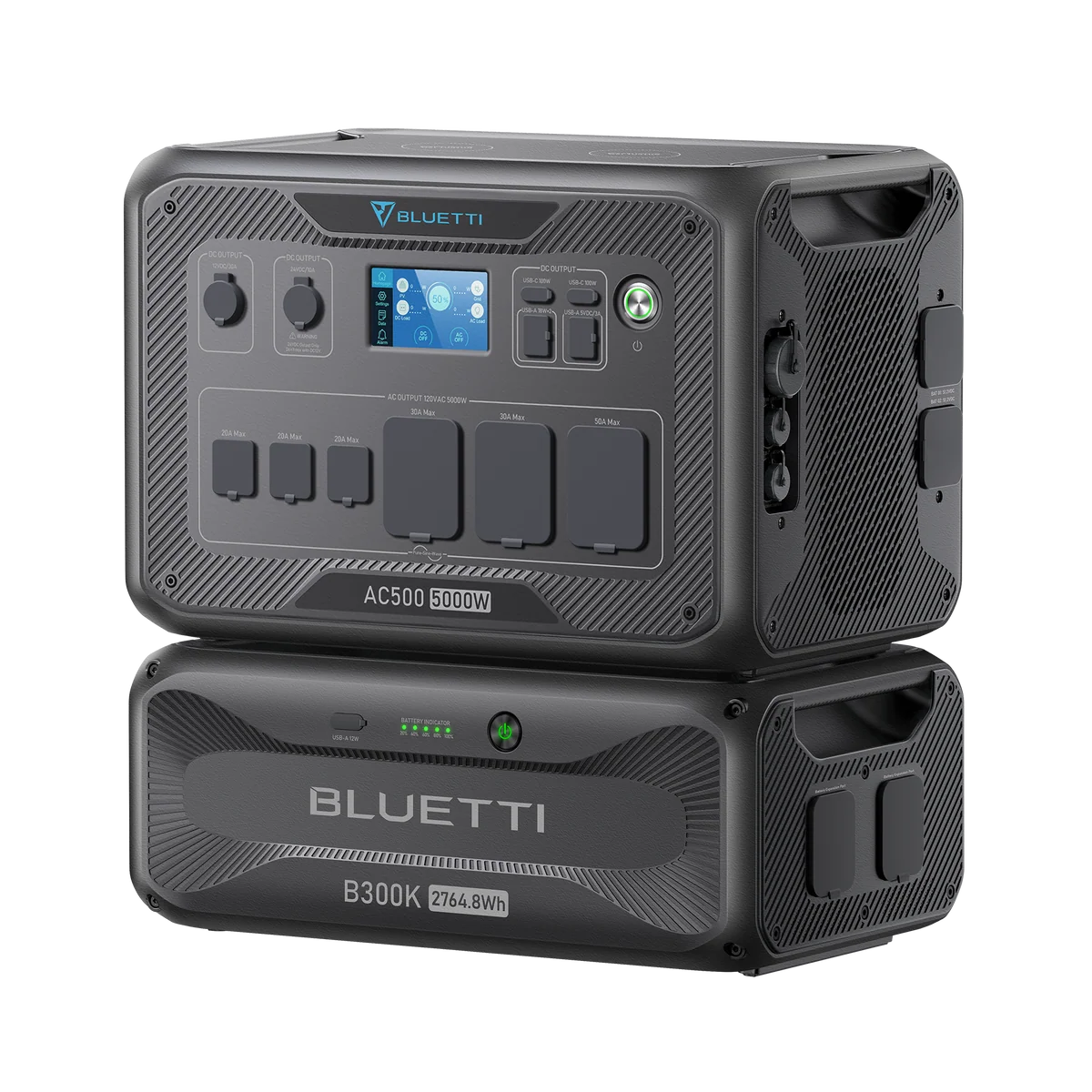
Bluetti AC500 + B300K
Bluetti's modular tower system: a 5,000W inverter head (10,000W surge - the strongest surge rating of any portable here) that stacks on B300K batteries. The 50A NEMA 14-50 outlet plus L14-30 makes transfer-switch and RV-pedestal hookups trivial, and two AC500s can pair for 240V and 33kWh. Costco has carried the combo, which says something about mainstream acceptance. Owners like the swap-ability - batteries charge to 80% in 45 minutes and detach for transport, since the two-piece design splits an unliftable 131 lbs into two 65-lb pieces. Recurring complaints: the fans are genuinely loud at high charge rates, Wi-Fi connectivity drops, and the 4-year/3+1 warranty structure trails the 5-year industry standard. It's older than the Apex 300 but the 5kW inverter and 14-50 outlet still earn it recommendations for heavy transfer-switch duty.
Tesla
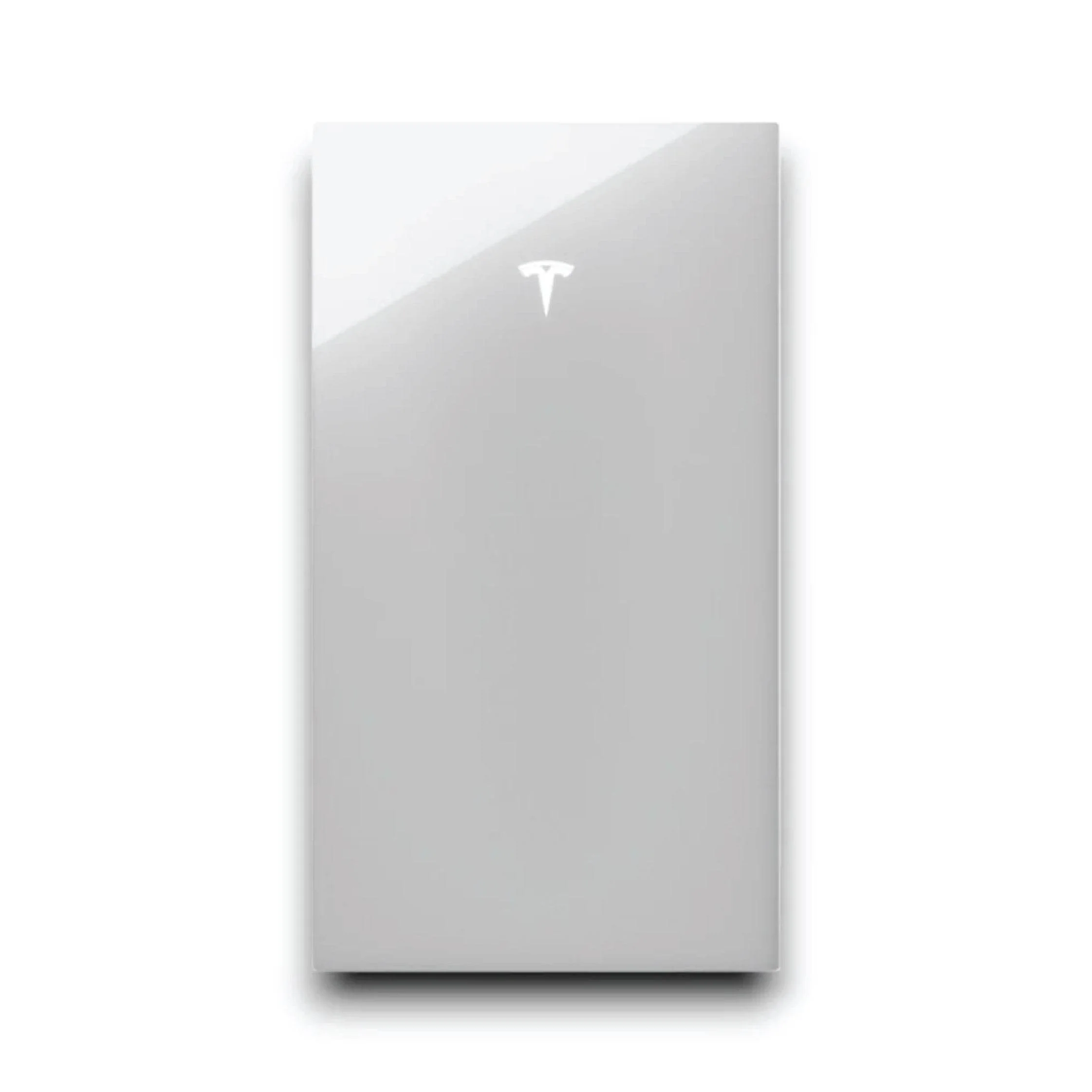
Tesla Powerwall 3
The reference point every other home battery is measured against. Price shown is typical installed cost ($13,000-16,500 in 2026, roughly $9,300-11,500 hardware). One unit delivers 11.5kW continuous with a 185A locked-rotor start rating - enough to run and start central air - plus an integrated 6-MPPT solar inverter that eliminates a separate inverter purchase. LFP chemistry, 97.5% efficiency, 10-year warranty. Owner sentiment: the app is universally called the best in the industry, and per-kWh installed cost is hard to beat. The complaints are real though: a subset of owners report a persistent two-tone hum/vibration from the cooling system audible through garage walls, support tickets that stall between Tesla and third-party installers, and quote quality varies enormously by installer. Expansion packs (13.5kWh, no inverter) bring a unit to 54kWh.

Champion
Champion aXis 14kW
Champion's aXis system is the disruptor bid in standby: a 14kW unit with a 200-amp service-entrance transfer switch AND a 10-year warranty — double the coverage of Generac, Kohler, or Cummins — for about five grand. The clever bit is Power Line Carrier technology: the generator talks to the transfer switch over your home's existing wiring, so installs skip the extra control-wire run, and the aXis load management prioritizes up to four loads. The 754cc Milwaukee-series V-twin runs a claimed 62 dBA, quiet for the class, and it operates from -22°F to 104°F with a 24V starting system. Owner reports are mostly happy, but the honest cons: the certified installer network is young and sparse, some electricians are unfamiliar with the PLC setup, and 12.5kW on natural gas trails the LP rating.

The unicorn spec r/Generator kept asking for: tri-fuel AND inverter in one machine. Hook the 201176 to your natural-gas line for unlimited runtime, and unlike every conventional tri-fuel, it feeds your house clean sub-3% THD power that's safe for furnace boards, UPSs, and electronics — through a 50-amp outlet. On gasoline it makes 7,250 running watts; NG drops it to 5,875, still enough for most homes' essentials plus a small AC. It's an open-frame design, so the 72 dBA rating is real and load-dependent — quieter than a WGen9500DF, louder than closed-case inverters. Owner threads note the winning math (it replaced separate 'quiet' and 'NG' generators for many), with the familiar caveats: NG line pressure matters, the 420cc engine drinks on gasoline at full tilt, electric-start battery upkeep, and Champion's included NG/LP hoses are short. CO Shield included.
Goal Zero
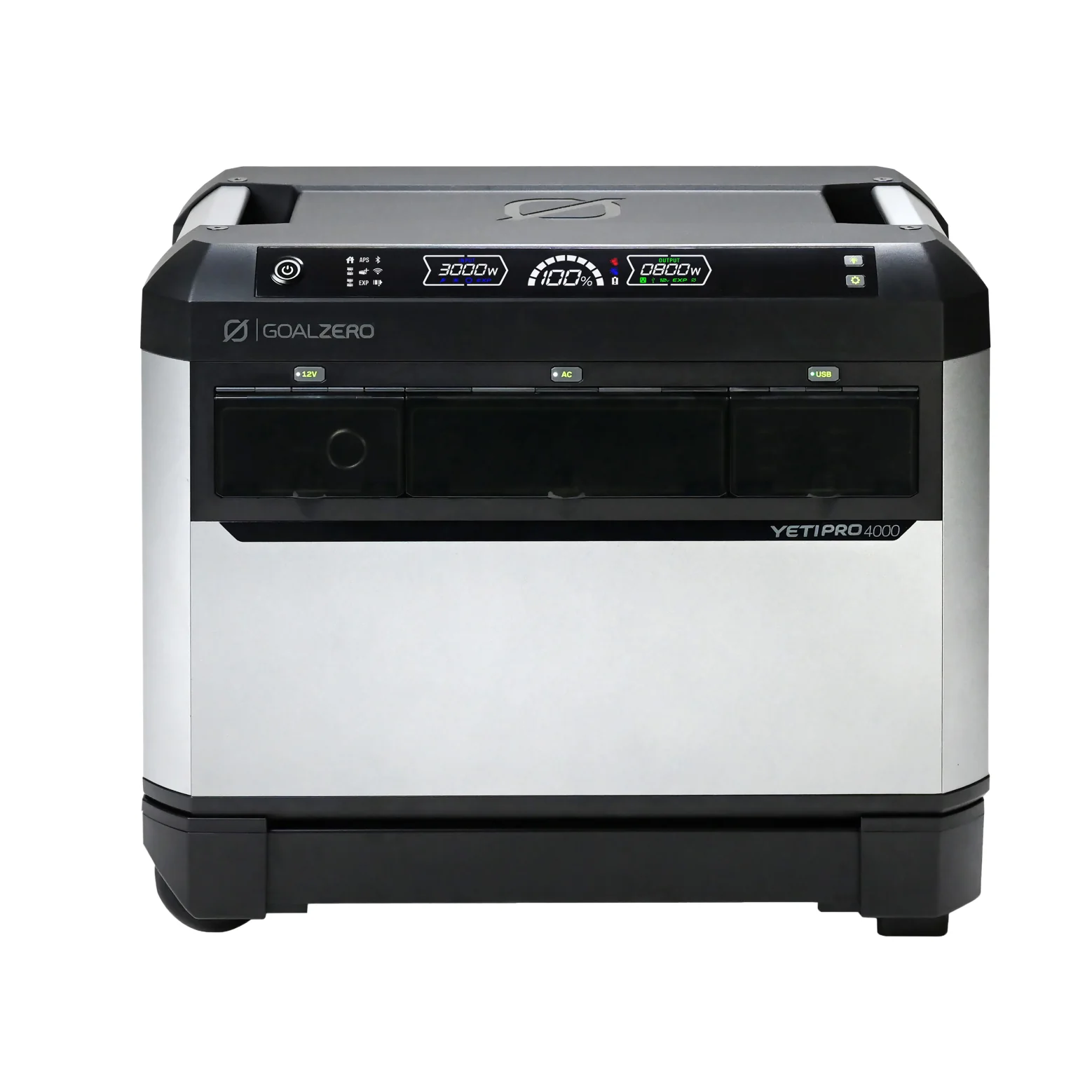
Goal Zero Yeti Pro 4000
Goal Zero's 6th-gen flagship, built like outdoor equipment rather than consumer electronics: aluminum housing, magnetic port covers that snap shut against dust and rain, and UL2743 certification for outdoor portable use - it's the overlanding crowd's pick for a reason. 3,994Wh with 3,600W output (7,200W surge), 3,000W of solar input, and expansion via Tank Pro batteries to roughly 20kWh. It pairs with Goal Zero's Haven 10 transfer switch for 10-circuit home backup. Owners consistently note the fans are quieter than expected for the size, and the build quality feels a class above. The complaints are equally consistent: it's expensive per kWh versus EcoFlow and Anker, Tank Pro expansion batteries cost more than competitors' packs, there's no 240V from a single unit, and Goal Zero's app - historically the brand's weak spot - is improved but still behind EcoFlow's.
Enphase
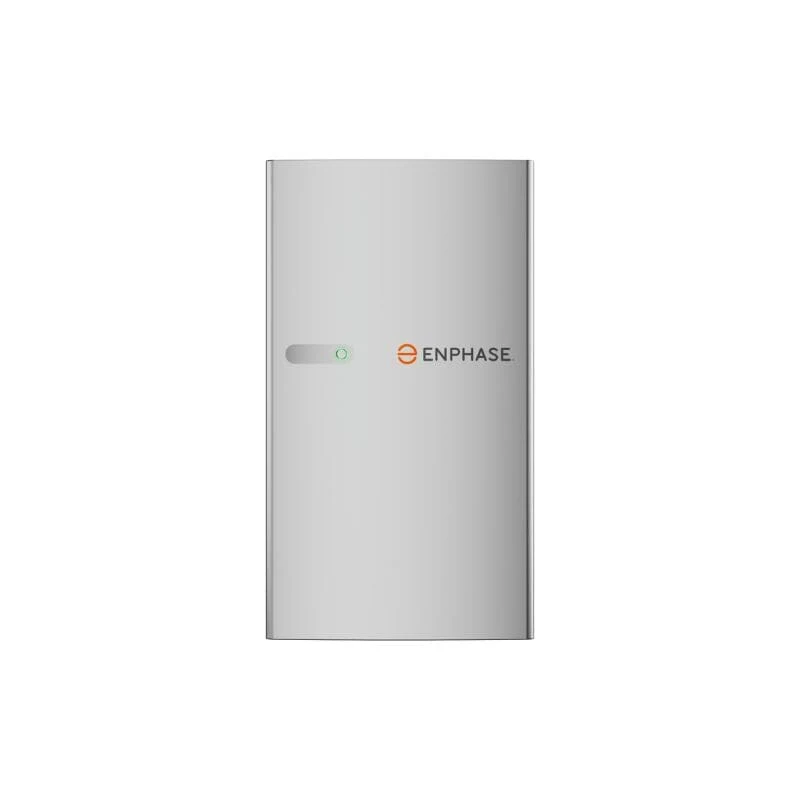
Enphase IQ Battery 5P
The modular, reliability-first choice - especially for homes already running Enphase microinverters. Each 5kWh module contains six grid-forming microinverters producing 3.84kW continuous (7.68kW peak for motor starts), and you stack modules to fit the budget. Price shown is typical installed cost per module ($5,000-8,000 depending on region and whether a System Controller is included). The 15-year/6,000-cycle warranty is the longest in the industry by five years, and it's the spec owners cite most when justifying the premium. The criticism is always the same: per-kWh cost runs $1,000-1,600 installed - roughly double a Powerwall 3 - and whole-home backup realistically needs three-plus modules and the IQ System Controller before it starts a heat pump. Owner sentiment on the Enphase app and the no-single-point-of-failure architecture is very positive; sentiment on the final invoice less so.
EcoFlow
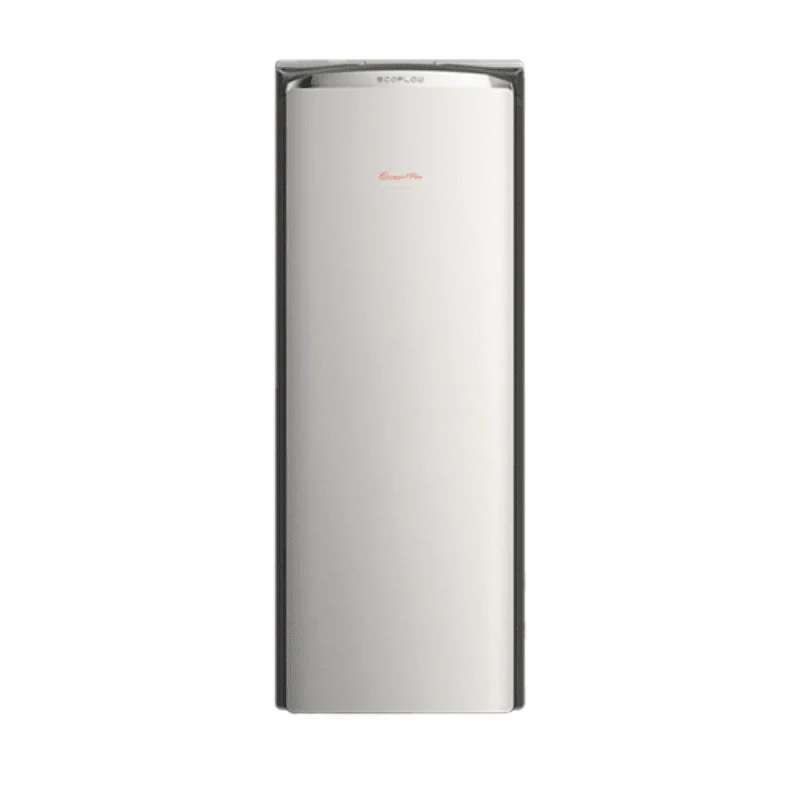
EcoFlow OCEAN Pro
EcoFlow's 2026 leap from portable stations into permanently-installed storage, and on paper it's a monster: 10kWh IP67 modules stacking to 80kWh per inverter, a hybrid inverter platform rated to 24kW output with 205A LRA motor-start, 40kW of solar input, an integrated Smart Electrical Panel 40 and 11.5kW EV charger, plus a 15-year warranty that beats everyone except Enphase's on paper. Pricing is quote-only through certified installers - the price shown is an estimated installed starting system (inverter + battery + smart panel) based on early published system ranges; treat it as directional, not gospel. Because it launched this year, real owner history is thin: early impressions praise the AI-driven time-of-use optimization and the whole-ecosystem integration, while the obvious cautions are a brand-new installer network, unproven long-term support for installed products from a portable-power company, and unknown service logistics.

Briggs & Stratton
Briggs & Stratton PowerProtect 22kW
Briggs' PowerProtect 22kW has one spec nobody else in the class matches: NGMax tuning delivers the full 22,000 watts on natural gas — no derate — where Generac's 22kW drops to 19.5kW and Kohler's 20kW to 18kW. If your home runs on NG, that's effectively a size-class upgrade for free. The commercial-grade Vanguard 993cc V-twin (Briggs' premium engine line) drives it, the aluminum enclosure is rated for 186-mph hurricane winds, and the 7-year parts/labor/travel warranty beats the standard 5-year offers. So why isn't it everywhere? Owner threads point to the thin dealer network, slower parts distribution since Briggs' 2020 bankruptcy and KPS acquisition, and low retail visibility — Lowe's is the main storefront. At 68 dBA normal / 64 dBA idle-mode it's mid-pack for noise.
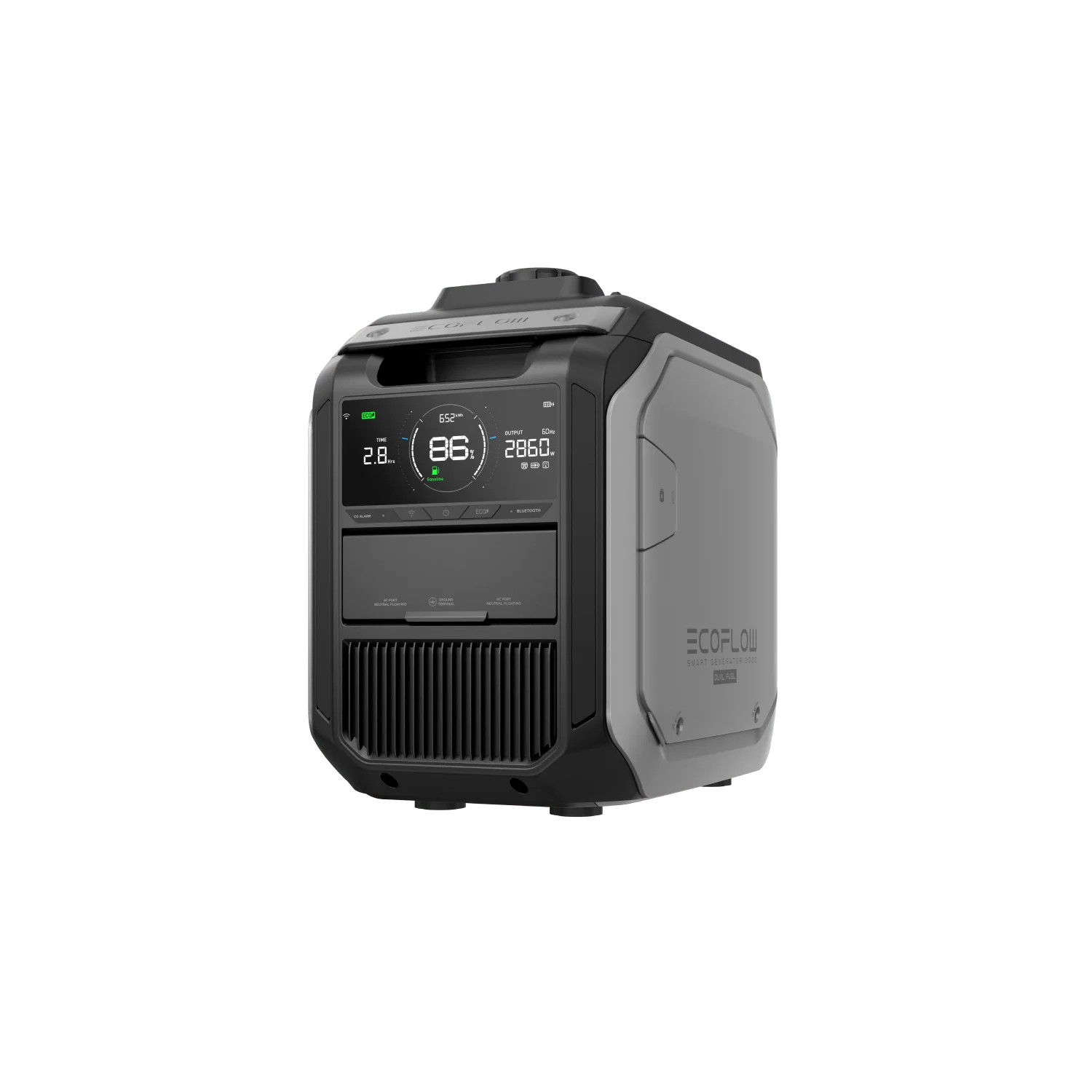
This isn't really a competitor to Honda — it's a range extender for EcoFlow's battery ecosystem, and that's exactly how owners use it. Paired with a DELTA 3 or DELTA Pro power station, it auto-starts itself when the battery drops below a threshold you set in the app, charges via high-efficiency DC (skipping the AC conversion loss), then shuts itself off — so the noisy, fuelly part of backup power runs as little as possible. It also works as a plain 2,000W dual-fuel inverter generator with app control and five start methods. Owner sentiment: brilliant inside the ecosystem, mediocre outside it — 69 dB is loud for 2,000 watts, the 1-year warranty is stingy, LPG output drops to 1,800W, and at typical pricing you can buy more raw watts elsewhere. As the automated gas backstop to a solar-battery setup, though, nothing mainstream matches it.
Anker
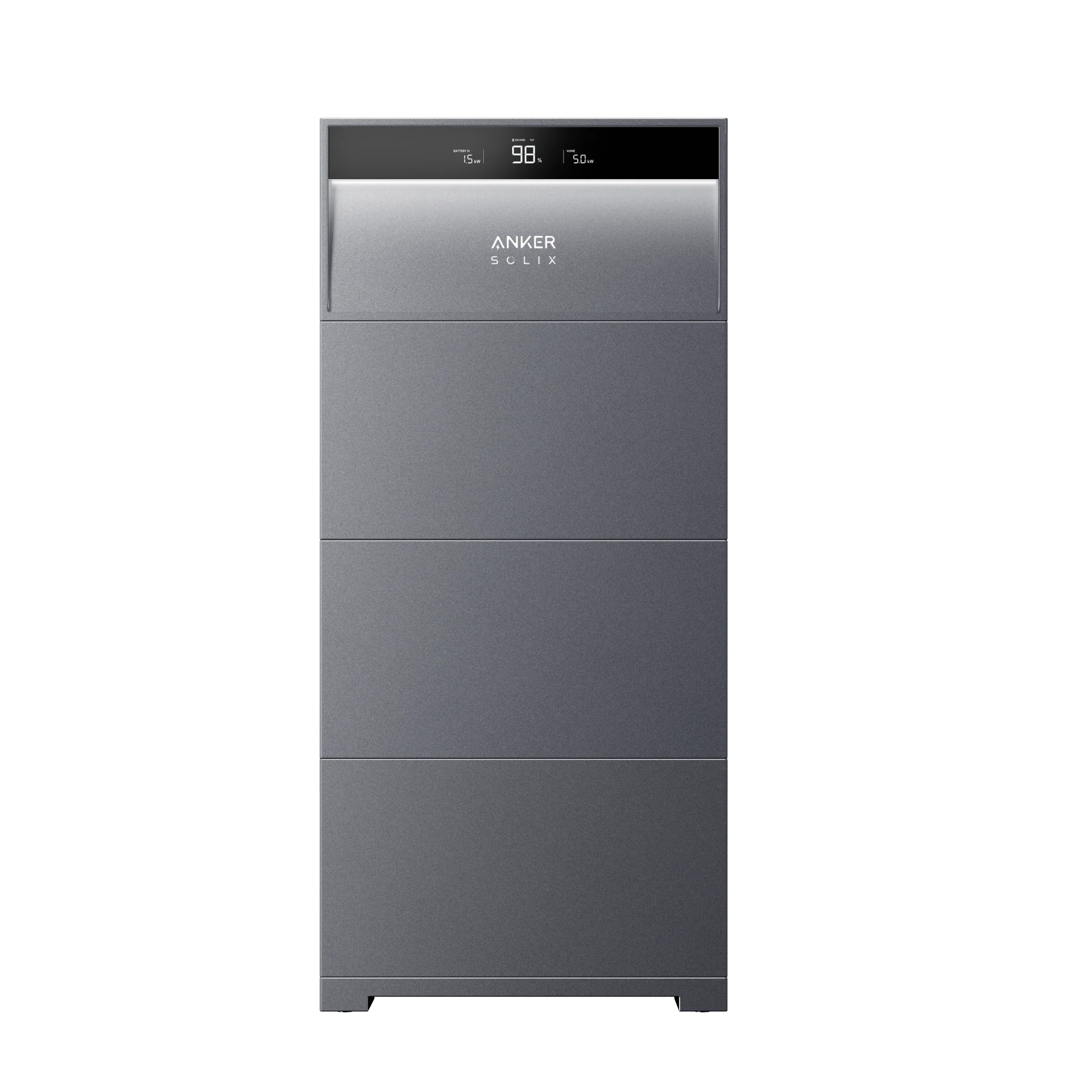
Anker SOLIX X1
Anker's professionally-installed system, built from slim 5kWh modules into the best-looking cabinet in the business - reviewers keep calling it the battery you don't need to hide. Price shown is a typical installed 15kWh configuration (~$9,750-11,000 hardware plus $1,500-5,000 installation). The 6kW/12kW-peak power module handles essential-loads or whole-home duty, modules run at full power from -4°F thanks to per-pack thermal management, and systems parallel to a monstrous 180kWh. Reviewers praise the modular economics - add 5kWh at a time instead of a whole second cabinet. The catch owners and forum threads flag: the certified-installer network is much thinner than Tesla's or Enphase's, so quotes swing wildly and some regions simply have no coverage; the app is solid but young; and 12kWh usable from the '15kWh' stack (90.2% round-trip) needs reading of the fine print.
Generac
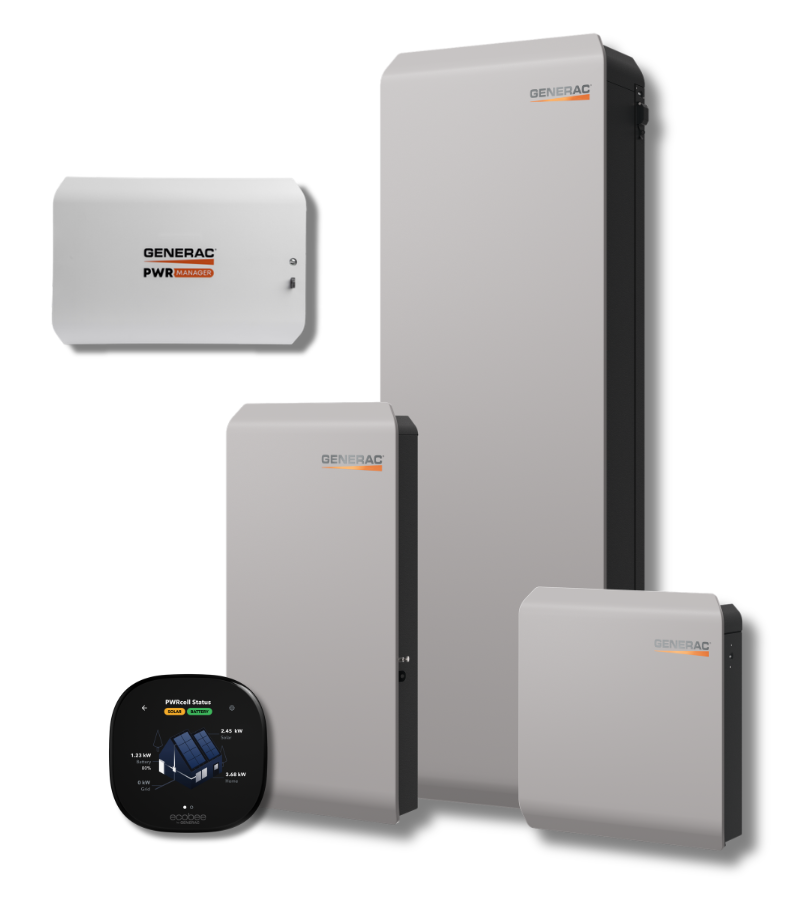
Generac PWRcell 2
The generator company's modular battery play: a cabinet holding three to six 3kWh NMC modules (9-18kWh), so you can start small and slot in ~$2,500 modules later - a genuinely different upgrade path from fixed-capacity rivals. Price shown is estimated installed cost for a full 18kWh cabinet; a 9kWh starter system runs $17,000-21,000 installed, which owners and reviewers consistently flag as expensive per kWh versus Powerwall 3. Where it earns its keep is ecosystem: PWRmanager load management sheds circuits automatically, it integrates cleanly with Generac standby generators for indefinite outages, and every system ships with an Ecobee smart thermostat. The baggage: PWRcell 1's SnapRS connector failures left a support-reputation scar that owner forums haven't forgotten, the NMC chemistry is less thermally forgiving than the LFP everyone else moved to, and dealer-only pricing makes apples-to-apples quotes difficult.
SolarEdge
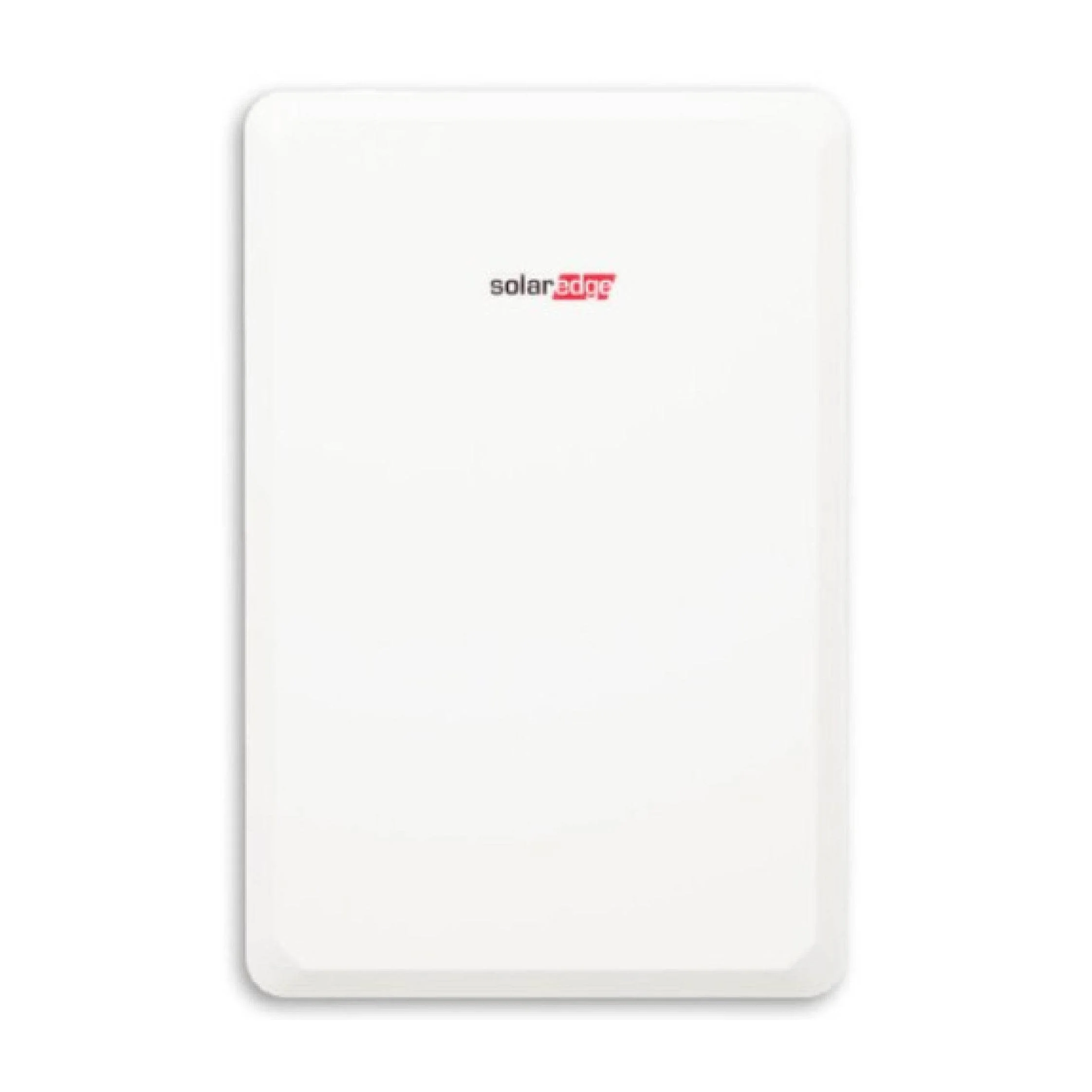
SolarEdge Home Battery
The default add-on for the millions of homes already running SolarEdge inverters. Its DC-coupled architecture is the technical selling point: solar charges the battery without a DC-AC-DC round trip, giving 94.5%+ efficiency - the best path from panel to stored kWh of anything here. 9.7kWh usable, 5kW continuous (7.5kW/10s peak), stacking three-high to 29.1kWh on one Home Hub inverter. Price shown is a typical installed cost; projects commonly land $7,000-15,000 depending on region and wiring. The caveats owners raise: it's NMC chemistry in an increasingly LFP world, 5kW continuous won't start big HVAC without careful load design, it only works within the SolarEdge ecosystem, and SolarEdge's post-2023 corporate turbulence plus mixed support reviews give some buyers pause. For existing SolarEdge homes though, nothing else integrates as cleanly.
Questions worth answering before you buy
Wattage, fuel, noise, transfer switches, and the carbon monoxide rule that people break every storm season.
What's the difference between running watts and starting watts?
Running watts is what a generator supplies continuously; starting watts is the extra surge it can deliver for a few seconds while a motor spins up. Anything with a compressor or pump — fridge, A/C, well pump — briefly draws 2-4x its running wattage at startup, so you size for the surge, not just the steady load. Wattage sizing walkthrough →
Can I run a generator in my garage or on the porch?
No — not with the door open, not 'just for a bit'. Generator exhaust carries enough carbon monoxide to kill in minutes, and CO deaths outnumber storm deaths after most hurricanes. Run it outdoors only, at least 20 feet from the house, exhaust pointed away from windows. Battery power stations are the only backup that's safe indoors. Generator safety guide →
Do I need a transfer switch?
If you want the generator to power your house wiring (furnace, well pump, hardwired circuits) — yes, a transfer switch or interlock kit is the only safe and legal way. If you're happy running extension cords to individual appliances, you don't need one. What you must never do is plug a generator into a wall outlet. Why backfeeding kills →
What size generator do I need for my house?
Essentials (fridge, lights, internet, phone charging) fit in 2,000-2,400 watts. Add a furnace blower, sump pump, or window A/C and you want 3,500-5,000. A well pump or small central A/C pushes you to 7,500+. Whole-home with central air is standby-generator territory at 18-26kW. Add up your real loads before buying. Size it properly →
Are battery power stations worth it compared to a gas generator?
For short outages, apartments, and anyone who values silence and zero maintenance — genuinely yes. But energy density still favors gas by a mile: a $3,000 battery stores about as much usable electricity as one gallon of gasoline produces in a small generator. For multi-day outages you want an engine, or a battery plus a small generator to recharge it. The honest tradeoffs →
What fuel type is best — gasoline, propane, natural gas, or dual fuel?
Gasoline makes the most watts per engine size but goes stale in months and vanishes from stations before storms. Propane stores forever and burns cleaner, at ~10% less power. Natural gas means unlimited runtime but only for fixed standby units on a gas line. Dual-fuel portables that burn gasoline or propane are the most storm-proof choice for most people.
How loud are generators, really?
Open-frame portables run 70-80 dB — lawn-mower loud, hard on neighbors overnight. Inverter generators run 48-60 dB, about a normal conversation. Standby units land in the mid-60s behind a sound enclosure. Batteries are near-silent. Every 10 dB is roughly a doubling of perceived loudness, so the gap between 50 and 70 dB is enormous at 2 a.m.
Can't I just plug the generator into my dryer outlet with a double-male cord?
No — this is the one absolute in the category. A 'suicide cord' backfeeds your panel, energizes the utility line outside, and can electrocute the lineman repairing it; it also bypasses every breaker protecting the circuit and has two sets of live exposed prongs in your laundry room. The legal, safe versions of the same idea cost less than people expect: an interlock kit runs $50-150 plus an electrician visit, and it makes the whole panel safely generator-fed. Every storm season someone dies for the $200 this saves. The safety guide →
How much gas should I store for a hurricane, and how do I keep it fresh?
A mid-size portable burns 8-15 gallons a day running flat out, so think 15-25 gallons stored for a real storm — run in shifts (mornings and evenings) and that covers most of a week. Ethanol gas goes stale in months; stabilizer extends it past a year, and rotating cans through your car's tank makes freshness automatic. The deeper fix is propane: it stores forever, and a dual-fuel generator turns the grill cylinders you already own into pre-staged outage fuel. The outage week playbook →
My generator ran fine last year and won't start now — what's wrong?
Stale gas in the carburetor, almost certainly — it's the single most common failure in the category. The escalation: fresh fuel in the tank and float bowl, check the choke/fuel-valve/oil-sensor basics, carb cleaner through the intake, then a 30-minute carburetor clean (or a $20 replacement carb — nobody rebuilds small carbs anymore). Prevention is a monthly 10-minute run under load and stabilized or drained fuel before storage; propane units skip this failure mode entirely. The won't-start fix, in order →
Will a power station really keep my fridge running overnight?
A modern fridge draws 40-60 watt-hours per hour once running, so a 1kWh station covers roughly 15-20 hours and a 2kWh unit rides out a full day-and-night — with the honest caveats: the compressor's starting surge rules out the smallest stations, door discipline matters, and an old garage fridge can double the math. A CPAP is easier still: 30-60 watts with humidification off means even a compact station handles the night. The pattern that wins outages is battery-for-the-quiet-loads, generator-for-the-heavy-lifting, recharging the battery during generator run windows. Battery vs generator, honestly →
How much does a home standby generator cost installed?
Budget roughly double the sticker: a $6,000-$7,000 whole-home unit typically lands at $11,000-$16,000 installed once you add the transfer switch, concrete pad, gas line work, permits, and electrician. Smaller 10-14kW essential-circuit setups can come in around $8,000-$10,000. Get multiple quotes — post-storm pricing spikes are real. Which type do you need? →