Head to head
Goal Zero Yeti 700 vs Goal Zero Yeti 1500
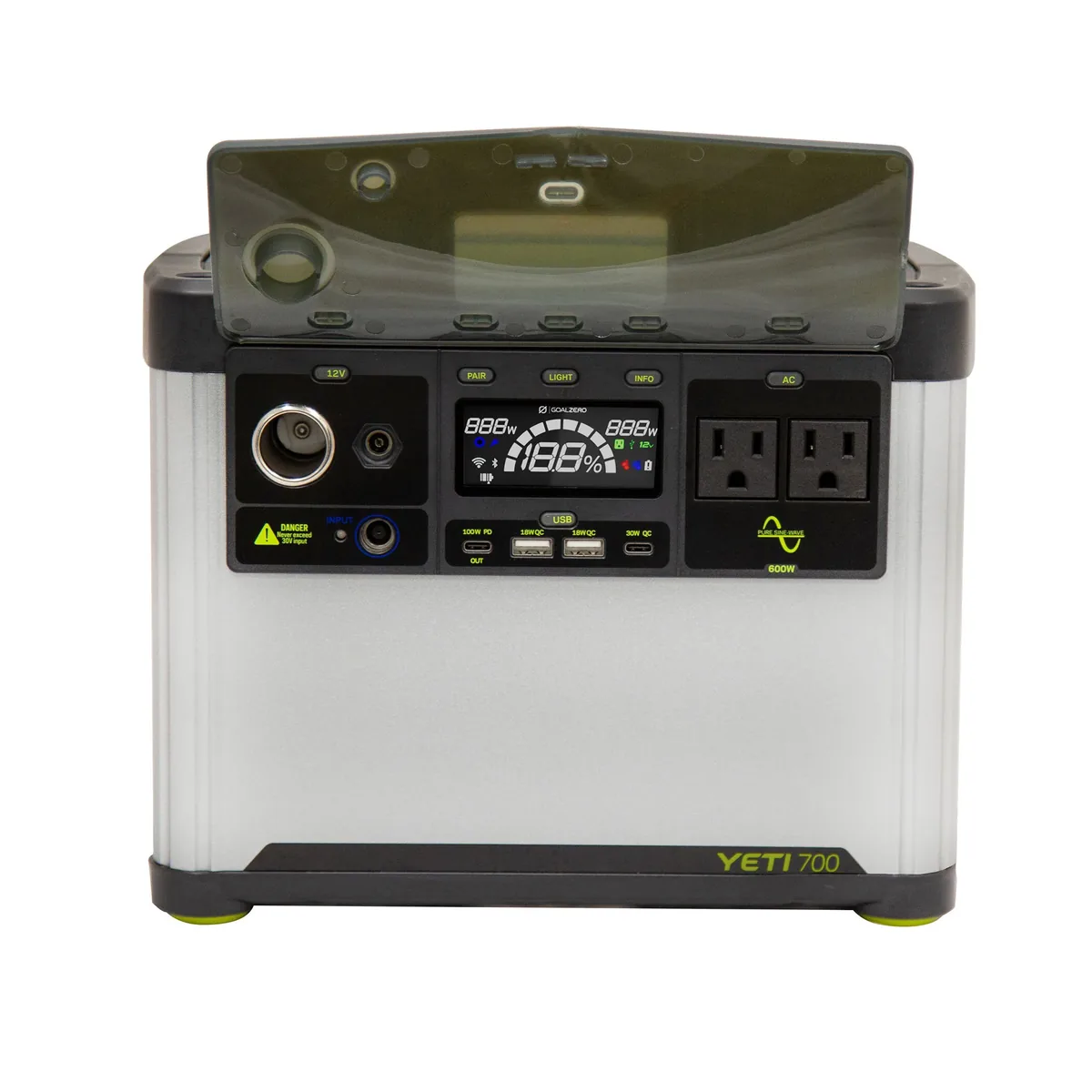
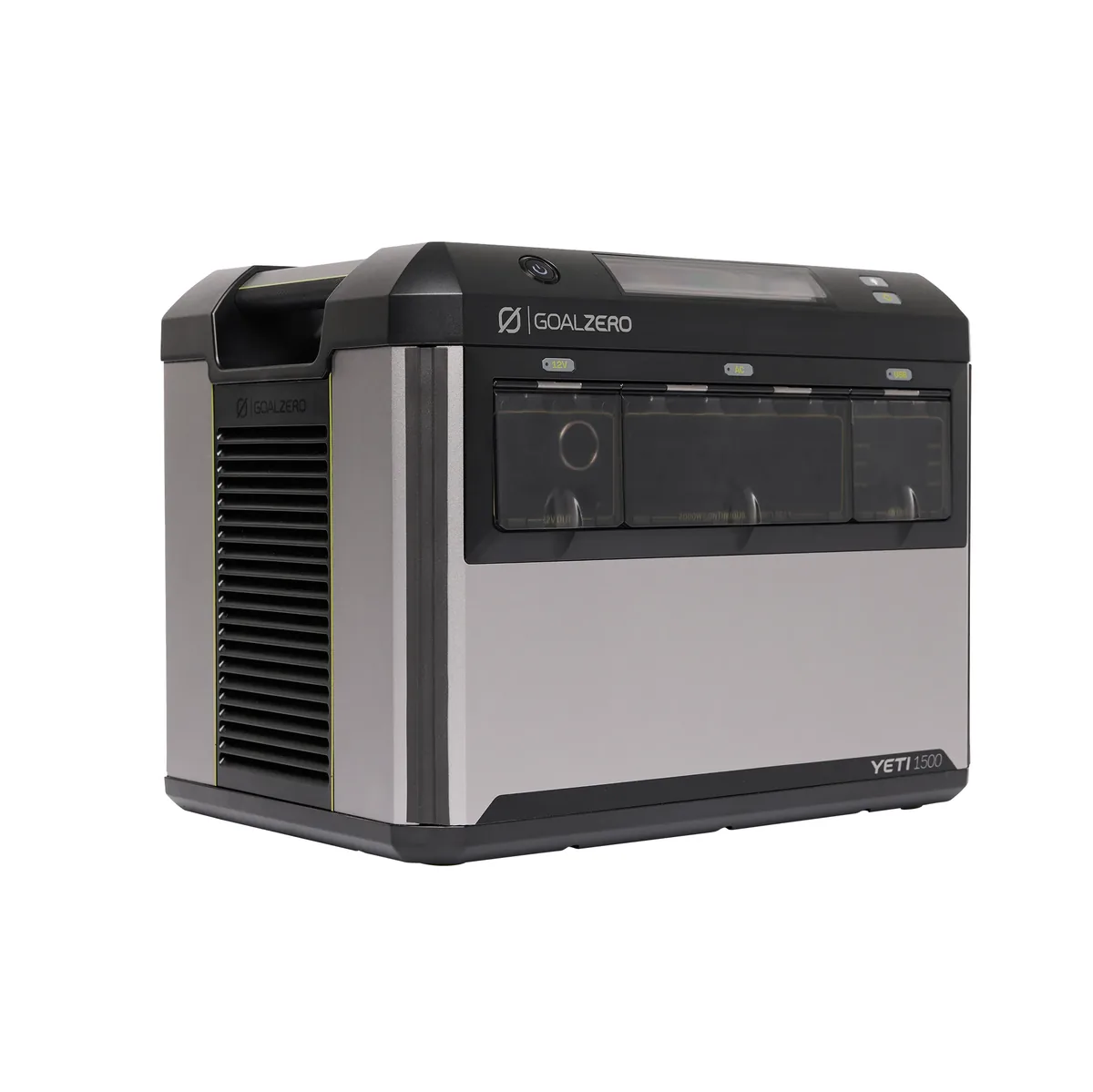
Goal Zero · Power Station
Goal Zero Yeti 1500
~$1,499
2,000 W / 3,600 W surge · up to lights, phones, router, a CPAP
Quick takeThe Goal Zero Yeti 700 lists about $800 lower; the Goal Zero Yeti 1500 puts out more sustained power (2,000 W).
| Spec | Goal Zero Yeti 700 | Goal Zero Yeti 1500 |
|---|---|---|
| Approx. price | ~$699 | ~$1,499 |
| Type | Power Station | Power Station |
| Fuel | Battery (LiFePO4) | Battery (LiFePO4) |
| Running / output watts | 600 W | 2,000 W |
| Starting / surge watts | 1,000 W | 3,600 W |
| Battery capacity | 677 Wh | 1,505 Wh |
| Expandable to | — | — |
| Noise | — | — |
| Runtime | Fridge (~150W): ~4 hrs on 677 Wh; CPAP (~40W): about 15 hrs | Fridge (~150W): ~8 hrs on 1,505 Wh |
| Outlets | 2x 120V AC (600 W combined), USB-C PD 100 W, 2x USB-C QC 30 W, 2x USB-A 18 W, 12V ports | 4x 120V 20A AC (2,000 W combined), USB-C PD 140 W and 60 W, 2x USB-C 30 W, 2x USB-A, three 12V ports |
| Fuel tank | — | — |
| Weight | 20.3 lbs | 52.75 lbs |
| Transfer-switch ready | No | No |
| Warranty | 5-year | 5-year |
Highlighted cell is the better figure for that row.
Owner pros and cons
Goal Zero Yeti 700
- +20.3 lb and rugged enough for mud and rain
- +Simultaneous charge and discharge supported
- +100 W USB-C PD charges laptops
- −600 W continuous inverter is the limit for appliances
- −Rivals offer more watts at the same price
- −Not expandable
- −No 30 A outlet, no transfer switch path
- −No noise figure published
Goal Zero Yeti 1500
- +IPX4 weather rating for outdoor and jobsite use
- +3,600 W surge handles compressor and pump starts
- +Up to 900 W combined solar input for off-grid recharging
- +140 W USB-C PD charges laptops at full speed
- −More expensive than rivals with the same capacity and output
- −No 30 A port for a transfer switch
- −52.75 lb is heavy for a camping unit
- −Not expandable; the old Yeti Tank packs do not apply
- −Brand-new design with little long-term field history
- −No published noise figure