
Cummins
Cummins QuietConnect RS20A
The RS20A is what owners buy when the nightly drone of a 70 dB generator is a dealbreaker: Cummins holds it to 65 dB at 23 feet — dishwasher territory — while still starting a 5-ton air conditioner and managing four loads with its built-in intelligent load control. The same QSJ999G V-twin as the RS13A runs harder here, delivering 20kW on propane and 18kW on natural gas, and it ships cold-weather-ready to 0°F out of the box. Owner reviews read like Kohler's best: uneventful, reliable, quiet enough that neighbors ask if it's running. The trade-offs also mirror the RS13A — sparse residential dealer coverage makes pre-purchase service planning essential, stock frequently slips to pre-order, and the app is functional but bare-bones. For sound-sensitive neighborhoods it's arguably the class benchmark.
Specifications
Highlights
What owners like
- ✓Best-in-class 65 dB noise at full 20kW output
- ✓Integrated load management controls four loads without extra modules
- ✓Starts a 5-ton AC while carrying the house
- ✓Cold-weather ready to 0°F with no added kit
- ✓Cummins commercial engineering and 5-year/2,000-hour warranty
Common complaints
- ✗Thin dealer network — warranty service can mean long waits
- ✗Often pre-order/backordered at major retailers
- ✗18kW natural gas derate
- ✗App monitoring trails Generac's polish
- ✗Extended-warranty and accessory pricing runs high
Owner Insightssummarized from Reddit and owner forums
The RS20A gets bought for one reason above all others, and owners are unapologetic about it: it's the quietest full-size standby you can put next to a property line. The 65 dB rating at 23 feet isn't marketing fluff - it holds while Generac's bigger Guardians climb to 67 dB and change - and the aluminum enclosure turns the exhaust note into a background hum. The buyers skew toward dense neighborhoods, HOA-governed subdivisions, and anyone whose bedroom window faces the pad. The second draw is sneakier: every RS20A ships with four-circuit intelligent load management built in, something Generac charges for via specific transfer switch models, which is partly why complete Cummins installs at $11,000-$16,000 tend to come in around $1,000 under a comparable Generac 22kW job.
The ownership record reads well. Multi-year owners report uneventful service, and the most convincing testimonials come from extended-outage country - two-week outage threads where the RS20A ran the duration without complaint. It starts a 5-ton air conditioner with the house already loaded, ships cold-weather-ready to 0F (with a -40F RS20AE variant for the far north), and the weekly exercise is quiet enough that owners forget which day it runs. The caveats are the same ones that follow every QuietConnect: the residential dealer map has holes, and when something does go wrong - like the documented brand-new unit that cranked but wouldn't fire until a dealer traced a fuel-valve fault - you need someone certified within range. The monitoring app remains status-and-alerts basic, installs go smoother with a Cummins-experienced electrician, and stock slips to pre-order after every major storm season.
It's the right unit for noise-sensitive lots that still need genuine whole-house muscle, and for buyers who verified dealer coverage first. Against the Generac Guardian 24kW you trade 4kW of headroom (and remember the RS20A's 18kW NG rating) for roughly 2 dB, a grand in savings, and included load management; against the Kohler 20RCA you trade some motor-starting surge for a notably quieter cabinet at similar money. There's also no in-brand path above 20kW air-cooled, so homes flirting with dual big compressors usually end up at the Generac 24/26kW or Kohler 26RCA instead. Cross-shoppers who choose the RS20A almost always cite the same two words: the noise.
What owners like
- +65 dB at 23 feet is the benchmark in the 20kW class - Generac's comparable Guardians jump to about 67 dB at 22kW and up
- +Load management for 4 circuits is built into every unit at no extra charge, where Generac makes it a transfer-switch upsell
- +Starts a 5-ton AC even with the house already loaded
- +Multi-year owners describe it exactly the way you want: it just runs, nothing to report
- +Installed quotes of $11,000-$16,000 typically land about $1,000 under an equivalent Generac 22kW job
- +Cold-weather package to 0F is standard, and the RS20AE variant extends that to -40F for the truly frozen states
- +Long 14-day-outage anecdotes with zero complaints show up in rural owner threads
- +Aluminum sound-insulated enclosure keeps the tone to a hum neighbors rarely notice
Common complaints
- −Residential dealer coverage is the deal-breaker in most negative threads - great machine, nobody nearby certified to touch it
- −One documented brand-new unit cranked but wouldn't fire - a fuel-valve fault a dealer had to chase through the dual gas valve wiring
- −The app reports status and faults and that's about it; Generac Mobile Link owners notice the downgrade
- −18kW on natural gas, same derate story as Kohler's 20kW
- −Stock regularly slips to pre-order after big storm seasons
- −20kW is the ceiling - Cummins has no bigger residential air-cooled unit, so growing households have no in-brand upgrade path
- −Electricians unfamiliar with Cummins low-voltage control wiring can stall an install
- −Parts routing through the commercial Cummins network means residential repair parts can take longer than a Generac dealer's shelf stock
Common Questions
Is it really that much quieter than a Generac?
How much does it derate on natural gas?
What does an installed system cost versus Generac?
What's the catch with the dealer network?
How does it handle cold climates?
Can it integrate with solar or a battery system?
Compare the Cummins QuietConnect RS20A
Related units
More from Cummins →
Cummins
Cummins QuietConnect RS13A
The sleeper value in home standby: a genuine Cummins — the company that powers hospitals and data centers — at a price under the equivalent Generac or Kohler. The RS13A's QSJ999G 999cc V-twin was designed in-house for gaseous fuel, and the QuietConnect sound-insulated enclosure holds it to 65 dB at 23 feet, quieter than most competitors' smaller units. It holds 13kW on either natural gas or propane with no derate, meets the 18-inch NFPA 37 clearance for tight lots, and owners consistently describe installs that just work. The catch, and it's the one that dominates owner threads: the Cummins residential dealer network is sparse compared to Generac's. If there's no certified servicer within reasonable distance, warranty work becomes your problem. The Cummins app covers status and alerts but is basic.
Generac
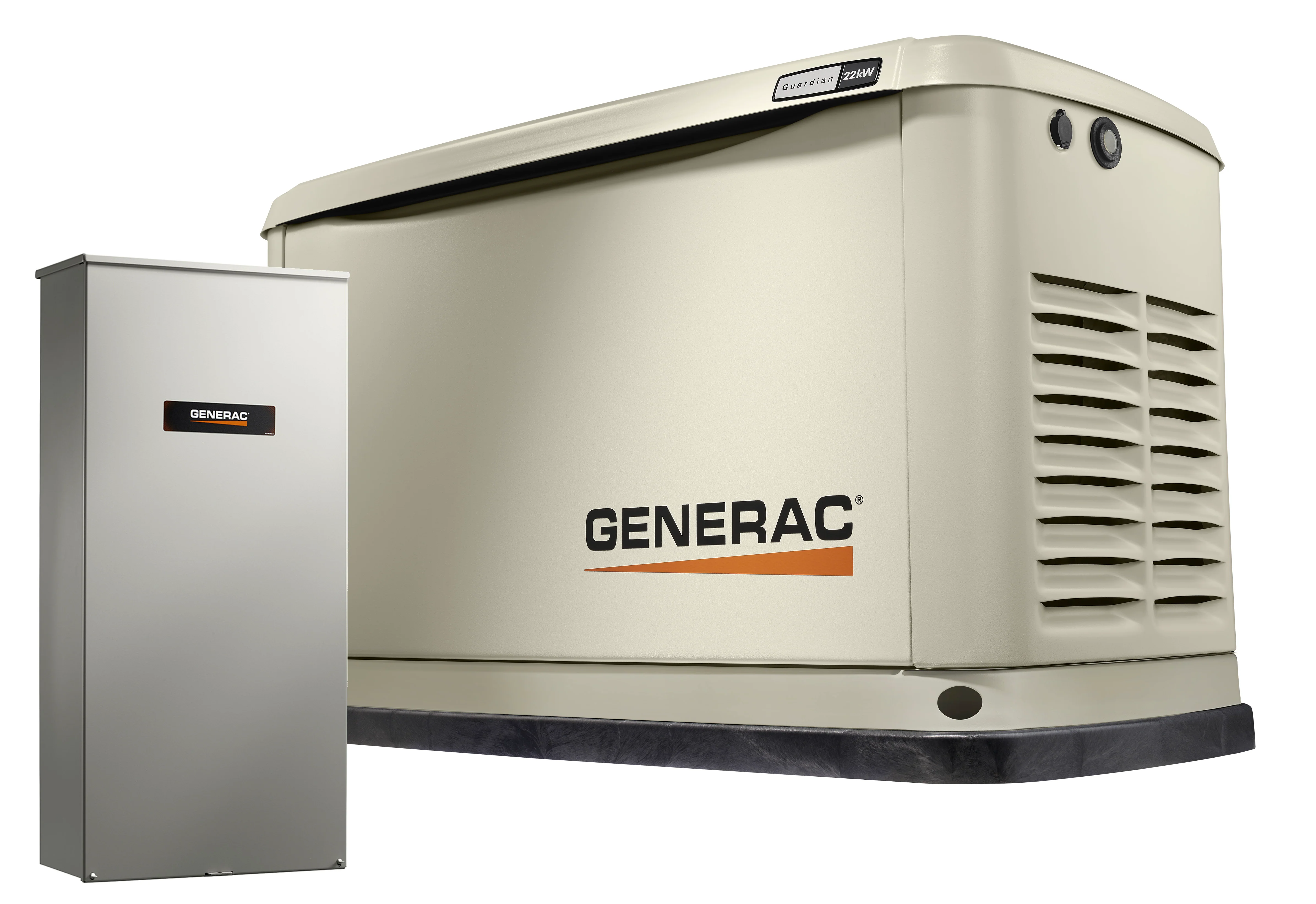
Generac Guardian 22kW
For years the best-selling home standby generator in America, and the sheer volume of owner reviews shows why: the 22kW carries most whole homes — two AC units with load management — and every electrician and gas fitter in the country has installed one. The G-Force 1000 engine and 67 dB noise level are unremarkable but proven; owners report units sailing through week-long outages after hurricanes. The flip side of ubiquity is that the complaint threads are equally deep: Evolution controller replacements, dealers backlogged after storms, and Generac support that owners describe as polite but powerless. The newer 24kW (7209/7210) has largely replaced it at similar money, but the 7042 remains widely stocked, slightly cheaper, and the known quantity — a big deal when your installer has done fifty of them.

Briggs & Stratton
Briggs & Stratton PowerProtect 22kW
Briggs' PowerProtect 22kW has one spec nobody else in the class matches: NGMax tuning delivers the full 22,000 watts on natural gas — no derate — where Generac's 22kW drops to 19.5kW and Kohler's 20kW to 18kW. If your home runs on NG, that's effectively a size-class upgrade for free. The commercial-grade Vanguard 993cc V-twin (Briggs' premium engine line) drives it, the aluminum enclosure is rated for 186-mph hurricane winds, and the 7-year parts/labor/travel warranty beats the standard 5-year offers. So why isn't it everywhere? Owner threads point to the thin dealer network, slower parts distribution since Briggs' 2020 bankruptcy and KPS acquisition, and low retail visibility — Lowe's is the main storefront. At 68 dBA normal / 64 dBA idle-mode it's mid-pack for noise.

Kohler
Kohler 20kW RCA
The 20RCA is Kohler's volume whole-house unit and the direct rival to Generac's 22/24kW, built around the bigger CH1000 V-twin. Its party trick is 41kVA of motor-starting capacity — owners regularly confirm it starts a 5-ton AC without dropping the rest of the house, which smaller-surge competitors need load-shedding modules to manage. The RDC2 controller has a strong reliability reputation, and long-term owners (this platform has been around for years) report exceptionally boring, dependable service — the best compliment a standby can get. Trade-offs are the familiar Kohler ones: 18kW on natural gas, 70 dB at full-speed operation is on the loud side, OnCue Plus monitoring trails Generac's app, and you may wait longer for both the unit and a certified installer depending on your region.

Kohler
Kohler 14kW RCA
Kohler's answer to the Guardian 14kW, and the one owners pick when they've read enough Generac controller threads. The commercial-grade CH740 V-twin uses hydraulic valve lifters — no break-in, no valve adjustments — and the corrosion-proof aluminum enclosure holds up in coastal salt air where painted steel rusts. It punches above its class on motor starting with 33kVA of surge capacity via PowerBoost, so a 4-ton AC is realistic. Owner sentiment is consistent: the hardware feels a grade above Generac, but the dealer network is thinner, lead times run longer, and the OnCue Plus monitoring app is dated and clunky compared to Mobile Link. Note the honest ratings: 14kW on propane but 12kW on natural gas, and 69 dB in normal operation is louder than the spec-sheet skim suggests.

Generac
Generac Guardian 18kW
The 18kW is the value pick in the Guardian range on a dollars-per-kilowatt basis — same 816cc G-Force 800 twin as the 14kW, tuned for 18kW on propane and 17kW on natural gas, at only a few hundred dollars more. Owners in hurricane and ice-storm country consistently report it carrying a whole modest home including a 3-ton AC without drama, and the G-Flex variable-speed exercise keeps the weekly test tolerable at 65 dB. The ownership caveats are pure Generac: the Evolution 2 controller is the component that fails, dealers are the only sanctioned path for warranty work, and owners recommend buying the battery and cold-weather kit up front rather than discovering they're extras on install day. If you're between the 14 and this, most owner advice says spend up.