DJI
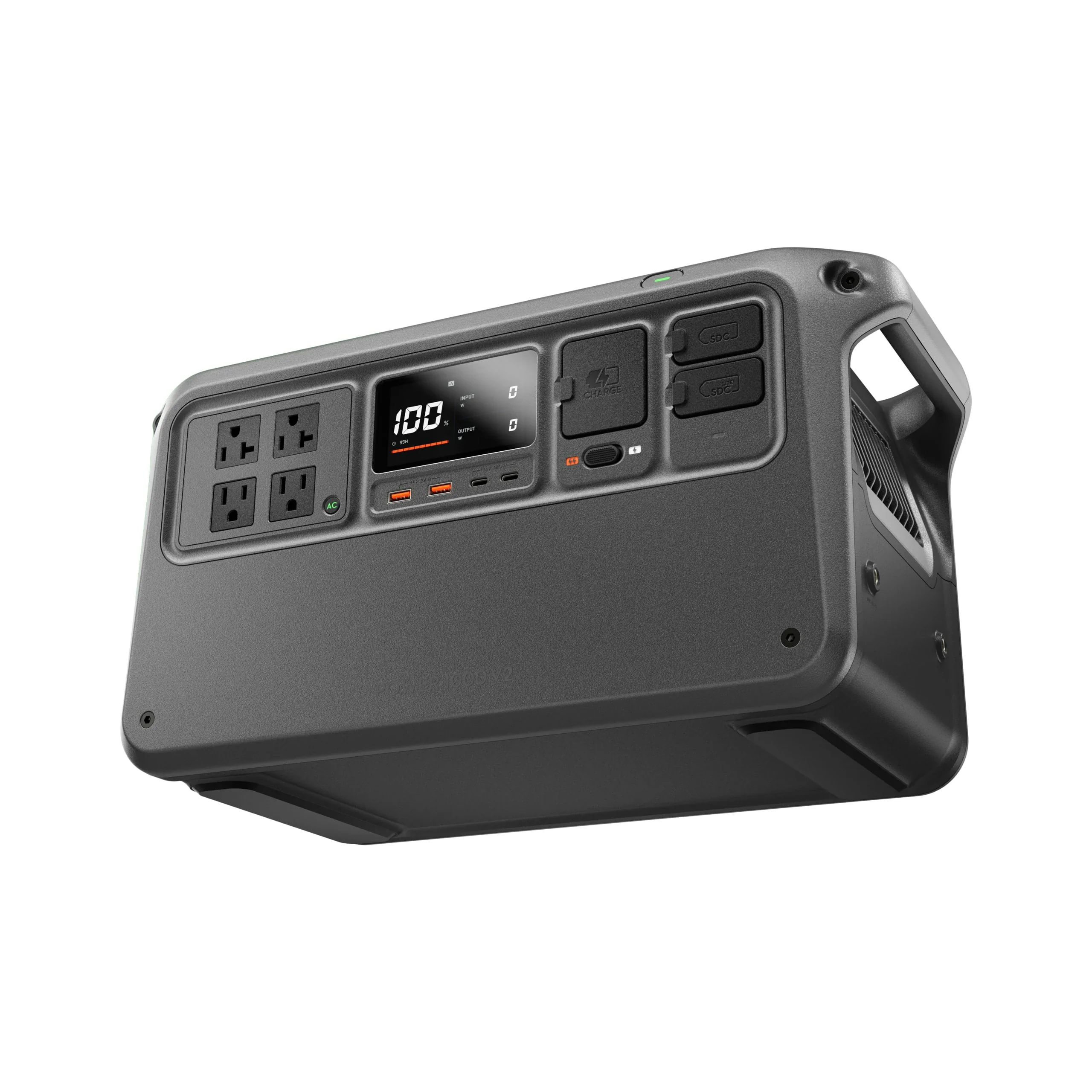
DJI Power 1000 V2
The drone company's second-gen power station, and the sleeper hit of the category - reviewers keep reaching for words like 'premium' and 'polished.' The headline specs are absurd for a 1kWh box: 2,600W continuous output (more than most 2kWh units), 4,400W peak, 0-80% charging in 37 minutes, and operation as low as 26dB - owners confirm it's effectively silent, the quietest unit in this entire roundup. V2 fixed the original's two-outlet stinginess with four AC ports and added Wi-Fi. Expansion runs to 11.2kWh via 2kWh add-on packs. The quirks are DJI-flavored: solar charging requires a proprietary MPPT adapter dongle rather than native XT60 ports, the app is minimal compared to EcoFlow's, and the SDC ports are really designed around fast-charging DJI drone batteries. Warranty is 3 years, extending to 5 if you register in the app.
Specifications
Highlights
What owners like
- ✓Near-silent 26dB operation - runs overnight next to a bed unnoticed
- ✓2,600W continuous embarrasses every other 1kWh-class inverter
- ✓0-80% in 37 minutes, full in 59
- ✓28.6 lbs with excellent build quality per reviewers
- ✓Sale pricing regularly hits $399-499
- ✓Fast-charges DJI drone batteries directly via SDC ports
Common complaints
- ✗Solar requires a proprietary MPPT adapter sold separately
- ✗App is bare-bones next to EcoFlow/Anker
- ✗Full 5-year warranty requires app registration
- ✗No 30A outlet or transfer-switch path - strictly plug-in loads
Owner Insightssummarized from Reddit and owner forums
The Power 1000 V2 is what happens when a company that obsesses over drone hardware decides power stations are done sloppily. Reviewers keep reaching for 'polished,' and the numbers back the vibe: 2,600W continuous from a 1,024Wh, 28.6-lb box, 0-80% charging in 37 minutes, and 26dB operation that owners confirm is effectively silent - the quietest unit in this entire category. The buyers split into two camps: DJI pilots who want field-charging for Mavic batteries through the SDC ports, and light sleepers, apartment dwellers, and content creators who tried a Bluetti and couldn't stand the fan.
Living with it is mostly frictionless with a few DJI-flavored tolls. The 10ms UPS switchover - twice as fast as the original - makes it a legitimately good desk companion for computers and network gear, and the four AC outlets plus Wi-Fi correct the V1's stingiest choices. The catches cluster around DC: there is no native solar input, so panels route through a proprietary MPPT adapter that is branded 1.8kW but delivers roughly 600W of measured solar intake, and with only two SDC ports you cannot run the solar adapter, an expansion battery, and the 12V car-socket module at once. The app is minimal, and the roughly 18W idle draw means a switched-on unit self-drains in about two and a half days - fine for a weekend, not for shelf duty. Register in the app early: it silently stretches the warranty from 3 years to 5.
Best for bedroom-adjacent backup, camping where silence is currency, and anyone already in the DJI ecosystem. At $599 list it sits above the perpetually discounted Bluetti AC180, which offers more Wh per dollar but sounds like a laptop under load next to the DJI's silence; the EcoFlow DELTA 3 Plus is the closest all-around rival with native solar and a far richer app. Owner threads land on a consistent verdict: if your use case touches solar or 12V accessories, cross-shop carefully - if it is outlets, silence, and speed, nothing at this size feels this finished.
What owners like
- +Genuinely silent in practice - owners confirm 26dB even during fast charging, quiet enough to sleep beside
- +2,600W continuous from a 1kWh box runs kettles, microwaves, and tools that trip units twice its size
- +10ms UPS switchover - double the speed of the V1 - carries desktops and NAS boxes without a flicker
- +0-80% in 37 minutes, and without the fan roar every competitor makes at full charge rate
- +28.6 lbs is easy one-hand carry weight for this much inverter
- +Four AC outlets and built-in Wi-Fi fix the original's two biggest shortcomings
- +SDC ports fast-charge Mavic and Air drone batteries in the field - the feature its core audience actually buys it for
- +Expands to 11.2kWh with add-on packs, absurd headroom for a unit this small
Common complaints
- −No native solar input at all - panels require DJI's proprietary MPPT adapter dongle
- −That adapter is branded '1.8kW' but testers measured actual solar intake topping out around 600W
- −Only two SDC expansion ports: run the solar adapter plus a battery pack and you've lost the 12V car-socket module
- −Roughly 18W idle draw will empty the 1kWh pack in about two and a half days if you leave it switched on
- −The app is sparse next to EcoFlow's - remote outlet toggling and firmware updates, little else
- −Do the math on 2,600W output: flat out, the battery is gone in about 20 minutes
- −Warranty is 3 years unless you remember to register in the app, which quietly unlocks 5
- −Car and alternator charging also route through paid add-on modules - the DC ecosystem is proprietary top to bottom
Common Questions
How long will it run a refrigerator during an outage?
Can I plug solar panels straight into it?
Is it good as a UPS for my computer?
How does expansion work?
What is the deal with the warranty?
What charge level should I store it at?
Related units
More from DJI →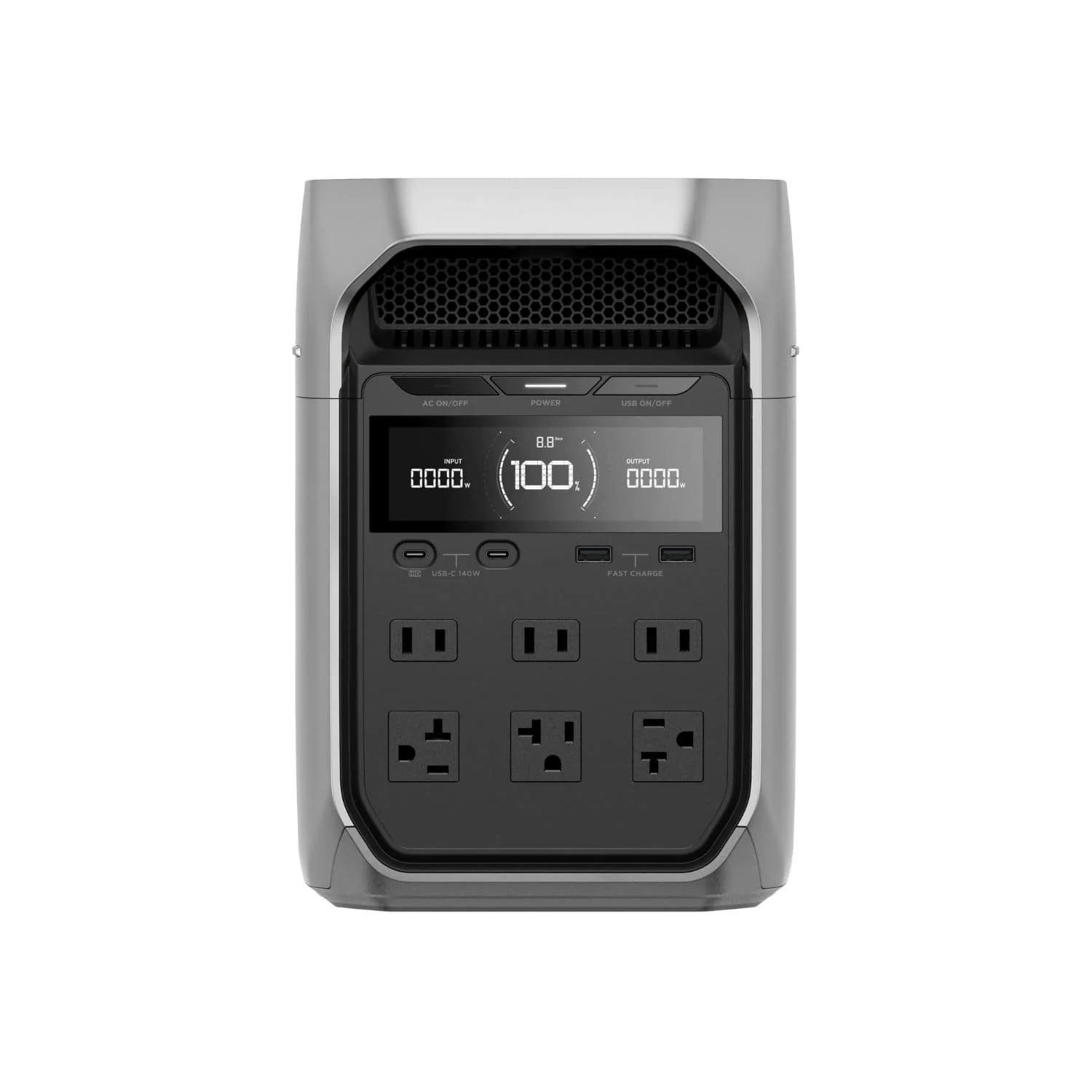
EcoFlow
EcoFlow DELTA 3 Plus
The default answer when someone asks r/portablepowerstations for a 1kWh backup unit. The killer feature owners rave about is the 10ms UPS switchover - people literally run NAS boxes, routers, and CPAP machines off it full-time and never notice an outage. It charges 0-100% in 56 minutes, which sounds like marketing until you watch it happen. Real-world quirks: the 30dB quiet claim only holds at idle - fast AC charging spins the fan up noticeably, so owners set a slower charge rate in the app at night. The app requires an EcoFlow account, which annoys the privacy crowd. X-Boost lets it fudge 2200W resistive loads (space heaters, kettles), but induction motors still trip it. Expansion to ~5kWh via extra batteries is handy, though the add-on packs cost almost as much as the unit on sale.
Jackery
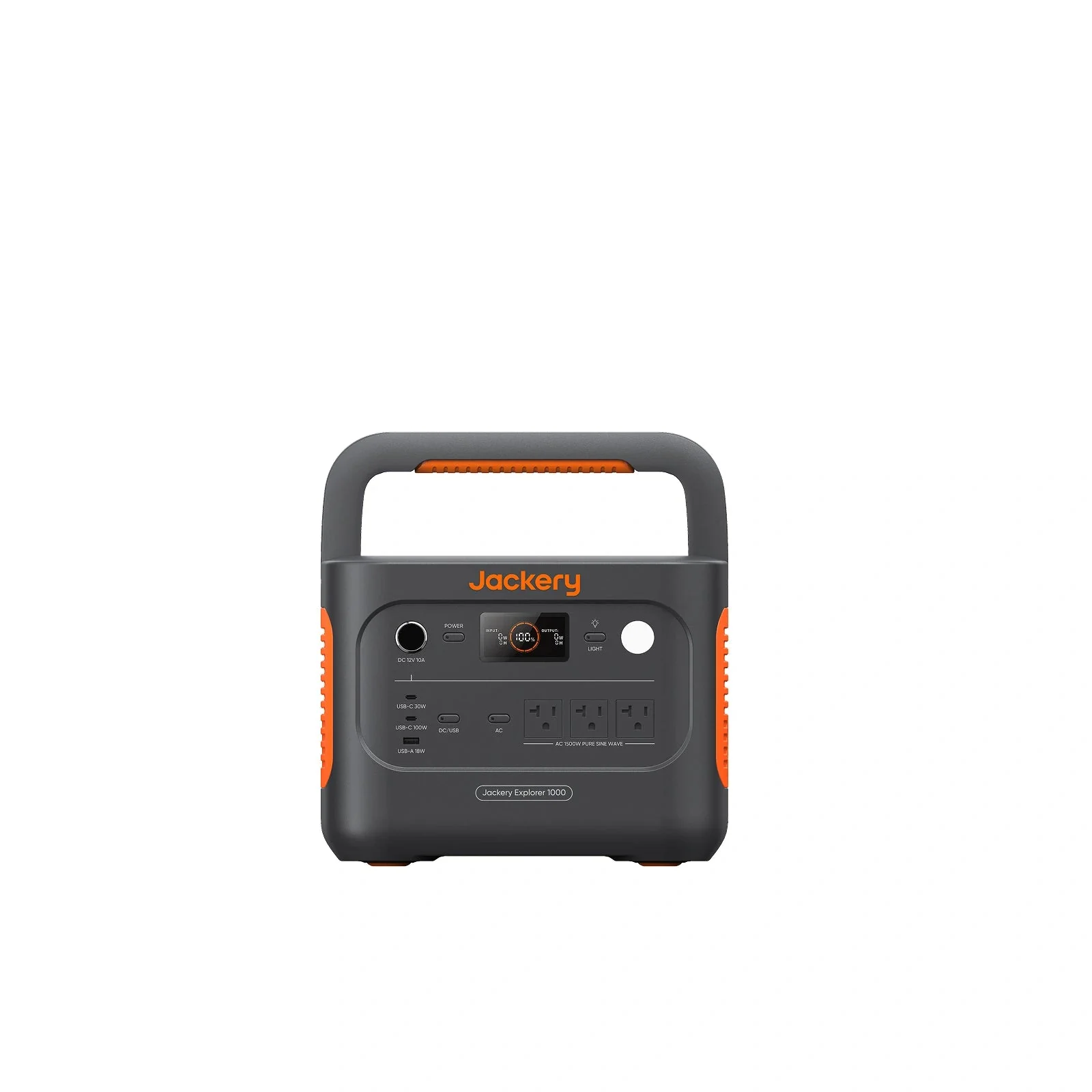
Jackery Explorer 1000 v2
Jackery's LiFePO4 do-over of the best-selling power station ever, and the one people actually mean when they say 'just get a Jackery.' At 23.8 lbs it's several pounds lighter than every 1kWh rival, which is why campers and older buyers gravitate to it. The 1500W inverter (3000W surge) runs coffee makers and microwaves fine; owners confirm the quiet-fan claim - it's noticeably more pleasant than an AC180 under load. Real-world knocks: there's no expansion port at all, the 20ms UPS switchover is fine for a fridge but not marketed for computers, and the 1500W output trails the 1800-2000W competition on paper. It lives on sale - $429-499 happens monthly - so nobody should pay list. The foldable handle and genuinely idiot-proof interface make it the one to recommend to non-technical relatives.
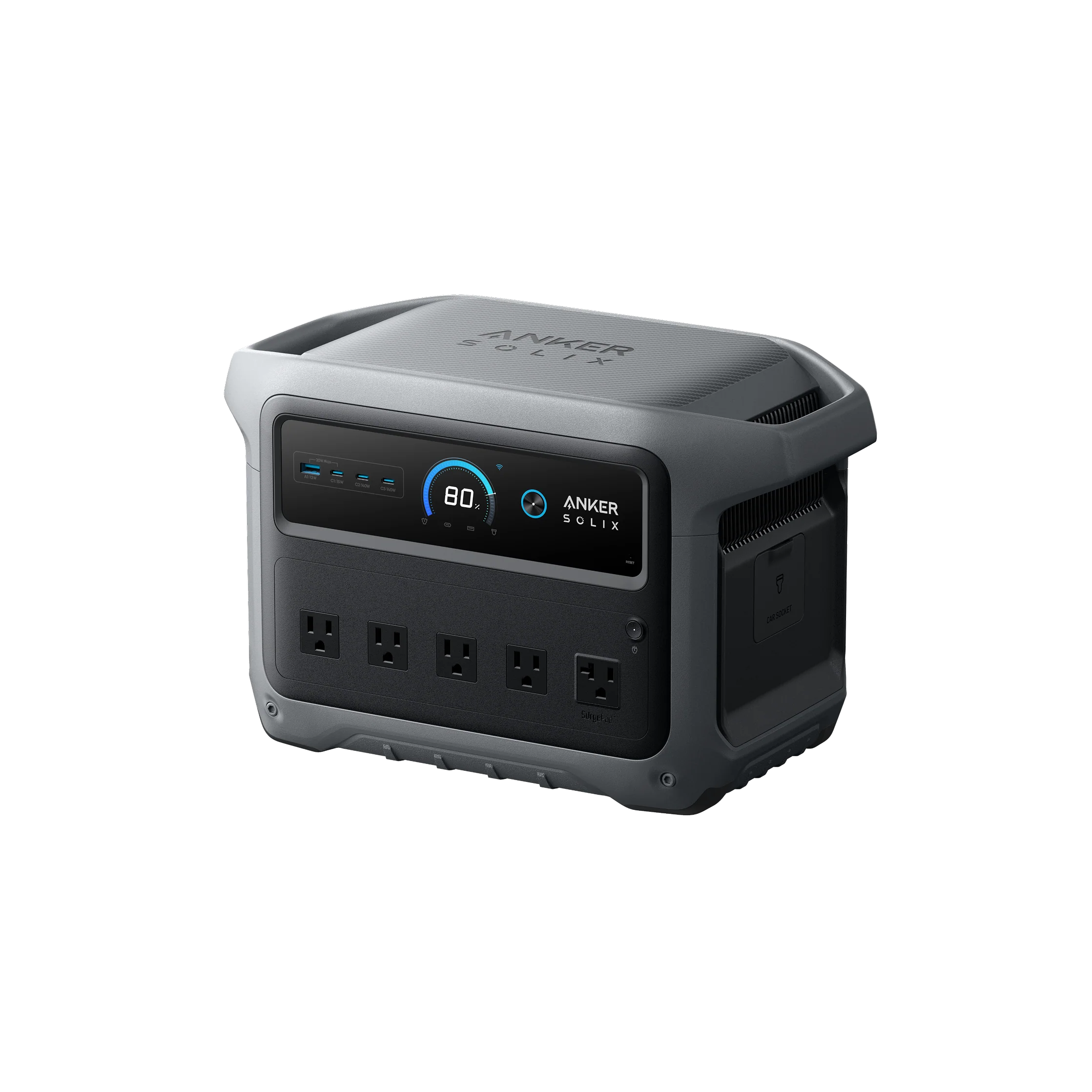
The 2026 'best overall' pick on multiple tested lists, and the current answer in the sub-$500 1kWh knife-fight. Anker took the already-popular C1000, cut 3.5 lbs, bumped output to 2000W, added a 10ms UPS mode, and kept HyperFlash charging (full in 49 minutes). Owners describe it as nearly silent at low loads - the 20dB claim holds for trickle duty, though the fan is audible during 1,600W charging. The catch that surprises upgraders: Gen 2 dropped expansion support entirely - the old BP1000 battery is not compatible, so 1kWh is what you get forever. Other nitpicks from owner threads: USB-A is a weak 12W, and the plastic shell feels less premium than the weight suggests. At its perpetual ~$499 street price, it's the strongest pure value in portable power right now.
Bluetti
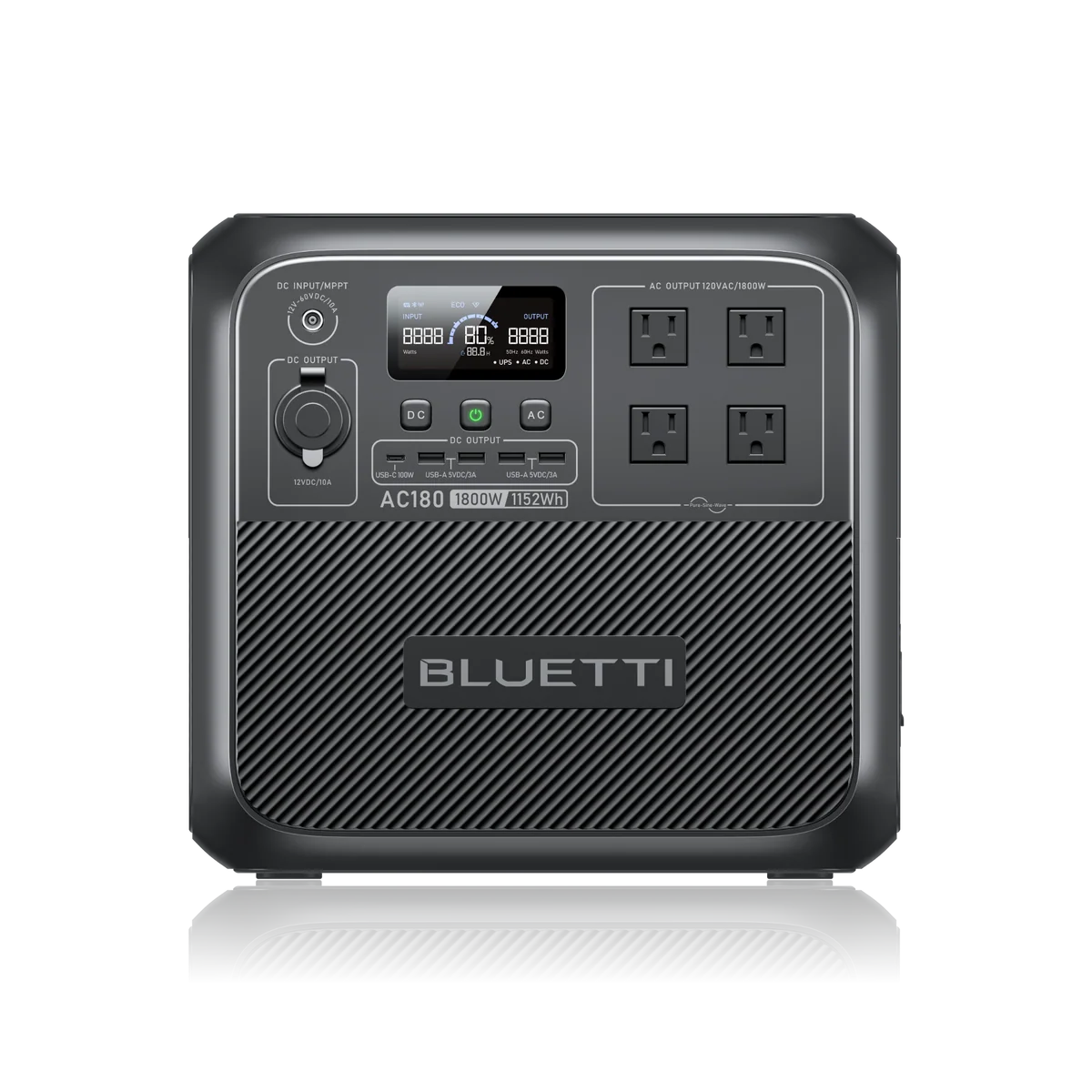
Bluetti AC180
The budget king of the 1kWh class - Amazon's perpetual best-seller with a review count nothing else touches. You get more capacity (1,152Wh) than the Anker or EcoFlow rivals, 1800W output with a 2,700W Power Lifting mode for heaters and kettles, and a wireless charging pad, usually for under $450. Owners are clear-eyed about the trade-offs: the fan runs early and often, even at loads where competitors stay silent - it's the single most repeated complaint in three years of reviews. The 12V DC port is a regulated but weak 10A, there's no expansion support, and at 35.3 lbs it's a full 10 lbs heavier than the Jackery. But for a storm-prep box that lives in a closet and runs the fridge when needed, the price-per-Wh math has kept it the default recommendation for budget buyers since 2023.
Bluetti
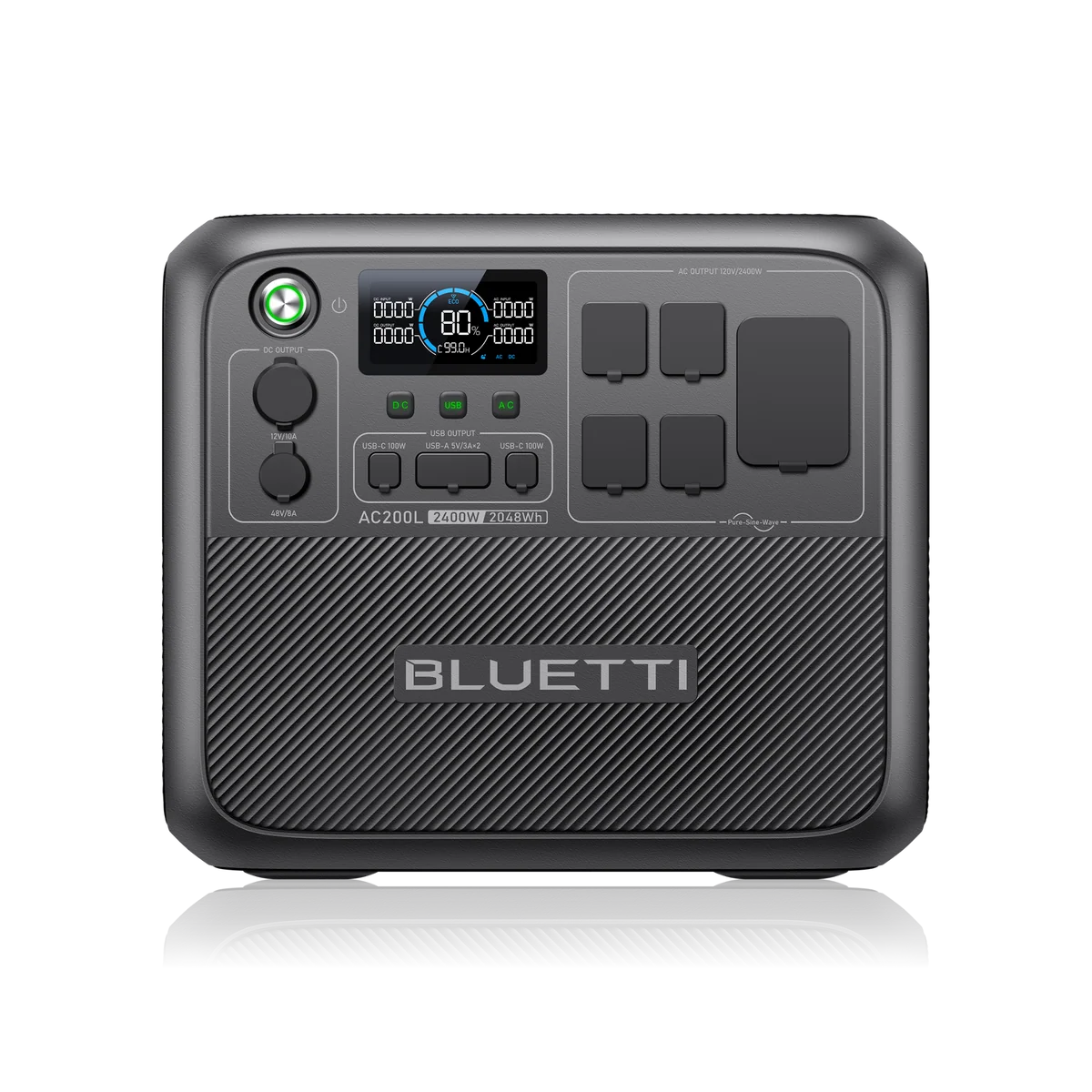
Bluetti AC200L
Bluetti's mainstream 2kWh unit and the expandability play at this price: it accepts B300K packs (up to ~8kWh) that also work with the bigger AC500 and Apex 300, so nothing you buy gets orphaned. The 30A TT-30 outlet plus a 48V RV DC port make it quietly one of the best RV units under $1,000. A 2,400W inverter with 3,600W Power Lifting covers tools and kitchen gear. Owner sentiment: solid hardware, middling software - app pairing drops and slow firmware updates are recurring gripes, and the cooling fans are audible under load in classic Bluetti fashion. At 62.4 lbs with no wheels, repositioning it is a deliberate act. Street pricing settled around $899 in 2026, and the periodic $799 deals make it a strong alternative to the Jackery 2000 Plus when expansion cost matters more than quietness.

Anker's suitcase-style 2kWh veteran - launched 2022, still sold in 2026 because constant $799-999 deals keep it moving. The rolling-luggage design with a pull handle is the feature owners mention most; 67 lbs rolls fine but the top-mounted ports mean bending over a lot. SurgePad pushes it to 3600W briefly, and the TT-30 makes it a natural for smaller RVs. GaNPrime charging does 0-80% in 1.4 hours, which was headline speed in 2022 and is merely fine now. Owner threads flag its age honestly: no UPS mode (there's a delay on switchover), the display washes out in sunlight, solar input caps at 1000W, and the app is the older Anker platform with fewer controls. Reliability sentiment is strong though - lots of three-year owners with zero issues, and the 5-year full-device warranty is unusual for its generation.