
Generac
Generac Guardian 10kW
The entry point to the Guardian line, and the one owners of smaller homes keep recommending because it bundles a 100-amp, 16-circuit transfer switch in the box. The 460cc G-Force 400 engine covers essentials — furnace, fridge, well pump, some lights — not whole-house AC, and owners are clear-eyed about that. At 61 dB it's the quietest Guardian, though people still report it's louder than they expected during weekly exercise. Owner threads praise years of flawless auto-transfers, but the recurring gripes are real: the battery, oil, and some setup parts aren't included, Evolution controller boards have a documented failure pattern, and warranty service depends entirely on how good your local Generac dealer is. Budget for install — most people pay more for wiring and gas work than for the unit.
Specifications
Highlights
What owners like
- ✓Transfer switch included — cheapest path to true automatic backup
- ✓61 dB is noticeably quieter than the bigger Guardians
- ✓G-Force 400 engine has a 2-year/200-hour oil change interval
- ✓Free Mobile Link Wi-Fi monitoring built in
- ✓Huge Generac dealer and parts network when something does break
Common complaints
- ✗Battery, oil, and some install hardware sold separately — owners get surprised
- ✗Won't start most central air conditioners
- ✗Evolution controller board failures are a known, recurring complaint
- ✗Warranty experience varies wildly by dealer; claims can take weeks
- ✗16 circuits only — no whole-house coverage
Owner Insightssummarized from Reddit and owner forums
The 10kW is the Guardian people buy when they want the automatic-transfer experience without whole-house money, and the bundled 100-amp 16-circuit switch is the whole pitch - one box, one quote, essentials covered. The typical buyer in owner threads has a smaller home or a rural place with a well pump and furnace, no ambitions of running central air, and a strong preference for not dragging a portable out at 2 a.m. Street price hovers a bit above four grand, and it has been spotted as low as about 4,189 dollars with the switch included, which keeps it the cheapest legitimate path into standby power.
Ownership reports are mostly boring in the good way - years of clean weekly exercises and automatic transfers - but the gripes are consistent. Mobile Link WiFi is the loudest one: Gentek Power forum threads document modules that show No WiFi Signal within a day, survive five different range extenders, and drop connection right when the transfer switch flips during a real outage. The Evolution controller is the line's known weak component, and while the 61 dB rating makes this the quietest Guardian, owners still describe the weekly test as louder than the brochure led them to expect. Budget realistically: Generac's own install guidance lands typical projects at 8,000 to 16,000 dollars once gas line, pad, wiring, and permits are on the invoice, and the battery and oil are extras.
Best for smaller homes and load-disciplined rural properties - people who will happily stagger the well pump and water heater in exchange for saving thousands. Against rivals, the honest comparison is the Guardian 14kW at only a few hundred dollars more, which is exactly what half the sizing threads end up recommending once an AC or second big load enters the picture; the Kohler equivalents cost more and have thinner dealer coverage. Owners also cross-shop portable-plus-interlock setups at a third the cost, and the ones who chose the 10kW anyway say the automatic transfer while traveling was the deciding factor.
What owners like
- +Cheapest way into automatic standby power
- +Bundled 100A 16-circuit transfer switch means one SKU covers the whole essential-circuits job, which installers say simplifies quoting
- +Owners with 220V well pumps report it starts them fine as long as the water heater and other big loads are shed
- +Can sit as close as 18 inches from the house, which saves small lots from a placement headache
- +Quietest Guardian at 61 dB - owners on small suburban lots specifically pick it for that
- +Same G-Force engine family and parts network as the big Guardians, so any Generac tech can service it
- +Retail reviews cluster around 4.3 stars across hundreds of owners, with build quality and value the common themes
- +Weekly self-test plus Mobile Link status checks catch problems before an outage does
Common complaints
- −Only 9kW on natural gas - the derate surprises buyers who sized against the 10kW headline number
- −Mobile Link WiFi is a running joke in forums: modules drop signal within a day, and owners have burned through extenders and replacement modules without a fix
- −The WiFi also tends to drop exactly when you want it - during an actual outage transfer
- −Battery, oil, and some setup parts are not in the box, and owners keep discovering that on install day
- −Forget whole-house AC; even a water heater plus well pump together is pushing it
- −Evolution controller boards have a documented failure pattern across the line, and this unit shares them
- −Installed cost stings: Generac's own guide puts typical projects at 8,000 to 16,000 dollars all-in, double or triple the hardware price
- −Warranty service is dealer-gatekept, and a handful of owners report units that failed to start in a real outage while claims dragged
Common Questions
Will the 10kW handle my well pump and furnace at the same time?
Why does it only make 9kW on natural gas?
What does installation actually cost?
Is the included 100A transfer switch enough, or do I need a 200A?
How reliable is the Mobile Link WiFi monitoring?
What ongoing maintenance should I budget for?
Related units
More from Generac →
Generac
Generac Guardian 14kW
The 14kW is the sweet spot Guardian for mid-size homes: it steps up to the 816cc twin-cylinder G-Force 800 engine, holds 14kW on both propane and natural gas, and will start a modest central AC with load management. Owners who sized it right describe multi-day outages where it just hummed along at 65 dB with the Quiet-Test weekly cycle keeping neighbors happy. The recurring themes in owner threads mirror the whole Guardian line: buy it for the dealer network and parts availability, not for the customer support experience — Generac corporate routes everything back to dealers, and controller/board warranty claims can drag for weeks. This 7223 SKU is the bare generator; pair it with a 100A or 200A switch, and get quotes, because installed cost typically lands at double the hardware price.

Generac
Generac Guardian 18kW
The 18kW is the value pick in the Guardian range on a dollars-per-kilowatt basis — same 816cc G-Force 800 twin as the 14kW, tuned for 18kW on propane and 17kW on natural gas, at only a few hundred dollars more. Owners in hurricane and ice-storm country consistently report it carrying a whole modest home including a 3-ton AC without drama, and the G-Flex variable-speed exercise keeps the weekly test tolerable at 65 dB. The ownership caveats are pure Generac: the Evolution 2 controller is the component that fails, dealers are the only sanctioned path for warranty work, and owners recommend buying the battery and cold-weather kit up front rather than discovering they're extras on install day. If you're between the 14 and this, most owner advice says spend up.
Generac
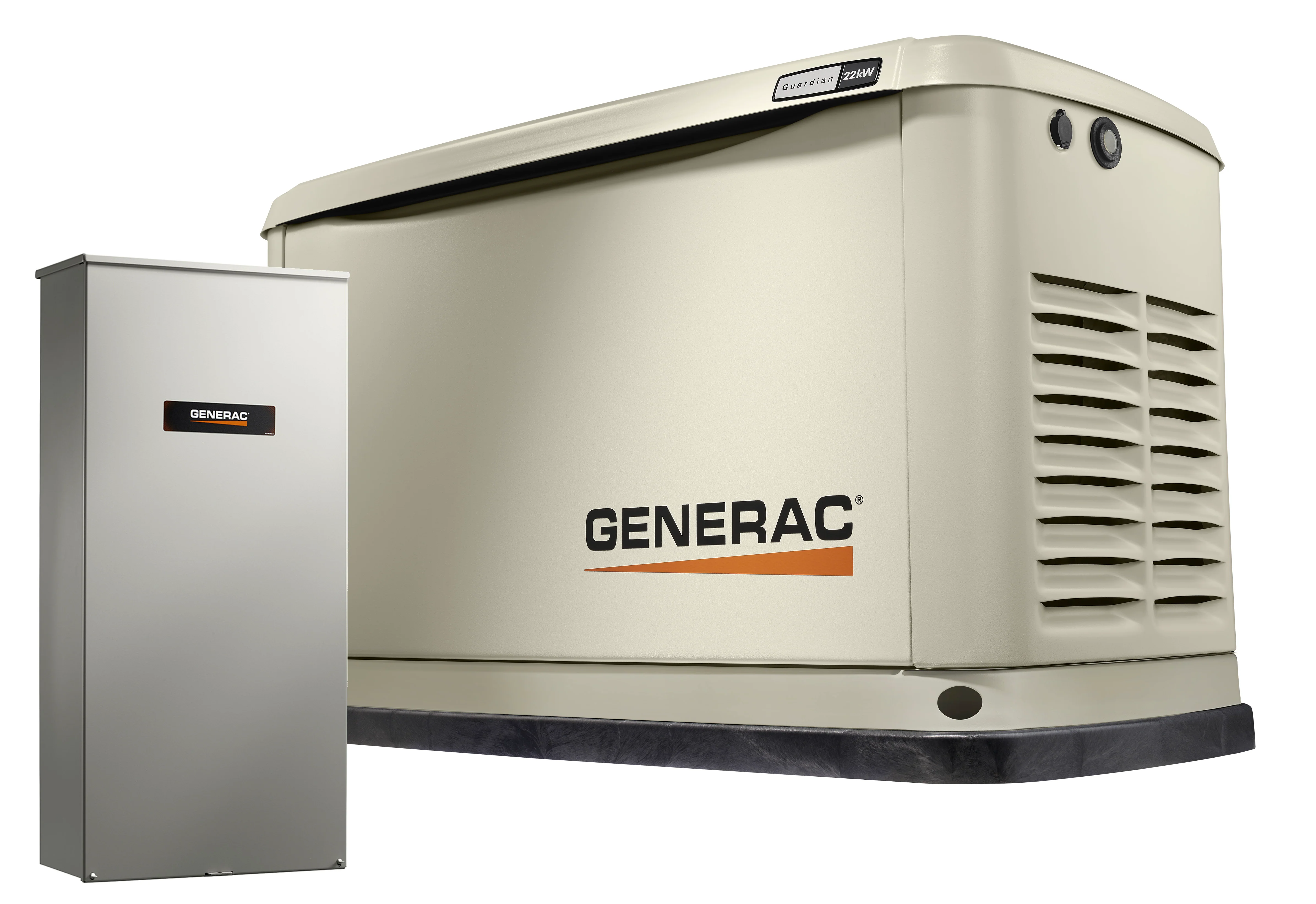
Generac Guardian 22kW
For years the best-selling home standby generator in America, and the sheer volume of owner reviews shows why: the 22kW carries most whole homes — two AC units with load management — and every electrician and gas fitter in the country has installed one. The G-Force 1000 engine and 67 dB noise level are unremarkable but proven; owners report units sailing through week-long outages after hurricanes. The flip side of ubiquity is that the complaint threads are equally deep: Evolution controller replacements, dealers backlogged after storms, and Generac support that owners describe as polite but powerless. The newer 24kW (7209/7210) has largely replaced it at similar money, but the 7042 remains widely stocked, slightly cheaper, and the known quantity — a big deal when your installer has done fifty of them.
Generac
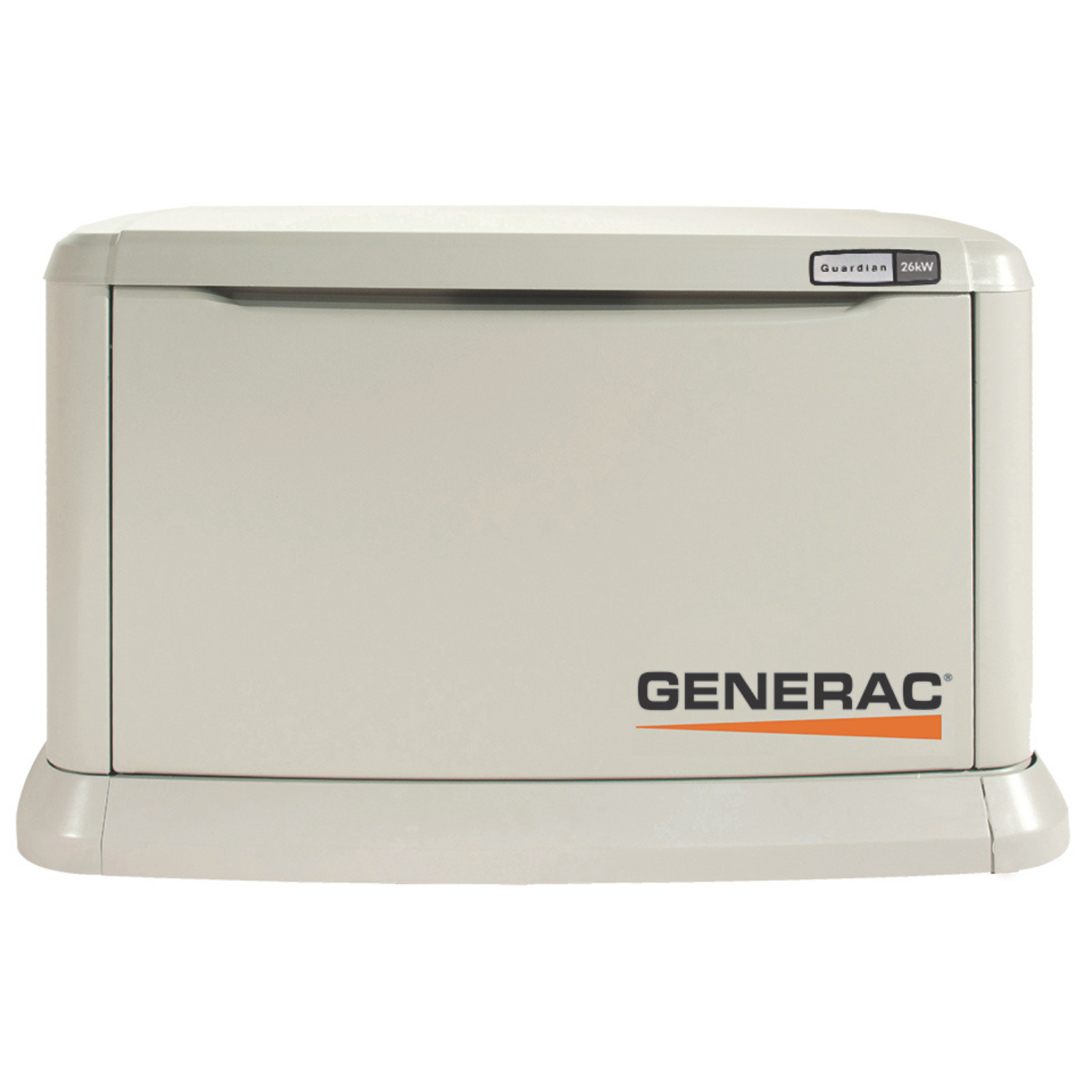
Generac Guardian 26kW
The biggest air-cooled generator Generac makes, and the one owners of large homes buy to avoid stepping up to liquid-cooled money. 26kW on propane (22.5kW on natural gas) with a redesigned alternator delivering 230 LRA of starting grunt means dual 5-ton AC setups are realistic with load management. It's 'smart grid ready' and runs the same Evolution 2 controller and Mobile Link stack as the rest of the line — which cuts both ways, since the controller is also the line's most-reported failure point. Owners praise the density (Generac claims 68% less space than comparable output) and the familiar service ecosystem; the grumbles are the usual dealer-dependent warranty service, the meaningful NG derate, and 67 dB of noise that a big home's yard absorbs better than a small lot does.
Generac
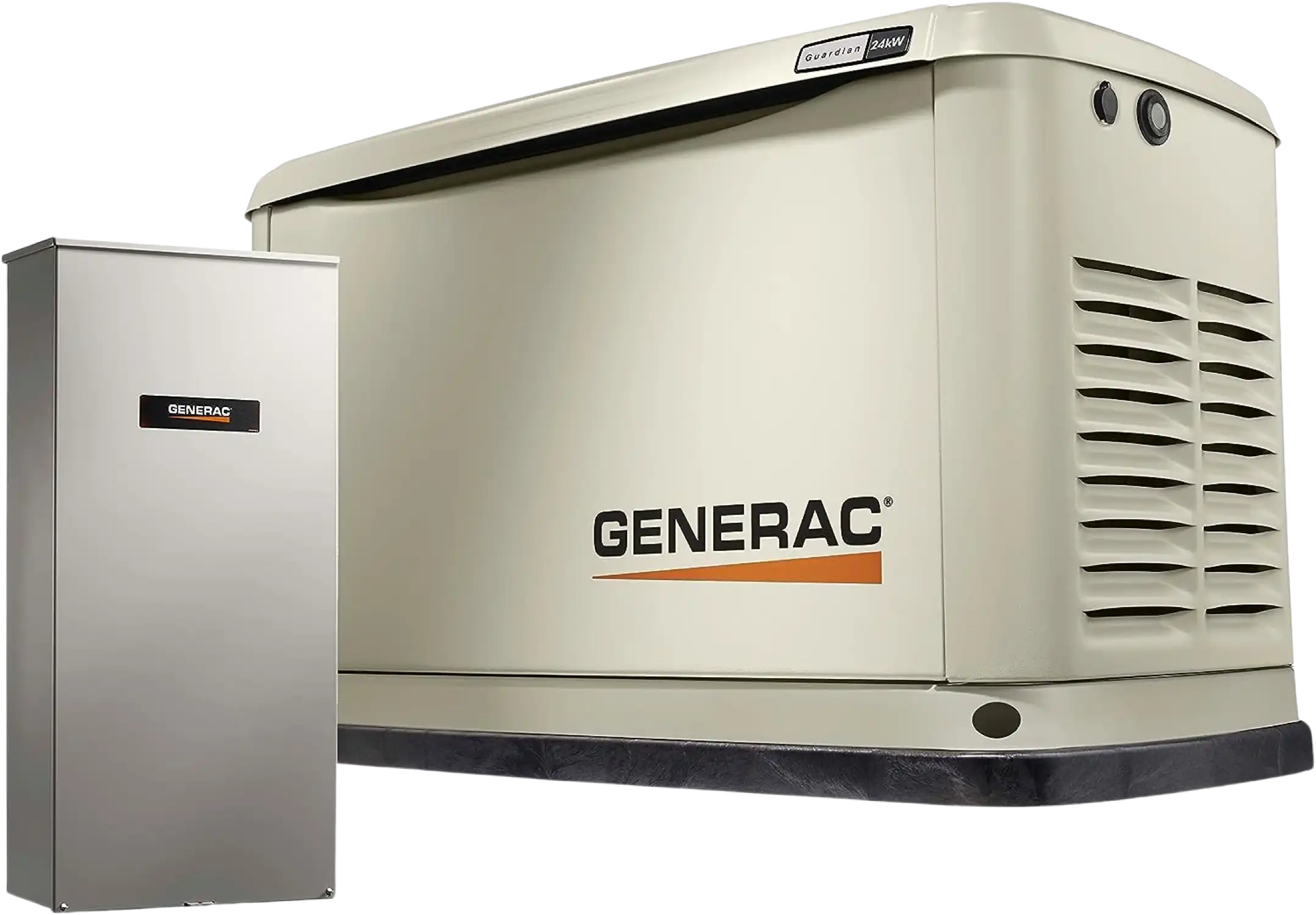
Generac Guardian 24kW
Generac's current volume flagship: 24kW on propane and 21kW on natural gas from the G-Force 1000 platform, bundled here with a 200-amp service-entrance transfer switch with PWRview energy monitoring. It's pitched as the 22kW's replacement, squeezing 2.6x the power of the baseline air-cooled units from the same-size enclosure, and owners like that it fits the same pad footprint. Real-world reports are strong — seamless transfers, two-AC homes handled with smart load modules — with noise at 67 dB under load and a much quieter 57 dB Quiet-Test. The complaints are familiar: owners report Wi-Fi Mobile Link dropouts, controller boards replaced under warranty, and dealer-network variability that makes your installer choice as important as the machine. Ships as a complete package, which simplifies quotes compared to the à-la-carte SKUs.

Generac
Generac iQ3500
Generac's premium inverter was built to beat Honda's EU3000iS on paper — more starting watts, electric start, a PowerDial that combines start/run/stop in one twist, and a digital dashboard showing watts and runtime — and owner reviews suggest it largely succeeds at 50-52 dB. Job-site users like the steel enclosure; tailgaters like that it's genuinely conversation-quiet in economy mode. It starts 13.5k RV ACs and the 30A L5-30R twist-lock feeds RV adapters cleanly. The persistent owner complaints: 109 pounds with no wheels and only two handles — moving it solo is miserable and a wheel-kit is the first accessory everyone buys; the carburetor demands fuel treatment before storage; and a 2023-era recall on certain units (stator faults causing fire risk) rattled confidence, though current production is clear. At street prices near $1,250 it undercuts what the equivalent Honda cost by nearly half.