Westinghouse
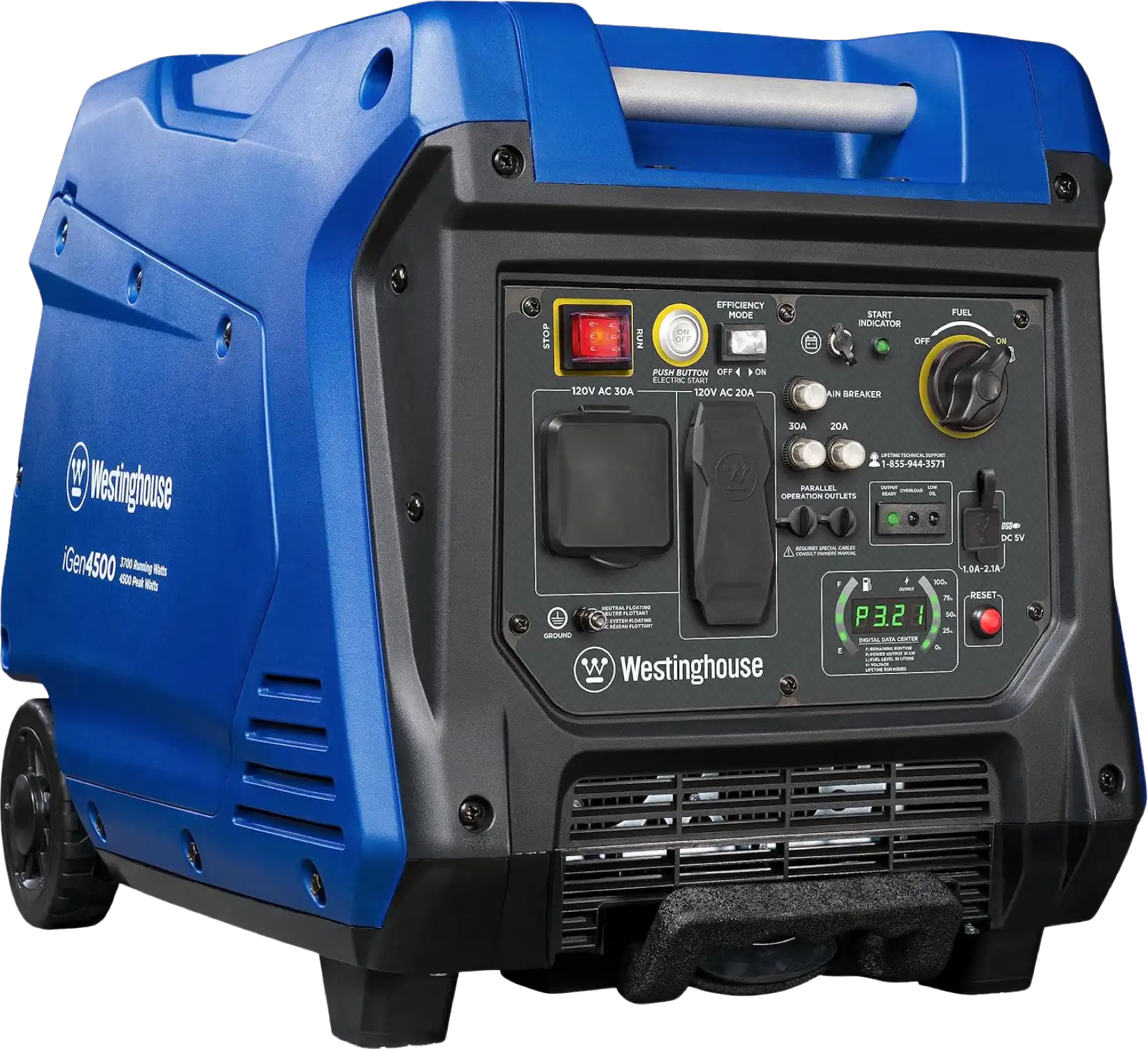
Westinghouse iGen4500
The RV community's favorite non-Honda: 3,700 running watts, a genuine 52 dB at quarter load, a telescoping suitcase handle, and an 18-hour economy-mode runtime that owners verify on long weekends. The digital display with remaining-runtime readout and the remote-start fob are the features people mention unprompted, and at half the cost of Honda's discontinued EU3000 it became the default. It starts most 15k BTU RV ACs, though owners at altitude or in high heat add a soft-starter to be safe. Grievances from long-term threads: the rear wheels are small for gravel campgrounds, the recoil backup start is awkwardly placed, carb gumming after storage is the top reliability complaint (fuel shutoff use is essential), and Westinghouse's parts/support pipeline can be slow. The DF dual-fuel variant had a fuel-filter leak recall in 2020 — this gas model wasn't affected.
Specifications
Highlights
What owners like
- ✓52 dB quarter-load noise embarrasses similarly priced open frames
- ✓18-hour economy runtime on 3.4 gallons
- ✓Starts most 15k BTU RV air conditioners
- ✓Display shows load, fuel, and remaining runtime
- ✓Remote-start fob works from inside the rig
Common complaints
- ✗Carb gumming after storage is the dominant owner complaint
- ✗Small rear wheels struggle on gravel and grass
- ✗No 240V and not transfer-switch friendly
- ✗Westinghouse parts and support can take days to weeks
- ✗98 lbs is heavy for one person to lift into a truck bed
Owner Insightssummarized from Reddit and owner forums
The iGen4500 is what happened when RVers collectively decided they wanted Honda quiet without Honda pricing, and Westinghouse actually delivered. It became the default recommendation in trailer forums on three features: a real 52 dB at light load, a digital display that tells you hours of fuel remaining, and a key fob that starts it from inside the rig. Buyers are overwhelmingly travel-trailer and fifth-wheel owners, with a second contingent of storm-prep suburbanites who wanted quiet enough not to advertise their generator to the block.
The ownership experience splits cleanly into how-it-runs and how-you-store-it. Running, it is superb: 13.5k ACs start without drama, 18 hours at quarter load is owner-verified, and the noise at fridge-and-lights loads genuinely sits in the low 50s dB. Storage is where owners get burned - the carburetor varnishes if left wet, and no-start-in-spring threads are the model's signature failure story, entirely preventable by running the carb dry via the fuel shutoff and stabilizing stored gas. Two more quiet gotchas from long-term threads: the electric-start battery needs occasional charging or you are on the awkward ankle-height recoil, and the warranty covers labor only for year one, so out-of-warranty-ish repairs arrive sooner than the 3-year headline suggests.
At 700 to 850 dollars street it owns the value middle: half of what Honda asks for less capability in the EU2200i, and 1,700 less than the EU3200i that matches its AC-starting job. The classic cross-shop is Champion's 200988 - the Champion adds dual fuel and costs slightly less, the Westinghouse counters with quieter running, the telescoping suitcase handle, the display, and the fob. Buyers wanting propane in this exact form factor look at the iGen4500DF, and Harbor Freight loyalists compare the Predator 3500. For pure gas-powered RV duty, the iGen4500 remains the one the forums keep landing on.
What owners like
- +Remote-starting it from inside a warm camper is the feature owners say they would never give up
- +The runtime-remaining readout removes overnight guesswork - check it before bed and know the furnace makes morning
- +Starts 13.5k BTU RV air conditioners with ease, and 15k units routinely work once a soft starter is in
- +A 3.4-gallon fill in economy mode covers a full boondocking weekend
- +TT-30R outlet takes the RV cord directly - no adapters, no parallel kit
- +CARB compliant, so California buyers are not locked out
- +Three ways to light it: fob, push button, and a backup recoil rope
- +The 224cc engine loafs along at typical RV loads, which high-hour owners credit for how little trouble it gives
Common complaints
- −Owners who stored it with fuel in the carb report no-start springs and 100-dollar carb cleanings - the run-dry ritual is non-negotiable
- −Warranty fine print: labor coverage ends after year one, so a year-two repair costs real money even when the part is covered
- −The starting battery drains over months of storage and needs topping up through the charge port
- −Hard 5.5-inch rear wheels - gravel-campground owners end up carrying all 98 pounds the last stretch
- −Oil changes mean removing a side panel and tilting the unit; messier than it has any right to be
- −The backup recoil hides behind a low panel and pulls from ankle height - miserable exactly when the battery is dead
- −Gas-only here, and the dual-fuel DF variant's 2020 recall makes used listings a serial-number check
- −Replacement parts from Westinghouse can take weeks, which owners discover mid-camping-season
Common Questions
Will it start a 15,000 BTU RV air conditioner?
How do I keep the carburetor from gumming up?
How does the remote start work and what is the range?
Is it quiet enough for campground quiet hours?
What does the 3-year warranty actually cover?
Should I get the dual-fuel iGen4500DF instead?
Compare the Westinghouse iGen4500
Related units
More from Westinghouse →
Westinghouse
Westinghouse WGen9500DF
Probably the most-reviewed big portable on the internet — 24,000+ ratings averaging 4.7 — and the default r/Generator answer for 'cheap whole-house backup through an interlock.' 9,500 running watts on gasoline (8,500 on propane), a 50-amp outlet, remote-start key fob, and a 12-hour tank for around a grand is a spec sheet nothing else matches. Owners routinely run entire homes including central AC during hurricanes. It is not subtle: expect 75+ real-world dB, a 211-lb frame, and open-frame vibration. The complaint file is proportionate to the sales volume: occasional oil leaks and QC escapes out of the box, a Westinghouse support line that owners describe as slow to days-long, and carb gumming if stored wet. The current 'DFc' revision adds a CO sensor. Buy it, change the skimpy break-in oil early, and store it dry.

Westinghouse
Westinghouse WGen11500TFc Tri-Fuel
The r/Generator power-user pick: hook it to your home's natural gas line through a quick-connect and you have effectively unlimited runtime without storing a drop of gasoline — the practical middle ground between a portable and a $12,000 standby install. On gasoline it makes a huge 11,500 running watts; the honest math is the NG derate to 9,500 running watts, still enough for most whole homes via the 50A outlet and an interlock. Remote start, CO sensor, and a 9.5-gallon tank round it out. Owner notes: NG performance depends on your line pressure — undersized gas plumbing causes surging and hard starts, the most common complaint thread — plus it's a 230-lb beast, mid-70s dB loud, and Westinghouse support remains the weak link. Registered owners report solid 3-year warranty coverage when they persist.

The people's RV generator. Champion's 200988 pairs 4,500 starting watts with dual-fuel flexibility and electric start at well under half of Honda money, and the review volume — thousands across Amazon, Walmart, and Camping World — is overwhelmingly positive. Owners confirm it starts 13.5k BTU RV air conditioners, sips propane for up to 21 hours on a 20-lb tank, and holds clean sub-3% THD power for electronics. At 61 dB it's audibly louder than a Honda or the iGen4500, more of a steady hum than a whisper, and the 103-lb body rides on small, hard wheels that owners wish were bigger. Recurring gripes: the electric-start battery dies if you don't tend it (there's a maintenance charger port for a reason), propane output derates to 3,150 running watts, and oil changes require a slight tilt-and-funnel dance.
Predator (Harbor Freight)
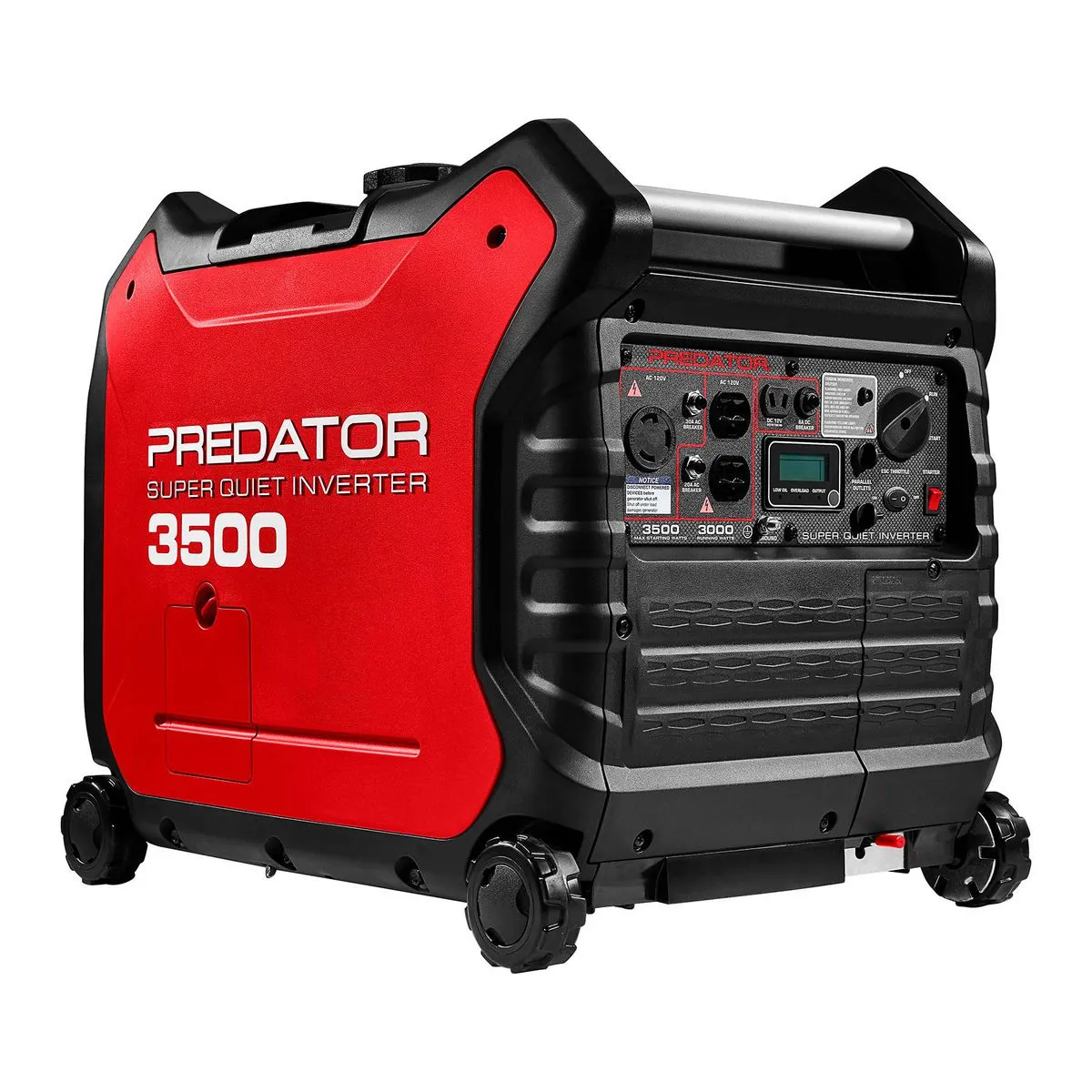
Predator 3500 Inverter
The cult classic of the RV world. The Predator 3500 has powered a decade of forum threads titled 'why pay Honda prices?' — 3,000 running watts, 57 dB super-quiet operation, electric start, and a digital readout for around $800, with periodic coupons taking it lower. Owners report five-plus-year lifespans with basic oil changes, and it starts 15k BTU RV ACs that make 2,200W units give up. Consumer Reports rates it surprisingly highly for noise and power quality. The trade-offs are well-mapped: 99 lbs with no folding handle makes truck-bed loading awkward, the oil fill is tilted and messy, carb varnish after storage is the top repair thread, the 90-day warranty is the shortest in the industry, and CARB-state buyers need the newer CO Secure version. Still the value benchmark for RV inverters.
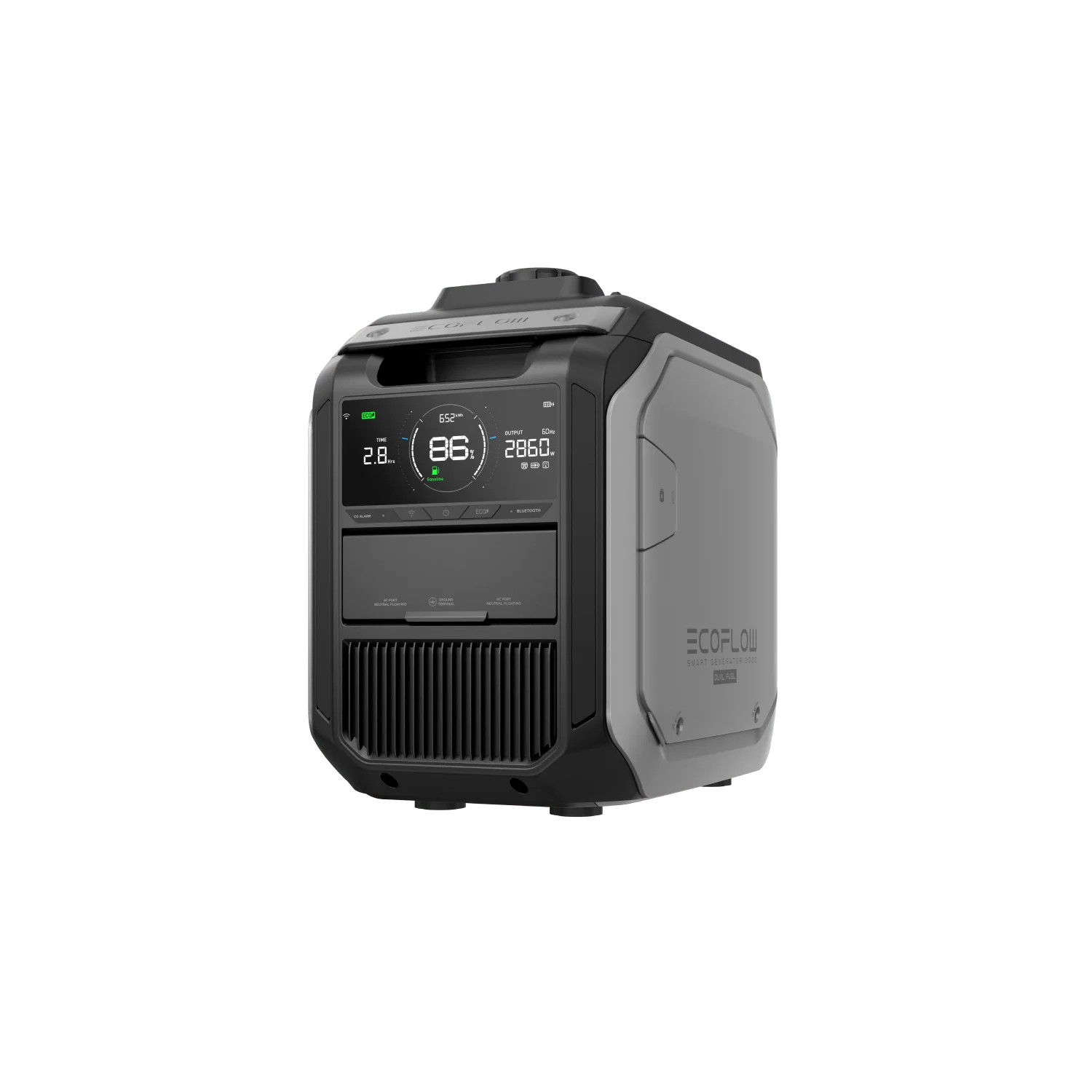
This isn't really a competitor to Honda — it's a range extender for EcoFlow's battery ecosystem, and that's exactly how owners use it. Paired with a DELTA 3 or DELTA Pro power station, it auto-starts itself when the battery drops below a threshold you set in the app, charges via high-efficiency DC (skipping the AC conversion loss), then shuts itself off — so the noisy, fuelly part of backup power runs as little as possible. It also works as a plain 2,000W dual-fuel inverter generator with app control and five start methods. Owner sentiment: brilliant inside the ecosystem, mediocre outside it — 69 dB is loud for 2,000 watts, the 1-year warranty is stingy, LPG output drops to 1,800W, and at typical pricing you can buy more raw watts elsewhere. As the automated gas backstop to a solar-battery setup, though, nothing mainstream matches it.

Generac
Generac GP3300i
Generac's play for the Honda EU2200i shopper who balks at $1,200: 2,500 running watts (700 more than the Honda), PowerRush surge tech, USB ports, and COsense CO shutdown for roughly half the money, in a 60-lb suitcase. Owners use it for camping, tailgates, and charging batteries off-grid, and reviews are broadly positive about starting behavior and the extra headroom that runs a small AC or space heater the Honda can't. What the threads flag: Generac doesn't publish a noise spec — owners measure it audibly louder than the Honda, especially outside eco mode; eco mode can hunt/surge with cycling loads like fridges; the 1-gallon tank is small; and while the 3-year warranty is real, portable warranty service goes through Generac's dealer network, which prioritizes standby customers. A rational value pick if ultimate quiet isn't the goal.