Bluetti
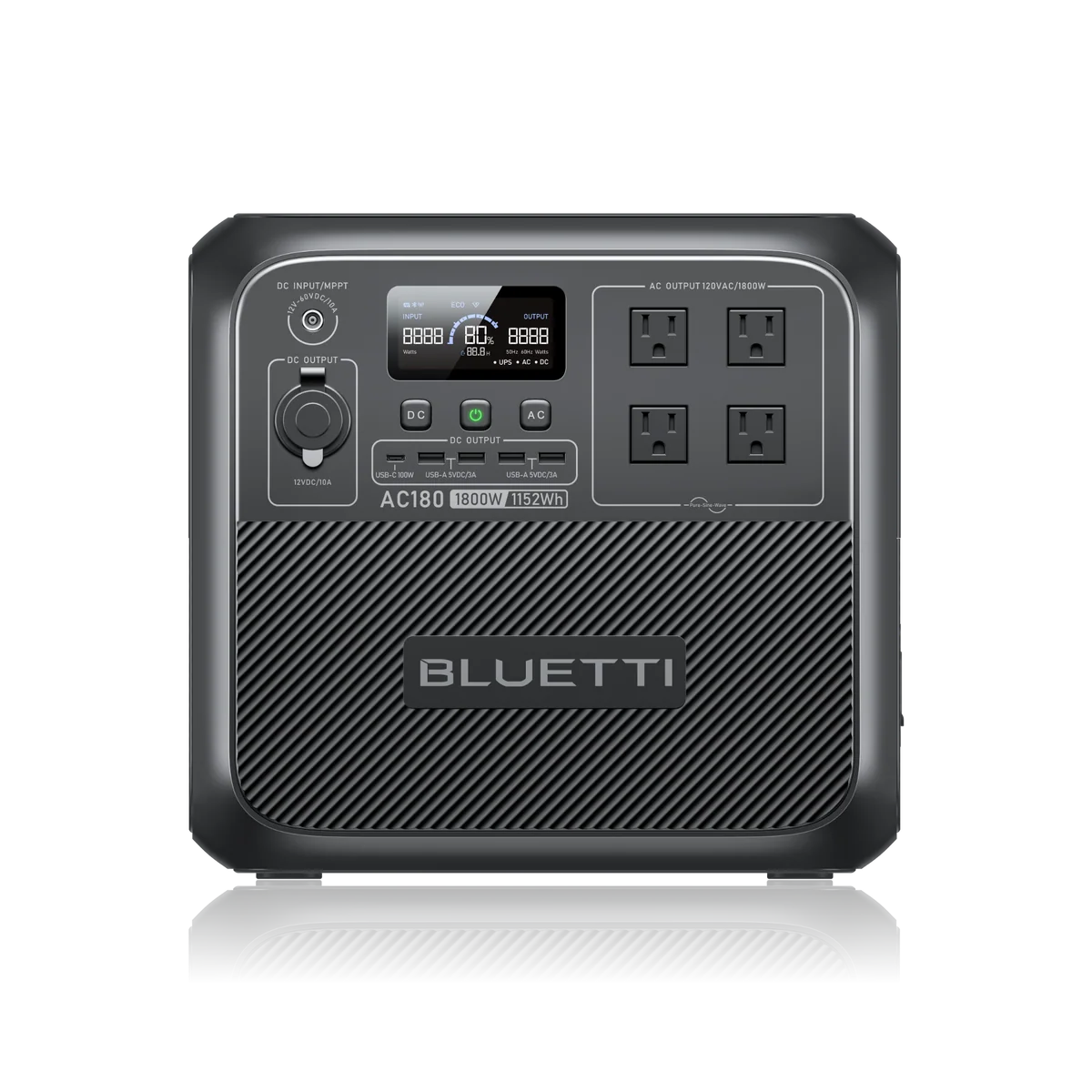
Bluetti AC180
The budget king of the 1kWh class - Amazon's perpetual best-seller with a review count nothing else touches. You get more capacity (1,152Wh) than the Anker or EcoFlow rivals, 1800W output with a 2,700W Power Lifting mode for heaters and kettles, and a wireless charging pad, usually for under $450. Owners are clear-eyed about the trade-offs: the fan runs early and often, even at loads where competitors stay silent - it's the single most repeated complaint in three years of reviews. The 12V DC port is a regulated but weak 10A, there's no expansion support, and at 35.3 lbs it's a full 10 lbs heavier than the Jackery. But for a storm-prep box that lives in a closet and runs the fridge when needed, the price-per-Wh math has kept it the default recommendation for budget buyers since 2023.
Specifications
Highlights
What owners like
- ✓Most capacity per dollar in the 1kWh class, frequently $399-449
- ✓Power Lifting runs 2,700W resistive loads like space heaters
- ✓0-80% AC recharge in ~45 minutes
- ✓Wireless charging pad and 4 USB-A ports - family-friendly port mix
- ✓3,500+ cycle LiFePO4 with 5-year warranty
Common complaints
- ✗Fan noise at low loads is the defining complaint - it's not subtle
- ✗No expansion battery support
- ✗35.3 lbs, heavy for its class
- ✗12V car port limited to 10A regulated
- ✗Single USB-C port feels dated in 2026
Owner Insightssummarized from Reddit and owner forums
The AC180 is the unit that made 1kWh power stations boring in the best way - it has been the default budget answer since 2023, and its review count towers over everything else because it keeps going on sale for $399-449 and keeps not breaking. The buyers are storm preppers, apartment dwellers who want fridge insurance, and first-time buyers who read one price-per-Wh comparison and stopped shopping. It is rarely anyone's dream unit; it is everyone's rational one.
Living with it means making peace with the fan. Bluetti tuned it to trigger at loads as low as 30W - a phone charger can wake it - and the on-off cycling with its spike-then-whine profile is the single most repeated complaint across three years of owner threads, with a multi-page thread on Bluetti's own forum devoted to it. Beyond that, ownership is uneventful in a good way: independent testing puts usable capacity around 950Wh (about 82% of rated), the 20ms UPS switchover genuinely carries desktops and routers through clean-grid outages (owners on unstable rural grids report occasional fault states needing a manual reset), the app pairs reliably, and the 45-minute 0-80% charge from one cable is still class-leading. The 10A 12V socket and the absence of any expansion path are the two hardware walls you cannot firmware your way past.
Buy it if you want maximum stored energy per dollar for closet-to-kitchen-counter outage duty and can live with fan noise; skip it if it will sit in your bedroom or van. Cross-shoppers weigh it against the EcoFlow DELTA 2 (quieter bypass mode, 1,024Wh, similar sale pricing but with expansion) and the Anker SOLIX C1000 (lighter, faster fan ramp-down, ~100Wh less), and the AC180 wins almost purely on capacity-per-dollar when a deal is live. At full $449 the decision gets closer; at $399 the math ends the conversation.
What owners like
- +Sale pricing is basically permanent - $399-429 deals recur monthly, and refurbs dip to around $335
- +45 minutes to 80% from a single wall cable, no external brick to lose
- +2,700W Power Lifting mode genuinely runs kettles, space heaters, and coffee makers that trip rival 1kWh units
- +20ms UPS switchover keeps the router and modem alive through outages without a blink
- +3,500+ cycle LiFePO4 pack - owners cycling it daily for three years report negligible capacity loss
- +Four full AC outlets plus a wireless pad, so nothing fights over plugs
- +Independent testing measured about 950 usable Wh - honest delivery for a unit this cheap
- +Hardware reliability track record is excellent; three years of reviews show remarkably few dead units
Common complaints
- −The fan kicks on at loads as small as 30W and cycles on-off endlessly - the community thread complaining about it runs to multiple pages
- −The fan's sound profile - spike, dip, then a sustained whine - bugs owners more than the raw volume
- −12V output is a single 10A cigarette socket, which boxes out DC-heavy van builds
- −No expansion port, ever - the 1,152Wh you buy is the 1,152Wh you die with
- −UPS mode can trip into a fault state on flaky grid power and sit there until you manually reset it
- −Turbo 1,440W charging turns the fan into a hair dryer for the duration
- −35.3 lbs is a lot of mass for the 1kWh class - 10 lbs more than the Jackery equivalent
- −Roughly 82% of rated capacity reaches your devices; the spec-sheet number flatters it
Common Questions
How long will the AC180 run a full-size refrigerator in an outage?
Can I use it as a UPS for my desktop computer?
What is the maximum solar input?
Can I add expansion batteries later?
What charge level should I store it at between outages?
Is there any way to quiet the fan down?
Related units
More from Bluetti →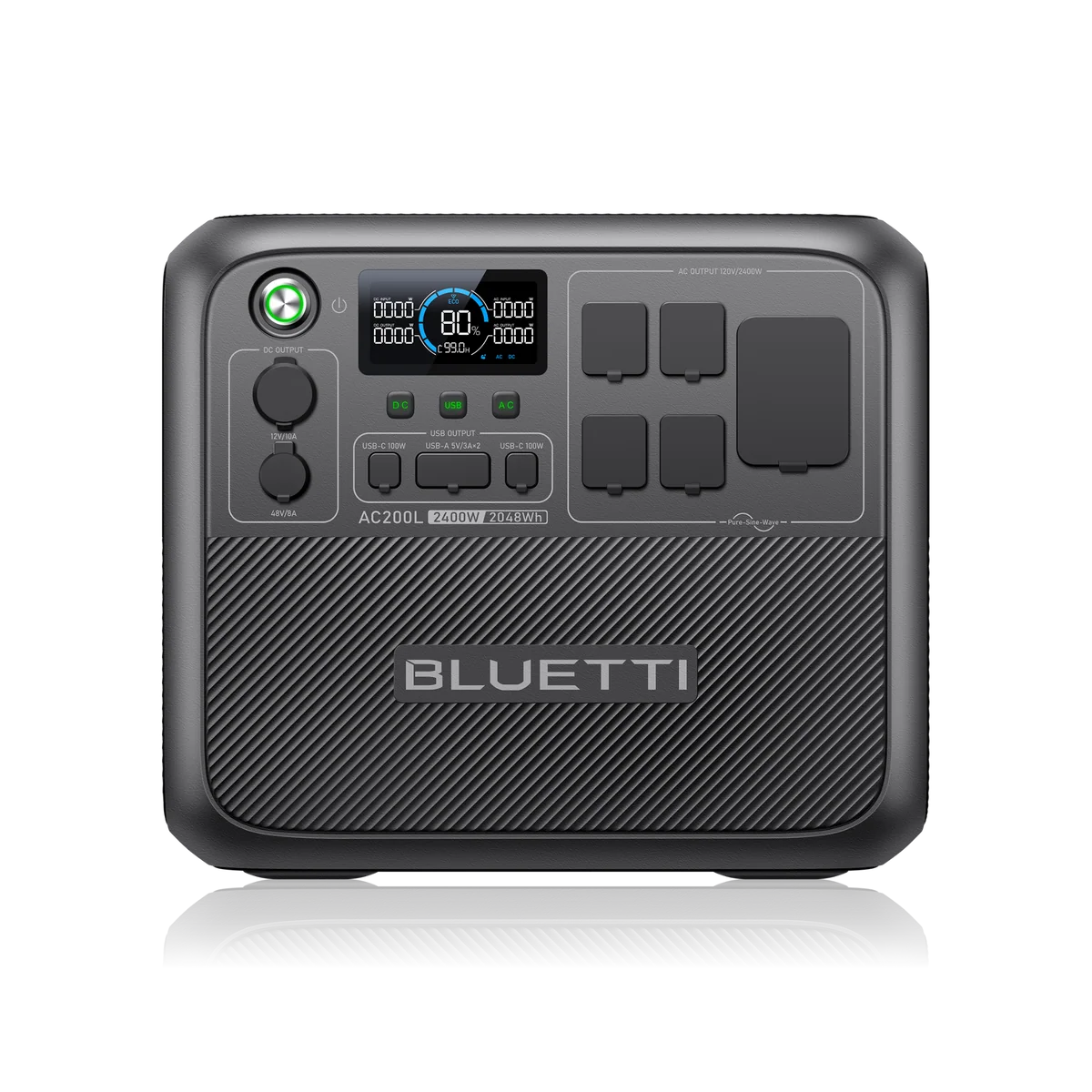
Bluetti
Bluetti AC200L
Bluetti's mainstream 2kWh unit and the expandability play at this price: it accepts B300K packs (up to ~8kWh) that also work with the bigger AC500 and Apex 300, so nothing you buy gets orphaned. The 30A TT-30 outlet plus a 48V RV DC port make it quietly one of the best RV units under $1,000. A 2,400W inverter with 3,600W Power Lifting covers tools and kitchen gear. Owner sentiment: solid hardware, middling software - app pairing drops and slow firmware updates are recurring gripes, and the cooling fans are audible under load in classic Bluetti fashion. At 62.4 lbs with no wheels, repositioning it is a deliberate act. Street pricing settled around $899 in 2026, and the periodic $799 deals make it a strong alternative to the Jackery 2000 Plus when expansion cost matters more than quietness.
Bluetti
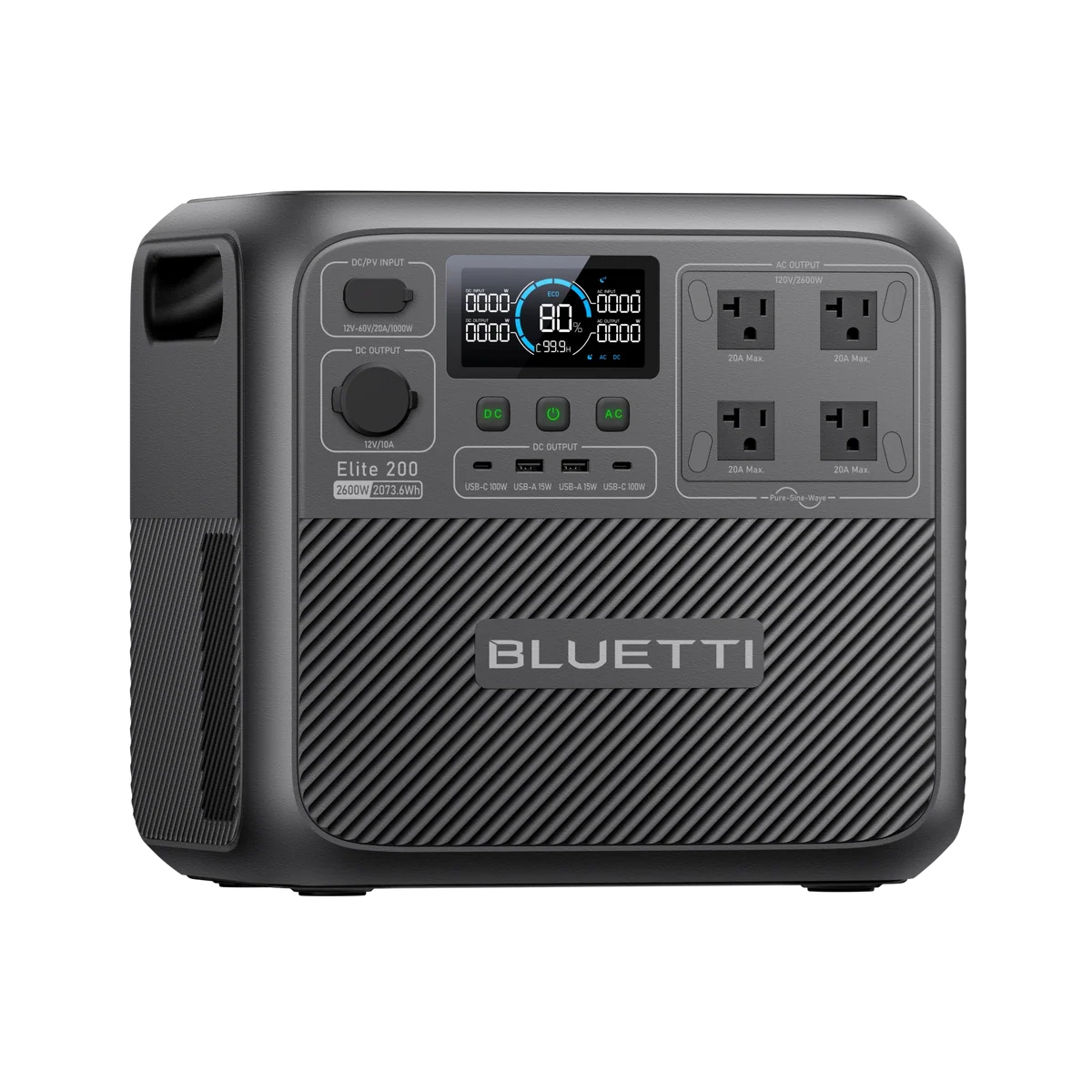
Bluetti Elite 200 V2
Bluetti's 2025-generation 2kWh flagship and the unit that reset expectations for what $999 buys: a 6,000-cycle LiFePO4 pack (cycle it daily and it still holds 80% in 2043), a stronger 2,600W inverter than anything else in class, and a chassis nearly 10 lbs lighter than the AC200L it effectively replaces. Vanlife reviewers in particular have adopted it as the default build battery. Owners praise the 50-minute 0-80% charging and the noticeably better fan tuning versus older Bluettis - it's not silent, but it no longer howls at 200W loads. The trade-offs are real though: no expansion port at all (that's what Apex 300 is for), solar input caps at 1,000W, and there's no wireless pad or fancy extras. If your capacity needs are fixed at ~2kWh, this is arguably the best-engineered unit in the segment right now.
Bluetti
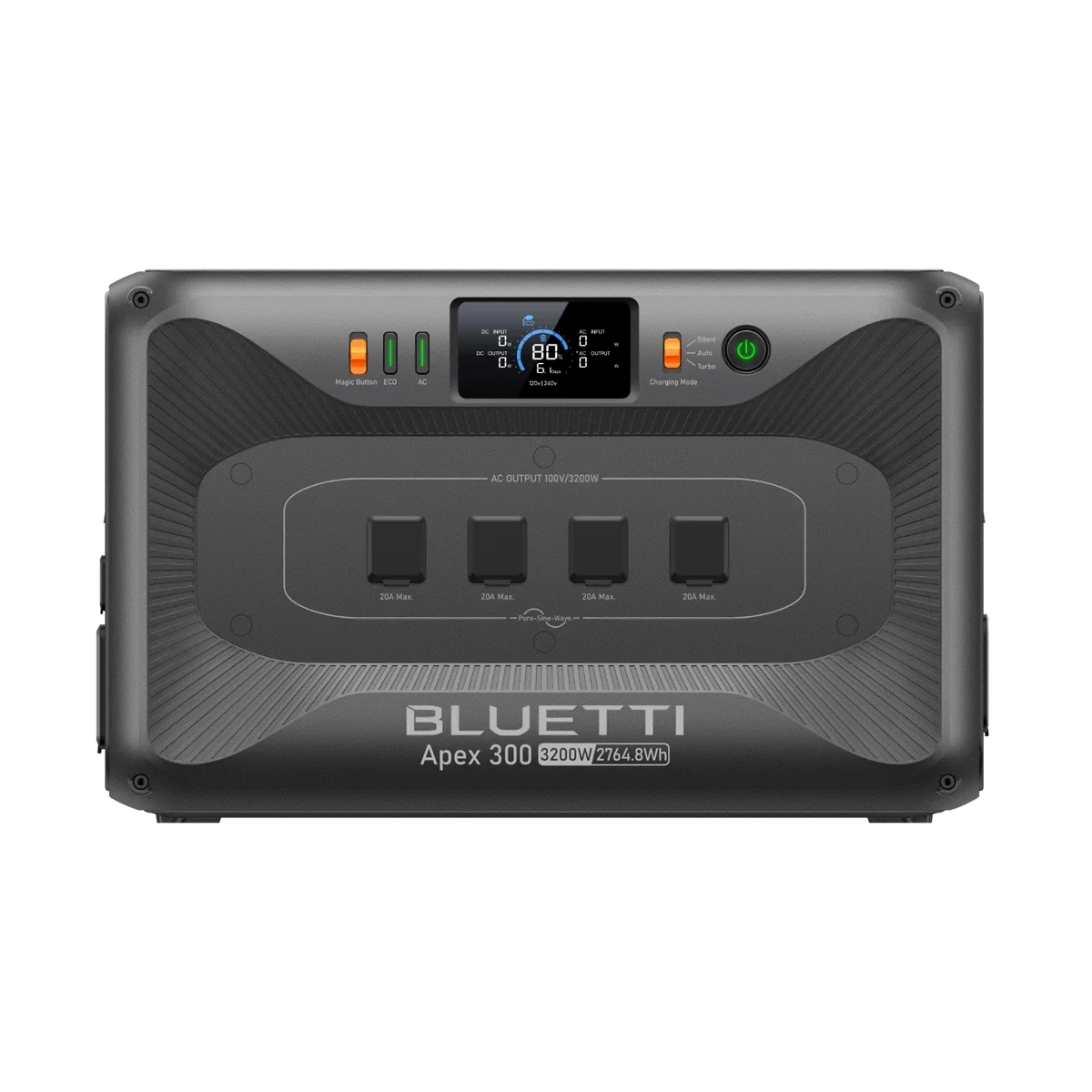
Bluetti Apex 300
Bluetti's 2025 modular flagship and their real answer to the F3800 Plus: 3,840W continuous (7,680W surge) with simultaneous 120/240V output, black-start capability, and expansion to a frankly absurd 58kWh using the same B300K packs the AC200L takes. The 6,000-cycle cells carry a claimed 17-year lifespan. Pro reviewers praise how confidently it starts well pumps and RV air conditioners, and the $1,529 street price undercuts every 240V-capable rival. Owner-reported quirks skew new-platform: frequent firmware updates (mostly improvements, occasionally breakage), accessories like the solar controller and home-integration hub trickling out on their own schedule, and 83.8 lbs with no built-in wheels - the optional trolley is basically mandatory. Fan noise under heavy charge is present but better-mannered than older AC-series units. The ecosystem bet looks smart if Bluetti keeps shipping the promised add-ons.
Bluetti
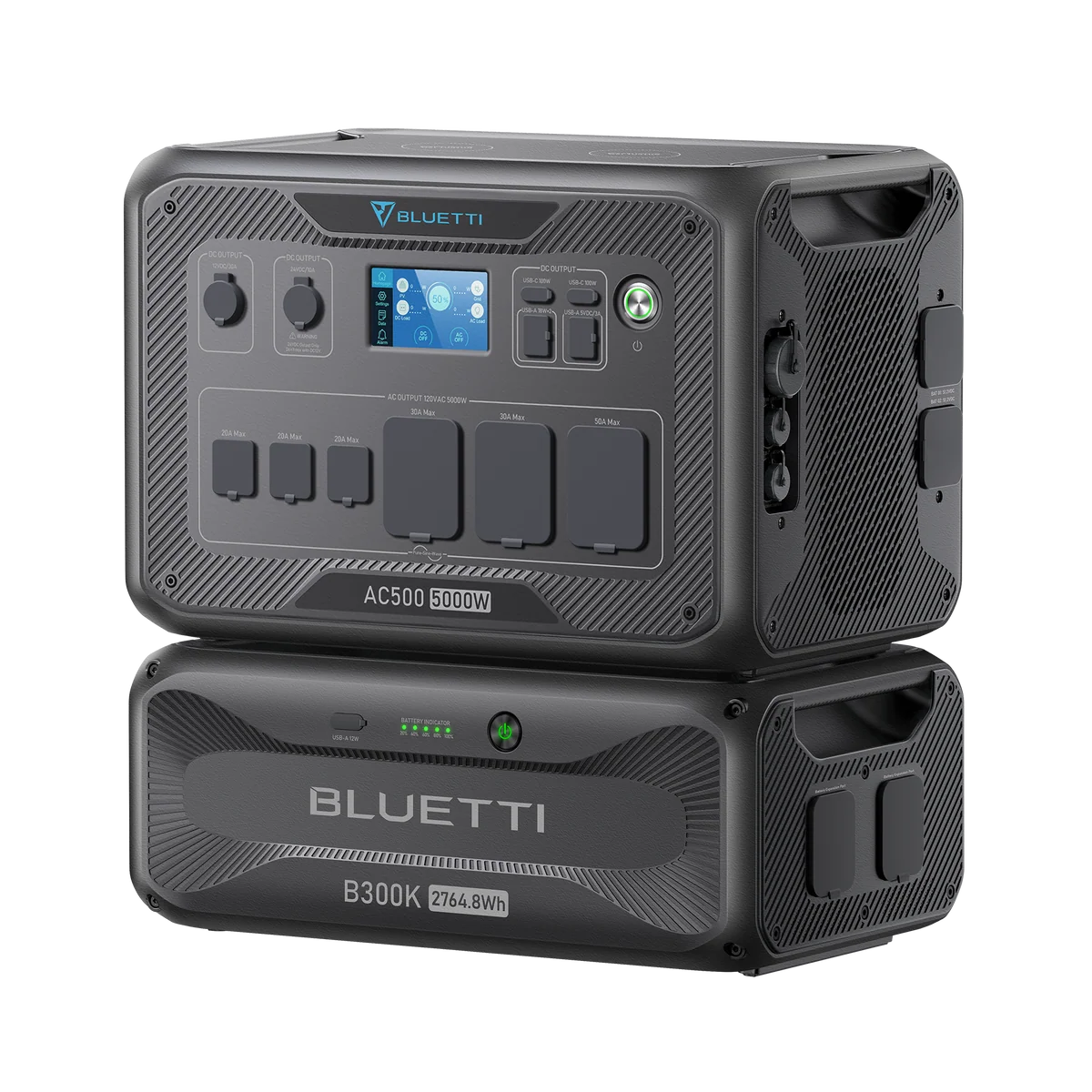
Bluetti AC500 + B300K
Bluetti's modular tower system: a 5,000W inverter head (10,000W surge - the strongest surge rating of any portable here) that stacks on B300K batteries. The 50A NEMA 14-50 outlet plus L14-30 makes transfer-switch and RV-pedestal hookups trivial, and two AC500s can pair for 240V and 33kWh. Costco has carried the combo, which says something about mainstream acceptance. Owners like the swap-ability - batteries charge to 80% in 45 minutes and detach for transport, since the two-piece design splits an unliftable 131 lbs into two 65-lb pieces. Recurring complaints: the fans are genuinely loud at high charge rates, Wi-Fi connectivity drops, and the 4-year/3+1 warranty structure trails the 5-year industry standard. It's older than the Apex 300 but the 5kW inverter and 14-50 outlet still earn it recommendations for heavy transfer-switch duty.
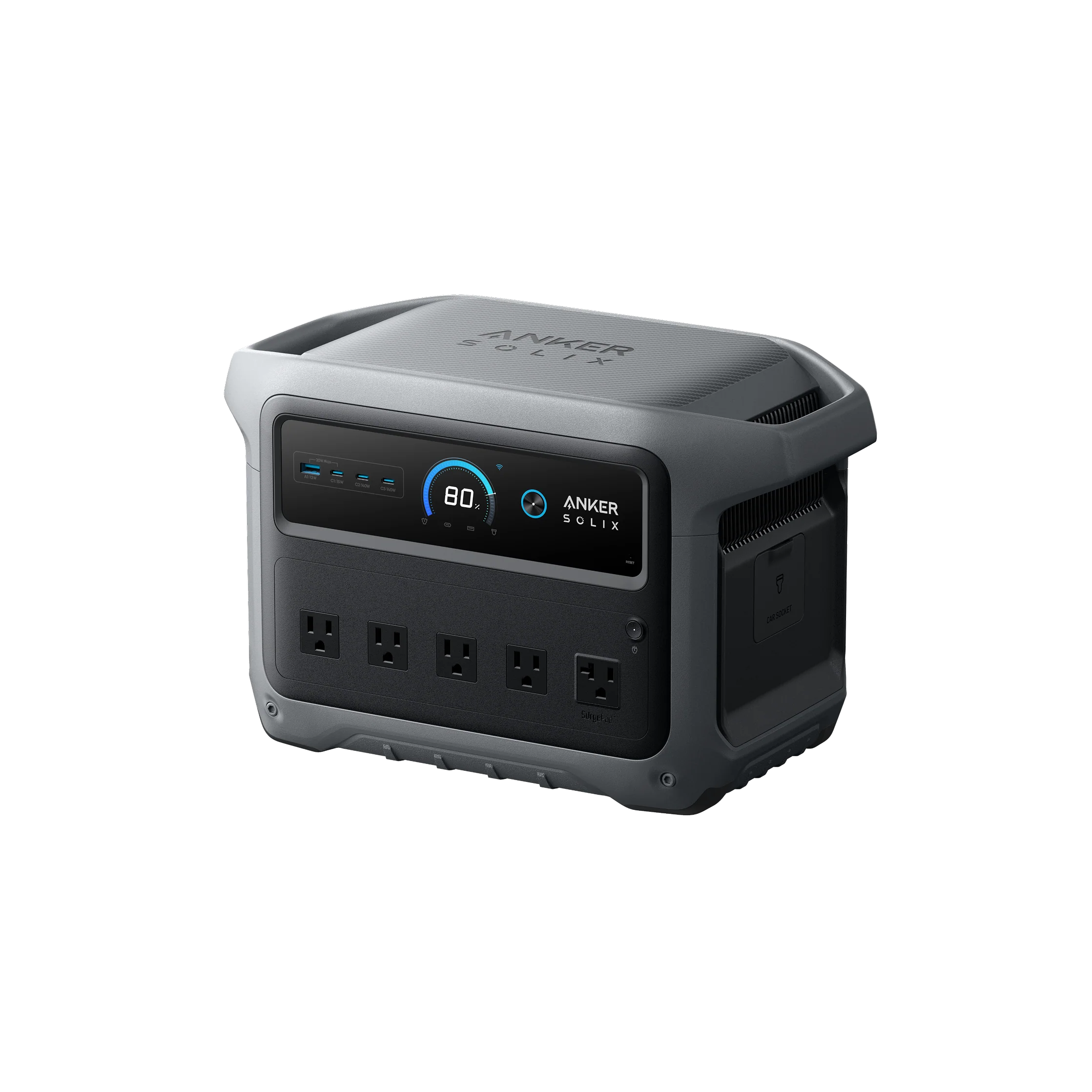
The 2026 'best overall' pick on multiple tested lists, and the current answer in the sub-$500 1kWh knife-fight. Anker took the already-popular C1000, cut 3.5 lbs, bumped output to 2000W, added a 10ms UPS mode, and kept HyperFlash charging (full in 49 minutes). Owners describe it as nearly silent at low loads - the 20dB claim holds for trickle duty, though the fan is audible during 1,600W charging. The catch that surprises upgraders: Gen 2 dropped expansion support entirely - the old BP1000 battery is not compatible, so 1kWh is what you get forever. Other nitpicks from owner threads: USB-A is a weak 12W, and the plastic shell feels less premium than the weight suggests. At its perpetual ~$499 street price, it's the strongest pure value in portable power right now.
Jackery
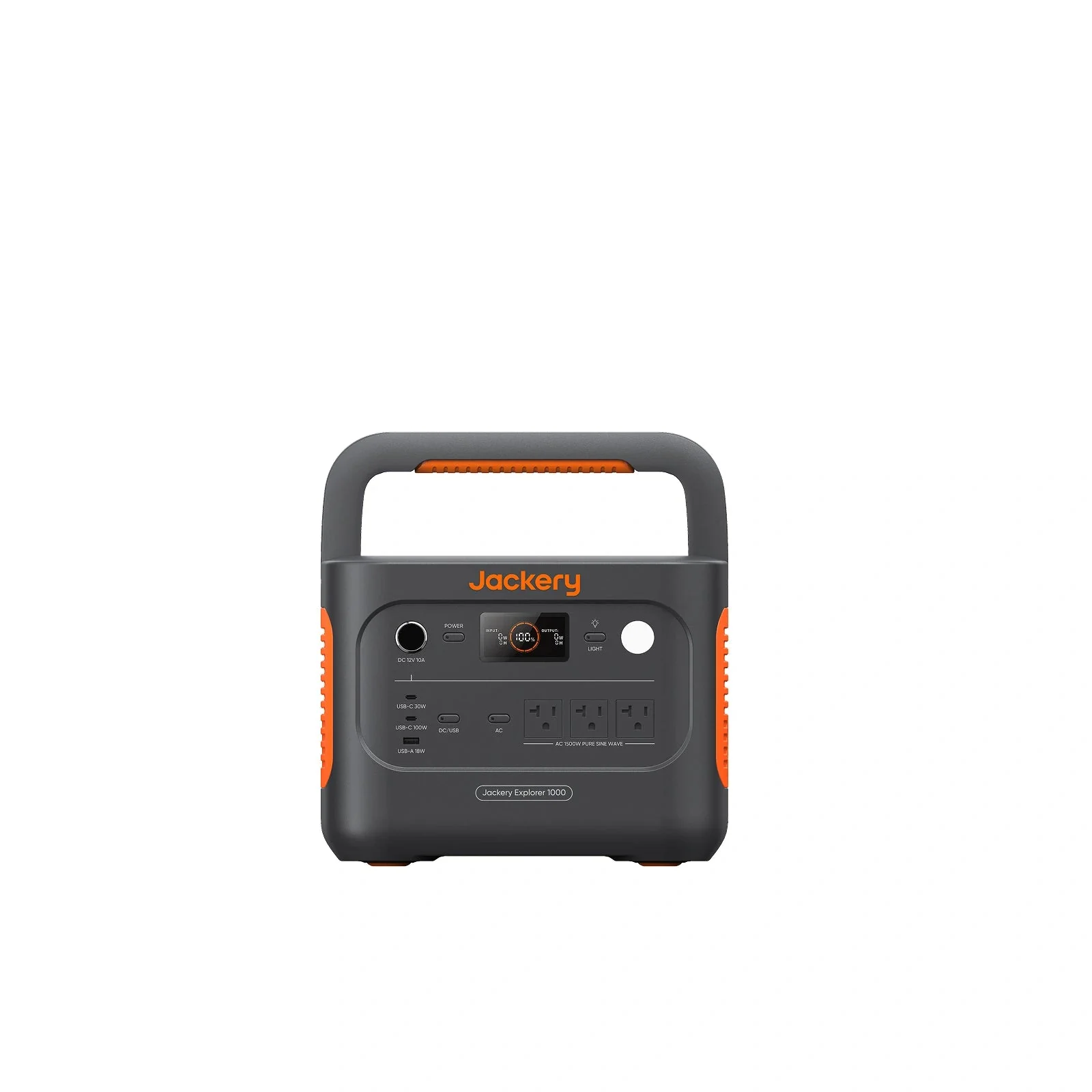
Jackery Explorer 1000 v2
Jackery's LiFePO4 do-over of the best-selling power station ever, and the one people actually mean when they say 'just get a Jackery.' At 23.8 lbs it's several pounds lighter than every 1kWh rival, which is why campers and older buyers gravitate to it. The 1500W inverter (3000W surge) runs coffee makers and microwaves fine; owners confirm the quiet-fan claim - it's noticeably more pleasant than an AC180 under load. Real-world knocks: there's no expansion port at all, the 20ms UPS switchover is fine for a fridge but not marketed for computers, and the 1500W output trails the 1800-2000W competition on paper. It lives on sale - $429-499 happens monthly - so nobody should pay list. The foldable handle and genuinely idiot-proof interface make it the one to recommend to non-technical relatives.