Bluetti
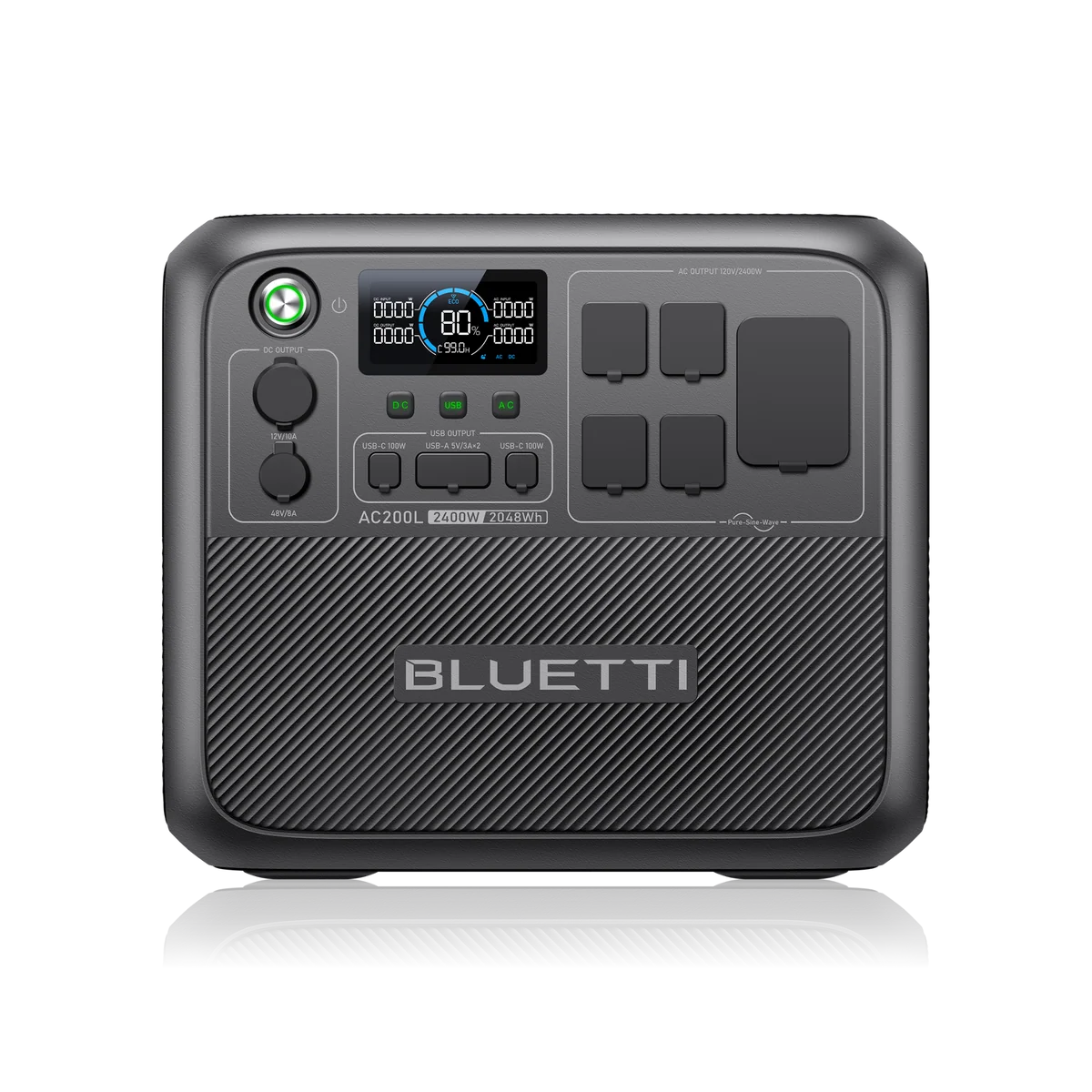
Bluetti AC200L
Bluetti's mainstream 2kWh unit and the expandability play at this price: it accepts B300K packs (up to ~8kWh) that also work with the bigger AC500 and Apex 300, so nothing you buy gets orphaned. The 30A TT-30 outlet plus a 48V RV DC port make it quietly one of the best RV units under $1,000. A 2,400W inverter with 3,600W Power Lifting covers tools and kitchen gear. Owner sentiment: solid hardware, middling software - app pairing drops and slow firmware updates are recurring gripes, and the cooling fans are audible under load in classic Bluetti fashion. At 62.4 lbs with no wheels, repositioning it is a deliberate act. Street pricing settled around $899 in 2026, and the periodic $799 deals make it a strong alternative to the Jackery 2000 Plus when expansion cost matters more than quietness.
Specifications
Highlights
What owners like
- ✓B300K expansion packs are cheap per kWh and cross-compatible with other Bluetti gear
- ✓30A TT-30 plus 48V DC port - a genuine RV-first port layout
- ✓2,400W continuous with 3,600W lifting handles most single appliances
- ✓5-year warranty, 3,000+ cycle LiFePO4
- ✓Consistent $799-899 street pricing
Common complaints
- ✗App Bluetooth/Wi-Fi pairing flakiness is a persistent owner complaint
- ✗Fans are audible under moderate load
- ✗62.4 lbs with no wheels or telescoping handle
- ✗No UPS-grade switchover spec - not for computer backup duty
Owner Insightssummarized from Reddit and owner forums
The AC200L is Bluetti's volume seller in the 2kWh class, and the buyers skew heavily RV and trailer: it is one of the very few units anywhere near $900 with a real TT-30 outlet on the face and a 48V DC port that can push charge into an RV's house battery through the D40 regulator. The other big draw is insurance against orphaned hardware - the B300K packs it accepts are the same ones the AC500 and the new Apex 300 use, which makes it the rare budget unit with a credible upgrade story.
Ownership is a hardware-good, details-annoying experience. The fans are actually well-mannered for a Bluetti - roughly 40dB on the low step and 48dB on high, with a low-frequency character owners describe as easy to sleep near - but the electronics fudge the margins: measured AC conversion efficiency comes in around 87% against the advertised 94%, so real-world usable energy is closer to 1,800Wh, and at least one owner documented solar intake of 292W from 310W of properly configured panel. The app still drops Bluetooth pairings often enough to be a running joke, firmware moves slowly, and the accessory ecosystem leans on proprietary connectors. Wall charging is a bright spot at about 45 minutes to 80%, and the 3,600W lifting mode handles motor starts gracefully.
Best for RV owners and expansion planners who care about dollars-per-future-kWh more than refinement. Against the Jackery 2000 Plus it is cheaper to buy and much cheaper to expand, but the Jackery is quieter and more polished; against EcoFlow's DELTA 3 class it trades app quality for the RV-specific ports. The Elite 200 V2 is the better pick at the same price if you will never expand - newer cells, lighter, stronger inverter - which is exactly the internal-lineup dilemma owners debate in every buying thread. When the $700-ish deals appear, most of that debate evaporates.
What owners like
- +Native TT-30 outlet means RV pedestal-style hookups with zero adapter pigtails
- +48V DC port plus the D40 regulator can charge an RV house battery directly - a trick almost nothing else offers
- +B300K expansion packs also fit the AC500 and Apex 300, so your battery investment survives an upgrade
- +Deal pricing is aggressive - owners have caught it at $664-750, under half original MSRP
- +Fan tuning is genuinely decent: about 40dB on low, 48dB on high, with a low-frequency tone that fades into the background
- +Roughly 45 minutes to 80% from the wall
- +3,600W Power Lifting mode starts saws and space heaters a 2,400W rating shouldn't
- +Five-year warranty on the main unit
Common complaints
- −Measured conversion efficiency runs about 87%, not the advertised 94% - closer to 1,800Wh of the 2,048Wh actually reaches AC loads
- −Solar harvest under-delivers; one owner logged 292W from 310W of panel well within the voltage window
- −Proprietary DC connectors and cables for nearly everything beyond the basics, and they are not cheap
- −The B300K expansion packs have their own cooling fan - a step backwards from the silent B300 they replaced
- −App pairing still drops randomly, forcing re-connection dances that got old two firmware versions ago
- −The '30A' TT-30 outlet is capped by the 2,400W inverter, so it can't actually deliver a continuous 30 amps
- −62.4 lbs in one piece with no wheels - moving it is a commitment
- −Firmware fixes arrive on Bluetti time, which is to say slowly
Common Questions
How long will the AC200L run a refrigerator during an outage?
What is the maximum solar input?
How does expansion with B300K batteries work, and what's the ceiling?
Can it plug into a home transfer switch for backup?
What charge level should I store it at?
Is the app required to use it?
Related units
More from Bluetti →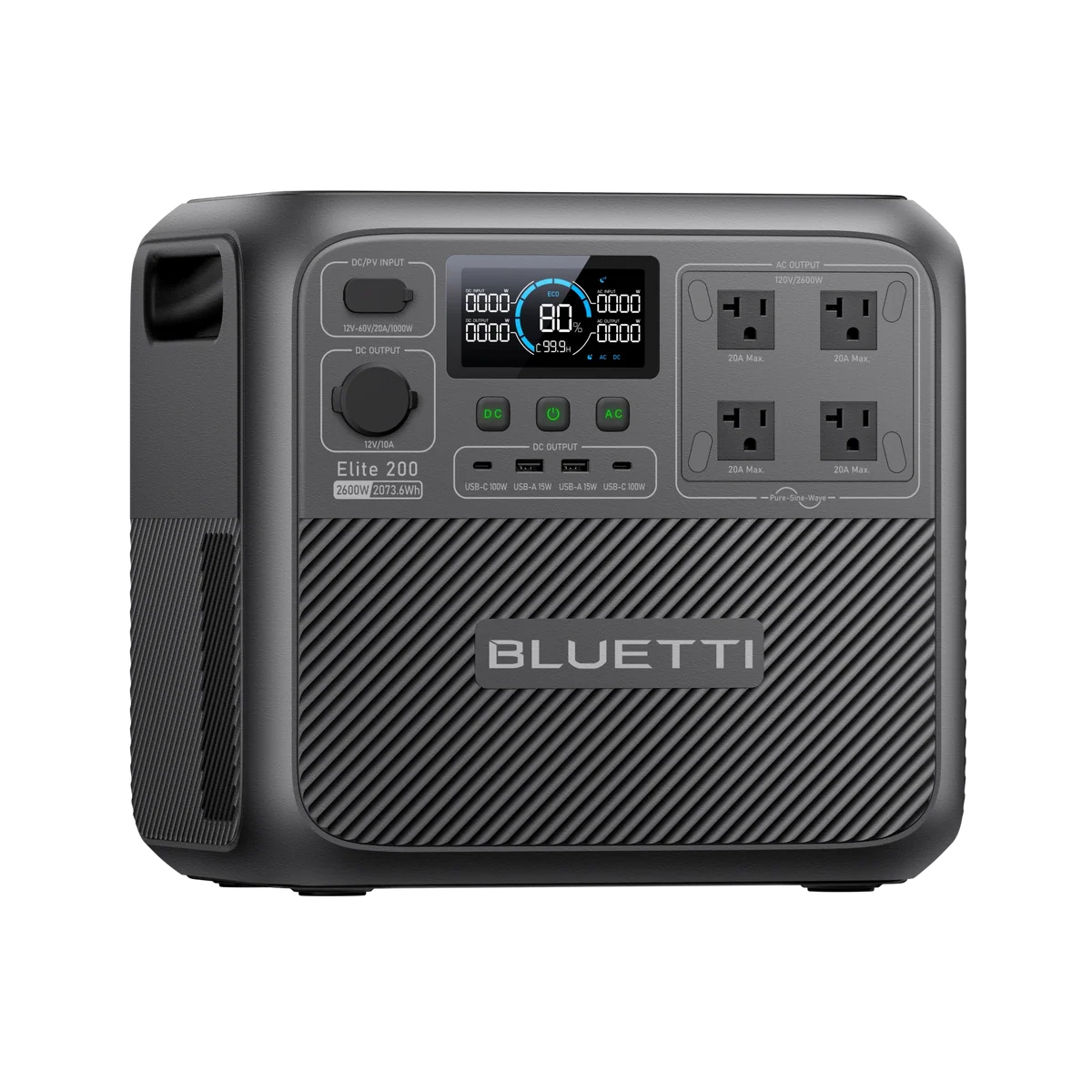
Bluetti
Bluetti Elite 200 V2
Bluetti's 2025-generation 2kWh flagship and the unit that reset expectations for what $999 buys: a 6,000-cycle LiFePO4 pack (cycle it daily and it still holds 80% in 2043), a stronger 2,600W inverter than anything else in class, and a chassis nearly 10 lbs lighter than the AC200L it effectively replaces. Vanlife reviewers in particular have adopted it as the default build battery. Owners praise the 50-minute 0-80% charging and the noticeably better fan tuning versus older Bluettis - it's not silent, but it no longer howls at 200W loads. The trade-offs are real though: no expansion port at all (that's what Apex 300 is for), solar input caps at 1,000W, and there's no wireless pad or fancy extras. If your capacity needs are fixed at ~2kWh, this is arguably the best-engineered unit in the segment right now.
Bluetti
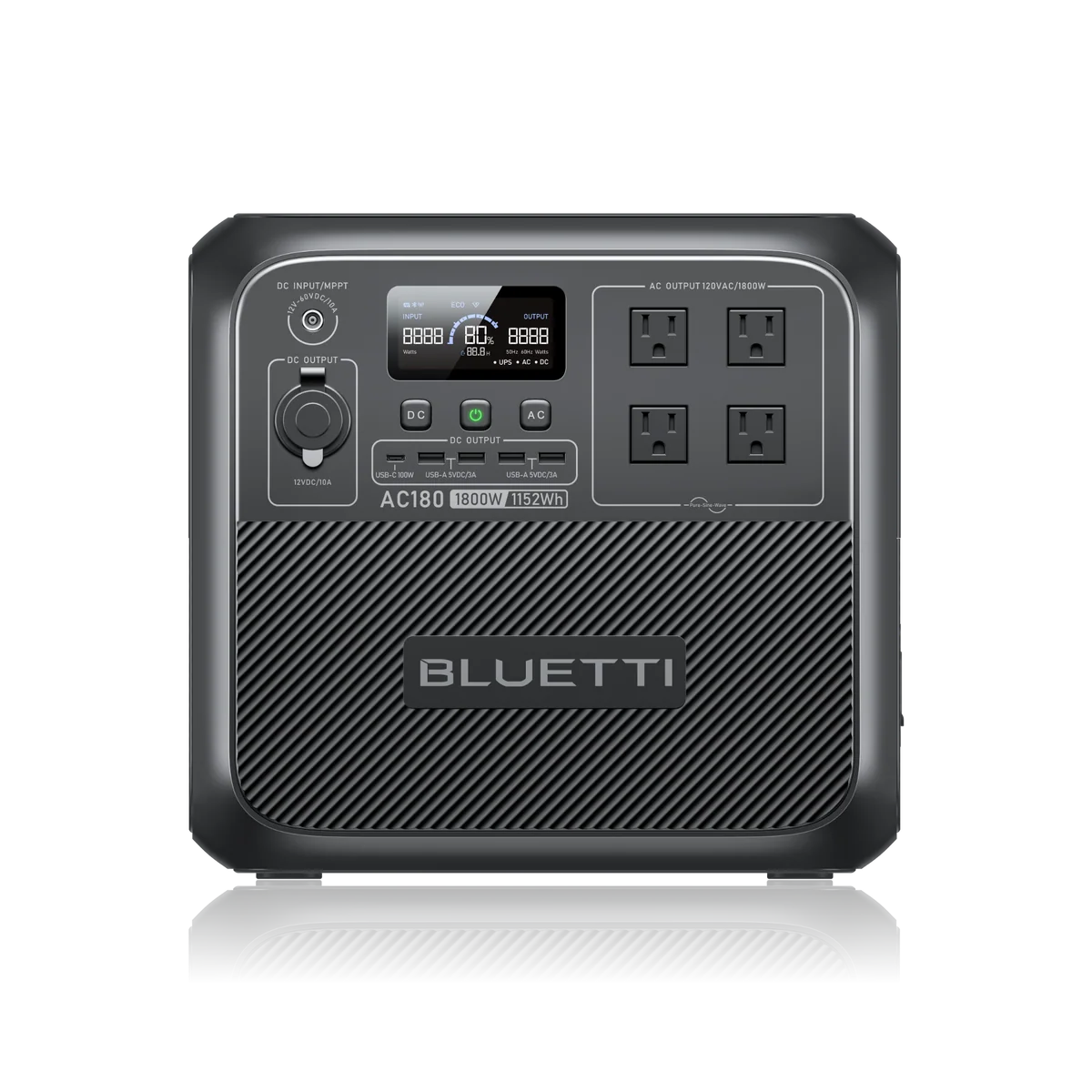
Bluetti AC180
The budget king of the 1kWh class - Amazon's perpetual best-seller with a review count nothing else touches. You get more capacity (1,152Wh) than the Anker or EcoFlow rivals, 1800W output with a 2,700W Power Lifting mode for heaters and kettles, and a wireless charging pad, usually for under $450. Owners are clear-eyed about the trade-offs: the fan runs early and often, even at loads where competitors stay silent - it's the single most repeated complaint in three years of reviews. The 12V DC port is a regulated but weak 10A, there's no expansion support, and at 35.3 lbs it's a full 10 lbs heavier than the Jackery. But for a storm-prep box that lives in a closet and runs the fridge when needed, the price-per-Wh math has kept it the default recommendation for budget buyers since 2023.
Bluetti
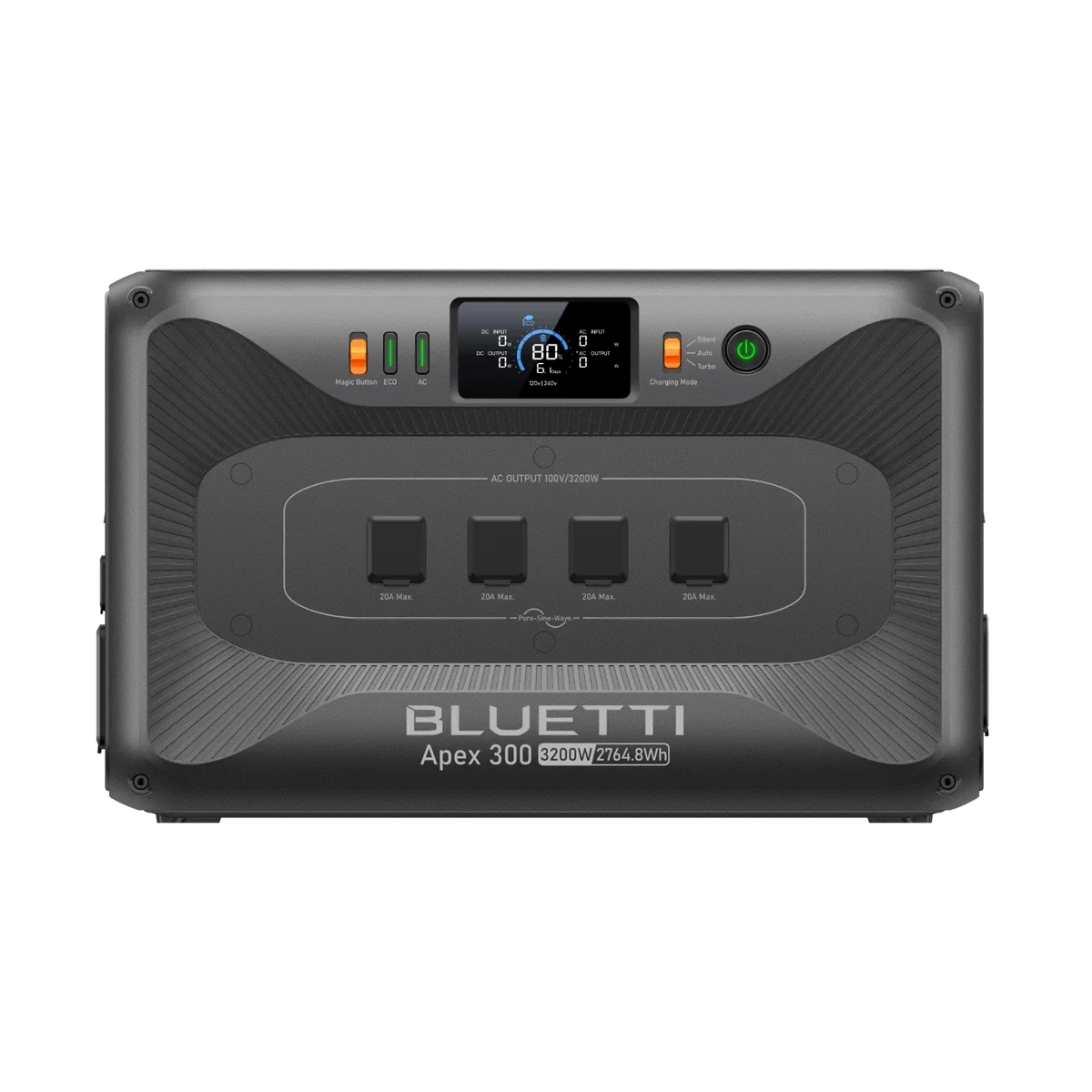
Bluetti Apex 300
Bluetti's 2025 modular flagship and their real answer to the F3800 Plus: 3,840W continuous (7,680W surge) with simultaneous 120/240V output, black-start capability, and expansion to a frankly absurd 58kWh using the same B300K packs the AC200L takes. The 6,000-cycle cells carry a claimed 17-year lifespan. Pro reviewers praise how confidently it starts well pumps and RV air conditioners, and the $1,529 street price undercuts every 240V-capable rival. Owner-reported quirks skew new-platform: frequent firmware updates (mostly improvements, occasionally breakage), accessories like the solar controller and home-integration hub trickling out on their own schedule, and 83.8 lbs with no built-in wheels - the optional trolley is basically mandatory. Fan noise under heavy charge is present but better-mannered than older AC-series units. The ecosystem bet looks smart if Bluetti keeps shipping the promised add-ons.
Bluetti
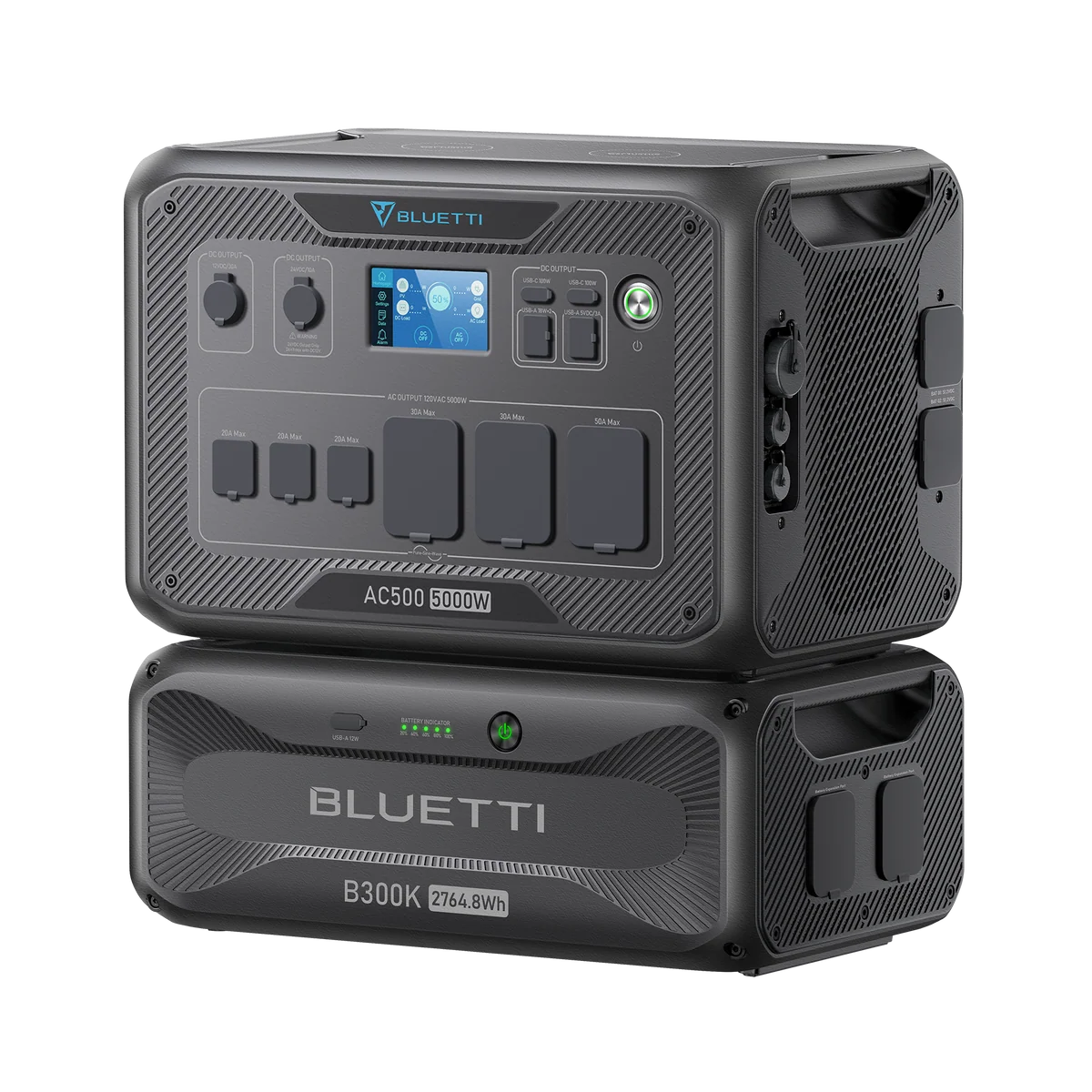
Bluetti AC500 + B300K
Bluetti's modular tower system: a 5,000W inverter head (10,000W surge - the strongest surge rating of any portable here) that stacks on B300K batteries. The 50A NEMA 14-50 outlet plus L14-30 makes transfer-switch and RV-pedestal hookups trivial, and two AC500s can pair for 240V and 33kWh. Costco has carried the combo, which says something about mainstream acceptance. Owners like the swap-ability - batteries charge to 80% in 45 minutes and detach for transport, since the two-piece design splits an unliftable 131 lbs into two 65-lb pieces. Recurring complaints: the fans are genuinely loud at high charge rates, Wi-Fi connectivity drops, and the 4-year/3+1 warranty structure trails the 5-year industry standard. It's older than the Apex 300 but the 5kW inverter and 14-50 outlet still earn it recommendations for heavy transfer-switch duty.

Anker's suitcase-style 2kWh veteran - launched 2022, still sold in 2026 because constant $799-999 deals keep it moving. The rolling-luggage design with a pull handle is the feature owners mention most; 67 lbs rolls fine but the top-mounted ports mean bending over a lot. SurgePad pushes it to 3600W briefly, and the TT-30 makes it a natural for smaller RVs. GaNPrime charging does 0-80% in 1.4 hours, which was headline speed in 2022 and is merely fine now. Owner threads flag its age honestly: no UPS mode (there's a delay on switchover), the display washes out in sunlight, solar input caps at 1000W, and the app is the older Anker platform with fewer controls. Reliability sentiment is strong though - lots of three-year owners with zero issues, and the 5-year full-device warranty is unusual for its generation.
EcoFlow
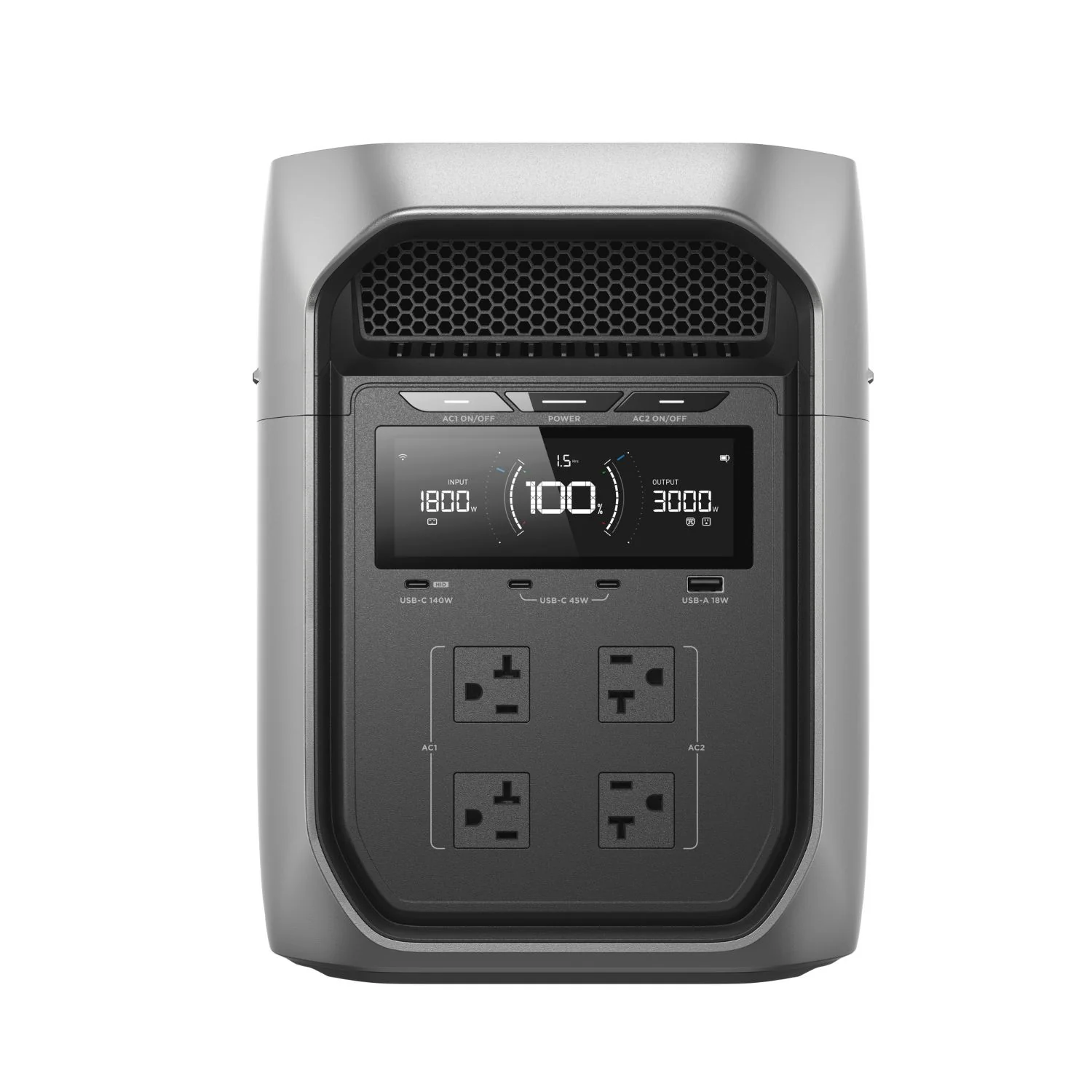
EcoFlow DELTA 3 Max Plus
The 2025-2026 refresh of EcoFlow's mid-size class and a current 'best for home backup' pick in several tested roundups. You get 2kWh and a 3000W inverter - enough to run a microwave and fridge simultaneously - at a price that undercuts the old Delta 2 Max's launch by hundreds. Owners like the practical stuff: 0-80% in about 68 minutes, X-Boost handling 3800W resistive loads, and expansion to 10kWh if backup needs grow. The dual side handles make the 49-lb carry manageable for one person. Quirks from owner threads mirror the rest of the Delta 3 line: fan spins up audibly during fast charging, idle drain means you shouldn't store it with AC output enabled, and the app occasionally loses Wi-Fi pairing until you power-cycle. Solid pick if 1kWh feels tight but 4kWh-class weight and price feel excessive.