EcoFlow
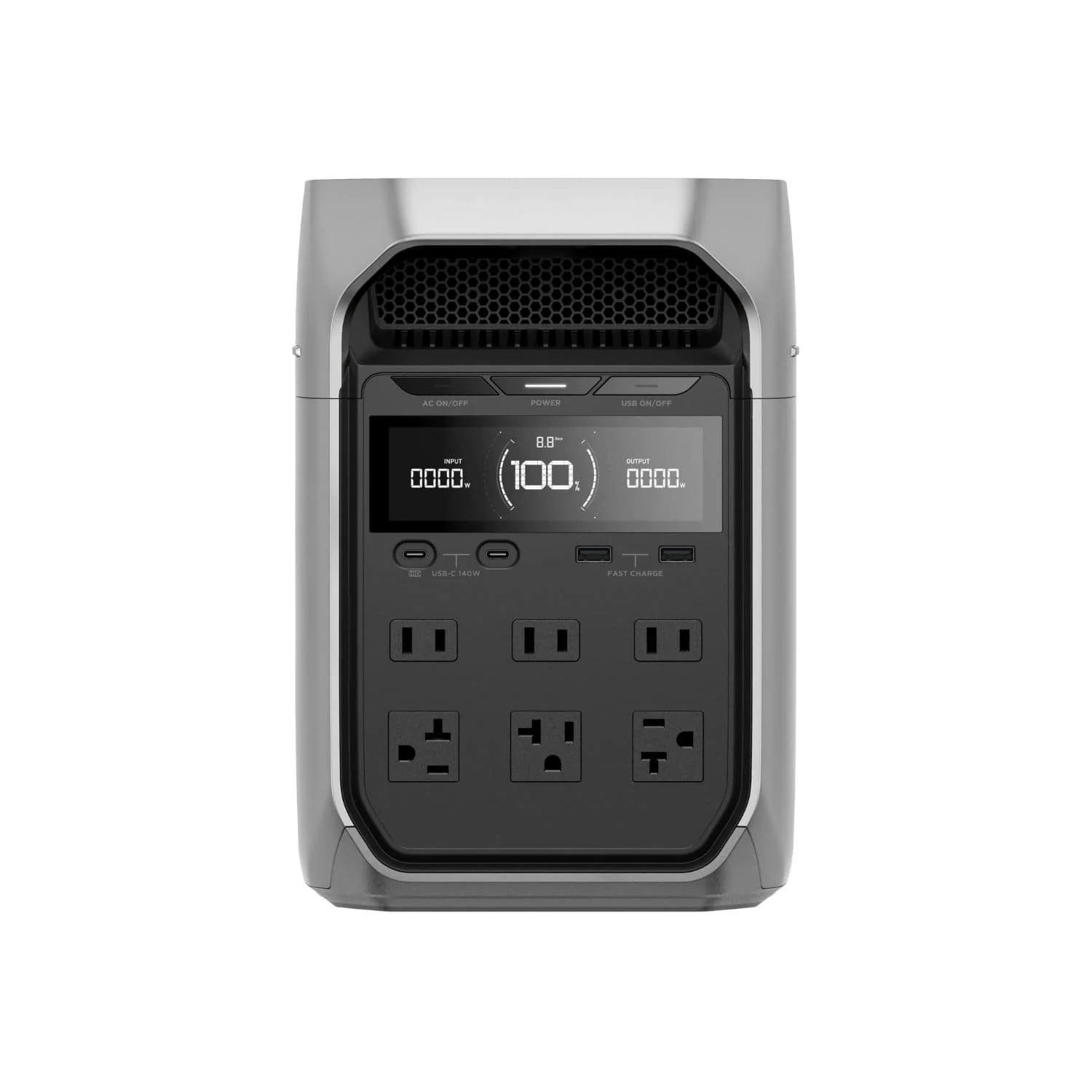
EcoFlow DELTA 3 Plus
The default answer when someone asks r/portablepowerstations for a 1kWh backup unit. The killer feature owners rave about is the 10ms UPS switchover - people literally run NAS boxes, routers, and CPAP machines off it full-time and never notice an outage. It charges 0-100% in 56 minutes, which sounds like marketing until you watch it happen. Real-world quirks: the 30dB quiet claim only holds at idle - fast AC charging spins the fan up noticeably, so owners set a slower charge rate in the app at night. The app requires an EcoFlow account, which annoys the privacy crowd. X-Boost lets it fudge 2200W resistive loads (space heaters, kettles), but induction motors still trip it. Expansion to ~5kWh via extra batteries is handy, though the add-on packs cost almost as much as the unit on sale.
Specifications
Highlights
What owners like
- ✓10ms UPS switchover actually keeps NAS/desktops alive - owners run them 24/7 on it
- ✓0-100% AC charge in ~56 minutes, fastest in class alongside Anker
- ✓6 AC outlets plus dual 140W USB-C - no fighting over ports
- ✓LiFePO4 rated ~4,000 cycles, fine to cycle daily for a decade
- ✓Frequent $599-649 street pricing makes it the value benchmark
- ✓Dual 500W solar input with high voltage tolerance for easy panel matching
Common complaints
- ✗Fan gets loud during fast charging - owners schedule slow charging overnight
- ✗1800W inverter is now behind Anker's 2000W at the same price
- ✗App requires cloud account; occasional firmware nags
- ✗Extra battery pricing makes expansion math unattractive versus buying bigger upfront
Owner Insightssummarized from Reddit and owner forums
The DELTA 3 Plus has become the reflexive answer for a first serious power station because it nails the unglamorous stuff: a sub-10ms transfer fast enough that desktops, NAS boxes, and CPAP machines never blink, wall charging that finishes before your coffee does, and a LiFePO4 pack rated for roughly 4,000 cycles so nobody feels guilty leaving it plugged in as a permanent outlet-side backup. The buyer profile in owner threads is telling - it is less campers and more home-office people, homelab tinkerers, and folks protecting a fridge and modem through storm season.
Ownership reports are consistent. Real usable energy lands around 870-920Wh depending on load, which is better than most 1kWh-class rivals deliver. The fan is a non-issue until roughly 600W of draw or fast charging, at which point it is clearly audible - nearly everyone learns to drag the charge-rate slider down at night. The recurring sharp-edged complaints are about software rather than hardware: the app wants a cloud account, and a couple of firmware pushes have caused enough grief that experienced owners deliberately update early, then leave well enough alone before an expected outage. It is also worth understanding that UPS mode switches over rather than conditioning power, so during a brownout it passes the sag through instead of cleaning it up.
Best fit is anyone who wants one box to quietly guard electronics year-round and still grab-and-go at 27.6 lbs. Against the Anker SOLIX C1000 Gen 2 it trades a little output (1800W vs 2000W) for expandability the Anker completely lacks; against the Jackery Explorer 1000 v2 it wins on charging speed, UPS transfer time, and ports while giving up a few pounds. Almost nobody pays the $649 sticker - $549 happens regularly, and panel bundles in the $550-700 range are often the smarter buy. Owners who wanted more headroom for kitchen appliances typically stepped up to the DELTA 3 Max Plus rather than leaving the ecosystem.
What owners like
- +Essentially silent below roughly 600W of load - the fan simply does not spin
- +Owners measure about 870-920Wh usable from the 1024Wh pack, a legitimately good 85-90% inverter efficiency
- +0-80% wall charging in about 40 minutes is confirmed by owners, not just marketing
- +The 140W USB-C port charges a MacBook Pro at full speed without waking the inverter
- +CPAP and APAP users report zero therapy interruptions riding through outages in UPS mode
- +Charge-speed slider in the app tames the fan for overnight bedroom charging
- +Backward-compatible with DELTA 2 extra batteries, so used expansion packs are a real option
- +Bundle deals are constant - $550-700 with a 160-220W solar panel included shows up monthly on Slickdeals
Common complaints
- −Runs warm and the fan gets genuinely loud during full-speed 1800W charging
- −It is a switchover UPS, not a line-conditioning one - brownout voltage sags pass straight through to your gear
- −A handful of firmware updates have temporarily bricked units, so cautious owners wait a week before installing new releases
- −Inverter overhead noticeably shortens runtime on tiny loads like a lone router
- −Full app functionality routes through EcoFlow's cloud - local Bluetooth control is limited
- −Expansion batteries rarely get discounted as deeply as the base unit, skewing the upgrade math
- −Air compressors and other high-inrush motor loads still trip it despite the 3600W surge rating
- −The 30dB claim is an idle measurement - under sustained heavy load it sounds like a small desktop fan at full tilt
Common Questions
How long will it actually run a full-size refrigerator?
Is UPS mode safe for a desktop PC or NAS?
What solar panels can I use and what is the max input?
Can I add more battery capacity later?
What charge level should I store it at?
How loud is it in a bedroom at night?
Compare the EcoFlow DELTA 3 Plus
Related units
More from EcoFlow →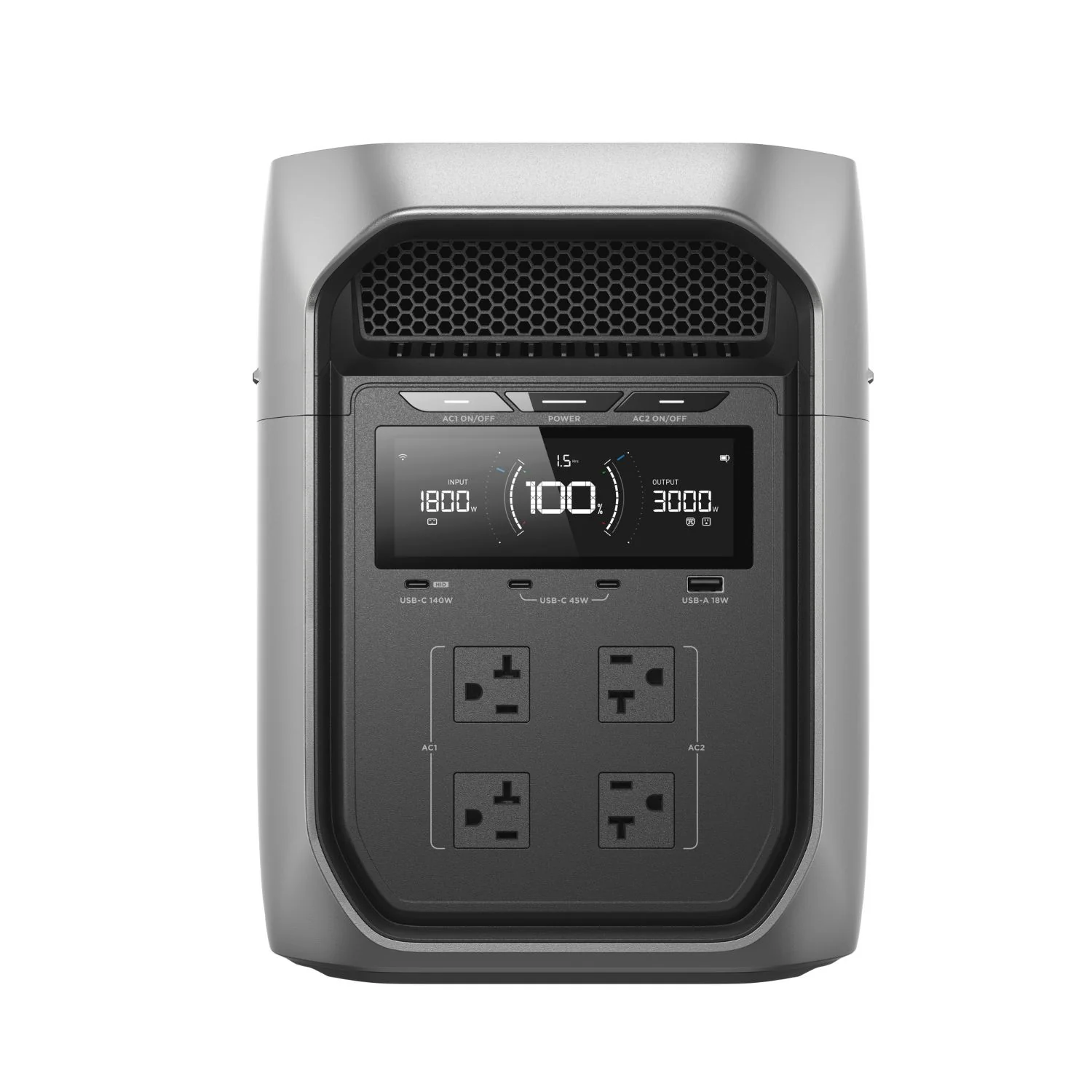
EcoFlow
EcoFlow DELTA 3 Max Plus
The 2025-2026 refresh of EcoFlow's mid-size class and a current 'best for home backup' pick in several tested roundups. You get 2kWh and a 3000W inverter - enough to run a microwave and fridge simultaneously - at a price that undercuts the old Delta 2 Max's launch by hundreds. Owners like the practical stuff: 0-80% in about 68 minutes, X-Boost handling 3800W resistive loads, and expansion to 10kWh if backup needs grow. The dual side handles make the 49-lb carry manageable for one person. Quirks from owner threads mirror the rest of the Delta 3 line: fan spins up audibly during fast charging, idle drain means you shouldn't store it with AC output enabled, and the app occasionally loses Wi-Fi pairing until you power-cycle. Solid pick if 1kWh feels tight but 4kWh-class weight and price feel excessive.
EcoFlow
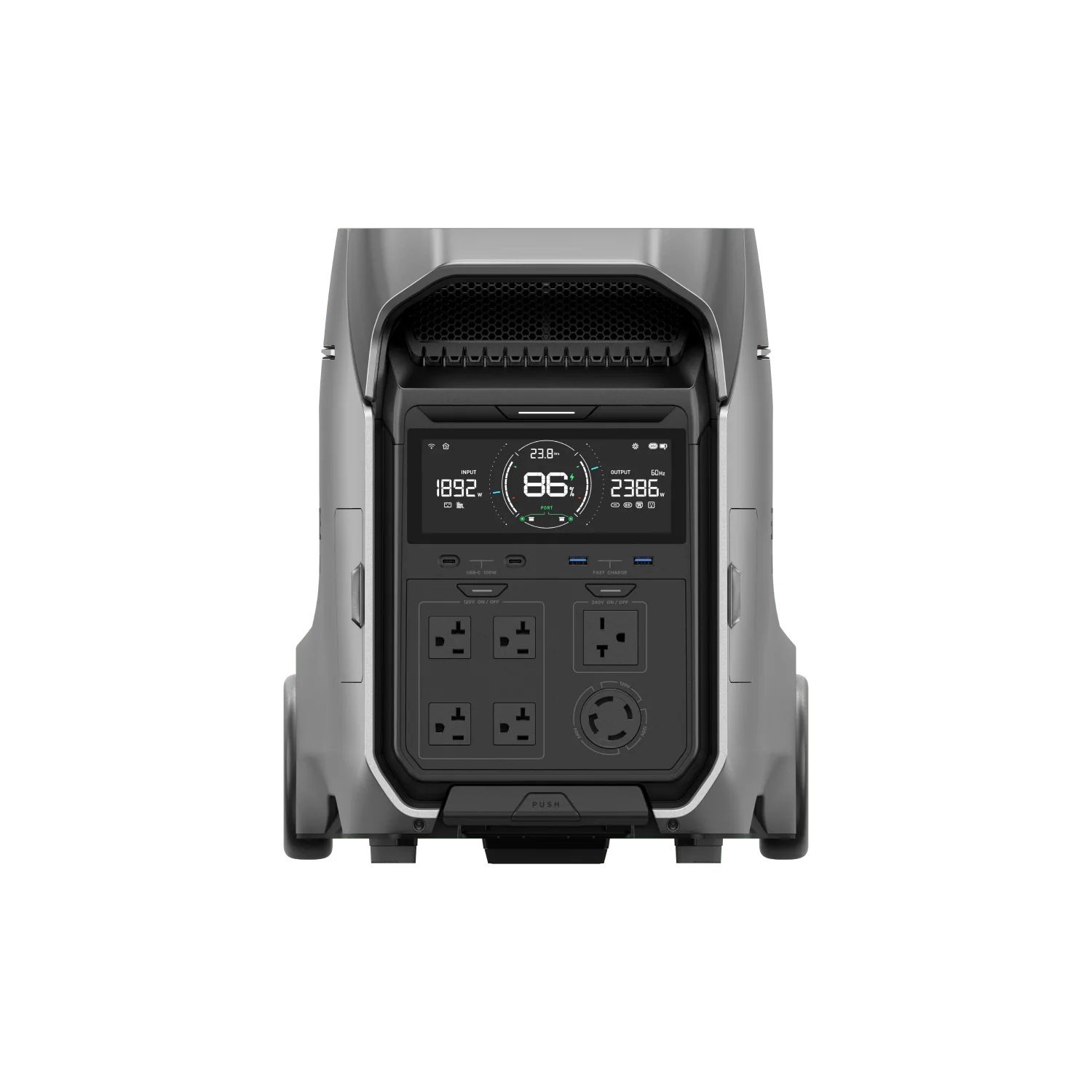
EcoFlow DELTA Pro 3
The single most-recommended whole-home-capable unit that still rolls on wheels. What sells it: 4000W with real 120/240V split-phase from one box, so it backfeeds a transfer switch and runs a well pump or mini-split without pairing two units. Owners consistently praise how quiet it stays at partial load (30dB claimed) and the 10ms UPS. The recurring complaint thread is idle drain - leaving AC output on burns tens of watts, so a 4kWh charge quietly evaporates over days if you use it as a dumb UPS without tweaking settings. It is 113 lbs; the wheels and handle work on pavement, not stairs. A few owners report warranty friction outside the mainland US, and early-firmware horror stories still circulate on Reddit, so update before first use. Street price has fallen from $3,699 to low-$2,000s, which changed the calculus versus F3800 Plus.
EcoFlow
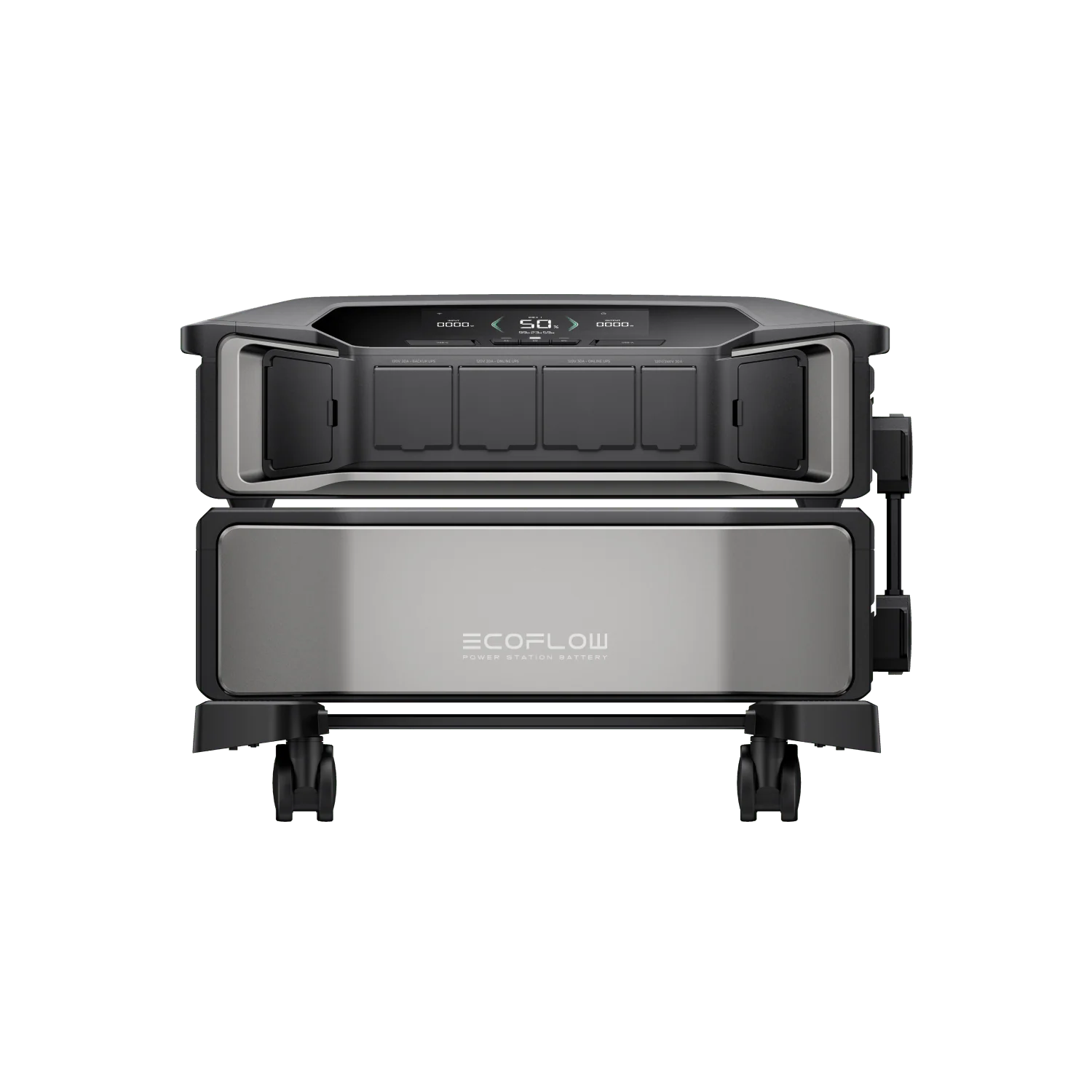
EcoFlow DELTA Pro Ultra
EcoFlow's modular whole-home flagship: a 7200W inverter head that stacks up to 15 batteries for 90kWh, or triples to 21.6kW output. Price shown is the inverter + one 6.1kWh battery; the Smart Home Panel 2 (roughly $1,500-1,900 more plus electrician) is what unlocks the automatic 10-circuit backup owners actually buy this for. Owner sentiment is mostly awe at capability with recurring gripes about the ecosystem tax - every accessory is proprietary and priced accordingly. Fan noise under heavy charge or load is louder than the marketing suggests, and at 164 lbs assembled you position it once and leave it. The 120A LRA rating starts most 3-ton air conditioners, which smaller stations simply cannot do. People cross-shop it against a Powerwall 3 install; the Ultra wins on no-permit portability, loses on per-kWh cost at scale.
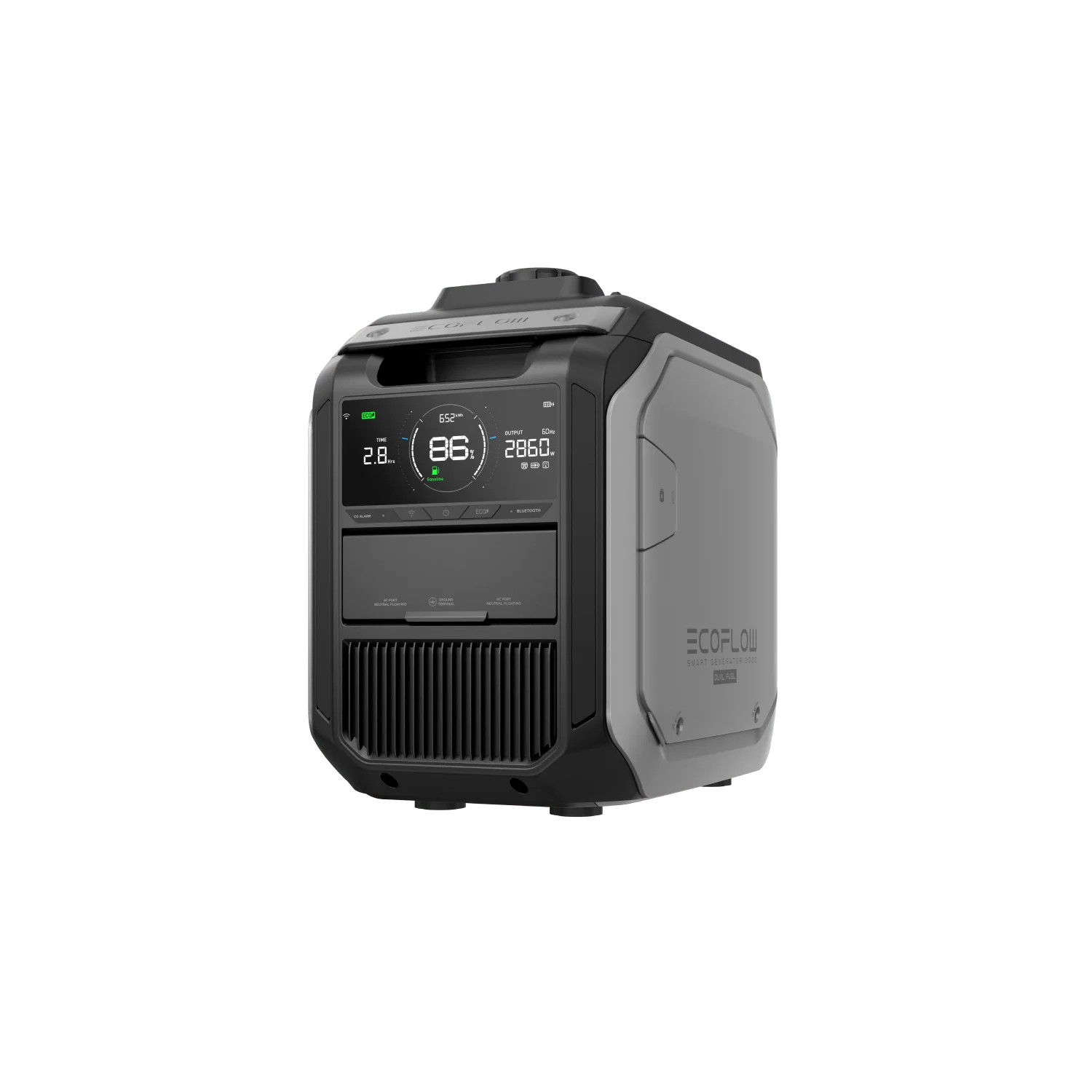
This isn't really a competitor to Honda — it's a range extender for EcoFlow's battery ecosystem, and that's exactly how owners use it. Paired with a DELTA 3 or DELTA Pro power station, it auto-starts itself when the battery drops below a threshold you set in the app, charges via high-efficiency DC (skipping the AC conversion loss), then shuts itself off — so the noisy, fuelly part of backup power runs as little as possible. It also works as a plain 2,000W dual-fuel inverter generator with app control and five start methods. Owner sentiment: brilliant inside the ecosystem, mediocre outside it — 69 dB is loud for 2,000 watts, the 1-year warranty is stingy, LPG output drops to 1,800W, and at typical pricing you can buy more raw watts elsewhere. As the automated gas backstop to a solar-battery setup, though, nothing mainstream matches it.
EcoFlow
EcoFlow OCEAN Pro
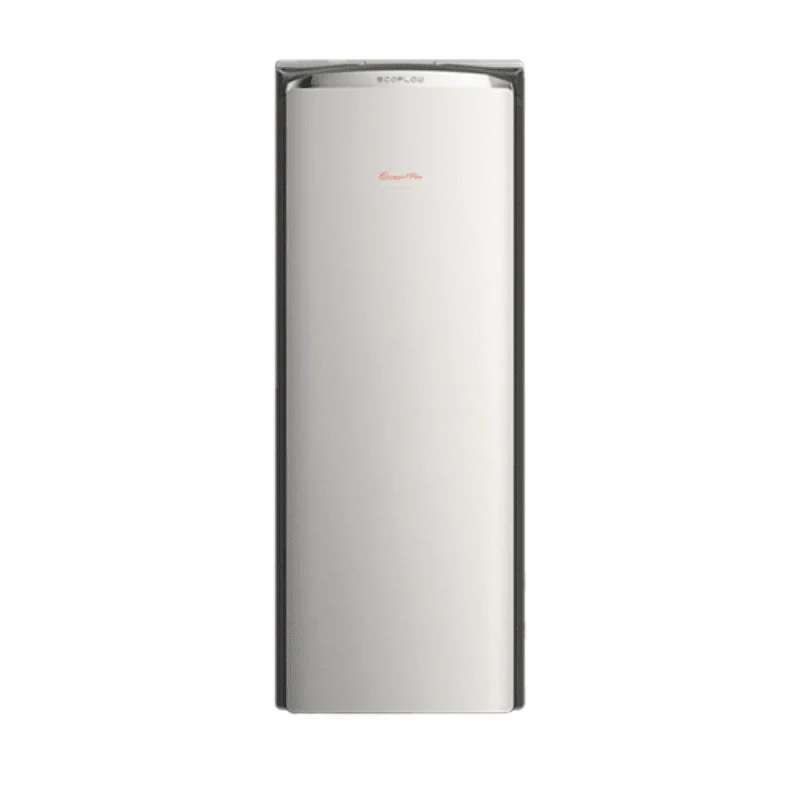
EcoFlow's 2026 leap from portable stations into permanently-installed storage, and on paper it's a monster: 10kWh IP67 modules stacking to 80kWh per inverter, a hybrid inverter platform rated to 24kW output with 205A LRA motor-start, 40kW of solar input, an integrated Smart Electrical Panel 40 and 11.5kW EV charger, plus a 15-year warranty that beats everyone except Enphase's on paper. Pricing is quote-only through certified installers - the price shown is an estimated installed starting system (inverter + battery + smart panel) based on early published system ranges; treat it as directional, not gospel. Because it launched this year, real owner history is thin: early impressions praise the AI-driven time-of-use optimization and the whole-ecosystem integration, while the obvious cautions are a brand-new installer network, unproven long-term support for installed products from a portable-power company, and unknown service logistics.
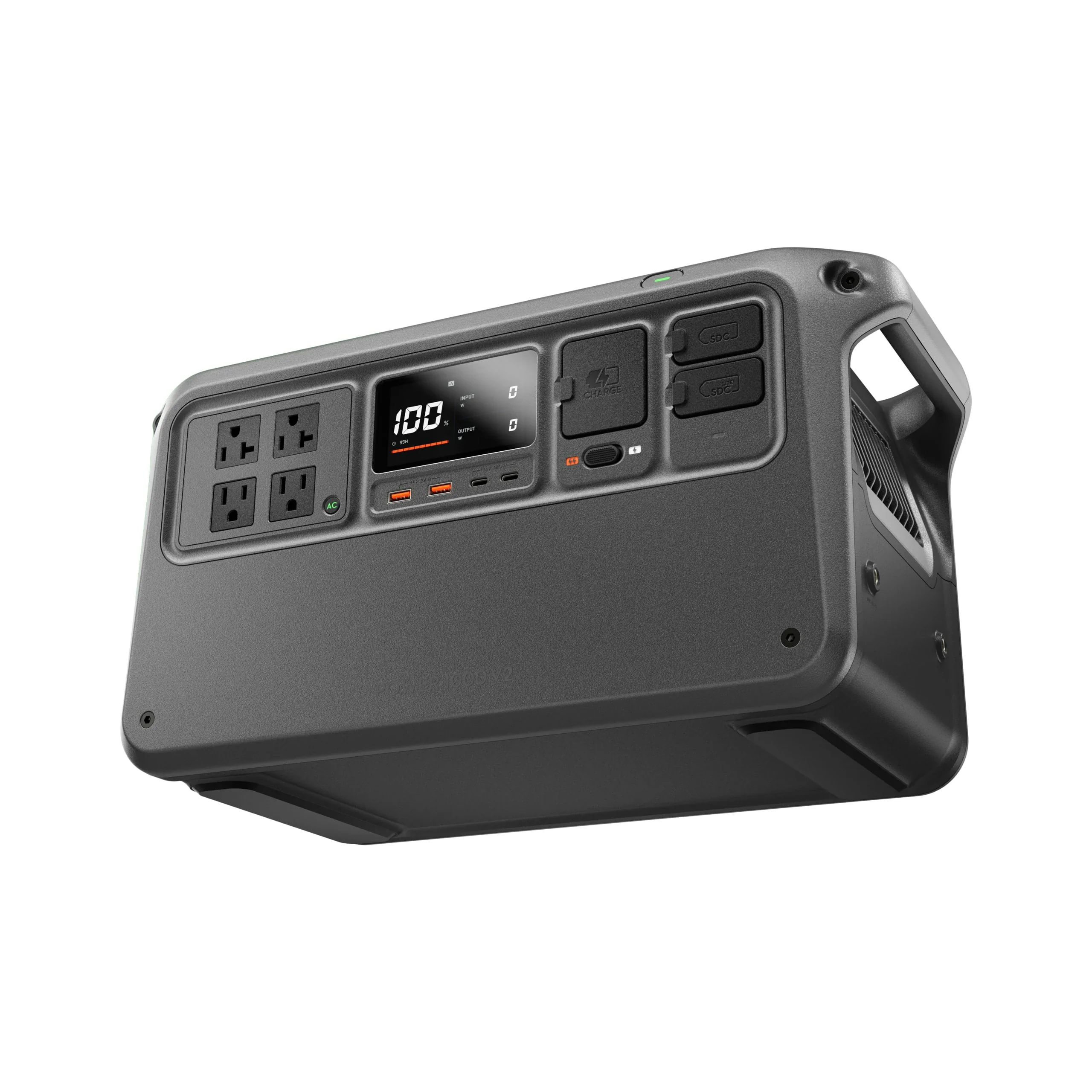
The drone company's second-gen power station, and the sleeper hit of the category - reviewers keep reaching for words like 'premium' and 'polished.' The headline specs are absurd for a 1kWh box: 2,600W continuous output (more than most 2kWh units), 4,400W peak, 0-80% charging in 37 minutes, and operation as low as 26dB - owners confirm it's effectively silent, the quietest unit in this entire roundup. V2 fixed the original's two-outlet stinginess with four AC ports and added Wi-Fi. Expansion runs to 11.2kWh via 2kWh add-on packs. The quirks are DJI-flavored: solar charging requires a proprietary MPPT adapter dongle rather than native XT60 ports, the app is minimal compared to EcoFlow's, and the SDC ports are really designed around fast-charging DJI drone batteries. Warranty is 3 years, extending to 5 if you register in the app.