Goal Zero
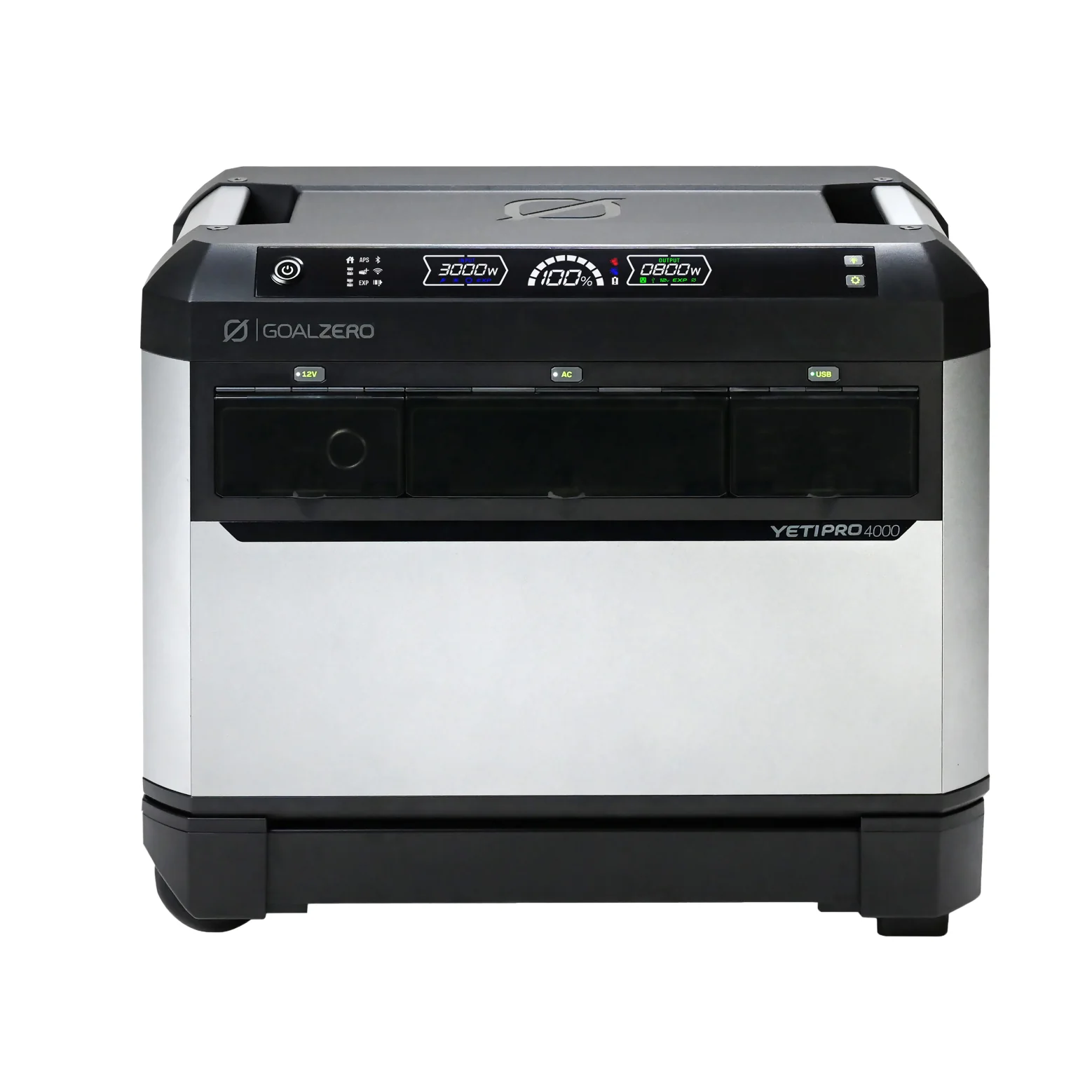
Goal Zero Yeti Pro 4000
Goal Zero's 6th-gen flagship, built like outdoor equipment rather than consumer electronics: aluminum housing, magnetic port covers that snap shut against dust and rain, and UL2743 certification for outdoor portable use - it's the overlanding crowd's pick for a reason. 3,994Wh with 3,600W output (7,200W surge), 3,000W of solar input, and expansion via Tank Pro batteries to roughly 20kWh. It pairs with Goal Zero's Haven 10 transfer switch for 10-circuit home backup. Owners consistently note the fans are quieter than expected for the size, and the build quality feels a class above. The complaints are equally consistent: it's expensive per kWh versus EcoFlow and Anker, Tank Pro expansion batteries cost more than competitors' packs, there's no 240V from a single unit, and Goal Zero's app - historically the brand's weak spot - is improved but still behind EcoFlow's.
Specifications
Highlights
What owners like
- ✓Best-in-class build: aluminum shell, magnetic port covers, UL2743 outdoor rating
- ✓3,000W solar input - full recharge in under 2 hours of good sun
- ✓Quieter fans than most 4kWh-class units per owner reports
- ✓Haven 10 transfer switch enables clean 10-circuit home backup
- ✓30A RV port plus 405W 12V high-power port for camper builds
Common complaints
- ✗Priced well above equivalent EcoFlow/Anker capacity
- ✗No 240V output from a single unit
- ✗Tank Pro expansion batteries are expensive per kWh
- ✗App still trails EcoFlow in features and polish
- ✗115.7 lbs without integrated wheels on the base station
Owner Insightssummarized from Reddit and owner forums
The Yeti Pro 4000 is the power station for people who buy tools by feel: aluminum where everyone else uses plastic, magnetic port covers that snap shut against dust, and a UL2743 outdoor-use certification nothing else in this roundup carries. That is why its core audience is overlanders, truck campers, and cabin owners rather than garage preppers - Airstream and truck-camper forums treat it as the default big battery. At 3,994Wh with 3,600W output and 3,000W of solar intake, the spec sheet is serious; the $3,399 price says Goal Zero knows its buyer will pay for build quality.
The ownership ledger has a great efficiency story and a spottier systems story. Measured idle draw is just 21W - reviewers watched it lose only 2% over 48 hours switched on, roughly a quarter of the Anker F3800's standby appetite - and the fans stay surprisingly civil. But the ecosystem pieces have teething marks: some owners found their Tank Pro expansion battery would not sync with the main unit into a single bank and waited weeks for the promised automatic merge, one documented grounding issue took weeks of support back-and-forth (the fix: remove the well-intentioned ground wire, since the unit self-grounds), and a slice of Haven 10 transfer-switch owners report random AC shutoffs and phantom drain. The app has genuinely improved but still lags EcoFlow's.
Buy it if ruggedness, outdoor certification, and solar speed top your list and the premium does not sting; skip it if you are optimizing spreadsheet value. The Anker F3800 Plus delivers more output plus 240V for $900 less, and EcoFlow's DELTA Pro 3 undercuts it while offering single-unit 240V - both come up constantly in cross-shopping threads. What keeps owners loyal is the physical product: years in, the aluminum-bodied Yetis tend to look and work like new, and for the truck-and-trail crowd that durability is the whole point.
What owners like
- +Measured 21W idle draw - it lost just 2% sitting powered-on for 48 hours, a fraction of what the Anker F3800 burns on standby
- +Aluminum housing, magnetic port covers, and UL2743 outdoor certification - it shrugs off truck-bed dust and drizzle that would kill plastic rivals
- +3,000W of solar input can refill nearly all 4kWh in a single good solar day
- +Fans run quieter than a unit this size has any right to
- +Haven 10 transfer switch pairs as a matched kit for clean 10-circuit home backup
- +Sold at REI, Home Depot, and Walmart - real counters to walk up to when something goes wrong
- +7,200W surge headroom starts pumps and compressors confidently
- +Five-year warranty on a platform clearly built to outlast it
Common complaints
- −Some owners' Tank Pro expansion batteries refused to sync with the main unit into one bank, and the promised automatic fix took weeks to materialize
- −A documented grounding gremlin cost one owner weeks of support troubleshooting - the unit is self-grounding, and adding a ground wire caused the fault
- −Haven 10 owners report occasional random AC-output shutoffs and phantom drain on the transfer-switch side
- −No 240V from a single unit, so well pumps and dryers are off the table without doubling up
- −Dollars-per-kWh runs well above Anker and EcoFlow, and Tank Pro packs cost more than competitors' expansion batteries
- −115.7 lbs with no built-in wheels - the cart is extra and effectively required
- −The app is better than Goal Zero's old reputation but still trails EcoFlow's in polish and features
- −Support is knowledgeable but slow - owner troubleshooting sagas run to weeks, not days
Common Questions
How does home backup with the Haven 10 work?
How long will it run a refrigerator?
What are the solar input limits?
How does expansion work, and is it reliable?
Can it power 240V loads like a well pump?
What is Goal Zero's support like if something goes wrong?
Related units
More from Goal Zero →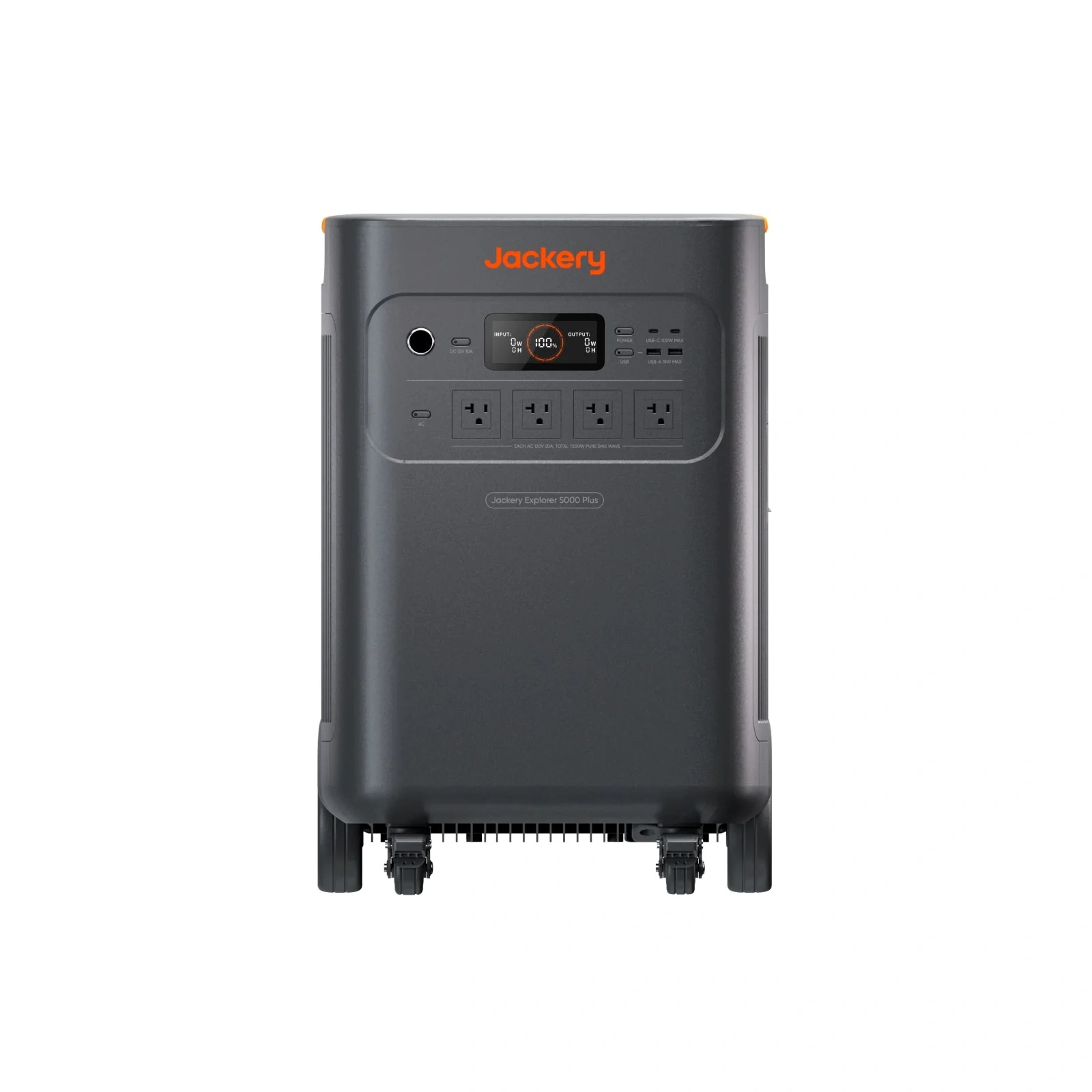
Jackery
Jackery Explorer 5000 Plus
Jackery's 2025 entry into whole-home territory: 5kWh, a 7200W split-phase inverter, and a claimed 0ms UPS switchover - the spec that gets it recommended for sump pumps and server closets. It expands to 60kWh with battery packs and pairs with Jackery's transfer-switch kits for panel integration. Costco periodically sells it at $2,799, which owners treat as the buy signal since list is $4,299. The good: 240V from a single unit (rare - EcoFlow needs the bigger Pro 3 for that), suitcase wheels that handle gravel, and genuinely fast 4000W solar charging. Owner complaints center on the accessory economics - the transfer switch kit, battery packs, and parallel box add up fast - plus a 134.5-lb chassis you will not lift alone, and Wi-Fi setup that multiple reviewers found finicky. Newer to market, so long-term reliability data is thinner than the 2000 Plus.
Bluetti
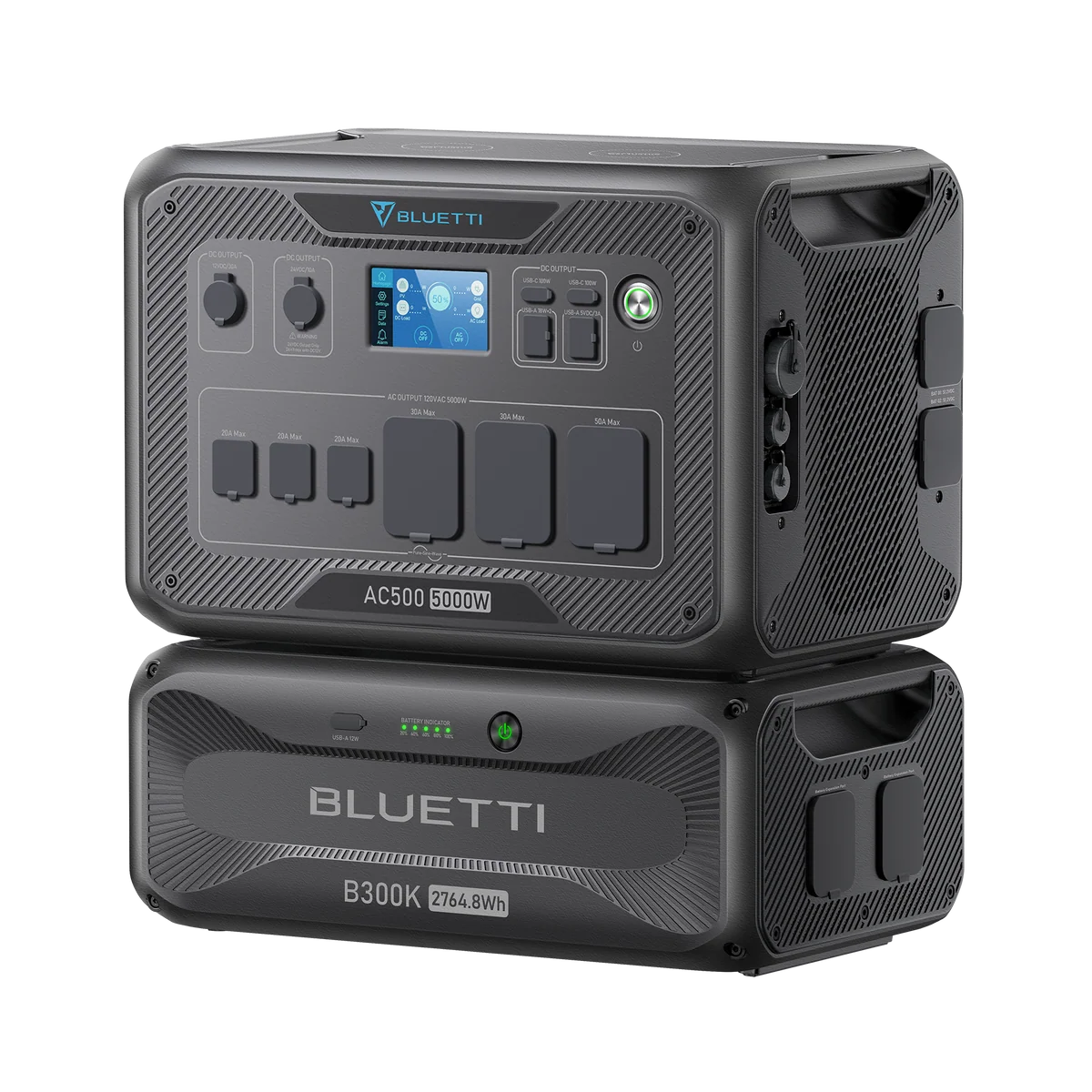
Bluetti AC500 + B300K
Bluetti's modular tower system: a 5,000W inverter head (10,000W surge - the strongest surge rating of any portable here) that stacks on B300K batteries. The 50A NEMA 14-50 outlet plus L14-30 makes transfer-switch and RV-pedestal hookups trivial, and two AC500s can pair for 240V and 33kWh. Costco has carried the combo, which says something about mainstream acceptance. Owners like the swap-ability - batteries charge to 80% in 45 minutes and detach for transport, since the two-piece design splits an unliftable 131 lbs into two 65-lb pieces. Recurring complaints: the fans are genuinely loud at high charge rates, Wi-Fi connectivity drops, and the 4-year/3+1 warranty structure trails the 5-year industry standard. It's older than the Apex 300 but the 5kW inverter and 14-50 outlet still earn it recommendations for heavy transfer-switch duty.

The enthusiast favorite for DIY whole-home backup, and the unit r/Anker and diysolarforum threads obsess over. 6000W split-phase with both a NEMA 14-50 and L14-30 on the face means it plugs straight into a generator inlet - no adapters - and can trickle-charge an EV. The Plus revision added 3,200W solar input and gas-generator charging input, fixing the two biggest F3800 complaints. Anker's permanent price cut to $2,499 (from $4,799 launch) made it the per-kWh bargain of the big-battery class. Owner quirks: a documented buzzing noise traced to a ferrite bead that firmware only partially fixed, fans that are unapologetically loud during 2,400W charging, and Home Power Panel installs that depend on finding a willing electrician. Support experiences vary wildly in owner reports - some get instant advance replacements, others chase tickets for weeks.
EcoFlow
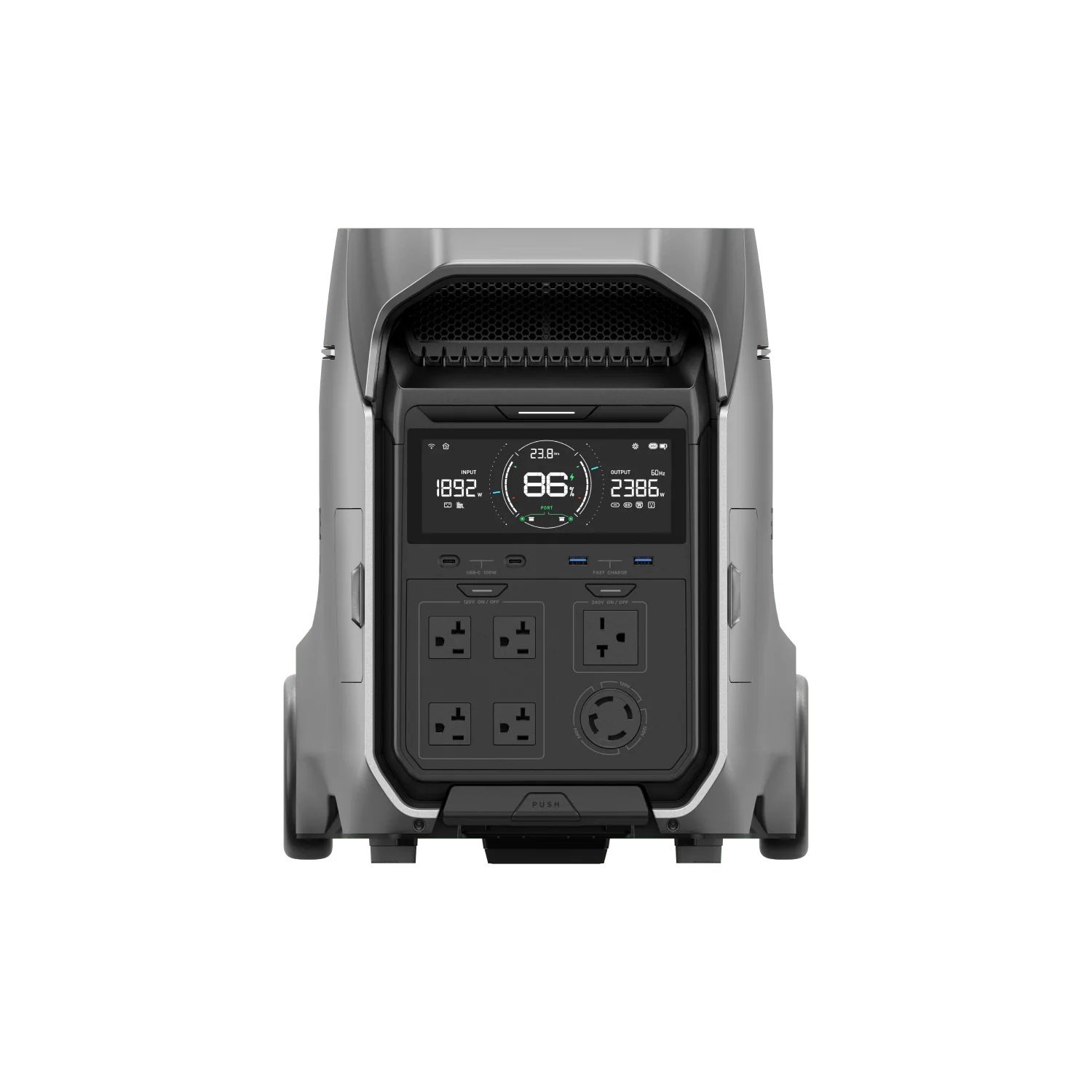
EcoFlow DELTA Pro 3
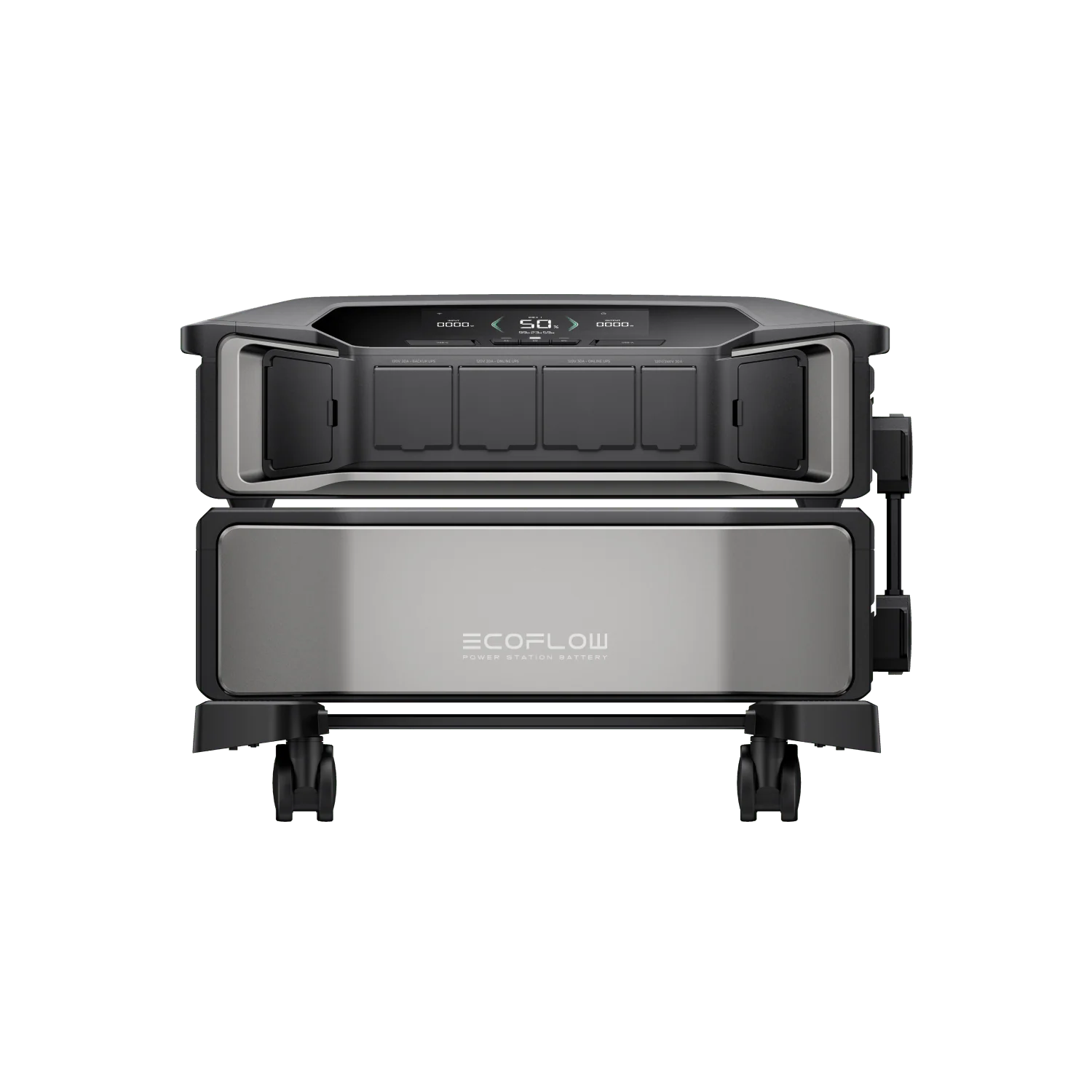
The single most-recommended whole-home-capable unit that still rolls on wheels. What sells it: 4000W with real 120/240V split-phase from one box, so it backfeeds a transfer switch and runs a well pump or mini-split without pairing two units. Owners consistently praise how quiet it stays at partial load (30dB claimed) and the 10ms UPS. The recurring complaint thread is idle drain - leaving AC output on burns tens of watts, so a 4kWh charge quietly evaporates over days if you use it as a dumb UPS without tweaking settings. It is 113 lbs; the wheels and handle work on pavement, not stairs. A few owners report warranty friction outside the mainland US, and early-firmware horror stories still circulate on Reddit, so update before first use. Street price has fallen from $3,699 to low-$2,000s, which changed the calculus versus F3800 Plus.
EcoFlow
EcoFlow DELTA Pro Ultra
EcoFlow's modular whole-home flagship: a 7200W inverter head that stacks up to 15 batteries for 90kWh, or triples to 21.6kW output. Price shown is the inverter + one 6.1kWh battery; the Smart Home Panel 2 (roughly $1,500-1,900 more plus electrician) is what unlocks the automatic 10-circuit backup owners actually buy this for. Owner sentiment is mostly awe at capability with recurring gripes about the ecosystem tax - every accessory is proprietary and priced accordingly. Fan noise under heavy charge or load is louder than the marketing suggests, and at 164 lbs assembled you position it once and leave it. The 120A LRA rating starts most 3-ton air conditioners, which smaller stations simply cannot do. People cross-shop it against a Powerwall 3 install; the Ultra wins on no-permit portability, loses on per-kWh cost at scale.
Bluetti
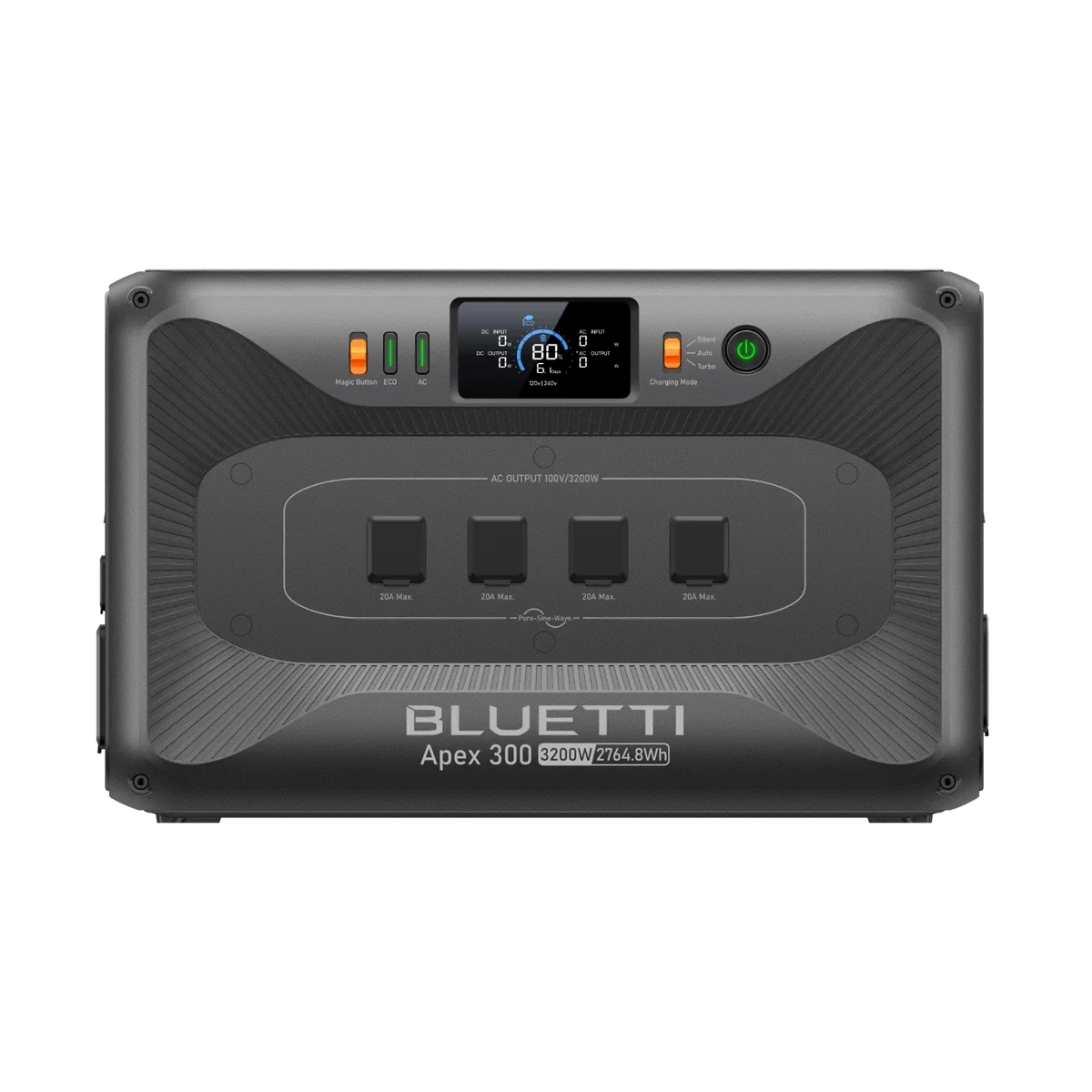
Bluetti Apex 300
Bluetti's 2025 modular flagship and their real answer to the F3800 Plus: 3,840W continuous (7,680W surge) with simultaneous 120/240V output, black-start capability, and expansion to a frankly absurd 58kWh using the same B300K packs the AC200L takes. The 6,000-cycle cells carry a claimed 17-year lifespan. Pro reviewers praise how confidently it starts well pumps and RV air conditioners, and the $1,529 street price undercuts every 240V-capable rival. Owner-reported quirks skew new-platform: frequent firmware updates (mostly improvements, occasionally breakage), accessories like the solar controller and home-integration hub trickling out on their own schedule, and 83.8 lbs with no built-in wheels - the optional trolley is basically mandatory. Fan noise under heavy charge is present but better-mannered than older AC-series units. The ecosystem bet looks smart if Bluetti keeps shipping the promised add-ons.