Jackery
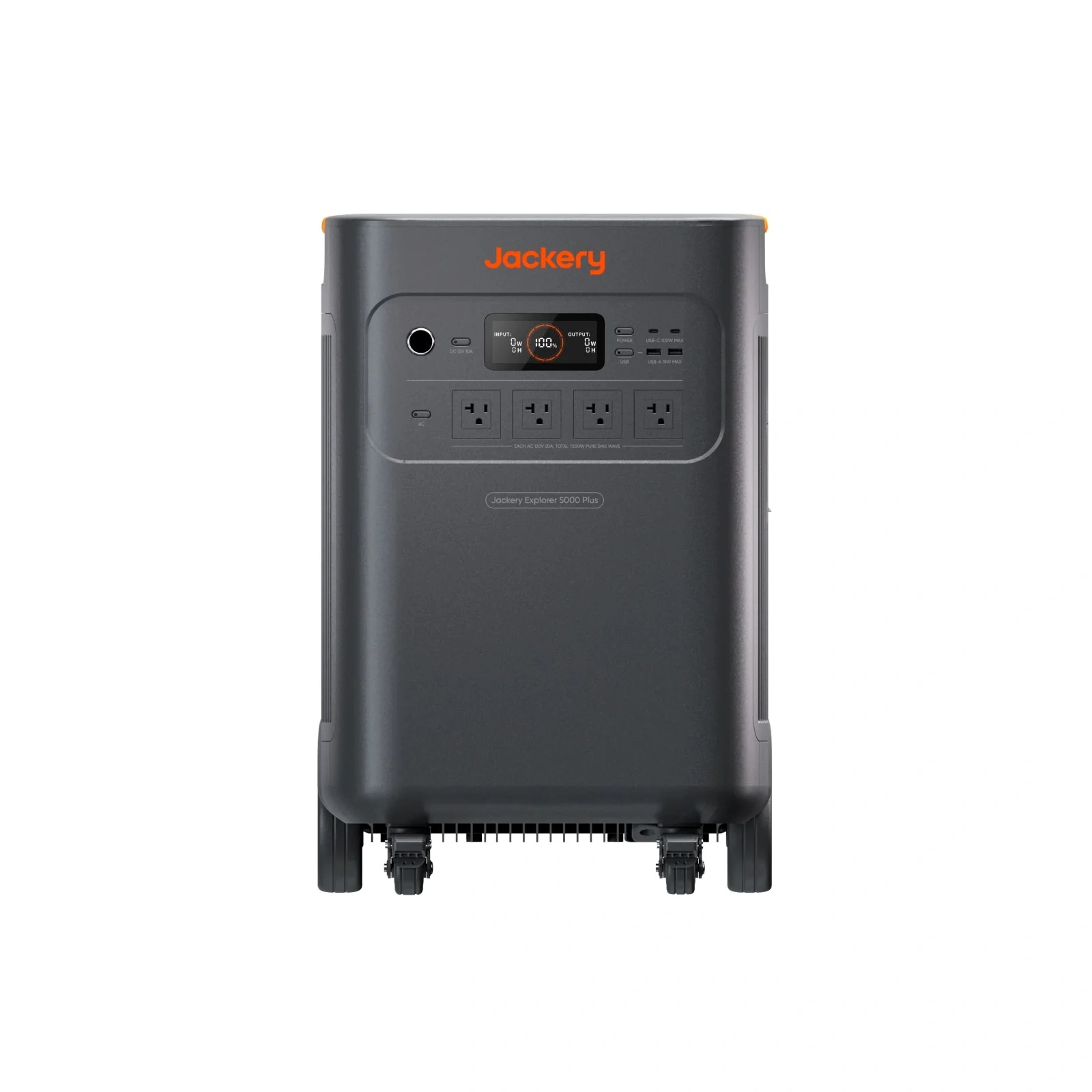
Jackery Explorer 5000 Plus
Jackery's 2025 entry into whole-home territory: 5kWh, a 7200W split-phase inverter, and a claimed 0ms UPS switchover - the spec that gets it recommended for sump pumps and server closets. It expands to 60kWh with battery packs and pairs with Jackery's transfer-switch kits for panel integration. Costco periodically sells it at $2,799, which owners treat as the buy signal since list is $4,299. The good: 240V from a single unit (rare - EcoFlow needs the bigger Pro 3 for that), suitcase wheels that handle gravel, and genuinely fast 4000W solar charging. Owner complaints center on the accessory economics - the transfer switch kit, battery packs, and parallel box add up fast - plus a 134.5-lb chassis you will not lift alone, and Wi-Fi setup that multiple reviewers found finicky. Newer to market, so long-term reliability data is thinner than the 2000 Plus.
Specifications
Highlights
What owners like
- ✓7200W continuous with true 240V L14-30 from one unit
- ✓0ms-class UPS switchover - sump pumps and PCs never blink
- ✓Expands to 60kWh, genuine multi-day whole-home territory
- ✓Costco pricing ($2,799) is exceptional per kWh for a tier-1 brand
- ✓Up to 4000W solar input - recharges in ~2 sunny hours
- ✓Built-in wheels and drawbar actually work outdoors
Common complaints
- ✗134.5 lbs - moving it upstairs is a two-person job
- ✗Transfer switch kit and expansion packs inflate total cost quickly
- ✗Wi-Fi/app setup friction reported by several owners
- ✗Limited long-term reliability track record versus the 2000 Plus
- ✗Only 4 household AC outlets for such a large unit
Owner Insightssummarized from Reddit and owner forums
The Explorer 5000 Plus is Jackery's 2025 shot at the whole-home tier, and its calling card is the spec sheet's most extreme number holding up in testing: reviewers measured switchover under 2ms - effectively a true zero-transfer UPS, the fastest in any consumer power station. Combined with 7200W of simultaneous 120/240V output, it lands with people backing up sump pumps, well pumps, medical equipment, and server closets - loads where both the wattage and the seamlessness matter. The 60kWh expansion ceiling and transfer-switch kits signal Jackery chasing EcoFlow's DELTA Pro 3 and Anker's F3800 Plus squarely.
Living with it, owners praise near-silence during routine backup and a setup process repeatedly described as dead simple - unbox, plug in essentials, done. The warts are ecosystem-shaped: the automatic transfer switch has a genuine gotcha where the unit will not recharge its batteries until grid power returns (fine for outage-only use, a real problem for solar-heavy off-grid ambitions), Wi-Fi onboarding took reviewers several tries, and leaving wireless radios on quietly drains a stored unit. None of these are dealbreakers, but they are the kind of thing you want to know before the electrician leaves. Long-term data is simply thin - this platform is barely a year old.
It makes sense for whole-home backup shoppers who want 240V capability with the best UPS behavior in the class. Against the DELTA Pro 3 it offers more output (7200W vs 4000W) and a faster measured transfer for similar street money; against the Anker F3800 Plus it counters 240V-for-less with bigger expansion and quieter operation. Pricing discipline matters enormously here: list is $4,299 but the station has repeatedly sold at $2,799-2,999 (Costco's periodic $2,799-2,999 windows are the community buy signal), and the potential 30% battery-storage tax credit changes the math for US homeowners. Buyers wanting fully-installed automation at 20kWh scale should honestly cross-shop a standby generator quote before committing.
What owners like
- +Transfer measured under 2ms in testing - the fastest switchover recorded in a consumer power station
- +Runs 120V and 240V loads simultaneously at up to 7200W from a single chassis
- +Owners consistently describe it as nearly silent during normal backup duty, even indoors
- +Genuinely plug-and-play - unbox to powering essentials in under an hour, no electrician required for cord-connected use
- +4000W of solar input can rebuild the 5kWh pack before lunch
- +20kWh whole-home kits cover 2-3 days of household essentials and have sold for $8,729
- +Standalone battery storage of this size may qualify for the 30% US residential clean energy tax credit
- +Costco carries kit versions, bringing its generous return policy to a very expensive purchase
Common complaints
- −Paired with Jackery's automatic transfer switch, batteries only recharge after grid power returns - owners discovered this post-installation
- −Leaving Wi-Fi and Bluetooth enabled slowly saps the pack during storage
- −134.5 lbs - it rolls well on its suitcase wheels, but lifting it anywhere takes two people
- −The accessory stack - transfer switch kit, expansion packs, parallel box - adds thousands to the real system price
- −Expansion batteries run about $2,299 each even on promotion
- −Wi-Fi onboarding is finicky; multiple reviewers needed several attempts to pair
- −Young platform with a thin long-term reliability record next to the battle-tested 2000 Plus
- −At full 20kWh kit scale you brush against installed Kohler and Generac standby-generator money
Common Questions
How long will it run a refrigerator?
Is the 0ms UPS claim real? Can I put medical equipment on it?
Can it run a well pump or other 240V equipment?
What is the catch with the automatic transfer switch?
How fast does it charge from solar and from the wall?
Does it qualify for the federal tax credit?
Related units
More from Jackery →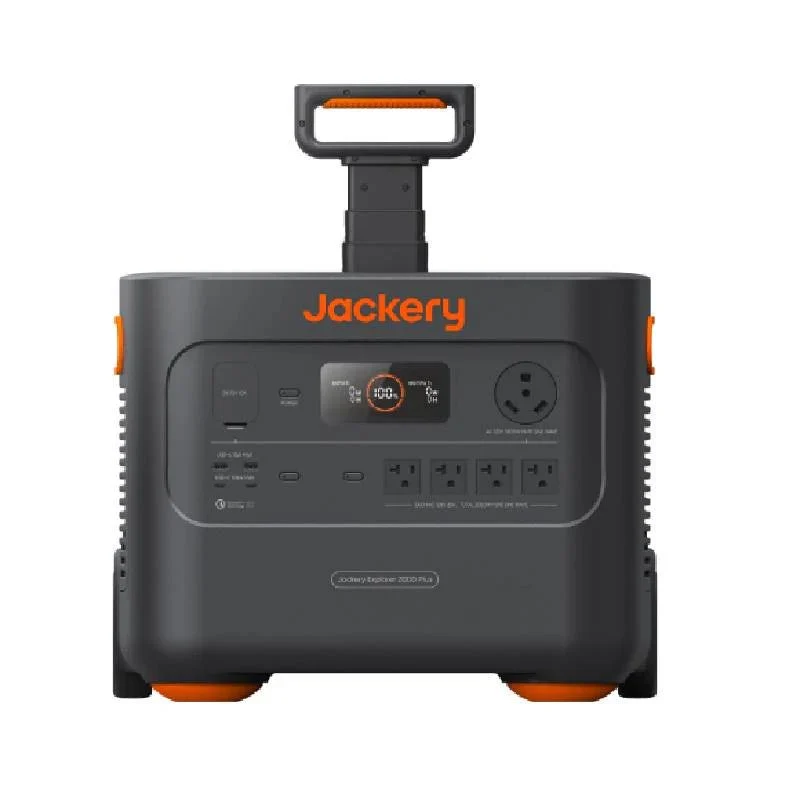
Jackery
Jackery Explorer 2000 Plus
The workhorse of Jackery's lineup and a fixture in RV and home-backup threads since 2023 - still current because Jackery kept cutting the price instead of replacing it. A 3000W inverter with a TT-30 RV outlet plus expansion to 12kWh (24kWh with two units paired for 240V) covers a lot of scenarios. Owners consistently call out how quiet it is - roughly 30dB under moderate load - and the telescoping handle and wheels, because 61.5 lbs is not a carry-it-around weight. The gripes: expansion packs run ~$1,000+ each, making big builds pricier than a Bluetti stack; the app is functional but bare-bones; and the TT-30 is 25A rather than a full 30A. Deal-watchers note it hits $999 several times a year, at which point it's arguably the best $/W value in the 2kWh class from a tier-one brand.
Jackery
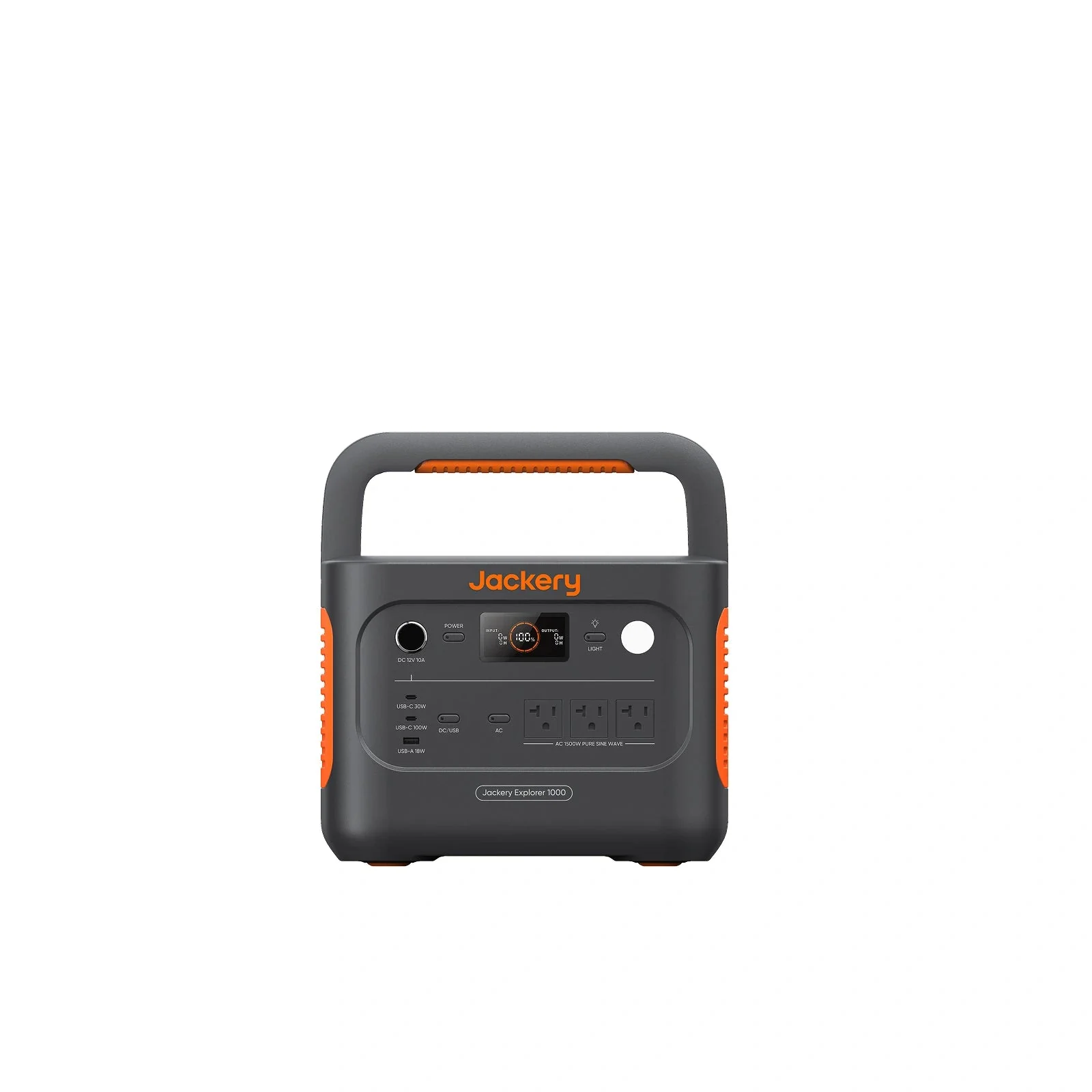
Jackery Explorer 1000 v2
Jackery's LiFePO4 do-over of the best-selling power station ever, and the one people actually mean when they say 'just get a Jackery.' At 23.8 lbs it's several pounds lighter than every 1kWh rival, which is why campers and older buyers gravitate to it. The 1500W inverter (3000W surge) runs coffee makers and microwaves fine; owners confirm the quiet-fan claim - it's noticeably more pleasant than an AC180 under load. Real-world knocks: there's no expansion port at all, the 20ms UPS switchover is fine for a fridge but not marketed for computers, and the 1500W output trails the 1800-2000W competition on paper. It lives on sale - $429-499 happens monthly - so nobody should pay list. The foldable handle and genuinely idiot-proof interface make it the one to recommend to non-technical relatives.
Bluetti
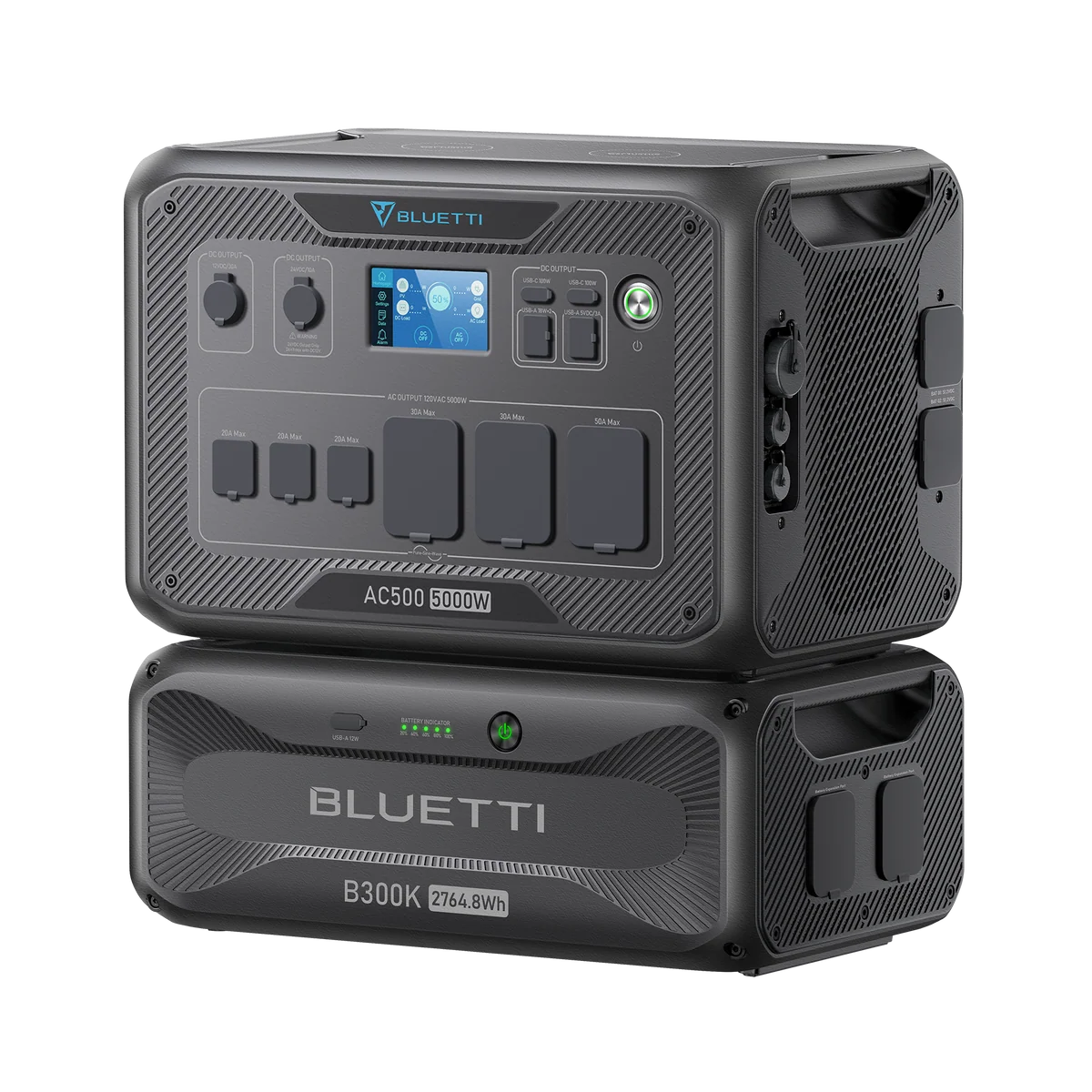
Bluetti AC500 + B300K
Bluetti's modular tower system: a 5,000W inverter head (10,000W surge - the strongest surge rating of any portable here) that stacks on B300K batteries. The 50A NEMA 14-50 outlet plus L14-30 makes transfer-switch and RV-pedestal hookups trivial, and two AC500s can pair for 240V and 33kWh. Costco has carried the combo, which says something about mainstream acceptance. Owners like the swap-ability - batteries charge to 80% in 45 minutes and detach for transport, since the two-piece design splits an unliftable 131 lbs into two 65-lb pieces. Recurring complaints: the fans are genuinely loud at high charge rates, Wi-Fi connectivity drops, and the 4-year/3+1 warranty structure trails the 5-year industry standard. It's older than the Apex 300 but the 5kW inverter and 14-50 outlet still earn it recommendations for heavy transfer-switch duty.
Goal Zero
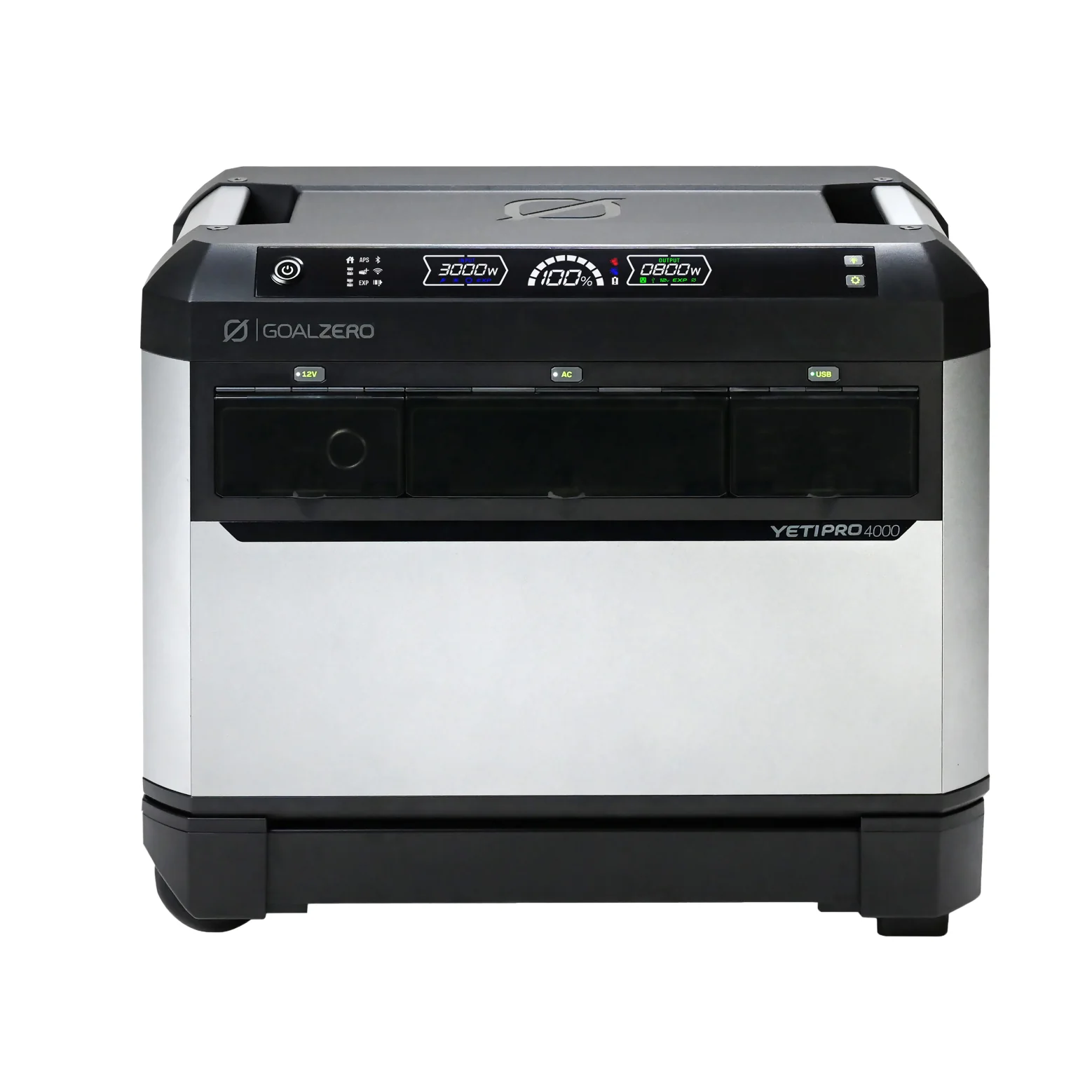
Goal Zero Yeti Pro 4000
Goal Zero's 6th-gen flagship, built like outdoor equipment rather than consumer electronics: aluminum housing, magnetic port covers that snap shut against dust and rain, and UL2743 certification for outdoor portable use - it's the overlanding crowd's pick for a reason. 3,994Wh with 3,600W output (7,200W surge), 3,000W of solar input, and expansion via Tank Pro batteries to roughly 20kWh. It pairs with Goal Zero's Haven 10 transfer switch for 10-circuit home backup. Owners consistently note the fans are quieter than expected for the size, and the build quality feels a class above. The complaints are equally consistent: it's expensive per kWh versus EcoFlow and Anker, Tank Pro expansion batteries cost more than competitors' packs, there's no 240V from a single unit, and Goal Zero's app - historically the brand's weak spot - is improved but still behind EcoFlow's.

The enthusiast favorite for DIY whole-home backup, and the unit r/Anker and diysolarforum threads obsess over. 6000W split-phase with both a NEMA 14-50 and L14-30 on the face means it plugs straight into a generator inlet - no adapters - and can trickle-charge an EV. The Plus revision added 3,200W solar input and gas-generator charging input, fixing the two biggest F3800 complaints. Anker's permanent price cut to $2,499 (from $4,799 launch) made it the per-kWh bargain of the big-battery class. Owner quirks: a documented buzzing noise traced to a ferrite bead that firmware only partially fixed, fans that are unapologetically loud during 2,400W charging, and Home Power Panel installs that depend on finding a willing electrician. Support experiences vary wildly in owner reports - some get instant advance replacements, others chase tickets for weeks.
EcoFlow
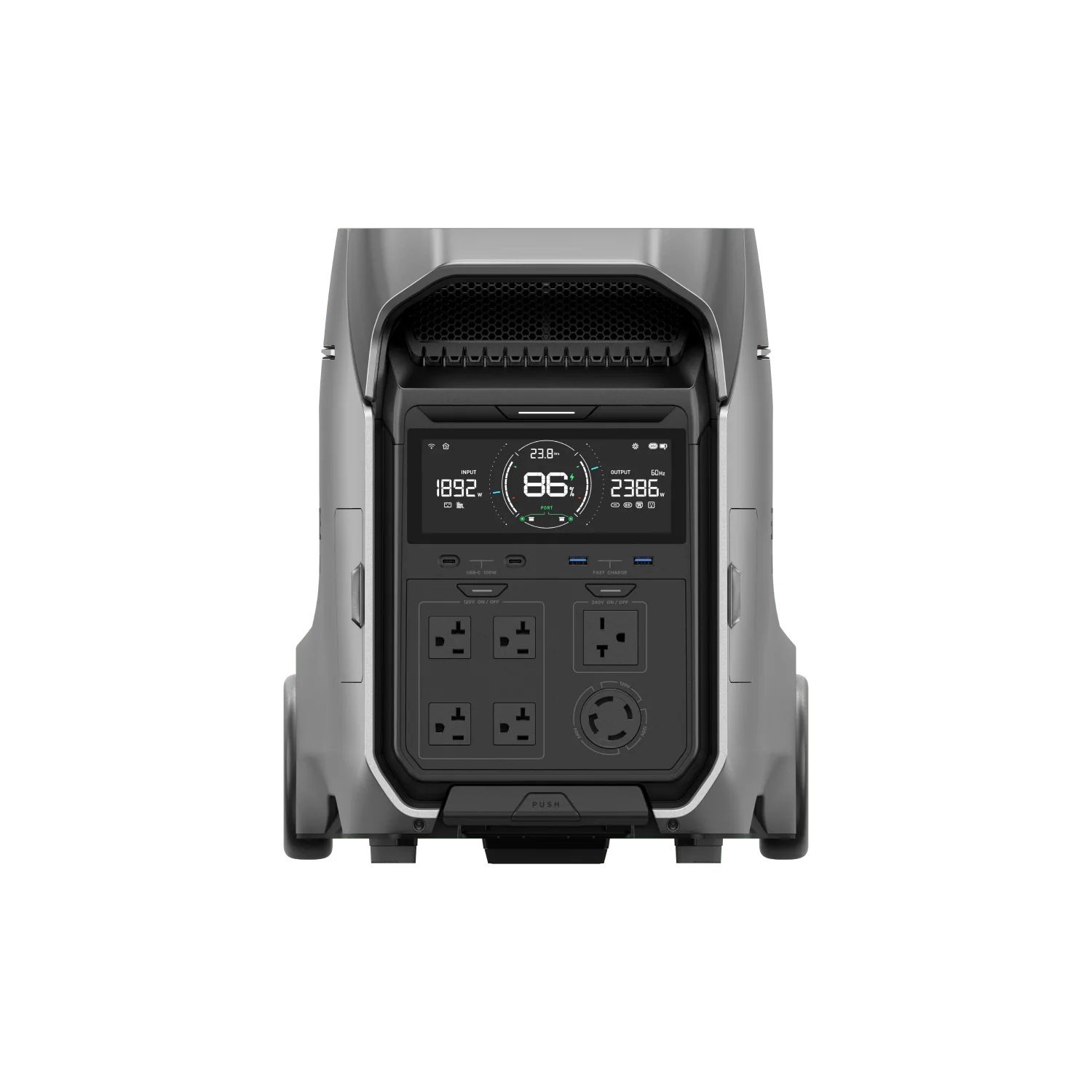
EcoFlow DELTA Pro 3
The single most-recommended whole-home-capable unit that still rolls on wheels. What sells it: 4000W with real 120/240V split-phase from one box, so it backfeeds a transfer switch and runs a well pump or mini-split without pairing two units. Owners consistently praise how quiet it stays at partial load (30dB claimed) and the 10ms UPS. The recurring complaint thread is idle drain - leaving AC output on burns tens of watts, so a 4kWh charge quietly evaporates over days if you use it as a dumb UPS without tweaking settings. It is 113 lbs; the wheels and handle work on pavement, not stairs. A few owners report warranty friction outside the mainland US, and early-firmware horror stories still circulate on Reddit, so update before first use. Street price has fallen from $3,699 to low-$2,000s, which changed the calculus versus F3800 Plus.