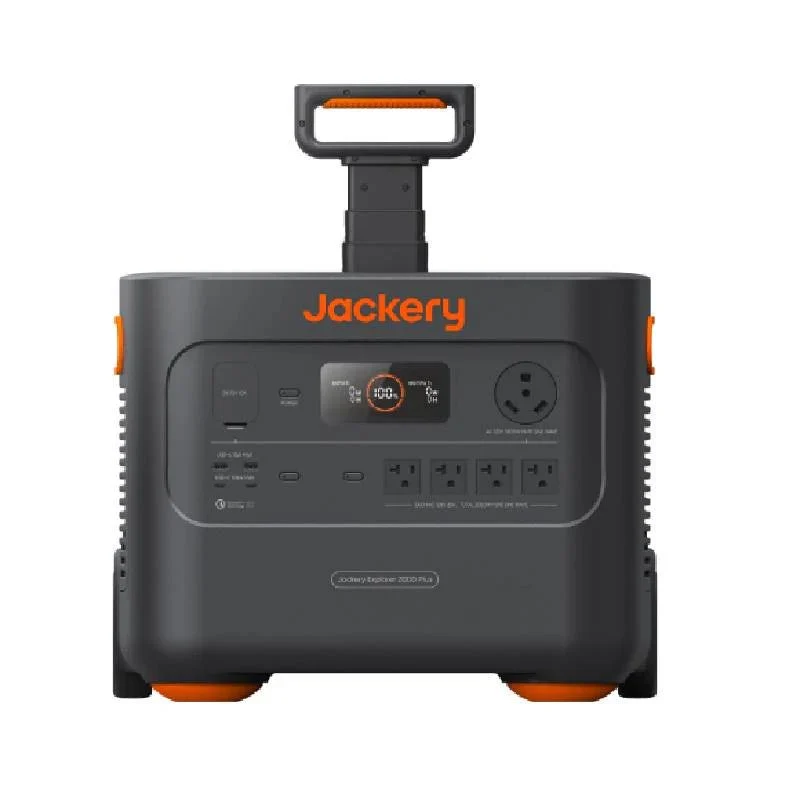
Jackery
Jackery Explorer 2000 Plus
The workhorse of Jackery's lineup and a fixture in RV and home-backup threads since 2023 - still current because Jackery kept cutting the price instead of replacing it. A 3000W inverter with a TT-30 RV outlet plus expansion to 12kWh (24kWh with two units paired for 240V) covers a lot of scenarios. Owners consistently call out how quiet it is - roughly 30dB under moderate load - and the telescoping handle and wheels, because 61.5 lbs is not a carry-it-around weight. The gripes: expansion packs run ~$1,000+ each, making big builds pricier than a Bluetti stack; the app is functional but bare-bones; and the TT-30 is 25A rather than a full 30A. Deal-watchers note it hits $999 several times a year, at which point it's arguably the best $/W value in the 2kWh class from a tier-one brand.
Specifications
Highlights
What owners like
- ✓3000W/6000W handles power tools, RV AC units, and kitchen loads
- ✓Among the quietest in class - owners measure ~30dB in normal use
- ✓Expands to 12kWh solo or 24kWh/240V with a second unit
- ✓Wheels + telescoping handle make 61.5 lbs manageable
- ✓4,000+ cycle LiFePO4 with 5-year warranty
- ✓Routinely discounted to $999-1,199 from $2,199 list
Common complaints
- ✗Expansion batteries are expensive versus Bluetti equivalents
- ✗61.5 lbs is a two-hander up stairs despite wheels
- ✗App lacks the granular controls EcoFlow owners are used to
- ✗TT-30 port is limited to 25A, annoying purist RVers
Owner Insightssummarized from Reddit and owner forums
The Explorer 2000 Plus has aged into the dependable pickup truck of the 2kWh class - launched in 2023 and still everywhere in RV and home-backup threads because Jackery kept slashing the price instead of replacing it. The 3000W inverter with a TT-30 outlet makes it a natural RV companion, while the tool-free expansion story (up to 12kWh on one unit, 24kWh and 240V with two) gives backup planners a growth path. Buyers are mostly RVers, hurricane-belt homeowners, and people who trusted the brand name after owning a smaller Jackery.
The ownership experience runs quiet and uneventful, which is exactly the appeal. Testers measured under 42dB even at maximum output while charging, and the app's quiet mode drops charging noise to around 30dB - though owners doing heavy charge-and-discharge simultaneously report a constant 44-52dB drone that matters in a van. Field reports are strikingly durable: dawn-to-dusk desert duty at 110F, twelve hours of kitchen appliances during a hurricane outage. The gripes are equally consistent: the app feels like an afterthought, the TT-30 is quietly 25A rather than 30A, and there is no real UPS spec, so this is outage recovery rather than seamless switchover. Long-term reliability sentiment is among the best in the category - three-year owners with zero issues are common.
It suits RV owners and expansion-minded backup planners more than desk-side UPS seekers - for that, the EcoFlow DELTA 3 Max Plus and its sub-10ms transfer is the better tool at similar money. The Anker SOLIX F2000 undercuts it on sale but is an older platform with slower ports and no expansion beyond one pack. Deal patterns decide most purchases: the bare station hits $999 several times a year, solar bundles have gone for $1,299-1,499, and the 4kWh kit at $1,449 is arguably the best bulk-capacity deal from any tier-one brand. At those prices, its combination of quiet, proven reliability, and expansion is very hard to beat.
What owners like
- +Measured under 42dB even at max output while charging - quieter than conversation
- +App's quiet-charging mode drops fan noise to about 30dB for overnight top-ups
- +A month-long Mojave test ran a fridge, Starlink, lights, and fans dawn to dusk at 110F without faltering
- +1200W of solar input refills the 2kWh pack in roughly two hours of full sun
- +Expansion is tool-free and huge - five packs per unit, 24kWh and 240V with two units paired
- +Ran a microwave, toaster, and two laptops for 12 straight hours in one hurricane-outage test
- +LiFePO4 rated for 4,000 cycles means a decade of regular use
- +Kit pricing has cratered - a 4kWh station-plus-battery bundle has sold for $1,449
Common complaints
- −Simultaneous heavy charge and discharge parks the fan at 44-52dB continuously - rough next to a van bed
- −No advertised UPS transfer spec, so owners keep desktops and NAS boxes off it
- −Expansion batteries list north of $1,000 each; only kit sales make big builds sane
- −The TT-30 outlet delivers 25A, not the full 30A shore-power rating RVers expect
- −App is the definition of functional-but-bare compared to EcoFlow's
- −At 61.5 lbs the wheels are mandatory equipment, not a convenience
- −Full AC recharge takes about two hours - fine, but the newer competition does it in one
- −Third-party solar arrays need adapter fiddling to hit the input's potential
Common Questions
How long will it run a refrigerator?
Can it run my RV air conditioner?
Is it a UPS? Can I put my computer on it?
What is the maximum solar input and do third-party panels work?
Are the expansion batteries worth it?
How should I store it between outages?
Compare the Jackery Explorer 2000 Plus
Related units
More from Jackery →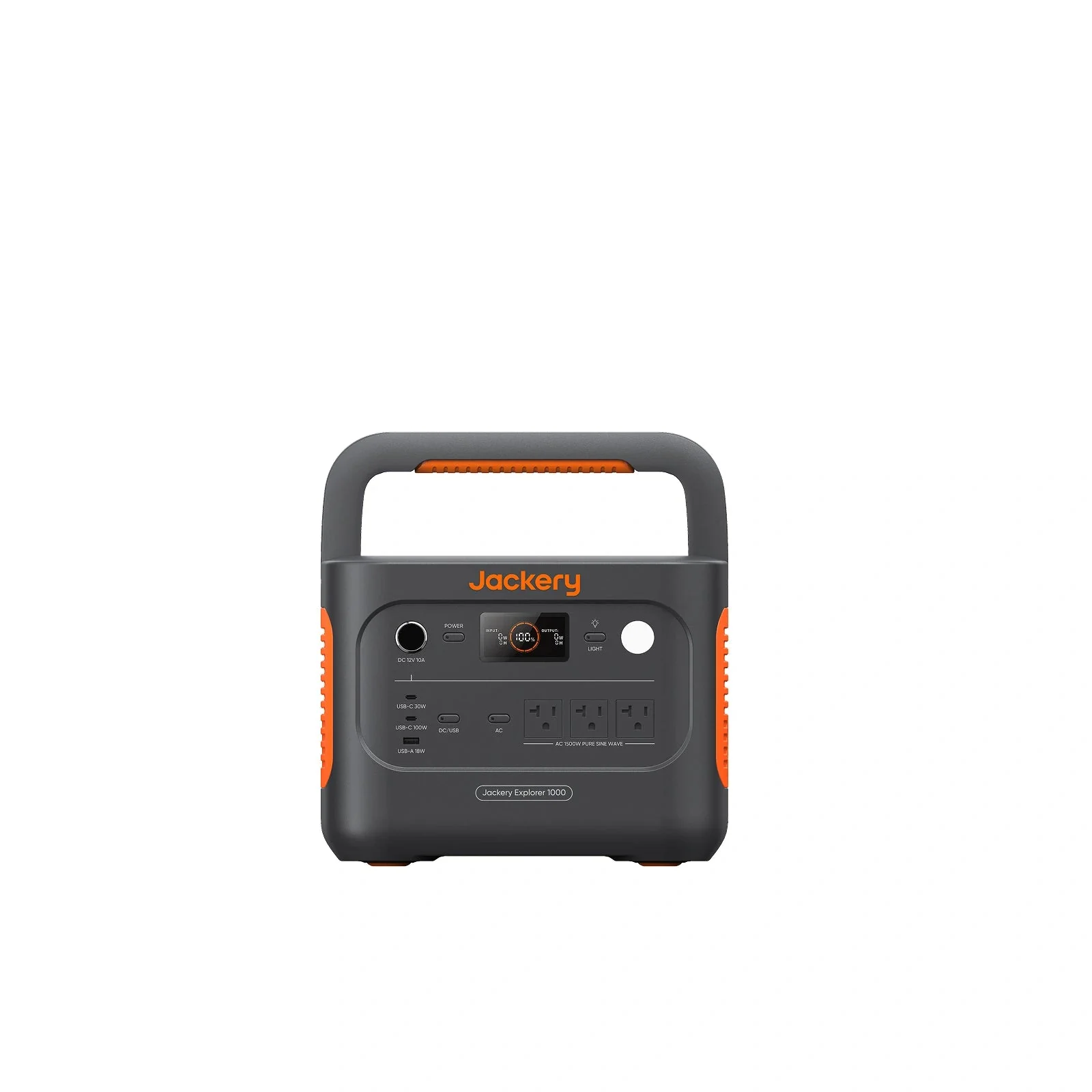
Jackery
Jackery Explorer 1000 v2
Jackery's LiFePO4 do-over of the best-selling power station ever, and the one people actually mean when they say 'just get a Jackery.' At 23.8 lbs it's several pounds lighter than every 1kWh rival, which is why campers and older buyers gravitate to it. The 1500W inverter (3000W surge) runs coffee makers and microwaves fine; owners confirm the quiet-fan claim - it's noticeably more pleasant than an AC180 under load. Real-world knocks: there's no expansion port at all, the 20ms UPS switchover is fine for a fridge but not marketed for computers, and the 1500W output trails the 1800-2000W competition on paper. It lives on sale - $429-499 happens monthly - so nobody should pay list. The foldable handle and genuinely idiot-proof interface make it the one to recommend to non-technical relatives.
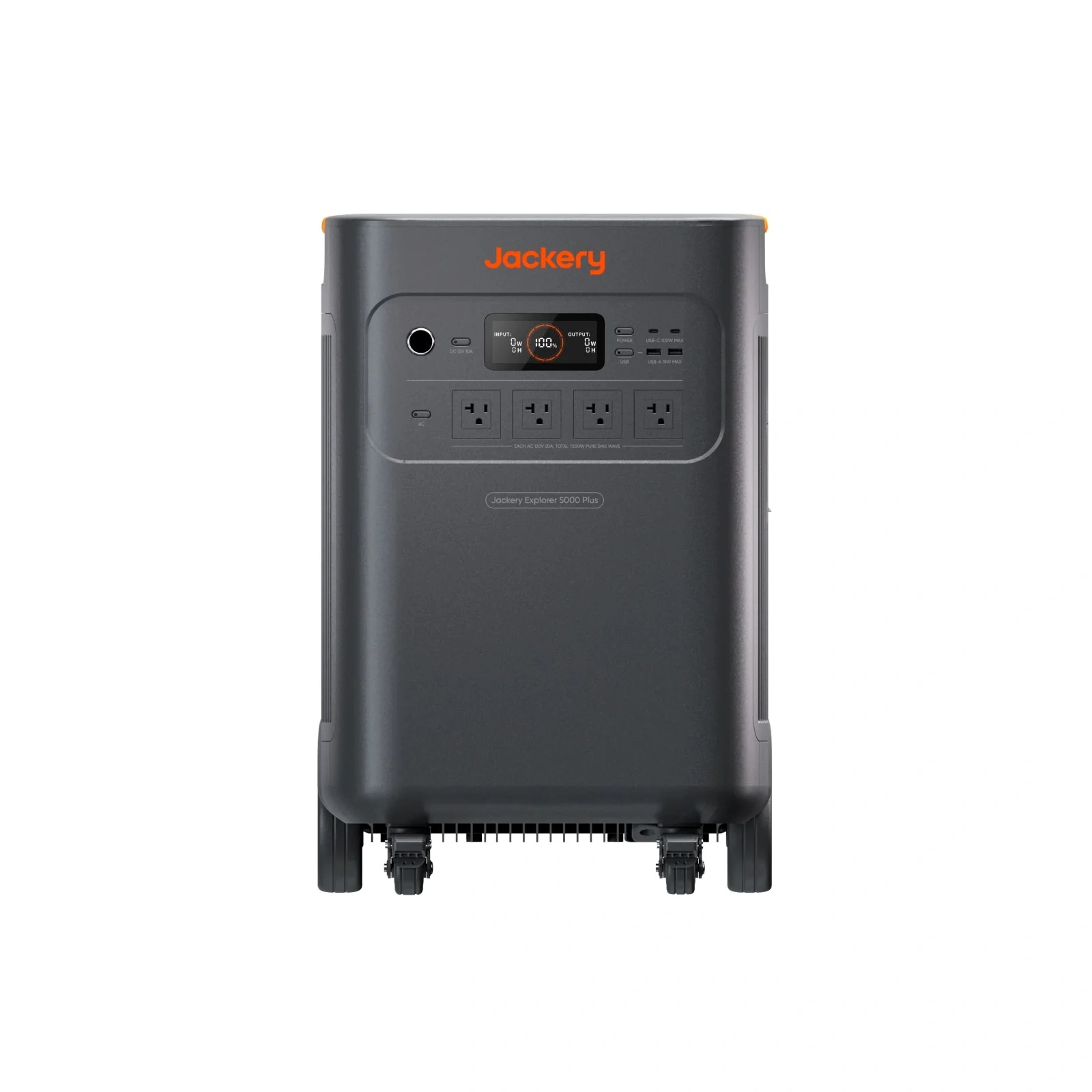
Jackery
Jackery Explorer 5000 Plus
Jackery's 2025 entry into whole-home territory: 5kWh, a 7200W split-phase inverter, and a claimed 0ms UPS switchover - the spec that gets it recommended for sump pumps and server closets. It expands to 60kWh with battery packs and pairs with Jackery's transfer-switch kits for panel integration. Costco periodically sells it at $2,799, which owners treat as the buy signal since list is $4,299. The good: 240V from a single unit (rare - EcoFlow needs the bigger Pro 3 for that), suitcase wheels that handle gravel, and genuinely fast 4000W solar charging. Owner complaints center on the accessory economics - the transfer switch kit, battery packs, and parallel box add up fast - plus a 134.5-lb chassis you will not lift alone, and Wi-Fi setup that multiple reviewers found finicky. Newer to market, so long-term reliability data is thinner than the 2000 Plus.
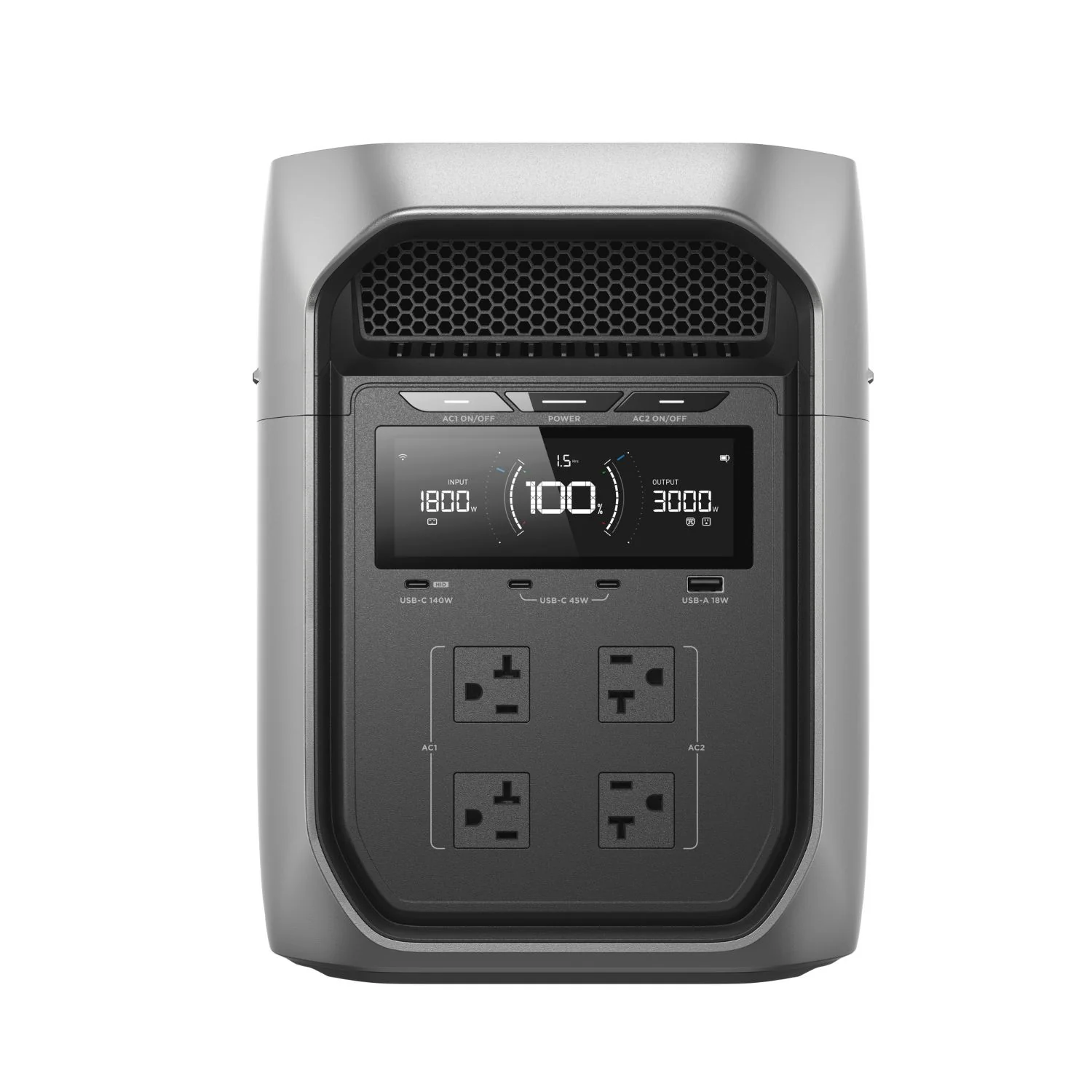
EcoFlow
EcoFlow DELTA 3 Max Plus
The 2025-2026 refresh of EcoFlow's mid-size class and a current 'best for home backup' pick in several tested roundups. You get 2kWh and a 3000W inverter - enough to run a microwave and fridge simultaneously - at a price that undercuts the old Delta 2 Max's launch by hundreds. Owners like the practical stuff: 0-80% in about 68 minutes, X-Boost handling 3800W resistive loads, and expansion to 10kWh if backup needs grow. The dual side handles make the 49-lb carry manageable for one person. Quirks from owner threads mirror the rest of the Delta 3 line: fan spins up audibly during fast charging, idle drain means you shouldn't store it with AC output enabled, and the app occasionally loses Wi-Fi pairing until you power-cycle. Solid pick if 1kWh feels tight but 4kWh-class weight and price feel excessive.

Anker's suitcase-style 2kWh veteran - launched 2022, still sold in 2026 because constant $799-999 deals keep it moving. The rolling-luggage design with a pull handle is the feature owners mention most; 67 lbs rolls fine but the top-mounted ports mean bending over a lot. SurgePad pushes it to 3600W briefly, and the TT-30 makes it a natural for smaller RVs. GaNPrime charging does 0-80% in 1.4 hours, which was headline speed in 2022 and is merely fine now. Owner threads flag its age honestly: no UPS mode (there's a delay on switchover), the display washes out in sunlight, solar input caps at 1000W, and the app is the older Anker platform with fewer controls. Reliability sentiment is strong though - lots of three-year owners with zero issues, and the 5-year full-device warranty is unusual for its generation.
Bluetti
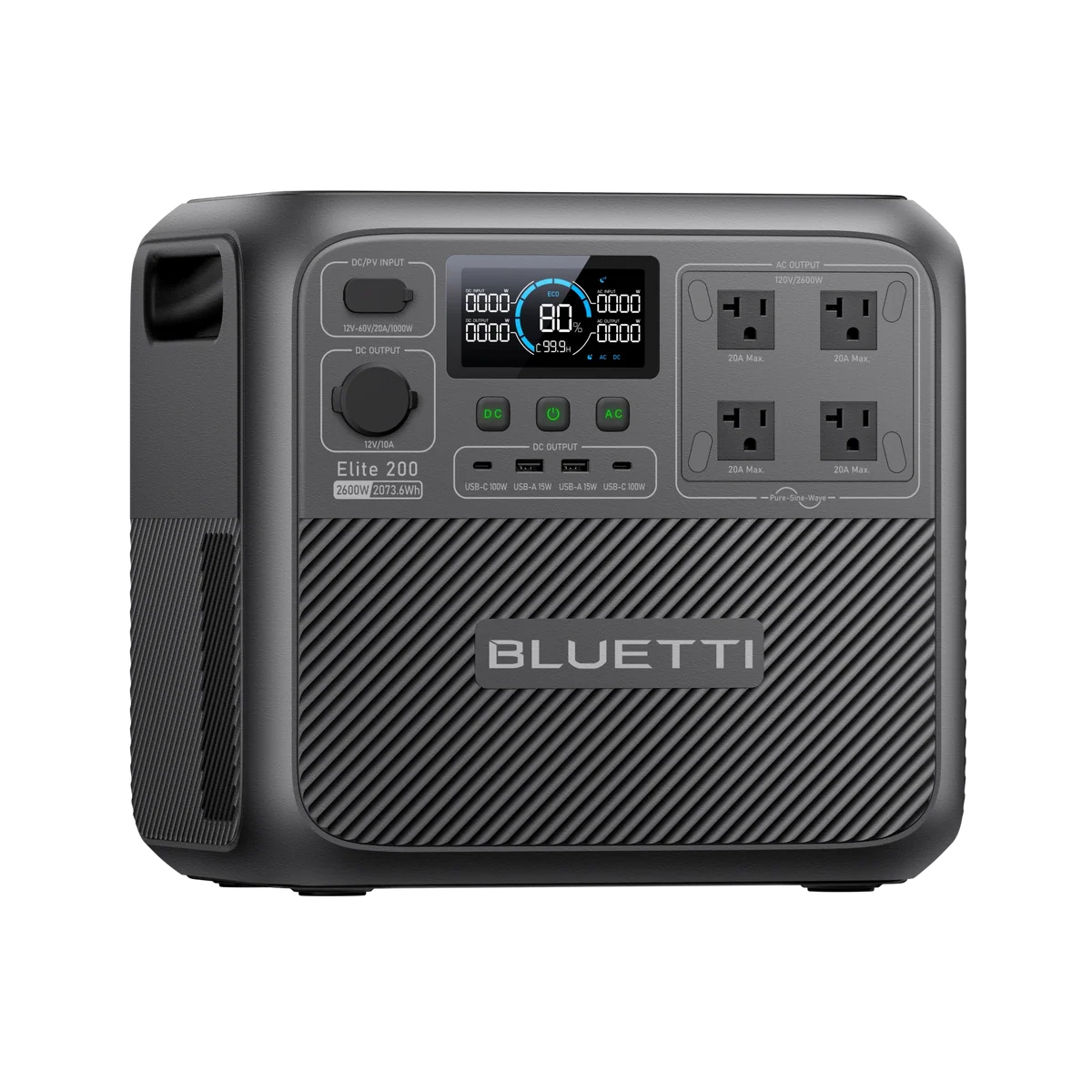
Bluetti Elite 200 V2
Bluetti's 2025-generation 2kWh flagship and the unit that reset expectations for what $999 buys: a 6,000-cycle LiFePO4 pack (cycle it daily and it still holds 80% in 2043), a stronger 2,600W inverter than anything else in class, and a chassis nearly 10 lbs lighter than the AC200L it effectively replaces. Vanlife reviewers in particular have adopted it as the default build battery. Owners praise the 50-minute 0-80% charging and the noticeably better fan tuning versus older Bluettis - it's not silent, but it no longer howls at 200W loads. The trade-offs are real though: no expansion port at all (that's what Apex 300 is for), solar input caps at 1,000W, and there's no wireless pad or fancy extras. If your capacity needs are fixed at ~2kWh, this is arguably the best-engineered unit in the segment right now.
Bluetti
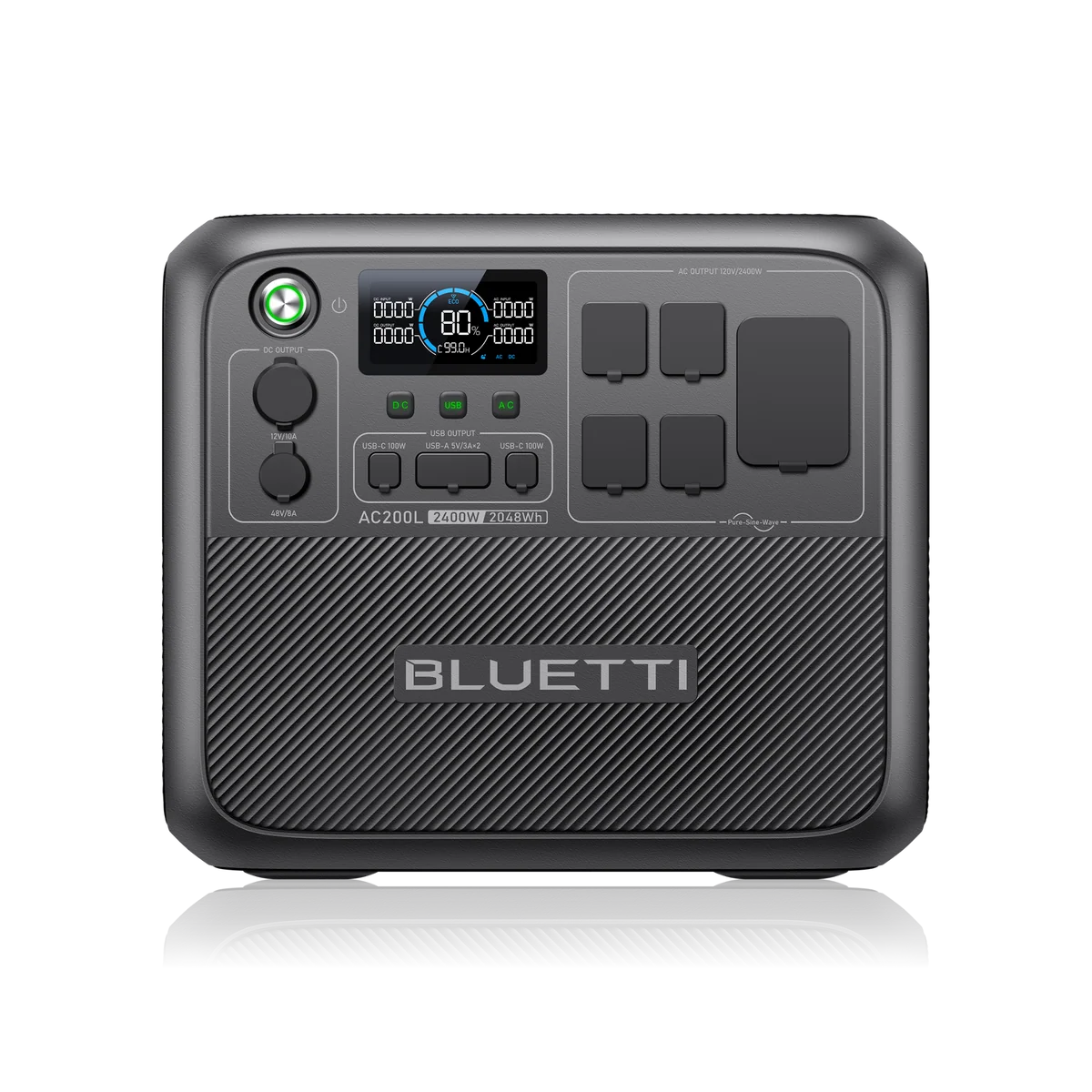
Bluetti AC200L
Bluetti's mainstream 2kWh unit and the expandability play at this price: it accepts B300K packs (up to ~8kWh) that also work with the bigger AC500 and Apex 300, so nothing you buy gets orphaned. The 30A TT-30 outlet plus a 48V RV DC port make it quietly one of the best RV units under $1,000. A 2,400W inverter with 3,600W Power Lifting covers tools and kitchen gear. Owner sentiment: solid hardware, middling software - app pairing drops and slow firmware updates are recurring gripes, and the cooling fans are audible under load in classic Bluetti fashion. At 62.4 lbs with no wheels, repositioning it is a deliberate act. Street pricing settled around $899 in 2026, and the periodic $799 deals make it a strong alternative to the Jackery 2000 Plus when expansion cost matters more than quietness.