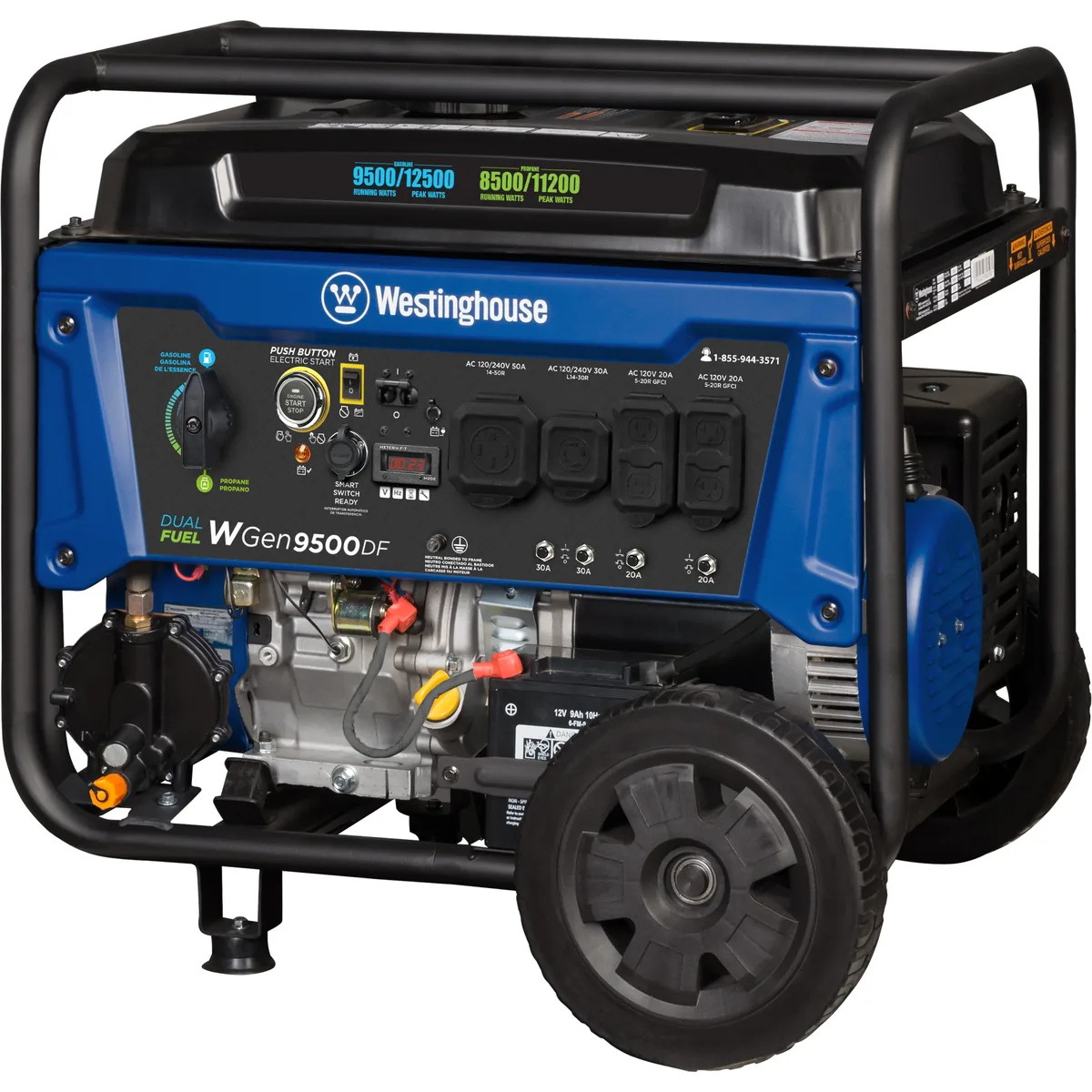
Running a whole house through a 50A inlet and an interlock or manual transfer switch is the usual job for the WGen9500DF, and owners' outage reports back that up: one ran central AC and the whole house through Hurricane Helene, and another had his inlet installed two weeks before an outage and powered everything he needed. Another went further, converting his to natural gas with a regulator swap at the propane port and wiring it into a homemade automatic start, and the dual-fuel setup kept the lights on for another owner whose carburetor failed during a 60-hour outage.
The quirks are mostly about the battery and the carb. A battery drained by a switch left on, or by a charging circuit that, on one owner's unit, does not keep up, stops the electric start cold, and owners ask whether to leave the supplied charger plugged in between storms. Carb varnish, surging after storage, and the advice to open the bowl drain rather than just run it dry come up repeatedly. It ships with 10W-30 for the 5-hour break-in. Westinghouse support draws complaints, including weeks of unanswered service requests for one owner, and one wrong-polarity harness ordered from its parts department left an owner's panel dead.
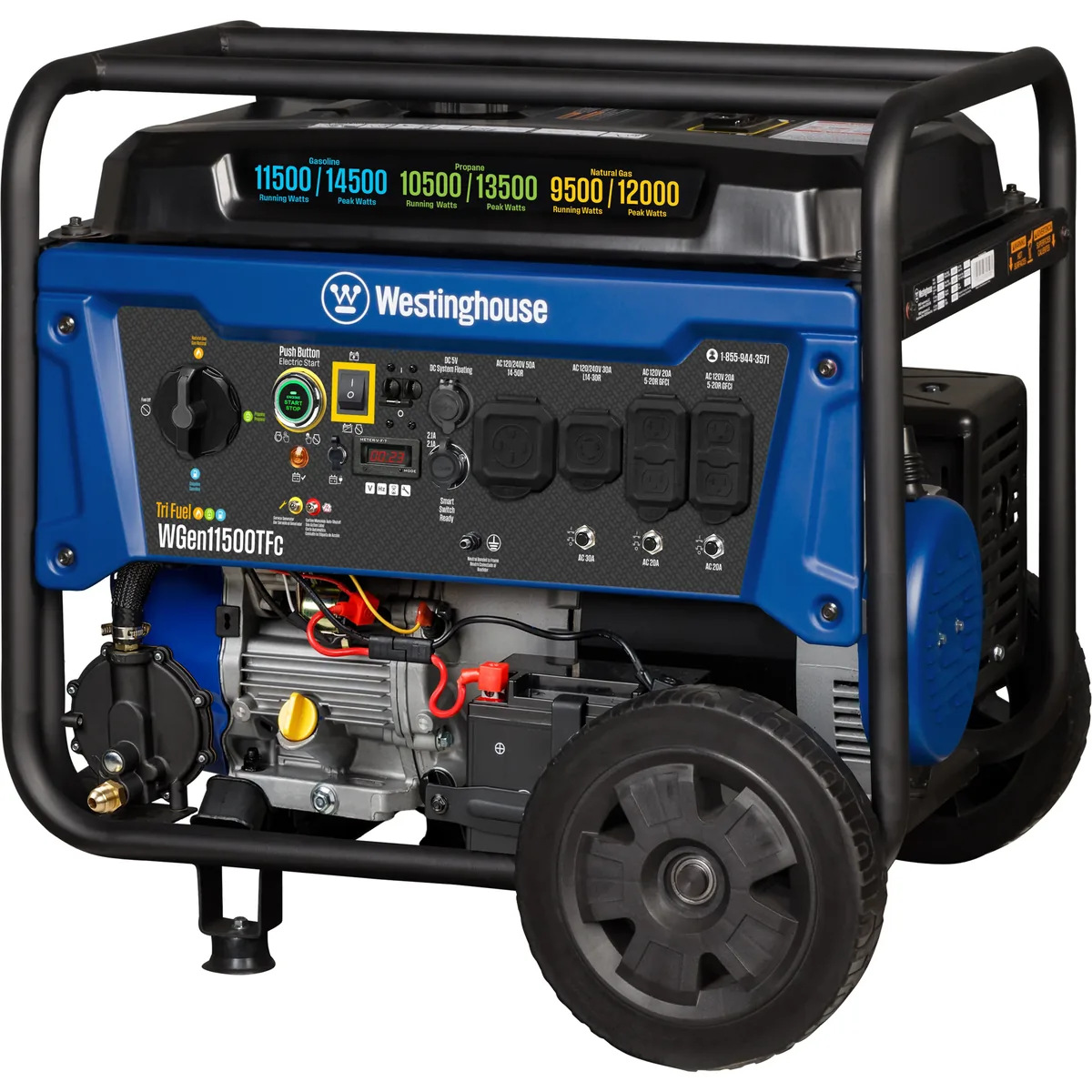
Maximum gasoline and propane watts per dollar is the pitch, for a homeowner with an interlock or transfer switch who is comfortable doing small fixes. The tri-fuel WGen9500TFc sibling is the obvious alternative for anyone with a gas line, and it has dipped to $799-$899 at warehouse clubs, so check that price before converting a DF yourself. One shopper wary of the reviews asked about inverters such as a paralleled Honda EU2200i pair instead, and others compared it with the DuroMax XP13000HX.