EcoFlow
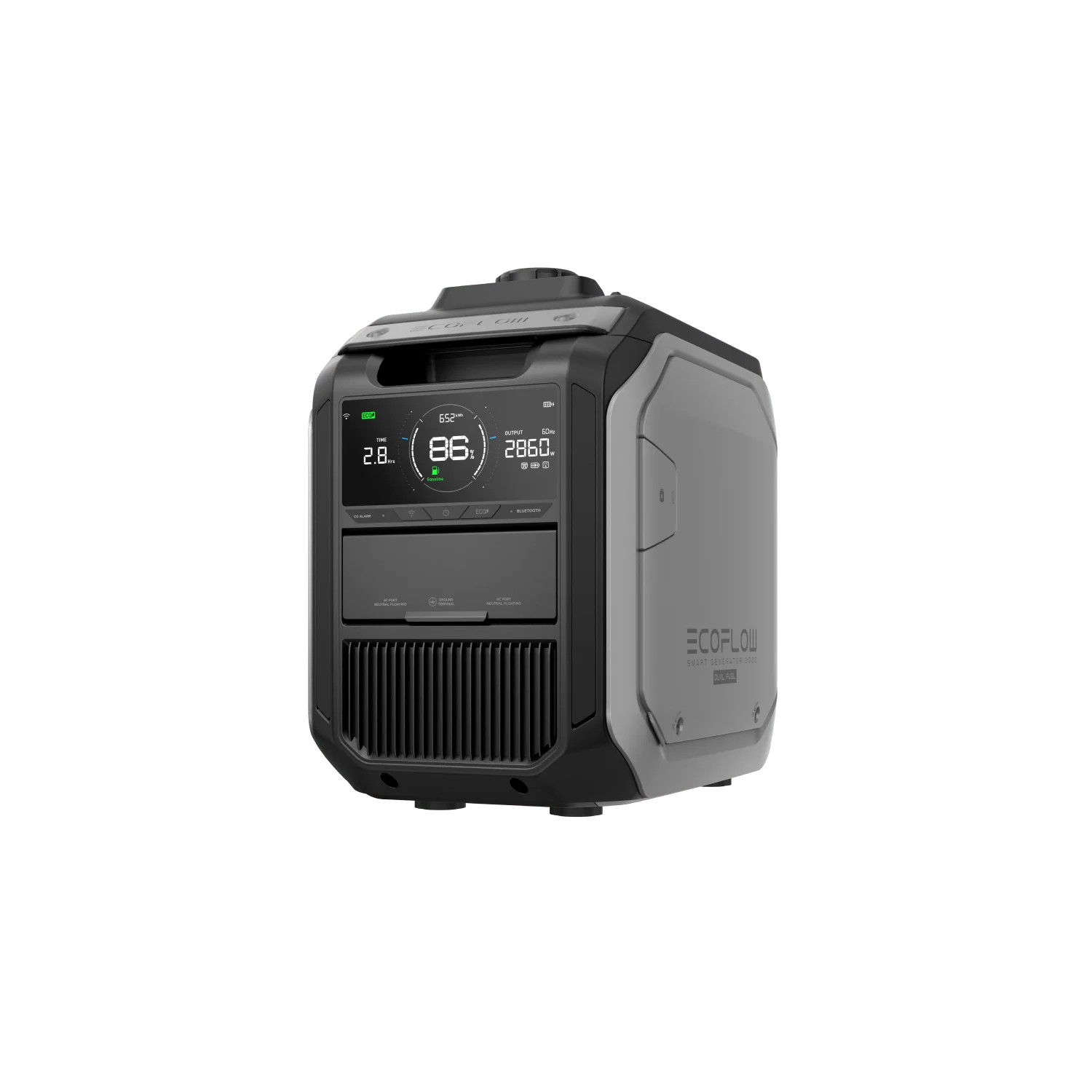
EcoFlow Smart Generator 3000 (Dual Fuel)
This isn't really a competitor to Honda — it's a range extender for EcoFlow's battery ecosystem, and that's exactly how owners use it. Paired with a DELTA 3 or DELTA Pro power station, it auto-starts itself when the battery drops below a threshold you set in the app, charges via high-efficiency DC (skipping the AC conversion loss), then shuts itself off — so the noisy, fuelly part of backup power runs as little as possible. It also works as a plain 2,000W dual-fuel inverter generator with app control and five start methods. Owner sentiment: brilliant inside the ecosystem, mediocre outside it — 69 dB is loud for 2,000 watts, the 1-year warranty is stingy, LPG output drops to 1,800W, and at typical pricing you can buy more raw watts elsewhere. As the automated gas backstop to a solar-battery setup, though, nothing mainstream matches it.
Specifications
Highlights
What owners like
- ✓Hands-free auto start/stop keyed to battery level
- ✓DC charging into DELTA units skips inverter losses
- ✓Dual fuel with propane for indefinite shelf life
- ✓48 lbs — genuinely light for 2,000W dual fuel
- ✓App shows fuel, output, and errors remotely
- ✓Five start methods including scheduled and remote
Common complaints
- ✗Only compelling if you already own EcoFlow batteries
- ✗69 dB is loud for a 2,000W inverter
- ✗1-year warranty trails the 3-year category norm
- ✗LPG derates output to 1,800W
- ✗Tiny 1.06-gal tank on gasoline
Owner Insightssummarized from Reddit and owner forums
The Smart Generator 3000 sells to a very specific person: someone who already owns a Delta Pro, Delta 3, or Delta Max, runs it on solar, and wants gasoline or propane as the automatic plan C when clouds outlast the battery. Configured that way, it does something nothing from Honda, Champion, or Generac does out of the box - the power station watches its own charge level, wakes the generator over the paired connection when it sags below your chosen floor, refills via DC, and shuts the engine back down. Owners describe multi-day outages where the engine only ran a few hours total because the battery handled every quiet stretch.
The practical experience splits cleanly along that ecosystem line. Inside it, owners praise the XT150 direct-DC charging - skipping the AC conversion round trip stretches each gallon meaningfully, and EcoFlow claims up to 40% fuel savings versus outlet charging - and propane operation means the carburetor never sees the varnishing gas that kills stored generators. Outside it, the gripes stack up: 69 dB is loud for the wattage, the fan roars during max-rate charging (setting a slower charge rate in the app is the standard nighttime fix), auto start/stop occasionally misses its cue - a quirk owners say the newer 4000 largely fixed - and the 1-year warranty is the shortest of any brand-name unit in this class. Nobody buys it for the AC outlets alone, and nobody should.
If you own an EcoFlow battery and want automated fossil-fuel backup, this is the purpose-built answer, priced at $749 against the bigger Smart Generator 4000 (about $950-1,100 on sale, 3,200W, smoother automation, pairs with Delta Pro 3). If you don't own an EcoFlow battery, cross-shop the Champion 3400/3500 dual-fuel inverters or a WEN 56235i instead - more watts or less noise for less money, minus the automation. Owners who bought it as a plain generator tend to be lukewarm; owners who bought it as the gas backstop to a solar setup tend to be evangelists.
What owners like
- +Hands-off outage automation no mainstream generator offers - the battery calls for fuel power only when it actually needs it
- +Direct DC charging over the XT150 cable skips inverter conversion losses; EcoFlow claims up to 40% fuel savings versus charging a power station from AC outlets
- +Running it on propane sidesteps stale-gas carb gumming entirely - a real advantage for a unit that sits idle for months
- +48 lbs, lightest in this roundup by a wide margin
- +Five start methods including from the app on your couch
- +Doubles as a normal 2,000W dual-fuel inverter with AC outlets when you need it to
- +Slower app-set charge rates keep fan and engine noise civil overnight
- +Owners running Delta Pro solar setups call it the missing piece for multi-day cloudy stretches
Common complaints
- −69 dB is genuinely loud for 2,000 watts - closed-case rivals run in the low 50s
- −Auto start/stop can be inconsistent - owners who upgraded say the newer Smart Generator 4000 behaves noticeably better
- −1-year warranty when Champion and WEN give 2-3 years
- −Propane knocks output down to 1,800W
- −The automation lives in EcoFlow's app, so firmware updates and pairing quirks can interrupt a feature you bought it for
- −Makes little sense as a standalone generator - $749 buys more watts and quieter cases elsewhere
- −Fast DC charging spins the cooling fan up loudly even when the engine itself is behaving
- −Thin service network and a small owner base mean long-term durability is still an open question
Common Questions
Which EcoFlow power stations does it pair with for auto-start?
Is DC charging really more efficient than just plugging the power station into a normal generator?
How loud is it in practice?
How much power do I lose running propane?
Should I buy this or the Smart Generator 4000?
Does it work as a regular generator if I don't own an EcoFlow battery?
Related units
More from EcoFlow →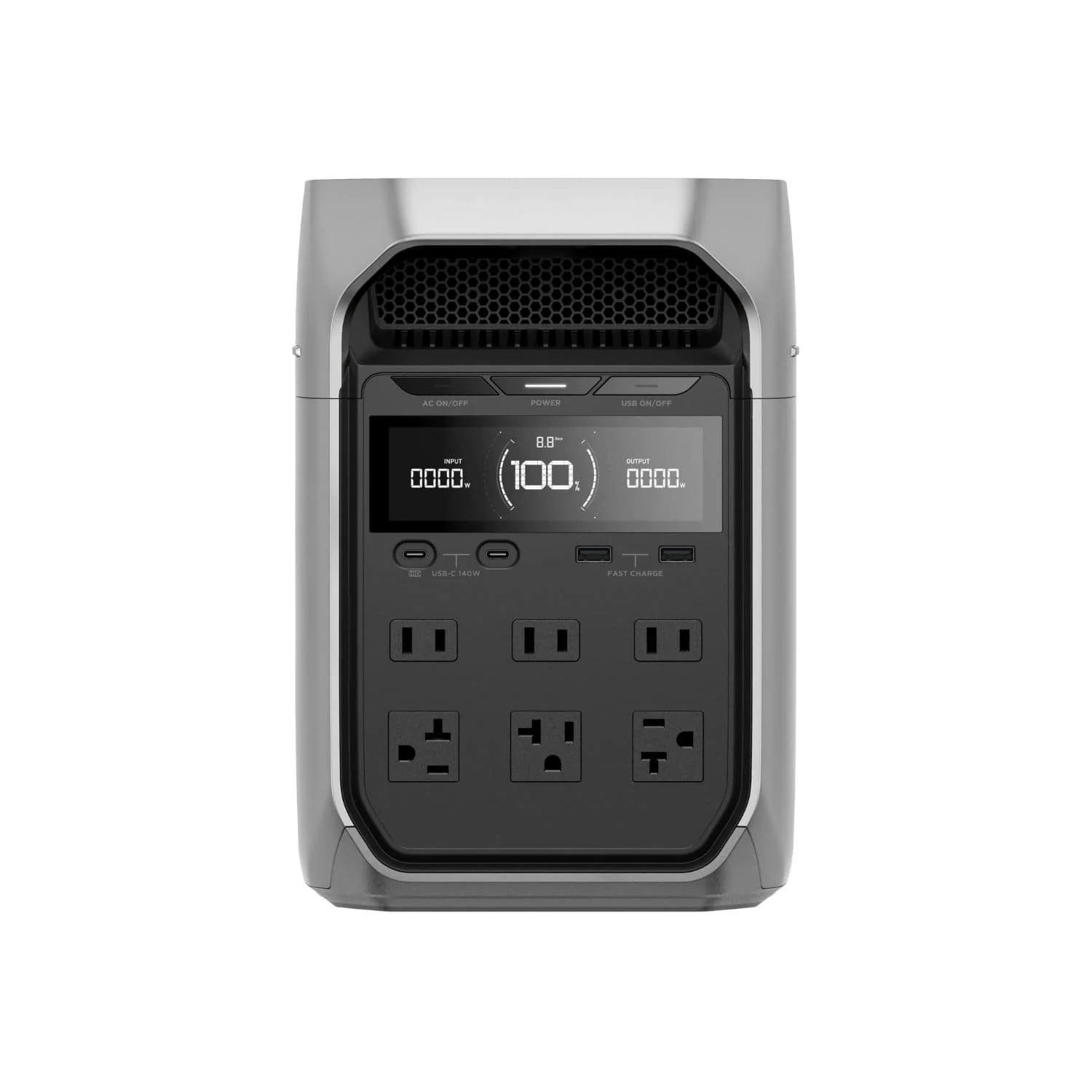
EcoFlow
EcoFlow DELTA 3 Plus
The default answer when someone asks r/portablepowerstations for a 1kWh backup unit. The killer feature owners rave about is the 10ms UPS switchover - people literally run NAS boxes, routers, and CPAP machines off it full-time and never notice an outage. It charges 0-100% in 56 minutes, which sounds like marketing until you watch it happen. Real-world quirks: the 30dB quiet claim only holds at idle - fast AC charging spins the fan up noticeably, so owners set a slower charge rate in the app at night. The app requires an EcoFlow account, which annoys the privacy crowd. X-Boost lets it fudge 2200W resistive loads (space heaters, kettles), but induction motors still trip it. Expansion to ~5kWh via extra batteries is handy, though the add-on packs cost almost as much as the unit on sale.
EcoFlow
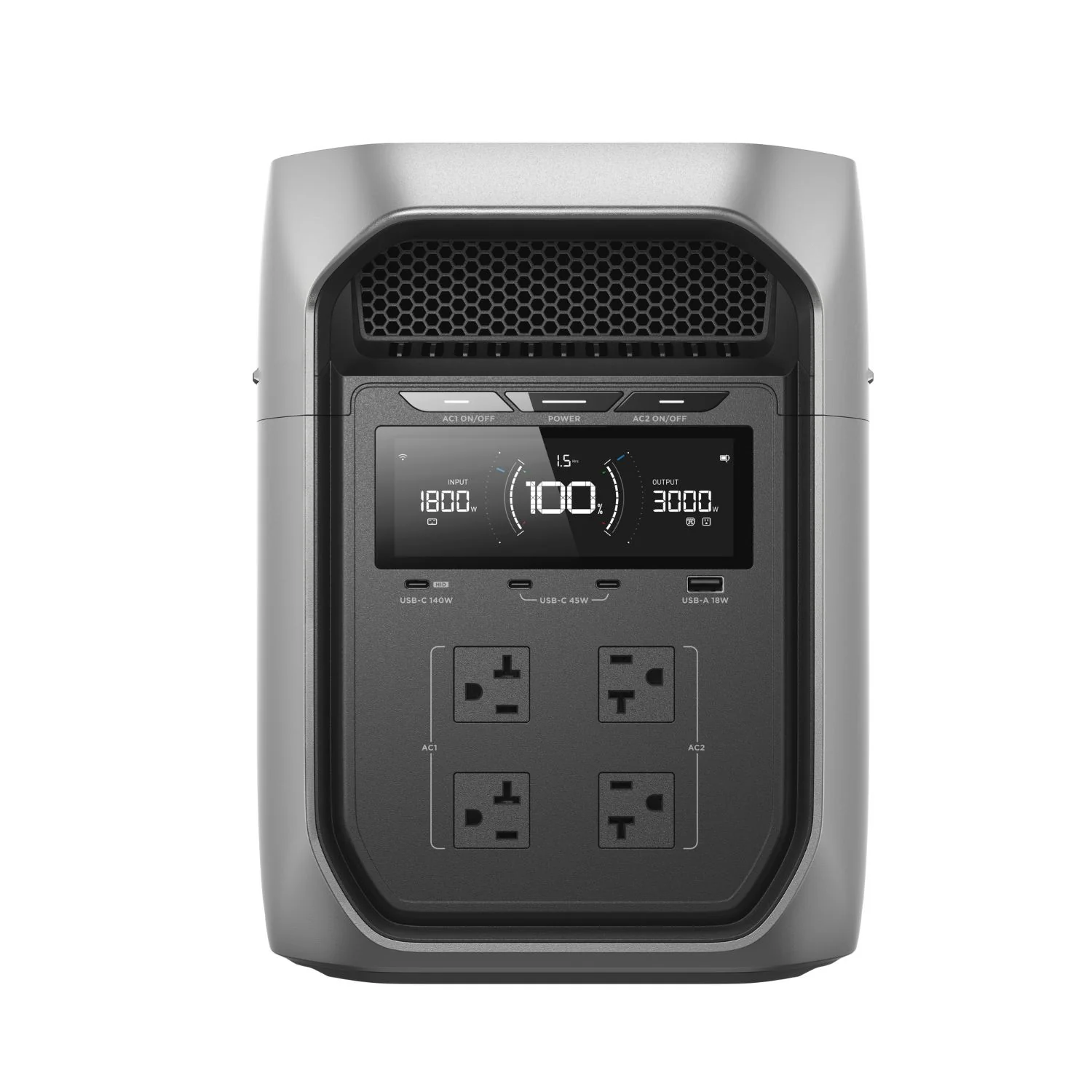
EcoFlow DELTA 3 Max Plus
The 2025-2026 refresh of EcoFlow's mid-size class and a current 'best for home backup' pick in several tested roundups. You get 2kWh and a 3000W inverter - enough to run a microwave and fridge simultaneously - at a price that undercuts the old Delta 2 Max's launch by hundreds. Owners like the practical stuff: 0-80% in about 68 minutes, X-Boost handling 3800W resistive loads, and expansion to 10kWh if backup needs grow. The dual side handles make the 49-lb carry manageable for one person. Quirks from owner threads mirror the rest of the Delta 3 line: fan spins up audibly during fast charging, idle drain means you shouldn't store it with AC output enabled, and the app occasionally loses Wi-Fi pairing until you power-cycle. Solid pick if 1kWh feels tight but 4kWh-class weight and price feel excessive.
EcoFlow
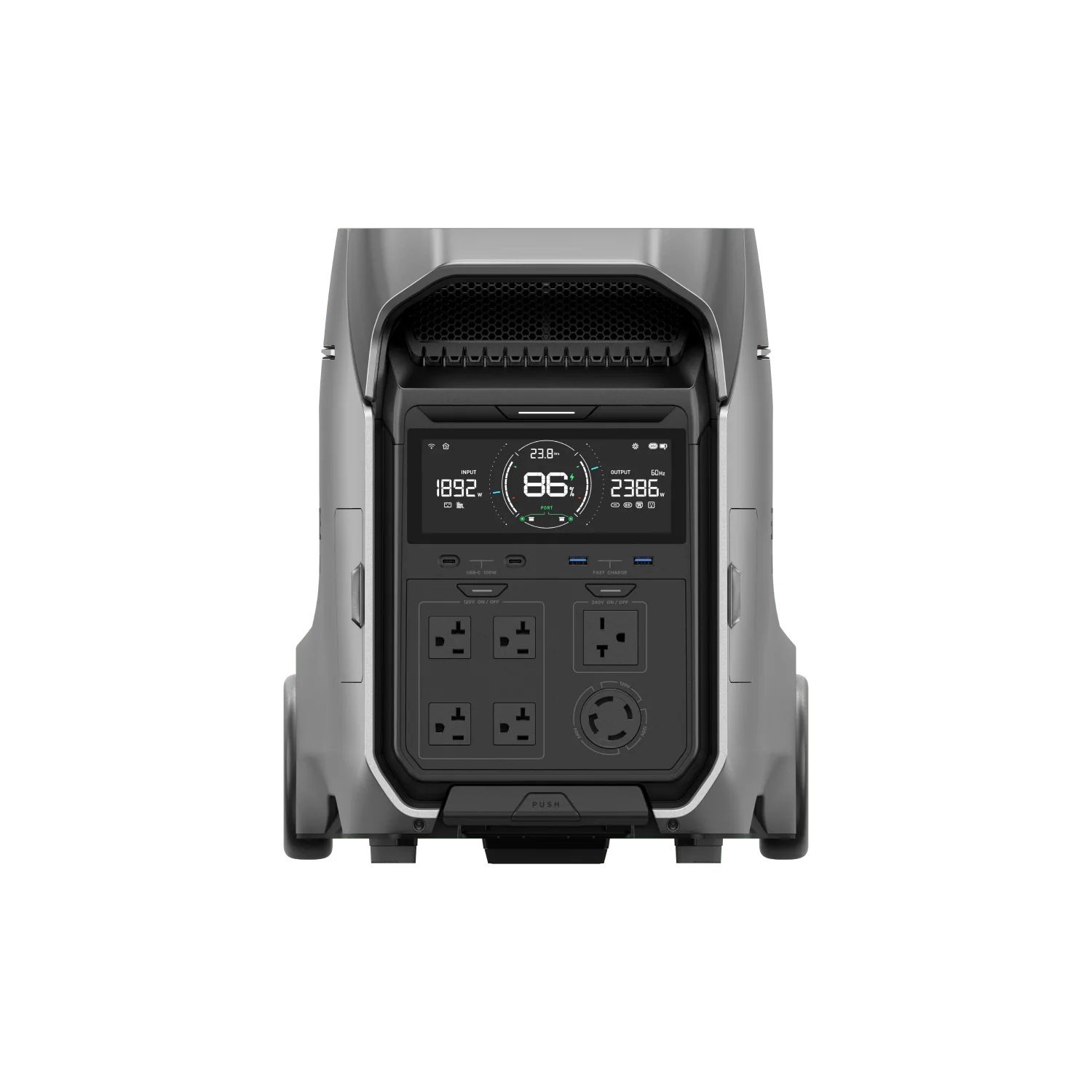
EcoFlow DELTA Pro 3
The single most-recommended whole-home-capable unit that still rolls on wheels. What sells it: 4000W with real 120/240V split-phase from one box, so it backfeeds a transfer switch and runs a well pump or mini-split without pairing two units. Owners consistently praise how quiet it stays at partial load (30dB claimed) and the 10ms UPS. The recurring complaint thread is idle drain - leaving AC output on burns tens of watts, so a 4kWh charge quietly evaporates over days if you use it as a dumb UPS without tweaking settings. It is 113 lbs; the wheels and handle work on pavement, not stairs. A few owners report warranty friction outside the mainland US, and early-firmware horror stories still circulate on Reddit, so update before first use. Street price has fallen from $3,699 to low-$2,000s, which changed the calculus versus F3800 Plus.
EcoFlow
EcoFlow DELTA Pro Ultra
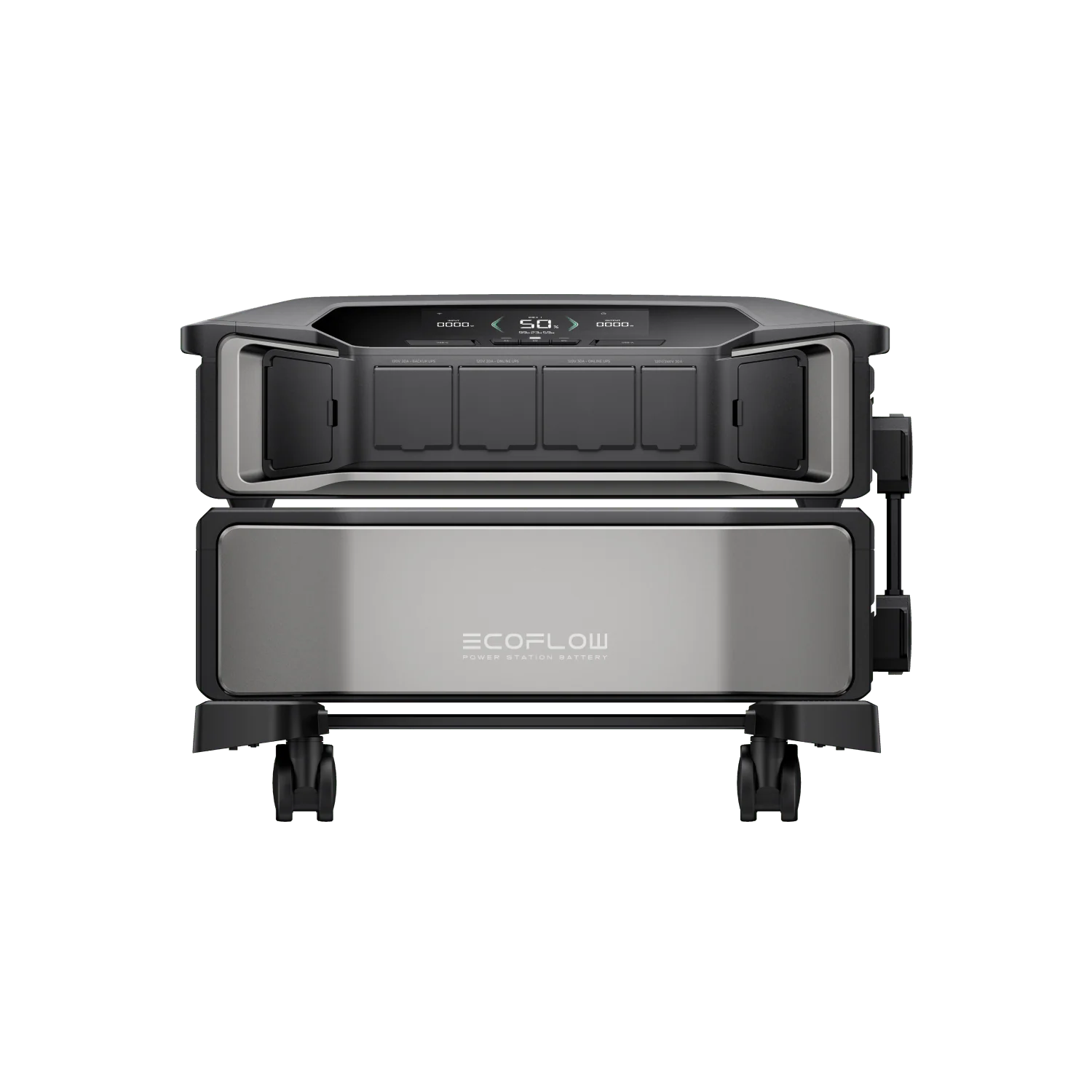
EcoFlow's modular whole-home flagship: a 7200W inverter head that stacks up to 15 batteries for 90kWh, or triples to 21.6kW output. Price shown is the inverter + one 6.1kWh battery; the Smart Home Panel 2 (roughly $1,500-1,900 more plus electrician) is what unlocks the automatic 10-circuit backup owners actually buy this for. Owner sentiment is mostly awe at capability with recurring gripes about the ecosystem tax - every accessory is proprietary and priced accordingly. Fan noise under heavy charge or load is louder than the marketing suggests, and at 164 lbs assembled you position it once and leave it. The 120A LRA rating starts most 3-ton air conditioners, which smaller stations simply cannot do. People cross-shop it against a Powerwall 3 install; the Ultra wins on no-permit portability, loses on per-kWh cost at scale.
EcoFlow
EcoFlow OCEAN Pro
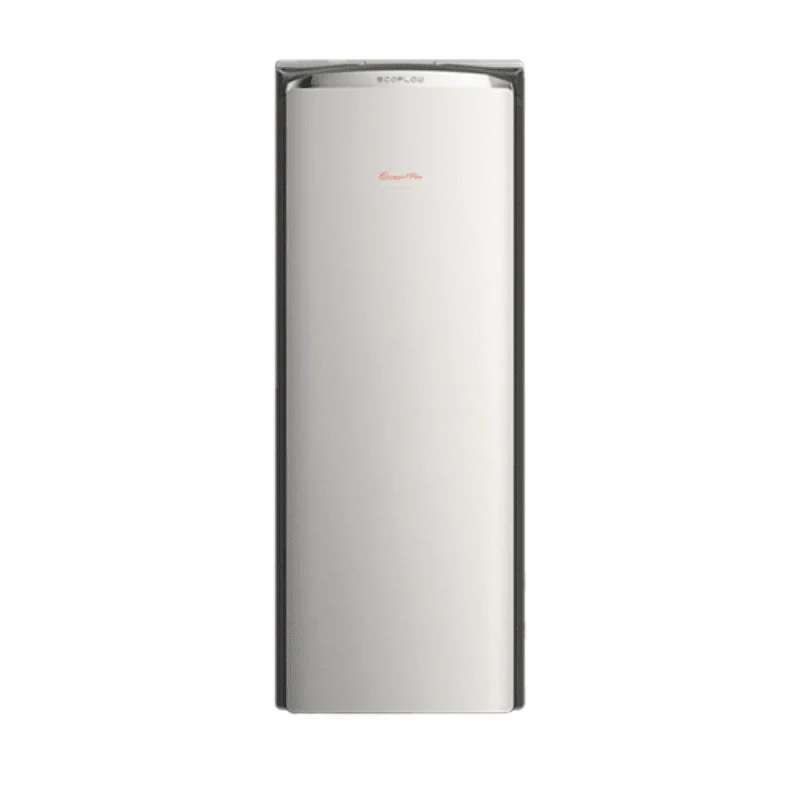
EcoFlow's 2026 leap from portable stations into permanently-installed storage, and on paper it's a monster: 10kWh IP67 modules stacking to 80kWh per inverter, a hybrid inverter platform rated to 24kW output with 205A LRA motor-start, 40kW of solar input, an integrated Smart Electrical Panel 40 and 11.5kW EV charger, plus a 15-year warranty that beats everyone except Enphase's on paper. Pricing is quote-only through certified installers - the price shown is an estimated installed starting system (inverter + battery + smart panel) based on early published system ranges; treat it as directional, not gospel. Because it launched this year, real owner history is thin: early impressions praise the AI-driven time-of-use optimization and the whole-ecosystem integration, while the obvious cautions are a brand-new installer network, unproven long-term support for installed products from a portable-power company, and unknown service logistics.
Predator (Harbor Freight)
Predator 3500 Inverter
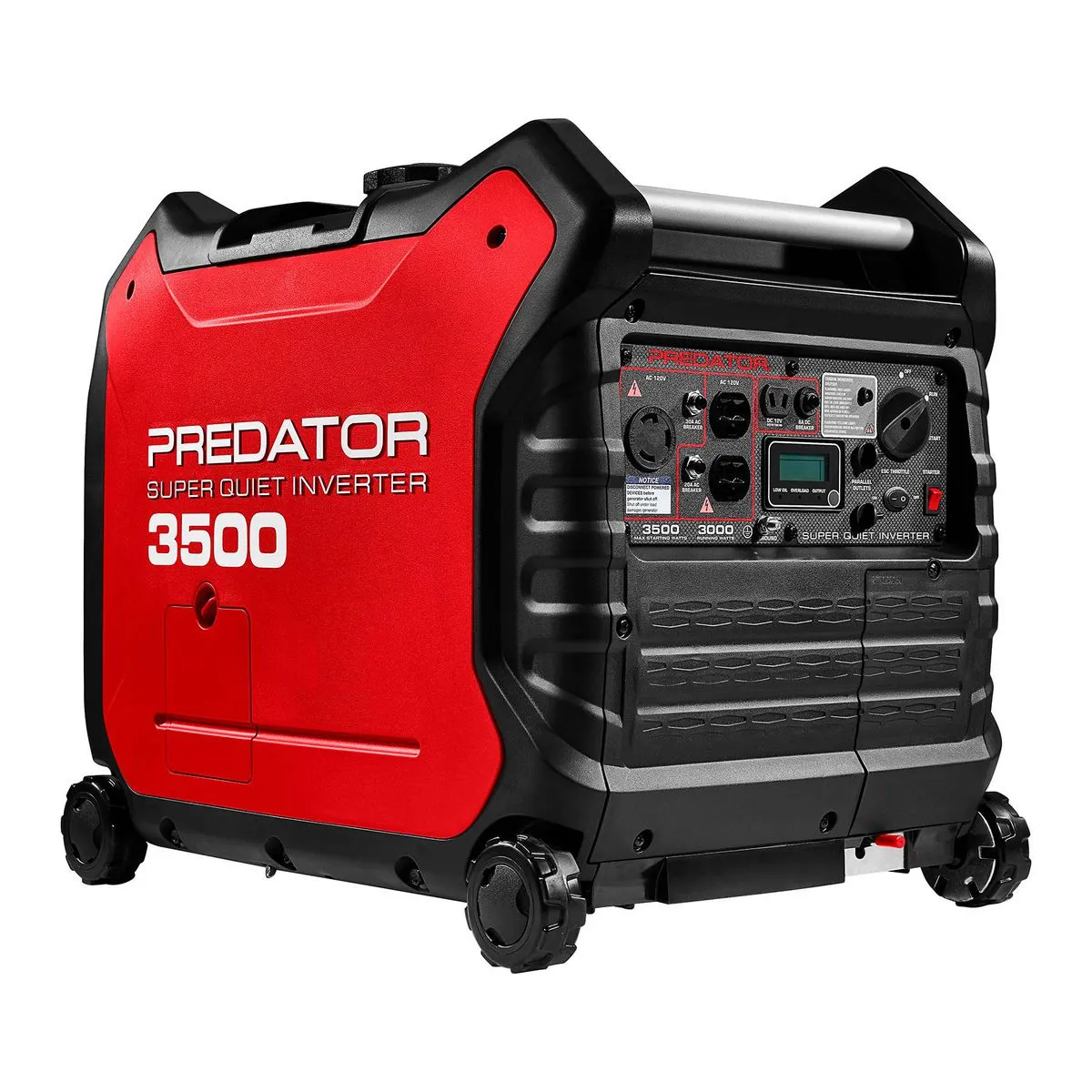
The cult classic of the RV world. The Predator 3500 has powered a decade of forum threads titled 'why pay Honda prices?' — 3,000 running watts, 57 dB super-quiet operation, electric start, and a digital readout for around $800, with periodic coupons taking it lower. Owners report five-plus-year lifespans with basic oil changes, and it starts 15k BTU RV ACs that make 2,200W units give up. Consumer Reports rates it surprisingly highly for noise and power quality. The trade-offs are well-mapped: 99 lbs with no folding handle makes truck-bed loading awkward, the oil fill is tilted and messy, carb varnish after storage is the top repair thread, the 90-day warranty is the shortest in the industry, and CARB-state buyers need the newer CO Secure version. Still the value benchmark for RV inverters.