Jackery
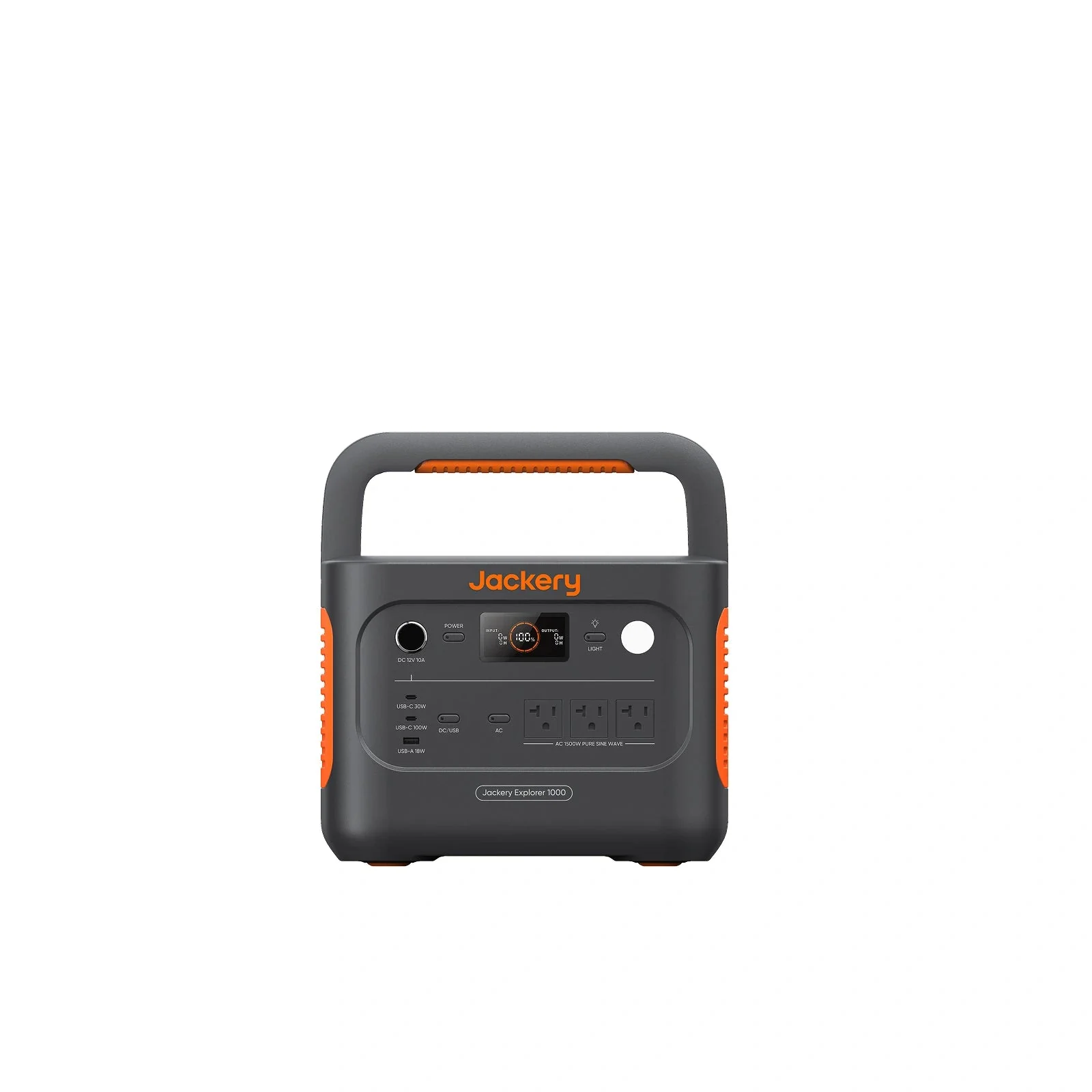
Jackery Explorer 1000 v2
Jackery's LiFePO4 do-over of the best-selling power station ever, and the one people actually mean when they say 'just get a Jackery.' At 23.8 lbs it's several pounds lighter than every 1kWh rival, which is why campers and older buyers gravitate to it. The 1500W inverter (3000W surge) runs coffee makers and microwaves fine; owners confirm the quiet-fan claim - it's noticeably more pleasant than an AC180 under load. Real-world knocks: there's no expansion port at all, the 20ms UPS switchover is fine for a fridge but not marketed for computers, and the 1500W output trails the 1800-2000W competition on paper. It lives on sale - $429-499 happens monthly - so nobody should pay list. The foldable handle and genuinely idiot-proof interface make it the one to recommend to non-technical relatives.
Specifications
Highlights
What owners like
- ✓23.8 lbs - lightest in the 1kWh class by a wide margin
- ✓Fans stay quiet under load, a consistent owner compliment
- ✓1-hour emergency fast charge when you need it topped before a storm
- ✓Dead-simple interface non-technical family members can operate
- ✓4,000-cycle LiFePO4 - a 10-year daily-use battery
- ✓Aggressive discounting means real price is ~$450-550
Common complaints
- ✗No expansion capability, period - buy the capacity you'll ever need
- ✗1500W inverter trails same-price rivals at 1800-2000W
- ✗Only 3 AC outlets and 1 USB-A - port-poor versus Anker
- ✗20ms switchover not rated for desktop-PC UPS duty
Owner Insightssummarized from Reddit and owner forums
The Explorer 1000 v2 is the power station people recommend to their parents, and that is meant as a compliment. Jackery took the best-selling station ever made, swapped in LiFePO4 chemistry good for thousands of cycles, and kept the thing that made the original a phenomenon: a 23.8-lb body with a fold-flat handle and controls a first-timer understands in thirty seconds. Buyers skew toward campers, CPAP users, and households that want fridge-and-phone insurance for storm season without learning an ecosystem.
Ownership reports are pleasantly boring in the best way. Independent testing pulled about 910Wh of real output from the 1070Wh pack, the fan sits around 42dB under moderate loads - quiet enough that a CPAP user reported sleeping beside it - and only climbs to roughly 55dB when you push past 1000W. The app adds two touches owners actually use: a one-hour emergency charge for storm warnings and a 30dB quiet-charge mode for overnight. The honest limitations are structural rather than bugs: there is no expansion path at all, solar input caps at 400W through dated 8mm connectors, and the 20ms switchover is fine for a fridge but not the sub-10ms class that EcoFlow markets for computers.
This is the right buy for simplicity-first shoppers, and the wrong one for anyone who might want to grow a system later. Cross-shoppers weigh it against the EcoFlow DELTA 3 Plus (faster UPS, 140W USB-C, expandable, a few pounds heavier) and Anker's SOLIX C1000 Gen 2 (2000W output, faster charging, similar no-expansion limitation). What settles it is usually a sale: the 1000 v2 has repeatedly hit $349-449, and at those prices its weight, quietness, and brand-name warranty make it the easy pick. Nobody should pay the $799 list - a discount is always weeks away.
What owners like
- +Owners measured about 910Wh delivered from the 1070Wh rating - a solid 85% efficiency
- +42dB under moderate load; one CPAP user reported sleeping right next to it all night
- +Emergency charge mode refills the whole pack in about an hour when a storm is inbound
- +App includes a 30dB quiet-charge mode for overnight top-ups in the bedroom
- +Pass-through charging on solar works cleanly while powering lighter loads
- +Interface is genuinely idiot-proof - buttons and a clear screen, no app required for basics
- +LiFePO4 pack rated around 4,000 cycles, roughly 8x the original Explorer 1000's chemistry
- +Discounts are relentless - it has sold for $349-449 against a $799 launch price
Common complaints
- −No expansion port at all - 1070Wh is the ceiling, forever
- −20ms switchover is fridge-grade backup, not something owners trust for desktop PCs
- −1500W output trails the 1800-2000W that similarly priced EcoFlow and Anker units deliver
- −USB-C tops out at 100W, shy of full-speed charging for larger laptops
- −Fan reaches about 55dB once loads pass 1000W - noticeable in a quiet room
- −Solar caps at 400W over two 8mm DC inputs, so panel-only refills take most of a sunny day
- −Solar input throttles sharply when the inverter is working hard during pass-through
- −Wi-Fi pairing insists on 2.4GHz networks and binds the unit to a Jackery account
Common Questions
How long will it run a CPAP machine?
Can it back up my refrigerator?
Is it safe to use as a UPS for a computer?
What solar panels can I connect?
Explorer 1000 v2 or the original Explorer 1000 on clearance?
What charge level should I store it at?
Related units
More from Jackery →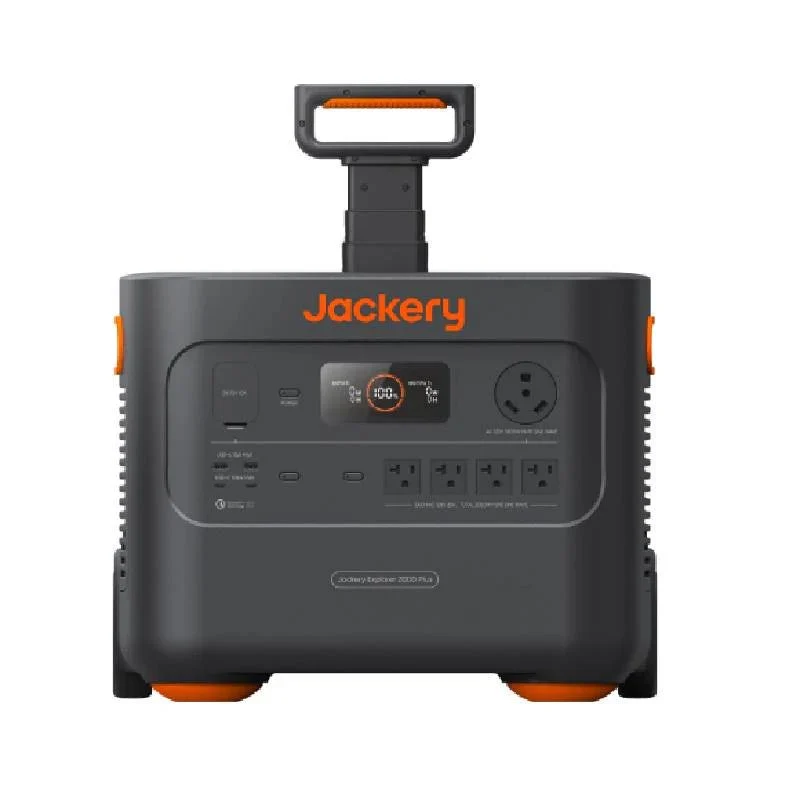
Jackery
Jackery Explorer 2000 Plus
The workhorse of Jackery's lineup and a fixture in RV and home-backup threads since 2023 - still current because Jackery kept cutting the price instead of replacing it. A 3000W inverter with a TT-30 RV outlet plus expansion to 12kWh (24kWh with two units paired for 240V) covers a lot of scenarios. Owners consistently call out how quiet it is - roughly 30dB under moderate load - and the telescoping handle and wheels, because 61.5 lbs is not a carry-it-around weight. The gripes: expansion packs run ~$1,000+ each, making big builds pricier than a Bluetti stack; the app is functional but bare-bones; and the TT-30 is 25A rather than a full 30A. Deal-watchers note it hits $999 several times a year, at which point it's arguably the best $/W value in the 2kWh class from a tier-one brand.
Jackery
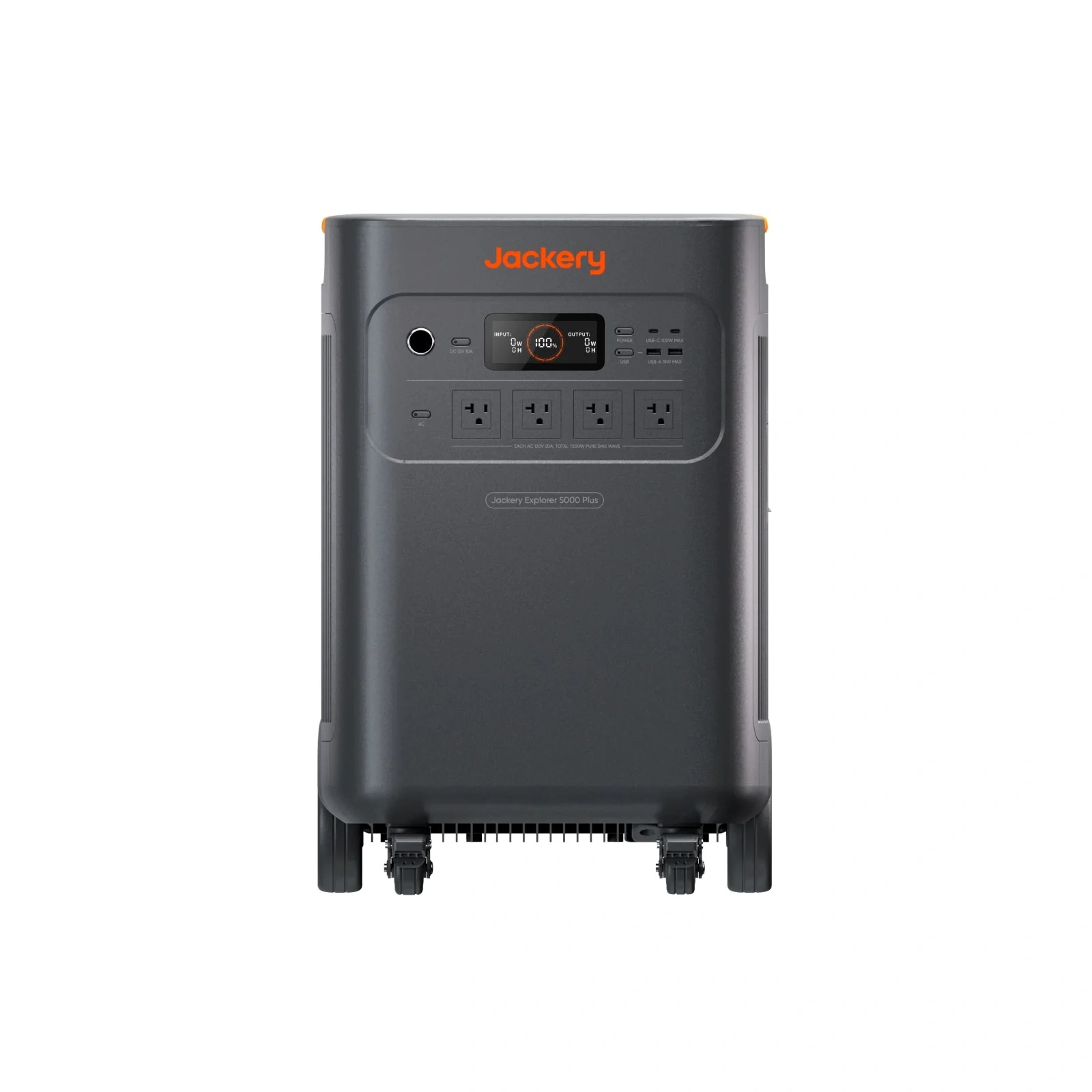
Jackery Explorer 5000 Plus
Jackery's 2025 entry into whole-home territory: 5kWh, a 7200W split-phase inverter, and a claimed 0ms UPS switchover - the spec that gets it recommended for sump pumps and server closets. It expands to 60kWh with battery packs and pairs with Jackery's transfer-switch kits for panel integration. Costco periodically sells it at $2,799, which owners treat as the buy signal since list is $4,299. The good: 240V from a single unit (rare - EcoFlow needs the bigger Pro 3 for that), suitcase wheels that handle gravel, and genuinely fast 4000W solar charging. Owner complaints center on the accessory economics - the transfer switch kit, battery packs, and parallel box add up fast - plus a 134.5-lb chassis you will not lift alone, and Wi-Fi setup that multiple reviewers found finicky. Newer to market, so long-term reliability data is thinner than the 2000 Plus.
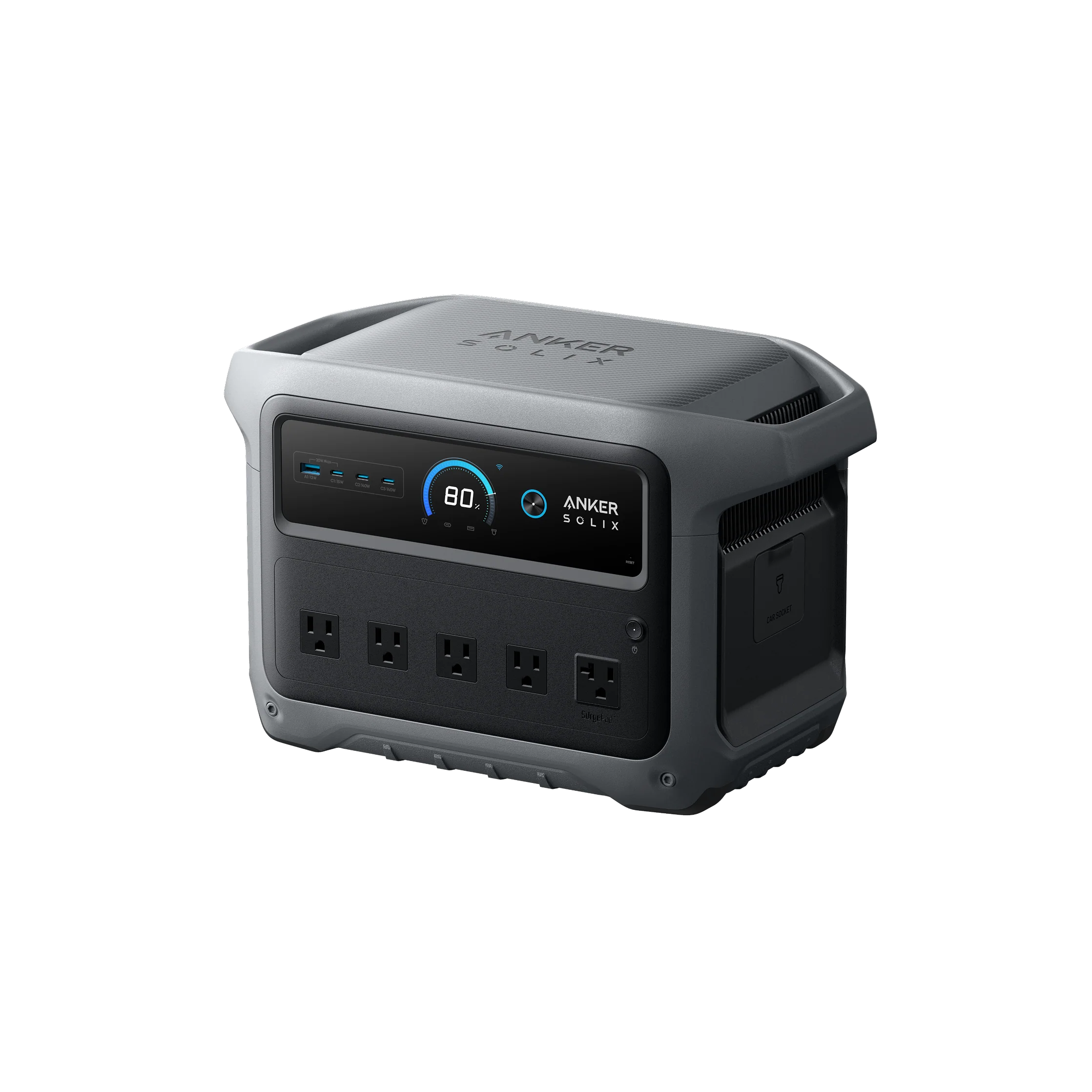
The 2026 'best overall' pick on multiple tested lists, and the current answer in the sub-$500 1kWh knife-fight. Anker took the already-popular C1000, cut 3.5 lbs, bumped output to 2000W, added a 10ms UPS mode, and kept HyperFlash charging (full in 49 minutes). Owners describe it as nearly silent at low loads - the 20dB claim holds for trickle duty, though the fan is audible during 1,600W charging. The catch that surprises upgraders: Gen 2 dropped expansion support entirely - the old BP1000 battery is not compatible, so 1kWh is what you get forever. Other nitpicks from owner threads: USB-A is a weak 12W, and the plastic shell feels less premium than the weight suggests. At its perpetual ~$499 street price, it's the strongest pure value in portable power right now.
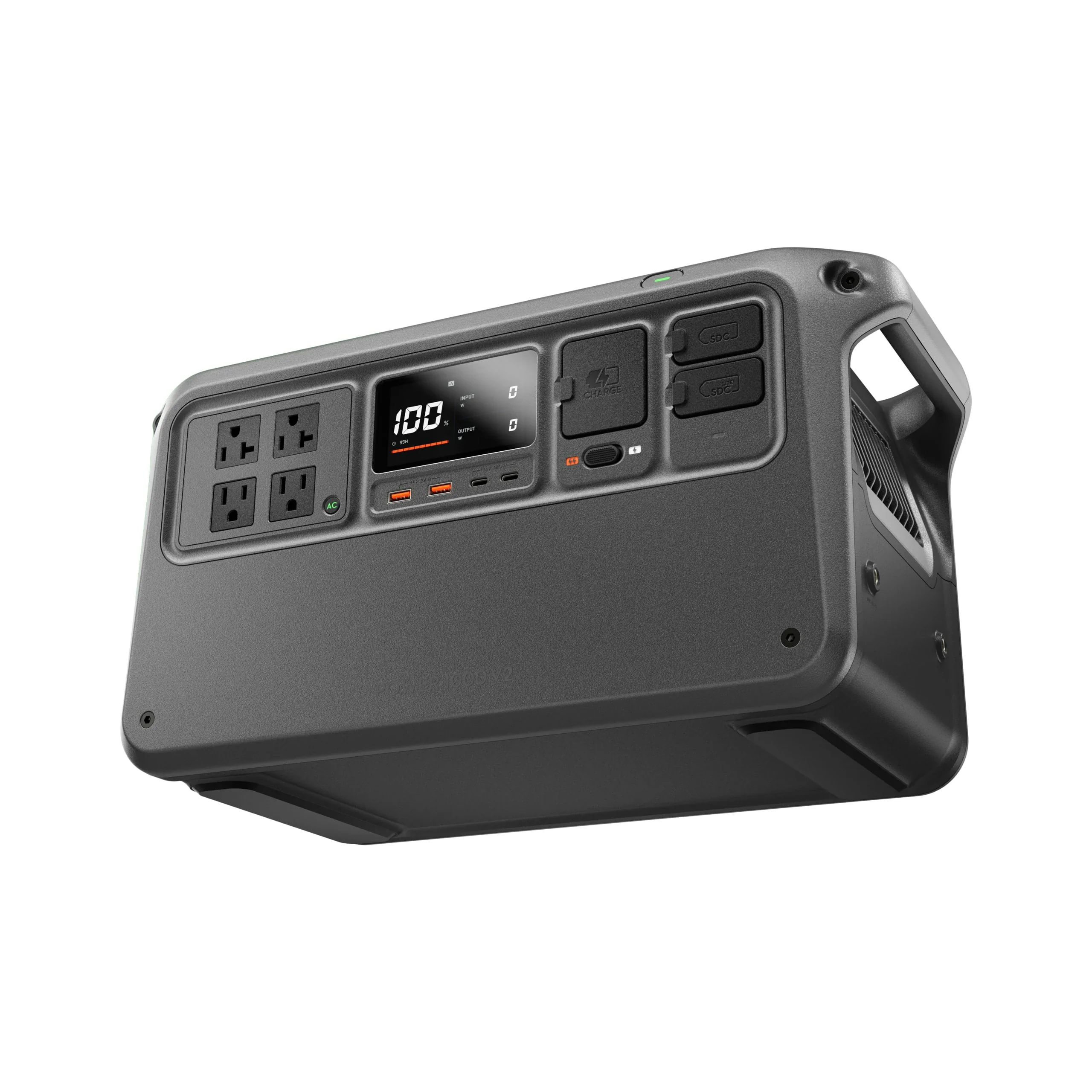
The drone company's second-gen power station, and the sleeper hit of the category - reviewers keep reaching for words like 'premium' and 'polished.' The headline specs are absurd for a 1kWh box: 2,600W continuous output (more than most 2kWh units), 4,400W peak, 0-80% charging in 37 minutes, and operation as low as 26dB - owners confirm it's effectively silent, the quietest unit in this entire roundup. V2 fixed the original's two-outlet stinginess with four AC ports and added Wi-Fi. Expansion runs to 11.2kWh via 2kWh add-on packs. The quirks are DJI-flavored: solar charging requires a proprietary MPPT adapter dongle rather than native XT60 ports, the app is minimal compared to EcoFlow's, and the SDC ports are really designed around fast-charging DJI drone batteries. Warranty is 3 years, extending to 5 if you register in the app.
EcoFlow
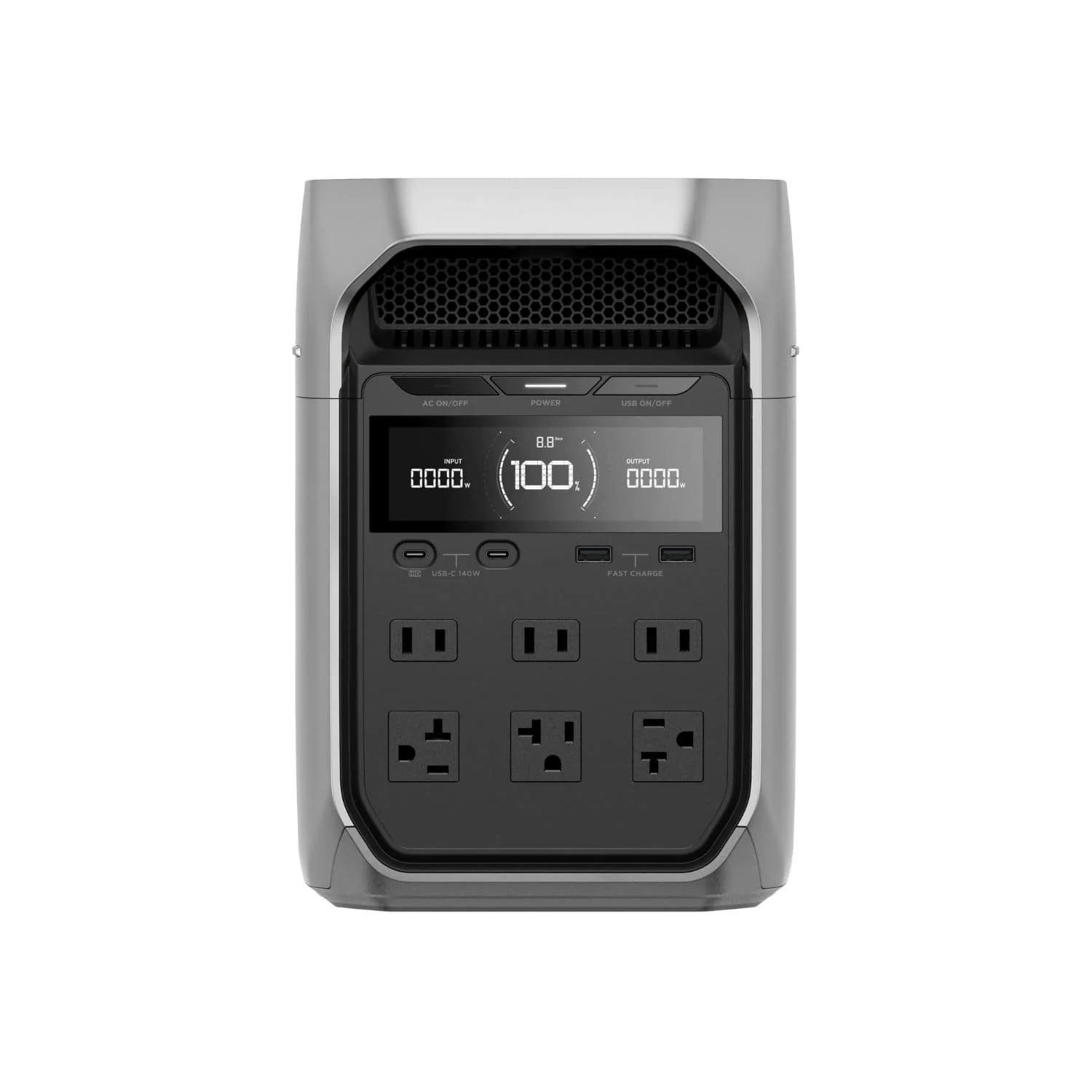
EcoFlow DELTA 3 Plus
The default answer when someone asks r/portablepowerstations for a 1kWh backup unit. The killer feature owners rave about is the 10ms UPS switchover - people literally run NAS boxes, routers, and CPAP machines off it full-time and never notice an outage. It charges 0-100% in 56 minutes, which sounds like marketing until you watch it happen. Real-world quirks: the 30dB quiet claim only holds at idle - fast AC charging spins the fan up noticeably, so owners set a slower charge rate in the app at night. The app requires an EcoFlow account, which annoys the privacy crowd. X-Boost lets it fudge 2200W resistive loads (space heaters, kettles), but induction motors still trip it. Expansion to ~5kWh via extra batteries is handy, though the add-on packs cost almost as much as the unit on sale.
Bluetti
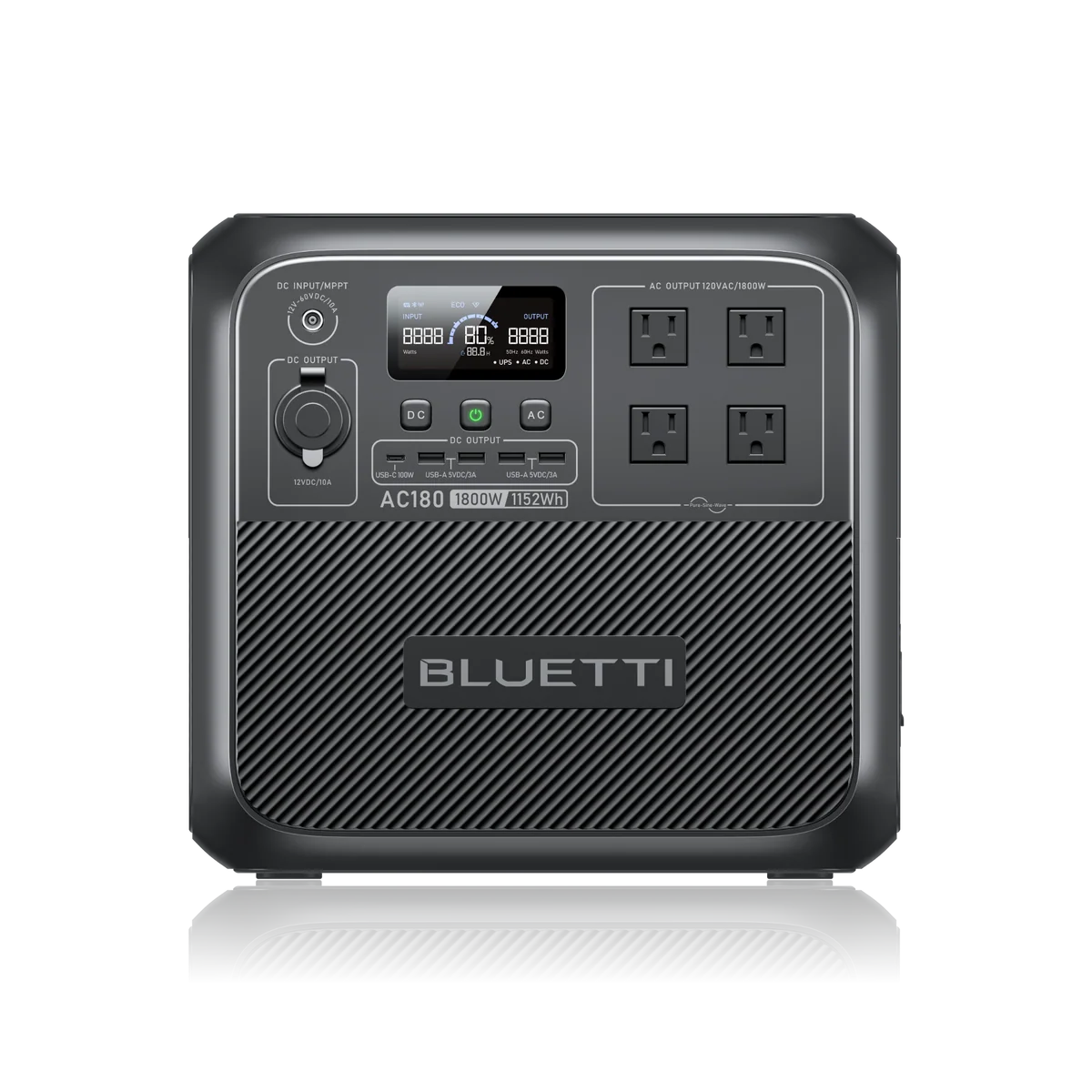
Bluetti AC180
The budget king of the 1kWh class - Amazon's perpetual best-seller with a review count nothing else touches. You get more capacity (1,152Wh) than the Anker or EcoFlow rivals, 1800W output with a 2,700W Power Lifting mode for heaters and kettles, and a wireless charging pad, usually for under $450. Owners are clear-eyed about the trade-offs: the fan runs early and often, even at loads where competitors stay silent - it's the single most repeated complaint in three years of reviews. The 12V DC port is a regulated but weak 10A, there's no expansion support, and at 35.3 lbs it's a full 10 lbs heavier than the Jackery. But for a storm-prep box that lives in a closet and runs the fridge when needed, the price-per-Wh math has kept it the default recommendation for budget buyers since 2023.