Anker
Anker SOLIX C1000 Gen 2
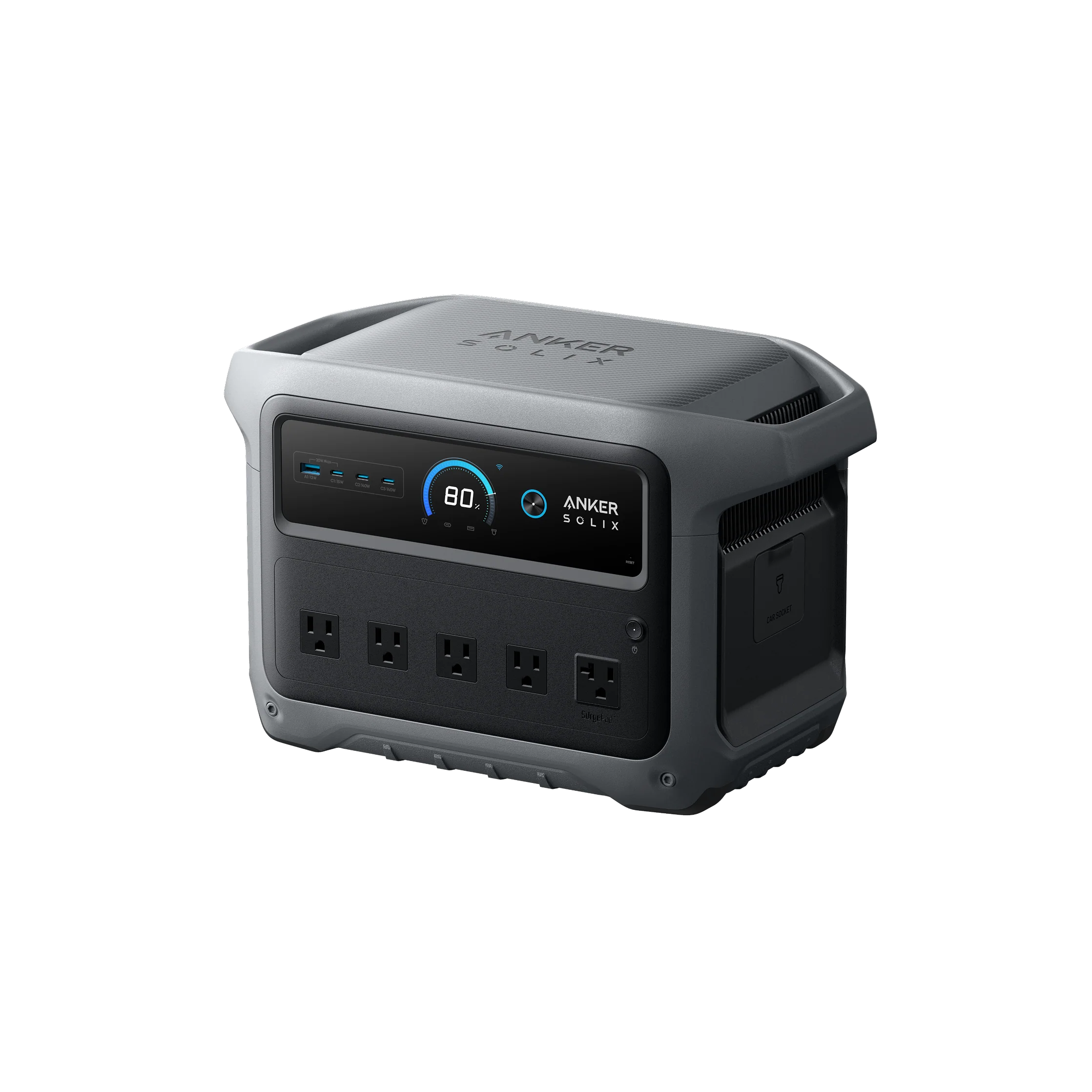
The 2026 'best overall' pick on multiple tested lists, and the current answer in the sub-$500 1kWh knife-fight. Anker took the already-popular C1000, cut 3.5 lbs, bumped output to 2000W, added a 10ms UPS mode, and kept HyperFlash charging (full in 49 minutes). Owners describe it as nearly silent at low loads - the 20dB claim holds for trickle duty, though the fan is audible during 1,600W charging. The catch that surprises upgraders: Gen 2 dropped expansion support entirely - the old BP1000 battery is not compatible, so 1kWh is what you get forever. Other nitpicks from owner threads: USB-A is a weak 12W, and the plastic shell feels less premium than the weight suggests. At its perpetual ~$499 street price, it's the strongest pure value in portable power right now.
Specifications
Highlights
What owners like
- ✓2000W continuous - most powerful 1kWh-class inverter available
- ✓24.9 lbs, lightest-per-watt in its class
- ✓20dB near-silent operation at light loads, confirmed by reviewers
- ✓Full AC recharge in 49 minutes at 1,600W input
- ✓Dual 140W USB-C ports fast-charge laptops without the inverter
- ✓10ms UPS switchover added in Gen 2
Common complaints
- ✗No expansion battery support - BP1000 from Gen 1 is incompatible
- ✗Single USB-A port capped at a feeble 12W
- ✗Fan audible during max-rate charging despite quiet reputation
- ✗600W solar input ceiling is modest for off-grid use
Owner Insightssummarized from Reddit and owner forums
The C1000 Gen 2 is what happens when a charging company decides to win the 1kWh price war on spec sheet alone: 2000W of output, a 49-minute full recharge, a 10ms UPS mode, and 3.5 lbs shaved off its predecessor, all at a street price that keeps drifting below $500. It tops multiple 2026 best-overall lists, and the buyers in owner threads are pragmatists - first-time preppers, home-office workers wanting fridge-plus-router insurance, and RV weekenders who did the math against EcoFlow and Jackery and took the extra watts per dollar.
Testing and ownership reports back the headline numbers: 87% measured efficiency is at the top of the class, and at small loads like a CPAP the unit is effectively silent. The asterisk is everything above small loads - fan noise during HyperFlash charging or near-max output is the most repeated complaint across reviews and owner threads, roughly a desktop tower fan at full speed. The other surprise ambushes Gen 1 upgraders: Anker deleted expansion support entirely, so the old BP1000 battery is a paperweight to this unit and the 1024Wh you buy is the 1024Wh you will always have. Beyond that the gripes are small - 12W USB-A ports, a plasticky shell, and an app that insists on an Anker account.
It is the value pick for anyone confident 1kWh is enough, full stop. Cross-shoppers who might ever want more capacity go EcoFlow DELTA 3 Plus, which gives up 200W of output but adds a real expansion path for similar sale money; weight-and-simplicity buyers go Jackery 1000 v2, which is lighter and calmer but slower and less powerful. With the C1000 Gen 2 spending most of the year at $499 and dipping as low as $389 - and solar bundles with a 200W panel around $599 - it wins most head-to-heads on price alone. Just know what you are giving up: quiet under load, and any future beyond one kilowatt-hour.
What owners like
- +Measured 87% efficiency in load testing - roughly 890Wh actually delivered from the 1024Wh pack
- +Effectively silent at CPAP-sized loads; the fan rarely engages below about 50W
- +Full wall recharge in 49 minutes is the fastest in the 1kWh class
- +600W solar input refills it in under two hours of sun - well beyond what a Jackery 1000 v2 accepts
- +2000W continuous output runs kettles and microwaves that trip same-price rivals
- +24.9 lbs, undercutting nearly every serious 1kWh competitor except the Jackery
- +5-year full-device warranty on a product that usually sells under $500
- +The deal floor keeps sinking - it has been spotted at $389 with free shipping
Common complaints
- −Fan noise is the single most common owner complaint - fast charging sounds like a desktop PC fan at full tilt
- −Expansion was deleted outright: Gen 1's BP1000 battery does not connect, so 1kWh is the permanent ceiling
- −USB-A ports are a feeble 12W - an odd miss from a company famous for chargers
- −The plastic shell feels cheaper than the internals deserve
- −The 20dB quiet claim only holds at trickle loads; work the inverter and it is fiction
- −Solar input's 60V cap rules out wiring many two-panel series strings
- −App features and firmware updates funnel through a mandatory Anker account
- −Leftover Gen 1 bundles with an expansion battery sometimes undercut it, muddying the buy decision
Common Questions
How long will it run a refrigerator?
Does UPS mode work for a desktop computer?
Can I add an expansion battery later?
What solar panels work with it?
Should I buy the Gen 2 or a discounted Gen 1 C1000?
How loud is it really?
Compare the Anker SOLIX C1000 Gen 2
Related units
More from Anker →
Anker's suitcase-style 2kWh veteran - launched 2022, still sold in 2026 because constant $799-999 deals keep it moving. The rolling-luggage design with a pull handle is the feature owners mention most; 67 lbs rolls fine but the top-mounted ports mean bending over a lot. SurgePad pushes it to 3600W briefly, and the TT-30 makes it a natural for smaller RVs. GaNPrime charging does 0-80% in 1.4 hours, which was headline speed in 2022 and is merely fine now. Owner threads flag its age honestly: no UPS mode (there's a delay on switchover), the display washes out in sunlight, solar input caps at 1000W, and the app is the older Anker platform with fewer controls. Reliability sentiment is strong though - lots of three-year owners with zero issues, and the 5-year full-device warranty is unusual for its generation.

The enthusiast favorite for DIY whole-home backup, and the unit r/Anker and diysolarforum threads obsess over. 6000W split-phase with both a NEMA 14-50 and L14-30 on the face means it plugs straight into a generator inlet - no adapters - and can trickle-charge an EV. The Plus revision added 3,200W solar input and gas-generator charging input, fixing the two biggest F3800 complaints. Anker's permanent price cut to $2,499 (from $4,799 launch) made it the per-kWh bargain of the big-battery class. Owner quirks: a documented buzzing noise traced to a ferrite bead that firmware only partially fixed, fans that are unapologetically loud during 2,400W charging, and Home Power Panel installs that depend on finding a willing electrician. Support experiences vary wildly in owner reports - some get instant advance replacements, others chase tickets for weeks.
Anker
Anker SOLIX X1
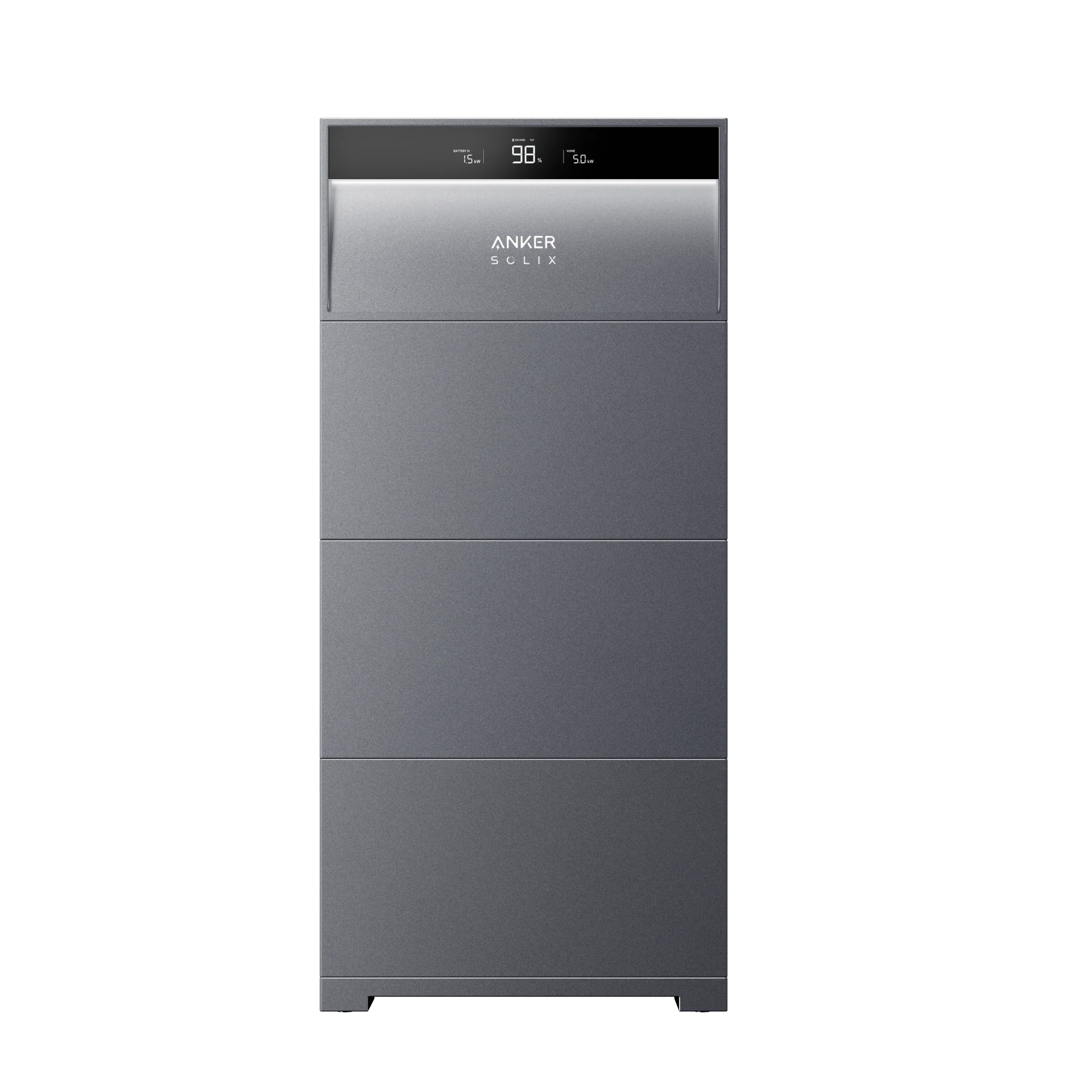
Anker's professionally-installed system, built from slim 5kWh modules into the best-looking cabinet in the business - reviewers keep calling it the battery you don't need to hide. Price shown is a typical installed 15kWh configuration (~$9,750-11,000 hardware plus $1,500-5,000 installation). The 6kW/12kW-peak power module handles essential-loads or whole-home duty, modules run at full power from -4°F thanks to per-pack thermal management, and systems parallel to a monstrous 180kWh. Reviewers praise the modular economics - add 5kWh at a time instead of a whole second cabinet. The catch owners and forum threads flag: the certified-installer network is much thinner than Tesla's or Enphase's, so quotes swing wildly and some regions simply have no coverage; the app is solid but young; and 12kWh usable from the '15kWh' stack (90.2% round-trip) needs reading of the fine print.
Jackery
Jackery Explorer 1000 v2
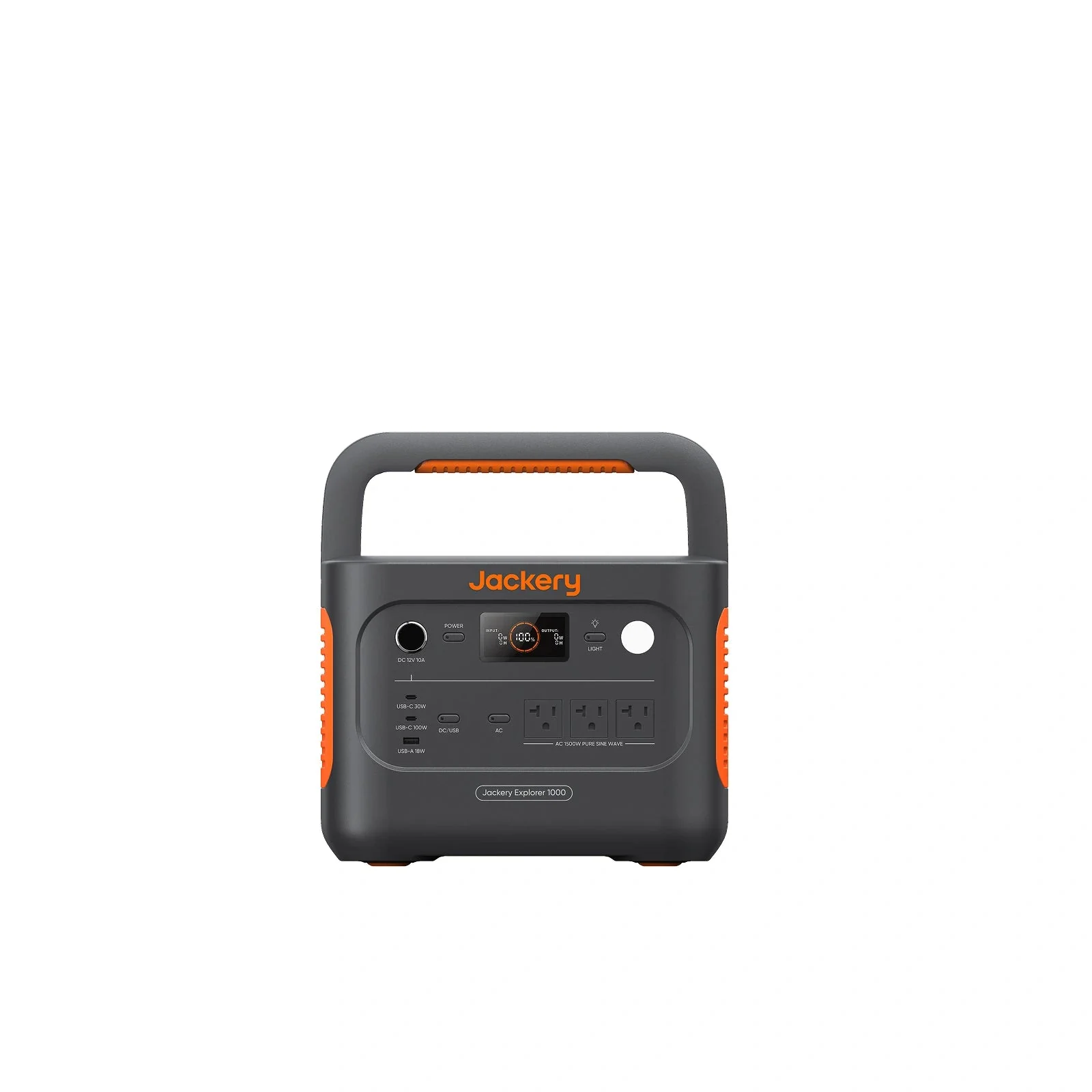
Jackery's LiFePO4 do-over of the best-selling power station ever, and the one people actually mean when they say 'just get a Jackery.' At 23.8 lbs it's several pounds lighter than every 1kWh rival, which is why campers and older buyers gravitate to it. The 1500W inverter (3000W surge) runs coffee makers and microwaves fine; owners confirm the quiet-fan claim - it's noticeably more pleasant than an AC180 under load. Real-world knocks: there's no expansion port at all, the 20ms UPS switchover is fine for a fridge but not marketed for computers, and the 1500W output trails the 1800-2000W competition on paper. It lives on sale - $429-499 happens monthly - so nobody should pay list. The foldable handle and genuinely idiot-proof interface make it the one to recommend to non-technical relatives.
Bluetti
Bluetti AC180
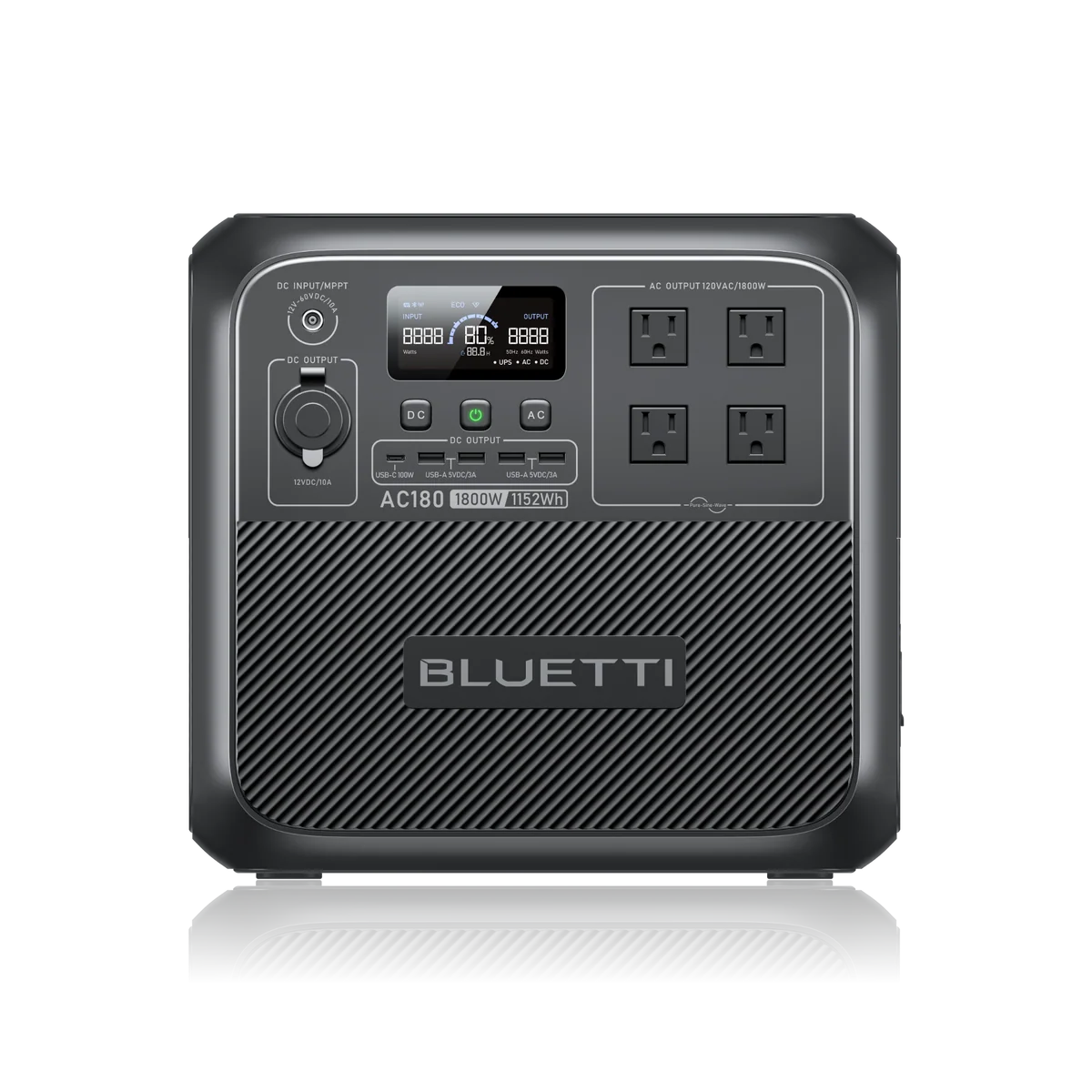
The budget king of the 1kWh class - Amazon's perpetual best-seller with a review count nothing else touches. You get more capacity (1,152Wh) than the Anker or EcoFlow rivals, 1800W output with a 2,700W Power Lifting mode for heaters and kettles, and a wireless charging pad, usually for under $450. Owners are clear-eyed about the trade-offs: the fan runs early and often, even at loads where competitors stay silent - it's the single most repeated complaint in three years of reviews. The 12V DC port is a regulated but weak 10A, there's no expansion support, and at 35.3 lbs it's a full 10 lbs heavier than the Jackery. But for a storm-prep box that lives in a closet and runs the fridge when needed, the price-per-Wh math has kept it the default recommendation for budget buyers since 2023.
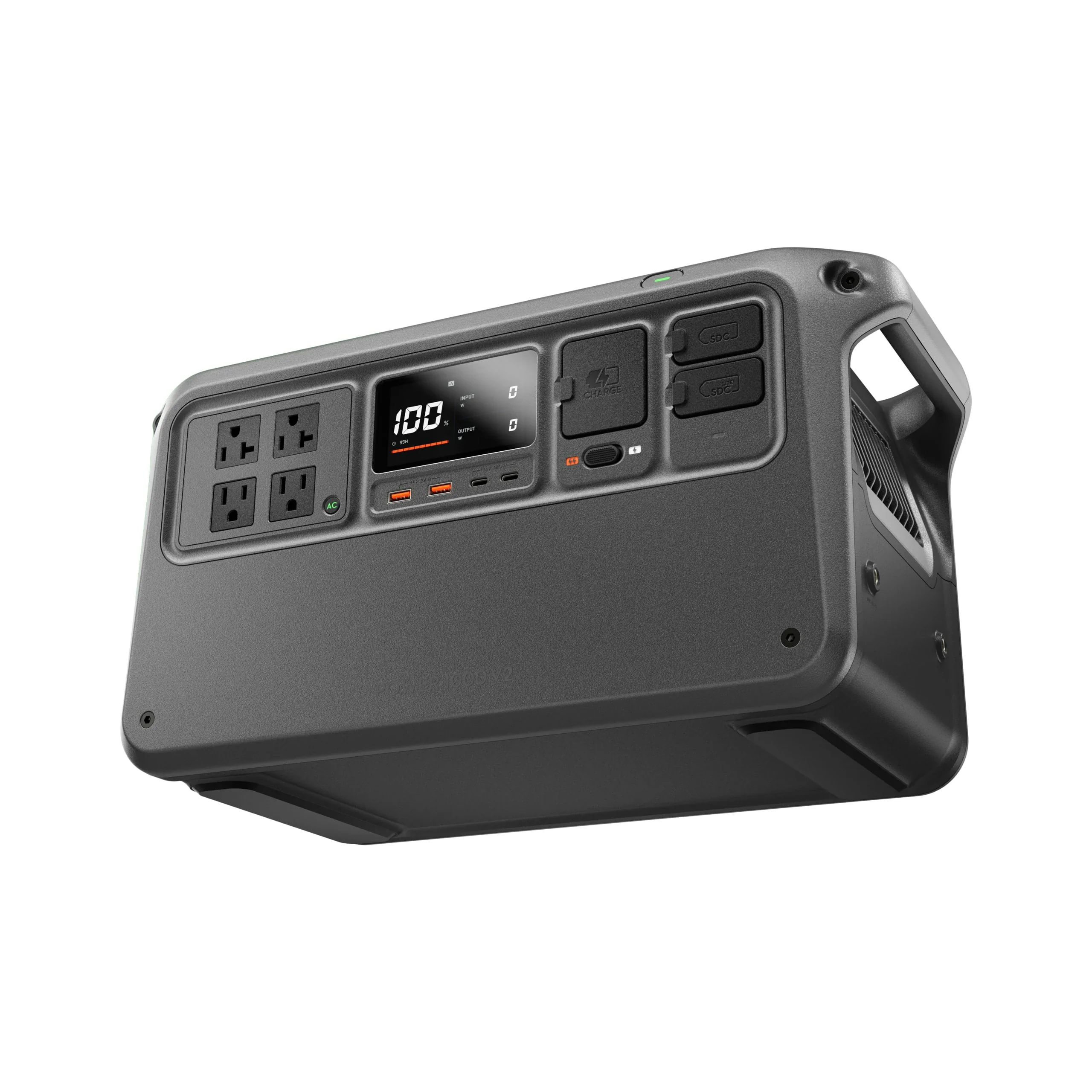
The drone company's second-gen power station, and the sleeper hit of the category - reviewers keep reaching for words like 'premium' and 'polished.' The headline specs are absurd for a 1kWh box: 2,600W continuous output (more than most 2kWh units), 4,400W peak, 0-80% charging in 37 minutes, and operation as low as 26dB - owners confirm it's effectively silent, the quietest unit in this entire roundup. V2 fixed the original's two-outlet stinginess with four AC ports and added Wi-Fi. Expansion runs to 11.2kWh via 2kWh add-on packs. The quirks are DJI-flavored: solar charging requires a proprietary MPPT adapter dongle rather than native XT60 ports, the app is minimal compared to EcoFlow's, and the SDC ports are really designed around fast-charging DJI drone batteries. Warranty is 3 years, extending to 5 if you register in the app.