
Anker
Anker SOLIX F2000 (PowerHouse 767)
Anker's suitcase-style 2kWh veteran - launched 2022, still sold in 2026 because constant $799-999 deals keep it moving. The rolling-luggage design with a pull handle is the feature owners mention most; 67 lbs rolls fine but the top-mounted ports mean bending over a lot. SurgePad pushes it to 3600W briefly, and the TT-30 makes it a natural for smaller RVs. GaNPrime charging does 0-80% in 1.4 hours, which was headline speed in 2022 and is merely fine now. Owner threads flag its age honestly: no UPS mode (there's a delay on switchover), the display washes out in sunlight, solar input caps at 1000W, and the app is the older Anker platform with fewer controls. Reliability sentiment is strong though - lots of three-year owners with zero issues, and the 5-year full-device warranty is unusual for its generation.
Specifications
Highlights
What owners like
- ✓Wheeled suitcase form factor - easiest 2kWh unit to move solo
- ✓2400W with 3600W SurgePad handles RV air conditioners
- ✓Long owner track record with low reported failure rates
- ✓3x 100W USB-C - great port loadout even by 2026 standards
- ✓5-year full-device warranty
- ✓Frequently discounted to $799-899
Common complaints
- ✗No true UPS mode - switchover gap rules out server/CPAP duty
- ✗1000W solar ceiling is dated for a 2kWh unit
- ✗Display hard to read in daylight per multiple owners
- ✗Older app platform lacks scheduling and fine-grained controls
- ✗Only one expansion battery supported (4kWh max)
Owner Insightssummarized from Reddit and owner forums
The F2000 is the elder statesman of 2kWh stations - a 2022 design still selling in 2026 purely because relentless $799-999 promotions keep it the cheapest tier-one 2kWh box with wheels. The rolling-suitcase form factor remains its signature: owners drag it across campsites, garages, and RV bays one-handed instead of deadlifting 67 lbs. Buyers today are almost exclusively deal-hunters and RVers who checked the reliability record, saw the price, and decided the 2022-era feature set was a fair trade.
That reliability record is the real story. Long-term owners - many three years in with daily or weekly cycling - report remarkably few failures, and the 4.3-star aggregate across thousands of reviews reflects it. The exceptions are specific and worth knowing: the most-reported failure mode is a firmware update bricking a unit, which has bred a community habit of not updating unless something is broken, and early production saw isolated reports of reversed AC outlet polarity plus exposed pins on the parallel XT60 adapter. Day to day, the honest annoyances are its age showing - no UPS mode of any kind, a screen that vanishes in sunlight, top-mounted ports, and the older Anker app with bare-bones controls.
It fits RVers and outage preppers who want proven hardware and could not care less about app polish or seamless switchover. The awkward part is that its fiercest competition is in-house: Anker's C2000 Gen 2 has sold for $719 with more modern electronics, and its expansion bundle hits 4kWh for around $1,177-1,249 - roughly what an F2000 plus BP760 pack costs. The Jackery Explorer 2000 Plus offers a bigger expansion ceiling for similar sale money, and EcoFlow's DELTA 3 Max Plus owns the UPS use case. Buy the F2000 when it dips to $799 and you need wheels and a track record; look elsewhere if a computer will ever hang off it.
What owners like
- +Three-year owners reporting zero issues are all over the forums - reliability sentiment is genuinely strong
- +LFP cells rated 3,000 cycles to 80% capacity, with a 5-year full-device warranty rare for its generation
- +The luggage handle and wheels make 67 lbs a one-person job across a campsite or garage
- +GaNPrime charging still delivers 0-80% in about 1.4 hours years after launch
- +Dual AC-plus-solar charging tops it off in roughly 2.5 hours
- +TT-30 outlet is plug-and-play for smaller 30A RVs
- +SurgePad muscles out 3600W briefly for stubborn motor starts
- +The $799-999 deal cadence has held steady for years, so a good price is always near
Common complaints
- −No UPS mode at all - there is a real switchover delay, so desktops and NAS boxes are out
- −The most-reported failure mode is a firmware update bricking the unit, so owners skip non-essential updates
- −Scattered reports of reversed AC outlet polarity and exposed pins on the parallel XT60 adapter
- −Every port lives on the top deck, so you bend over the luggage-style body constantly
- −Display washes out in direct sunlight - awkward for an outdoor product
- −Runs on Anker's older app platform with noticeably fewer controls than current SOLIX models
- −Expansion stops at one BP760 pack - 4kWh total, no further
- −Anker's own newer C2000 Gen 2 now undercuts it on price and features, which stings
Common Questions
How long will it run a refrigerator?
Can I use it as a UPS for my computer?
What solar panels can I connect?
Is the BP760 expansion battery worth buying?
Should I keep the firmware updated?
How should I store it between uses?
Related units
More from Anker →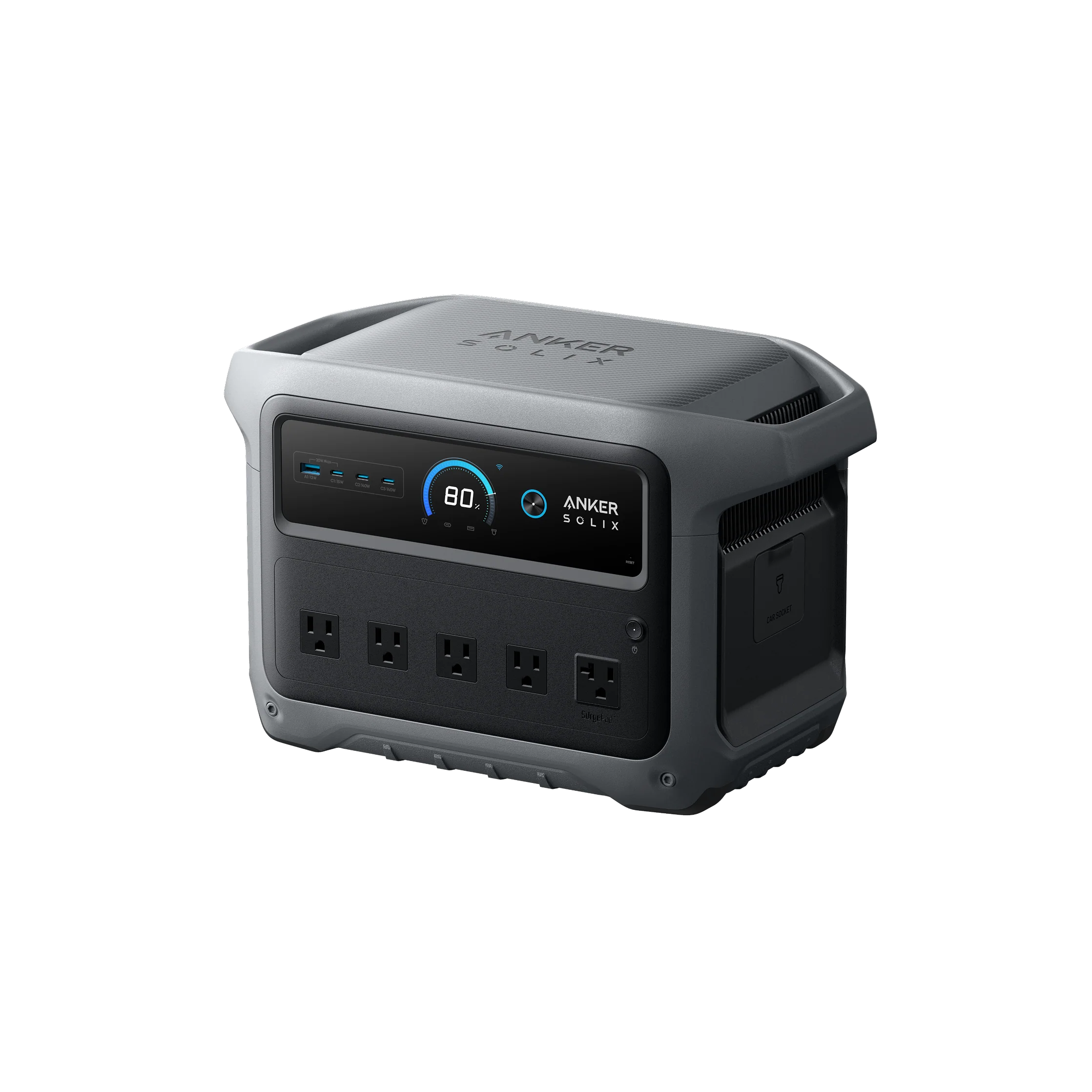
The 2026 'best overall' pick on multiple tested lists, and the current answer in the sub-$500 1kWh knife-fight. Anker took the already-popular C1000, cut 3.5 lbs, bumped output to 2000W, added a 10ms UPS mode, and kept HyperFlash charging (full in 49 minutes). Owners describe it as nearly silent at low loads - the 20dB claim holds for trickle duty, though the fan is audible during 1,600W charging. The catch that surprises upgraders: Gen 2 dropped expansion support entirely - the old BP1000 battery is not compatible, so 1kWh is what you get forever. Other nitpicks from owner threads: USB-A is a weak 12W, and the plastic shell feels less premium than the weight suggests. At its perpetual ~$499 street price, it's the strongest pure value in portable power right now.

The enthusiast favorite for DIY whole-home backup, and the unit r/Anker and diysolarforum threads obsess over. 6000W split-phase with both a NEMA 14-50 and L14-30 on the face means it plugs straight into a generator inlet - no adapters - and can trickle-charge an EV. The Plus revision added 3,200W solar input and gas-generator charging input, fixing the two biggest F3800 complaints. Anker's permanent price cut to $2,499 (from $4,799 launch) made it the per-kWh bargain of the big-battery class. Owner quirks: a documented buzzing noise traced to a ferrite bead that firmware only partially fixed, fans that are unapologetically loud during 2,400W charging, and Home Power Panel installs that depend on finding a willing electrician. Support experiences vary wildly in owner reports - some get instant advance replacements, others chase tickets for weeks.
Anker
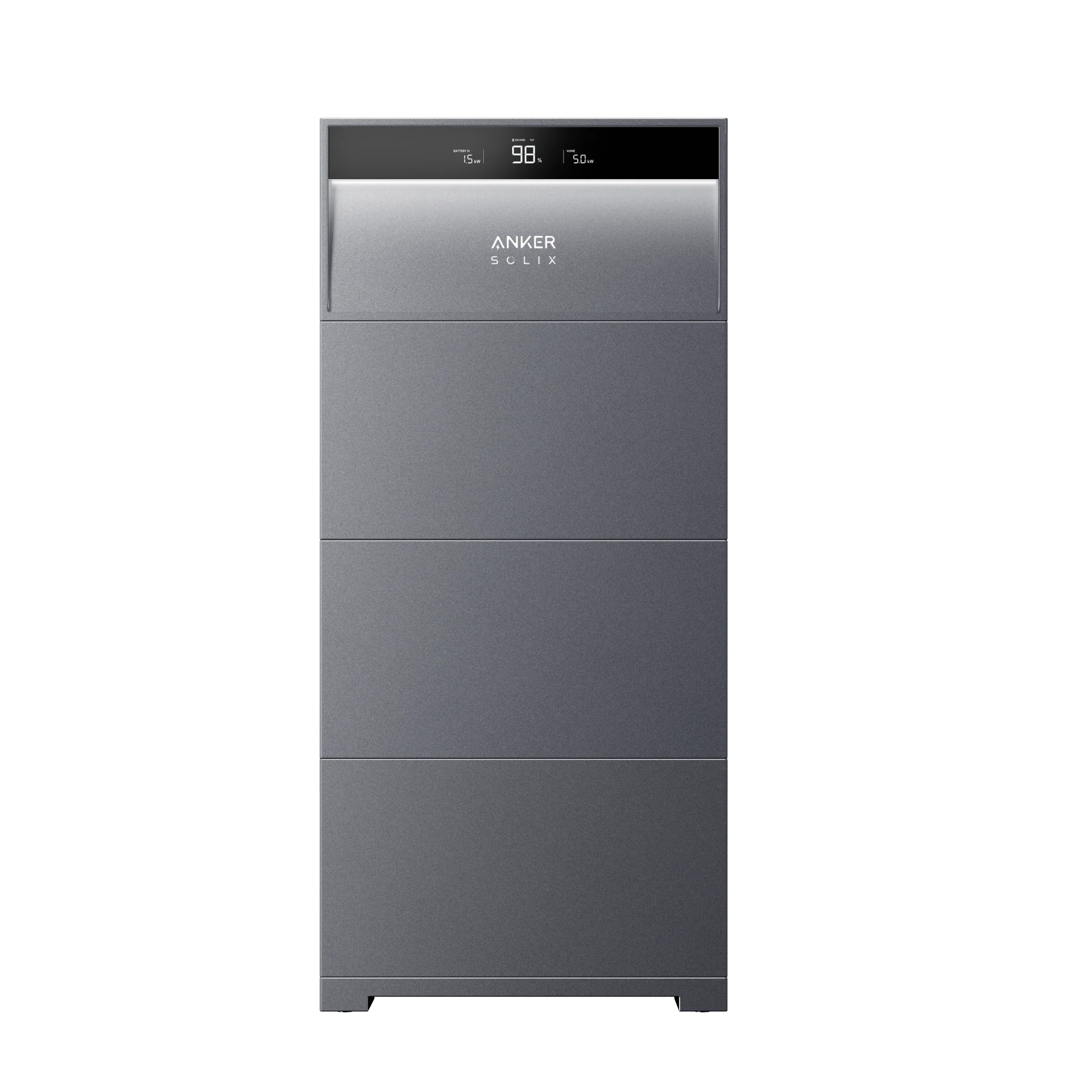
Anker SOLIX X1
Anker's professionally-installed system, built from slim 5kWh modules into the best-looking cabinet in the business - reviewers keep calling it the battery you don't need to hide. Price shown is a typical installed 15kWh configuration (~$9,750-11,000 hardware plus $1,500-5,000 installation). The 6kW/12kW-peak power module handles essential-loads or whole-home duty, modules run at full power from -4°F thanks to per-pack thermal management, and systems parallel to a monstrous 180kWh. Reviewers praise the modular economics - add 5kWh at a time instead of a whole second cabinet. The catch owners and forum threads flag: the certified-installer network is much thinner than Tesla's or Enphase's, so quotes swing wildly and some regions simply have no coverage; the app is solid but young; and 12kWh usable from the '15kWh' stack (90.2% round-trip) needs reading of the fine print.
Bluetti
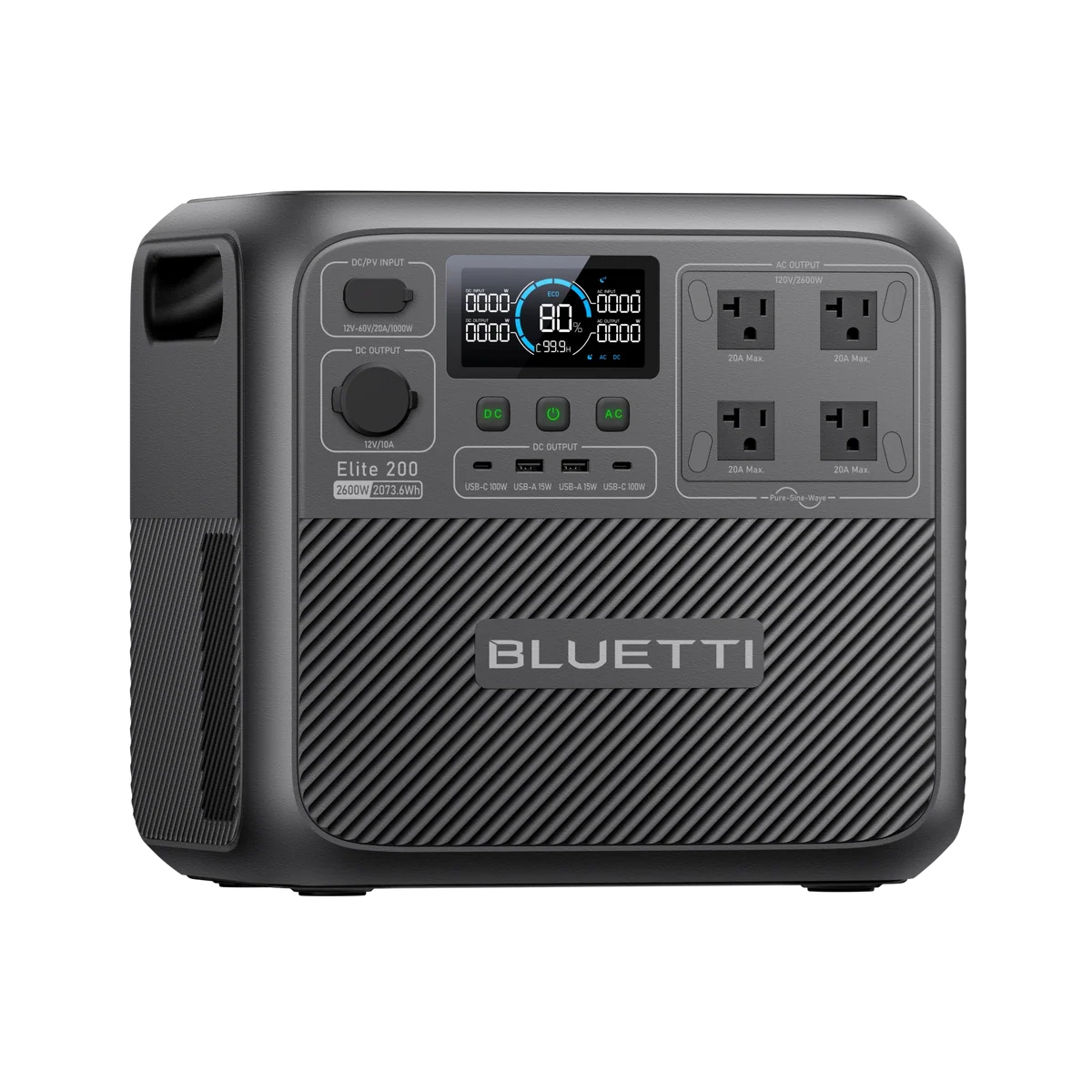
Bluetti Elite 200 V2
Bluetti's 2025-generation 2kWh flagship and the unit that reset expectations for what $999 buys: a 6,000-cycle LiFePO4 pack (cycle it daily and it still holds 80% in 2043), a stronger 2,600W inverter than anything else in class, and a chassis nearly 10 lbs lighter than the AC200L it effectively replaces. Vanlife reviewers in particular have adopted it as the default build battery. Owners praise the 50-minute 0-80% charging and the noticeably better fan tuning versus older Bluettis - it's not silent, but it no longer howls at 200W loads. The trade-offs are real though: no expansion port at all (that's what Apex 300 is for), solar input caps at 1,000W, and there's no wireless pad or fancy extras. If your capacity needs are fixed at ~2kWh, this is arguably the best-engineered unit in the segment right now.
EcoFlow
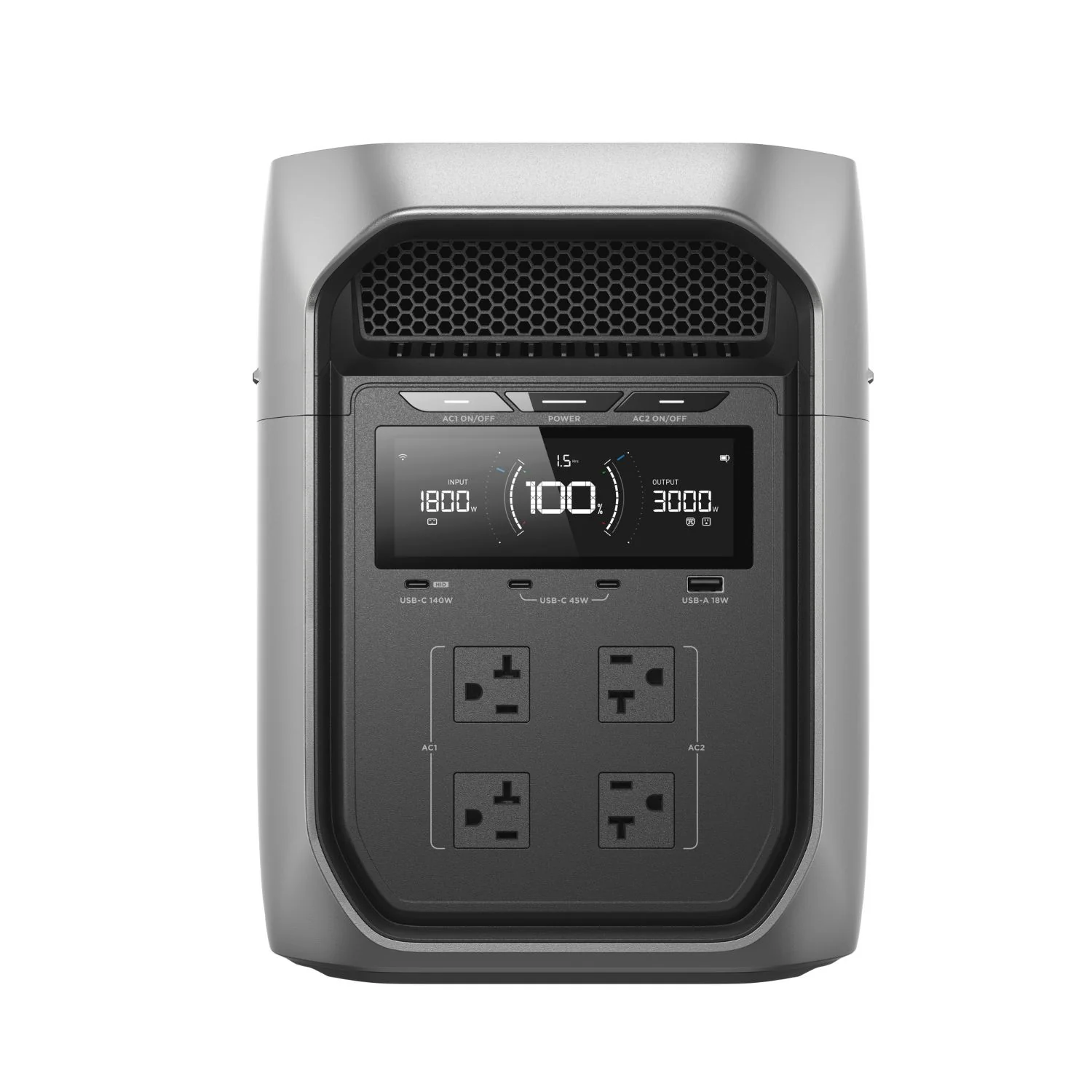
EcoFlow DELTA 3 Max Plus
The 2025-2026 refresh of EcoFlow's mid-size class and a current 'best for home backup' pick in several tested roundups. You get 2kWh and a 3000W inverter - enough to run a microwave and fridge simultaneously - at a price that undercuts the old Delta 2 Max's launch by hundreds. Owners like the practical stuff: 0-80% in about 68 minutes, X-Boost handling 3800W resistive loads, and expansion to 10kWh if backup needs grow. The dual side handles make the 49-lb carry manageable for one person. Quirks from owner threads mirror the rest of the Delta 3 line: fan spins up audibly during fast charging, idle drain means you shouldn't store it with AC output enabled, and the app occasionally loses Wi-Fi pairing until you power-cycle. Solid pick if 1kWh feels tight but 4kWh-class weight and price feel excessive.
Bluetti
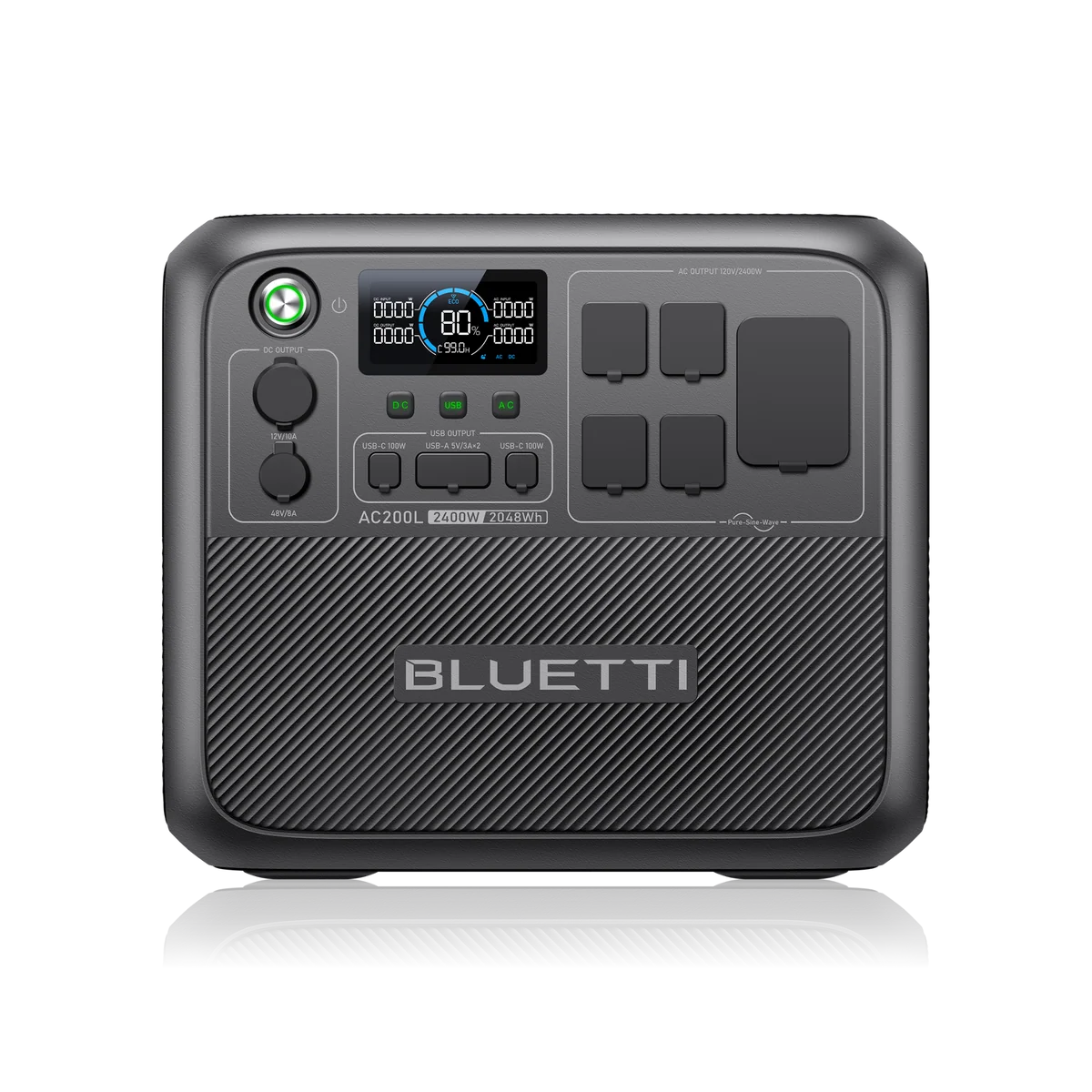
Bluetti AC200L
Bluetti's mainstream 2kWh unit and the expandability play at this price: it accepts B300K packs (up to ~8kWh) that also work with the bigger AC500 and Apex 300, so nothing you buy gets orphaned. The 30A TT-30 outlet plus a 48V RV DC port make it quietly one of the best RV units under $1,000. A 2,400W inverter with 3,600W Power Lifting covers tools and kitchen gear. Owner sentiment: solid hardware, middling software - app pairing drops and slow firmware updates are recurring gripes, and the cooling fans are audible under load in classic Bluetti fashion. At 62.4 lbs with no wheels, repositioning it is a deliberate act. Street pricing settled around $899 in 2026, and the periodic $799 deals make it a strong alternative to the Jackery 2000 Plus when expansion cost matters more than quietness.