
Anker
Anker SOLIX F3800 Plus
The enthusiast favorite for DIY whole-home backup, and the unit r/Anker and diysolarforum threads obsess over. 6000W split-phase with both a NEMA 14-50 and L14-30 on the face means it plugs straight into a generator inlet - no adapters - and can trickle-charge an EV. The Plus revision added 3,200W solar input and gas-generator charging input, fixing the two biggest F3800 complaints. Anker's permanent price cut to $2,499 (from $4,799 launch) made it the per-kWh bargain of the big-battery class. Owner quirks: a documented buzzing noise traced to a ferrite bead that firmware only partially fixed, fans that are unapologetically loud during 2,400W charging, and Home Power Panel installs that depend on finding a willing electrician. Support experiences vary wildly in owner reports - some get instant advance replacements, others chase tickets for weeks.
Specifications
Highlights
What owners like
- ✓6000W/240V split-phase from one unit - plugs into standard generator inlets
- ✓NEMA 14-50 enables emergency EV charging, a genuinely unique trick
- ✓Expands to 26.9kWh per unit, 53.8kWh paired
- ✓3,200W solar input recharges the base unit in under 2 sun-hours
- ✓Gas generator input for indefinite off-grid runtime
- ✓$2,499 permanent pricing is the best $/kWh among 240V portables
Common complaints
- ✗Known ferrite-bead buzz under load; firmware patch reduced but didn't eliminate it
- ✗Fans are loud during fast charging - garage placement recommended
- ✗132 lbs; wheels are small and struggle off pavement
- ✗Home Power Panel adds ~$1,500+ plus electrician for panel integration
- ✗Anker support quality is inconsistent per owner reports
Owner Insightssummarized from Reddit and owner forums
The F3800 Plus is what happens when a portable power station grows up into home infrastructure. It is the unit diysolarforum and r/Anker builders standardize on because it solves the 240V problem in one box: a NEMA 14-50 and an L14-30 right on the face, 6,000W of split-phase output, and a straight shot into a generator inlet with no adapter Tetris. The buyers are mostly homeowners who priced out a Generac or a permanent battery wall, flinched, and realized $2,499 gets them 80% of the outcome with zero permits required for the basic inlet setup.
Ownership has been a firmware story. Early units idled at 50-70W - enough to drain the whole battery in about two days - and a documented ferrite-bead buzz rattled under heavy startup loads. Anker actually shipped fixes: a standby update cut idle draw roughly in half, and the buzz patch helped most (though a few owners only killed it by rearranging their expansion batteries). Fans stay civil under normal fridge-and-lights loads but roar during 2,400W wall charging or 4,000W+ output. The 3,200W solar input with its 11-165V window is the sleeper feature - owners run strings of cheap full-size residential panels straight in. Support experiences genuinely split the community: advance replacements for some, multi-week ticket purgatory for others.
This is the pick for DIYers who want whole-home-adjacent backup without an installed system, and the per-kWh math after the permanent price cut embarrasses rivals - the EcoFlow DELTA Pro Ultra starts well north of $3,000 for its inverter alone, and Goal Zero's Yeti Pro 4000 costs $900 more with less output and no 240V. The Bluetti Apex 300 undercuts it at $1,529 but gives up 2,160W of continuous output. Cross-shoppers who chose the F3800 Plus usually cite the outlet layout and the constant bundle discounts; the ones who walked went Apex 300 for price or DELTA Pro Ultra for a more polished home-integration ecosystem.
What owners like
- +6,000W split-phase 240V from a single unit - well pumps and dryers run without pairing two boxes
- +Firmware update cut idle drain roughly in half, fixing the most complained-about early flaw
- +Solar input accepts 11-165V strings, so full-size residential panels connect without rewiring
- +Generator AC input only fires your gas generator when the battery actually needs a charge, slashing fuel burn
- +Built-in wheels and telescoping handle make the 132 lbs manageable on flat ground
- +Bundle deals are relentless - owners report kits with an expansion battery and Home Power Panel landing under $4,700
- +Can trickle-charge an EV enough for an emergency 10-15 miles of range
- +Six BP3800 packs per unit takes one station to 26.9kWh, and a paired set to 53.8kWh
Common complaints
- −Pre-update firmware let the unit eat 50-70W just sitting idle - it could drain itself in about two days
- −The ferrite-bead buzz under heavy AC startup loads was only partially fixed by firmware; some owners silenced it by physically reshuffling their battery stack
- −Full-speed 2,400W wall charging is loud enough that the garage becomes its de facto home
- −Home Power Panel installs need a permitted electrician, and owner quotes for the same job vary by hundreds of dollars
- −Support is a coin flip - some owners get advance replacements in days, others chase tickets for weeks
- −132 lbs means stairs are strictly a two-person job, wheels or not
- −Expansion batteries rarely go on sale outside bundles, so growing the system later costs more than buying the kit upfront
- −No weather rating at all - this lives indoors, full stop
Common Questions
Can the F3800 Plus really power my whole house through a transfer switch?
How long will it actually run a refrigerator?
What are the solar input limits?
Is the expansion battery worth it versus buying a second unit?
How should I store it between outages?
How is Anker's warranty support when something goes wrong?
Compare the Anker SOLIX F3800 Plus
Related units
More from Anker →
Anker's suitcase-style 2kWh veteran - launched 2022, still sold in 2026 because constant $799-999 deals keep it moving. The rolling-luggage design with a pull handle is the feature owners mention most; 67 lbs rolls fine but the top-mounted ports mean bending over a lot. SurgePad pushes it to 3600W briefly, and the TT-30 makes it a natural for smaller RVs. GaNPrime charging does 0-80% in 1.4 hours, which was headline speed in 2022 and is merely fine now. Owner threads flag its age honestly: no UPS mode (there's a delay on switchover), the display washes out in sunlight, solar input caps at 1000W, and the app is the older Anker platform with fewer controls. Reliability sentiment is strong though - lots of three-year owners with zero issues, and the 5-year full-device warranty is unusual for its generation.
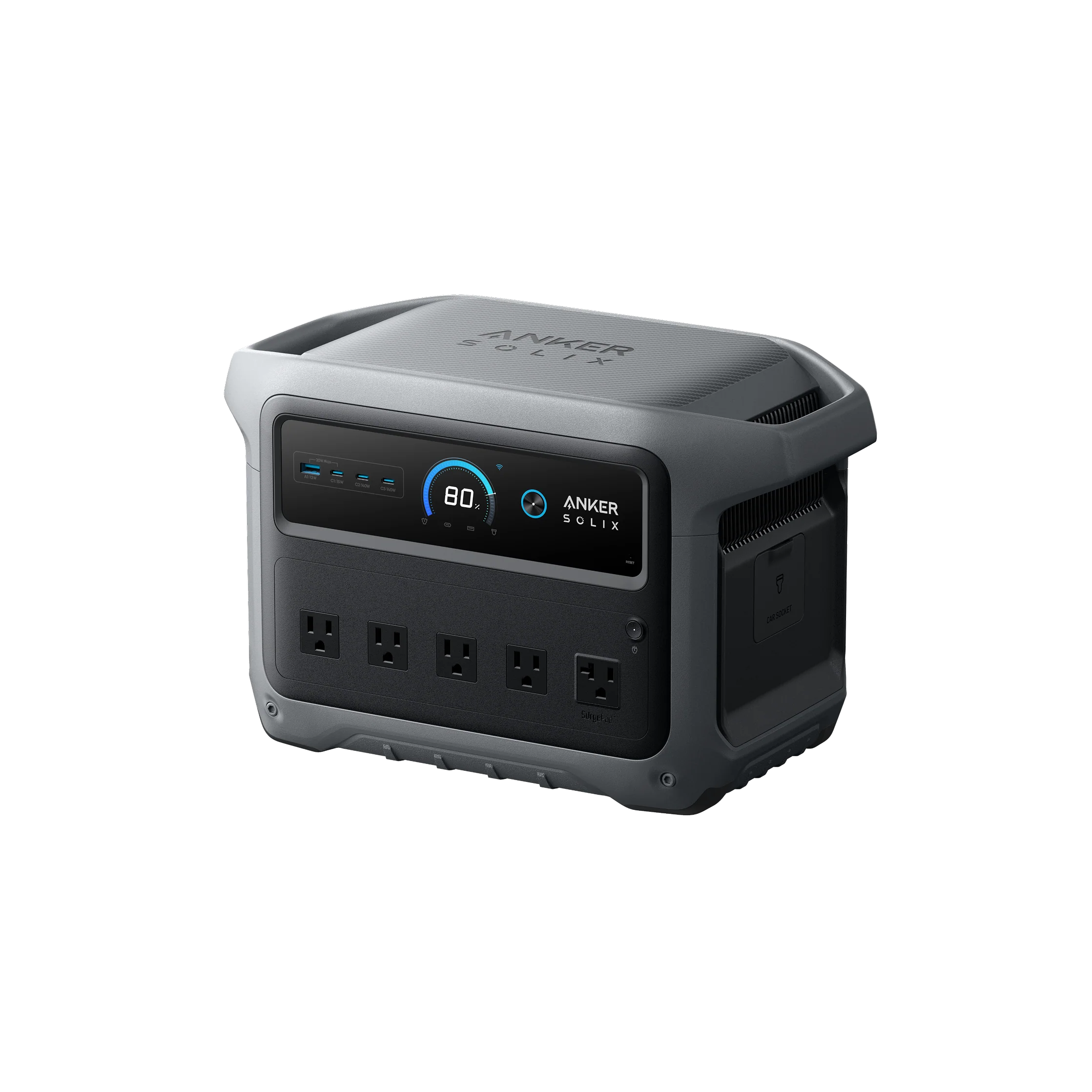
The 2026 'best overall' pick on multiple tested lists, and the current answer in the sub-$500 1kWh knife-fight. Anker took the already-popular C1000, cut 3.5 lbs, bumped output to 2000W, added a 10ms UPS mode, and kept HyperFlash charging (full in 49 minutes). Owners describe it as nearly silent at low loads - the 20dB claim holds for trickle duty, though the fan is audible during 1,600W charging. The catch that surprises upgraders: Gen 2 dropped expansion support entirely - the old BP1000 battery is not compatible, so 1kWh is what you get forever. Other nitpicks from owner threads: USB-A is a weak 12W, and the plastic shell feels less premium than the weight suggests. At its perpetual ~$499 street price, it's the strongest pure value in portable power right now.
Anker
Anker SOLIX X1
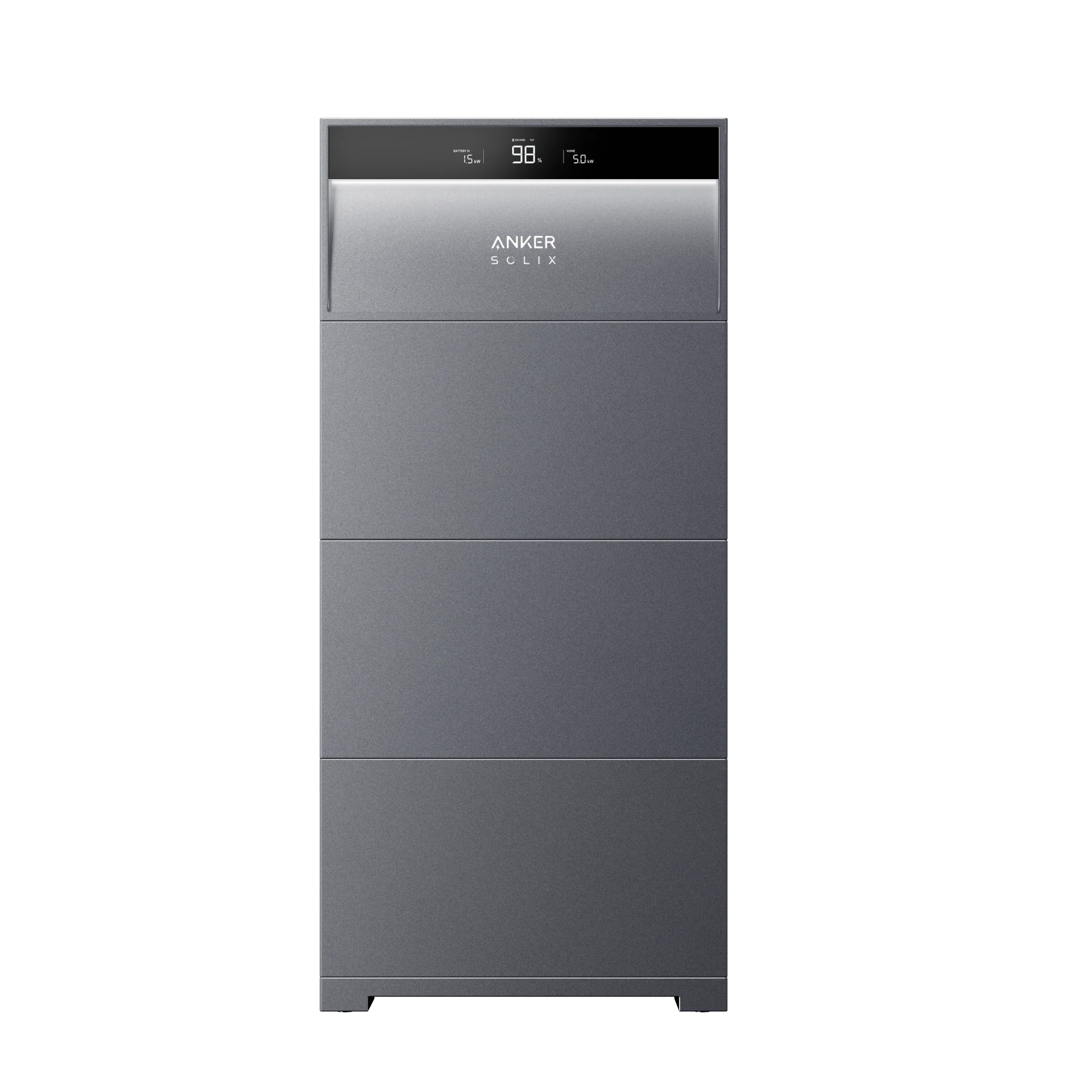
Anker's professionally-installed system, built from slim 5kWh modules into the best-looking cabinet in the business - reviewers keep calling it the battery you don't need to hide. Price shown is a typical installed 15kWh configuration (~$9,750-11,000 hardware plus $1,500-5,000 installation). The 6kW/12kW-peak power module handles essential-loads or whole-home duty, modules run at full power from -4°F thanks to per-pack thermal management, and systems parallel to a monstrous 180kWh. Reviewers praise the modular economics - add 5kWh at a time instead of a whole second cabinet. The catch owners and forum threads flag: the certified-installer network is much thinner than Tesla's or Enphase's, so quotes swing wildly and some regions simply have no coverage; the app is solid but young; and 12kWh usable from the '15kWh' stack (90.2% round-trip) needs reading of the fine print.
EcoFlow
EcoFlow DELTA Pro 3
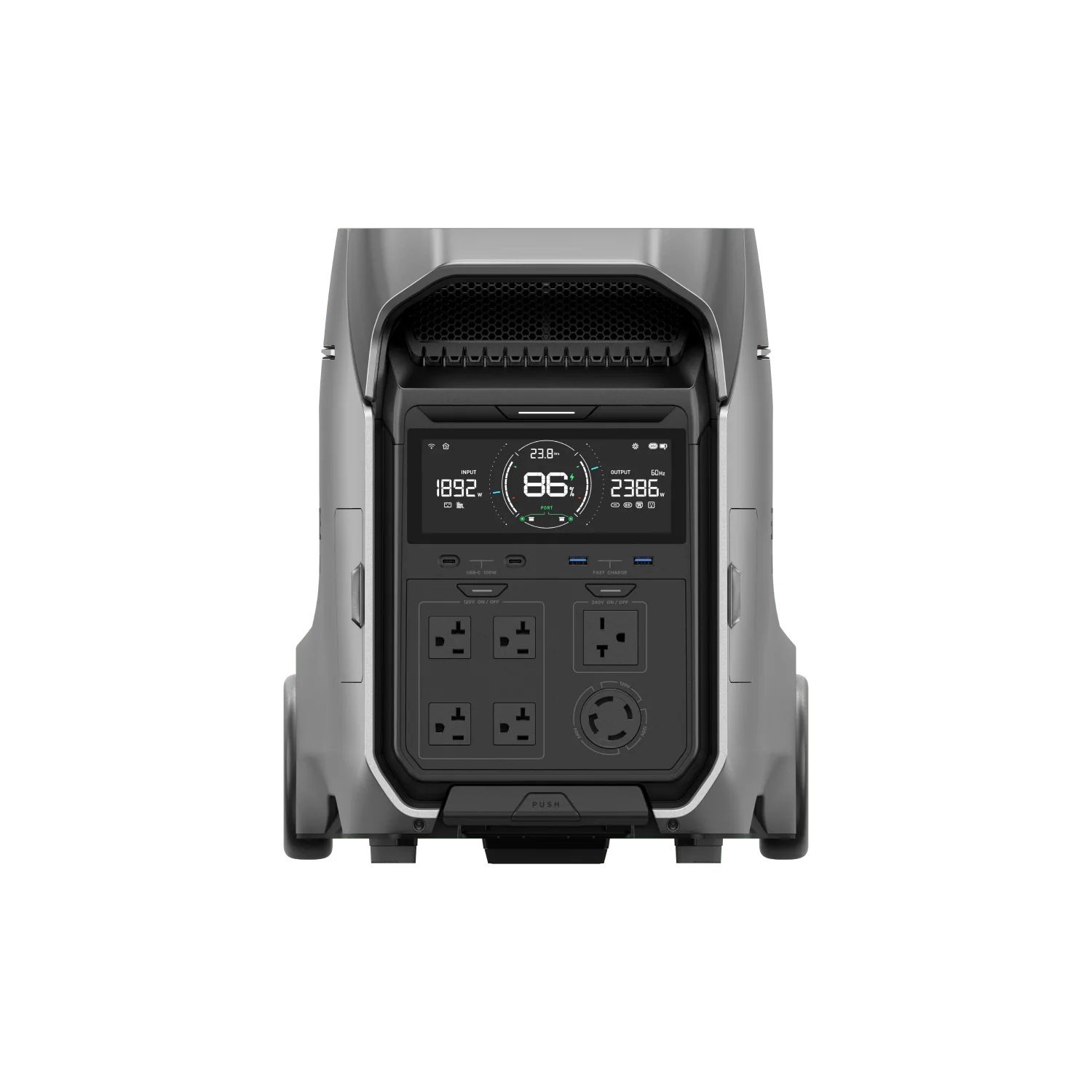
The single most-recommended whole-home-capable unit that still rolls on wheels. What sells it: 4000W with real 120/240V split-phase from one box, so it backfeeds a transfer switch and runs a well pump or mini-split without pairing two units. Owners consistently praise how quiet it stays at partial load (30dB claimed) and the 10ms UPS. The recurring complaint thread is idle drain - leaving AC output on burns tens of watts, so a 4kWh charge quietly evaporates over days if you use it as a dumb UPS without tweaking settings. It is 113 lbs; the wheels and handle work on pavement, not stairs. A few owners report warranty friction outside the mainland US, and early-firmware horror stories still circulate on Reddit, so update before first use. Street price has fallen from $3,699 to low-$2,000s, which changed the calculus versus F3800 Plus.
Jackery
Jackery Explorer 5000 Plus
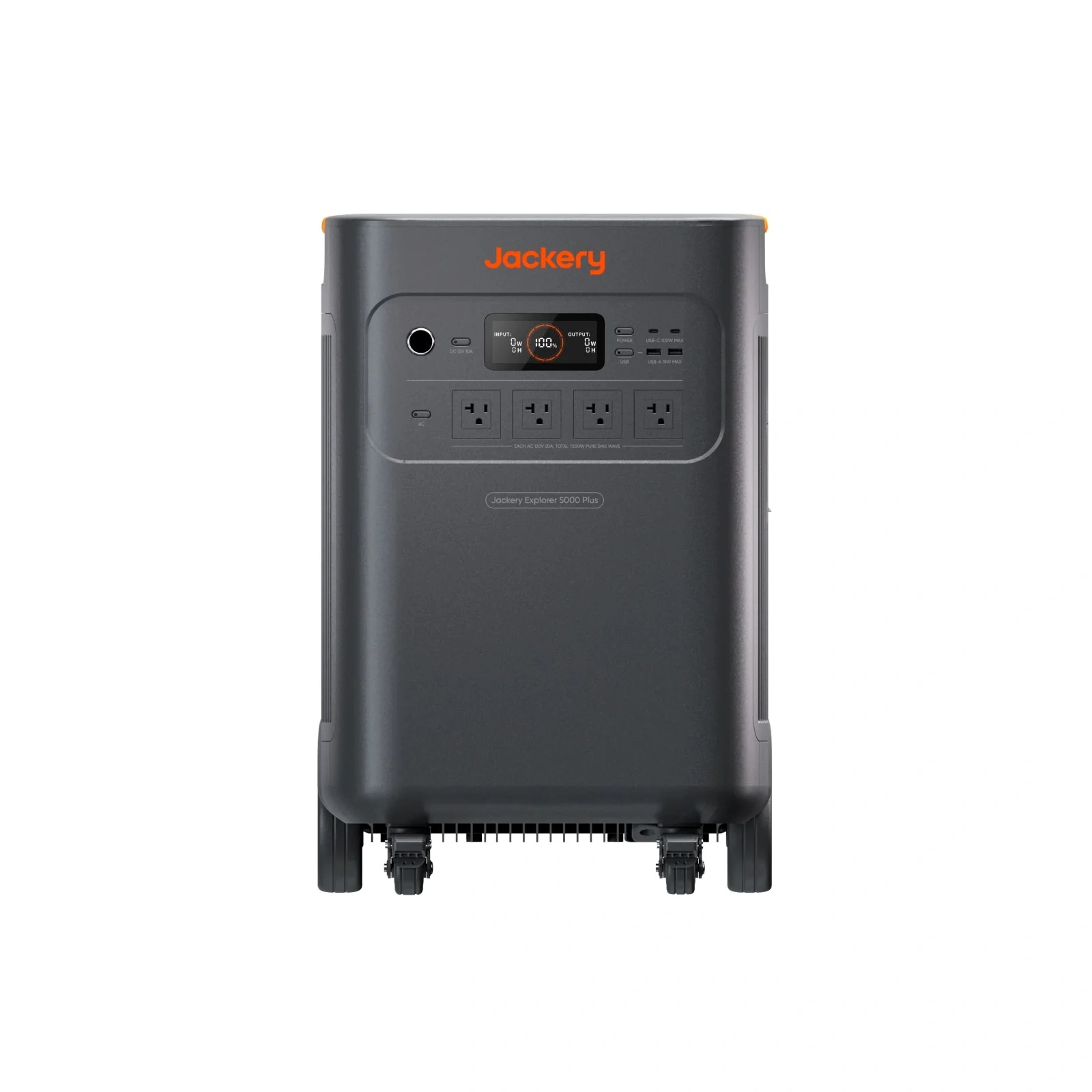
Jackery's 2025 entry into whole-home territory: 5kWh, a 7200W split-phase inverter, and a claimed 0ms UPS switchover - the spec that gets it recommended for sump pumps and server closets. It expands to 60kWh with battery packs and pairs with Jackery's transfer-switch kits for panel integration. Costco periodically sells it at $2,799, which owners treat as the buy signal since list is $4,299. The good: 240V from a single unit (rare - EcoFlow needs the bigger Pro 3 for that), suitcase wheels that handle gravel, and genuinely fast 4000W solar charging. Owner complaints center on the accessory economics - the transfer switch kit, battery packs, and parallel box add up fast - plus a 134.5-lb chassis you will not lift alone, and Wi-Fi setup that multiple reviewers found finicky. Newer to market, so long-term reliability data is thinner than the 2000 Plus.
Bluetti
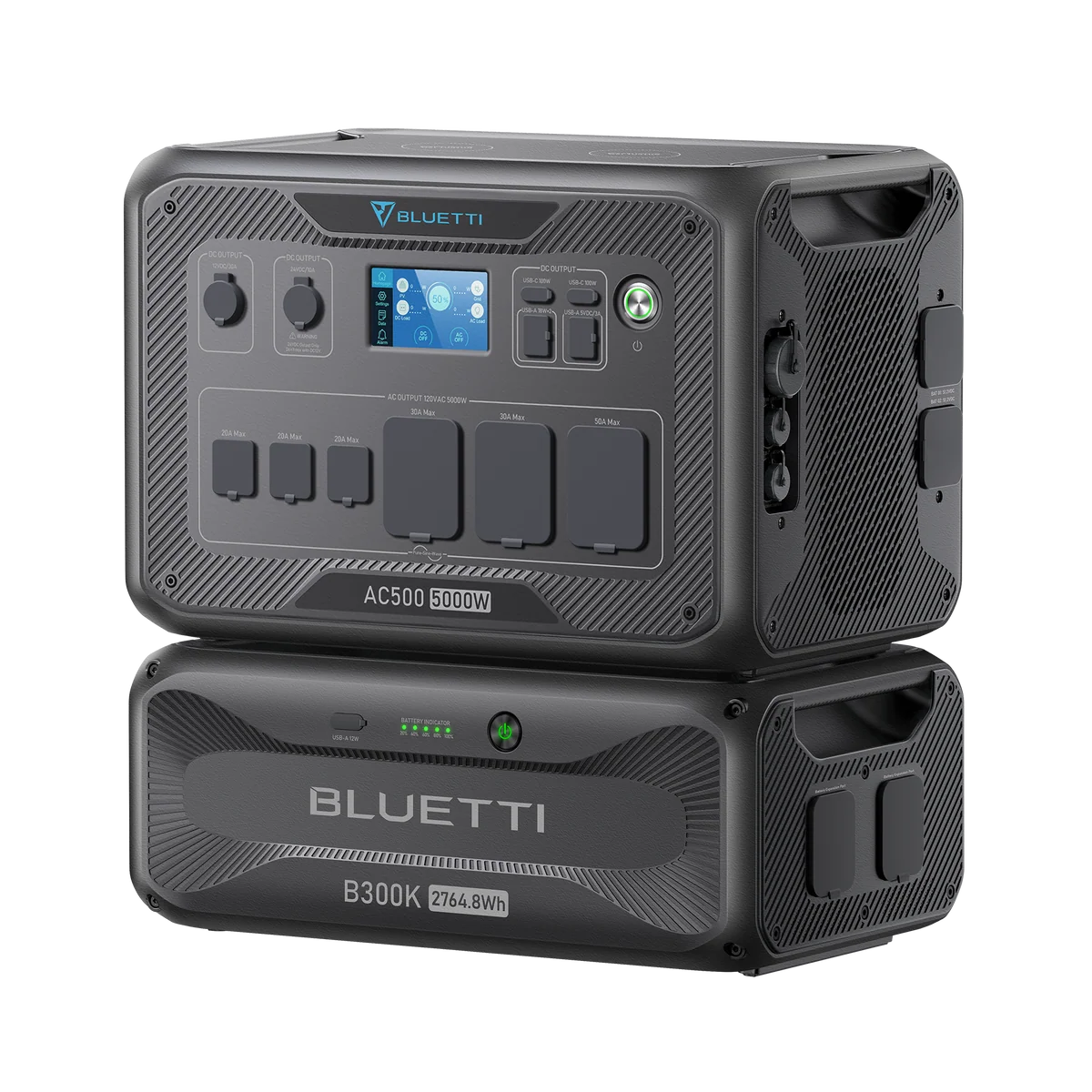
Bluetti AC500 + B300K
Bluetti's modular tower system: a 5,000W inverter head (10,000W surge - the strongest surge rating of any portable here) that stacks on B300K batteries. The 50A NEMA 14-50 outlet plus L14-30 makes transfer-switch and RV-pedestal hookups trivial, and two AC500s can pair for 240V and 33kWh. Costco has carried the combo, which says something about mainstream acceptance. Owners like the swap-ability - batteries charge to 80% in 45 minutes and detach for transport, since the two-piece design splits an unliftable 131 lbs into two 65-lb pieces. Recurring complaints: the fans are genuinely loud at high charge rates, Wi-Fi connectivity drops, and the 4-year/3+1 warranty structure trails the 5-year industry standard. It's older than the Apex 300 but the 5kW inverter and 14-50 outlet still earn it recommendations for heavy transfer-switch duty.